أكياس FIBC ذات الحلقة الواحدة مقابل الأكياس ذات الحلقات الأربع: اختيار طريقة الرفع واحتياطات السلامة
RUNCHEN
الكاتبتمتلك RUNCHEN خبرة تزيد على 25 عاما في تصنيع وبيع أكياس FIBC الكبيرة، مع مرافق إنتاج خاصة وقدرة مستقرة للإنتاج على دفعات. نتخصص في أكياس FIBC، والأكياس الجامبو، وأكياس الطن، وحلول التغليف الصناعي المخصصة.
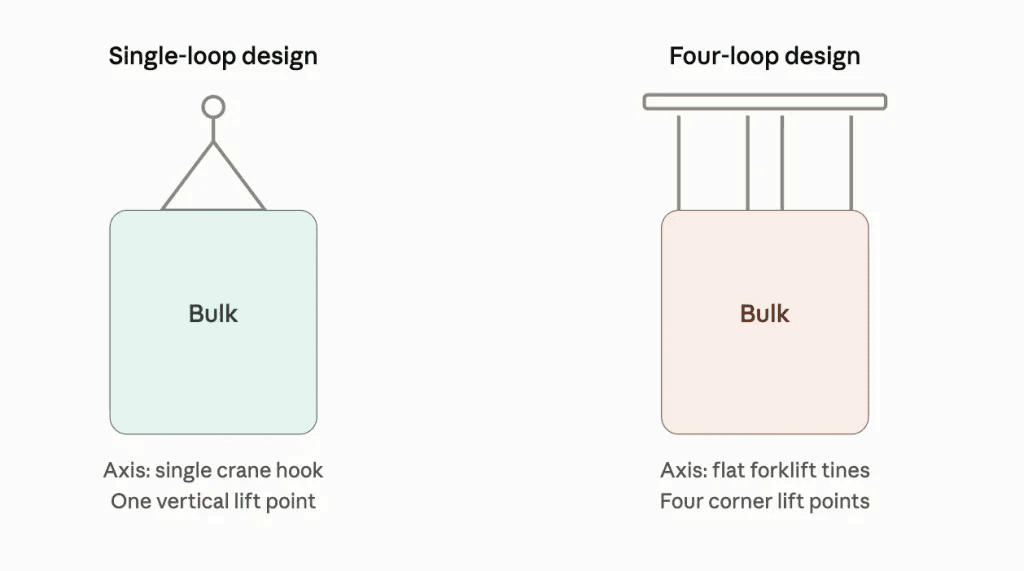
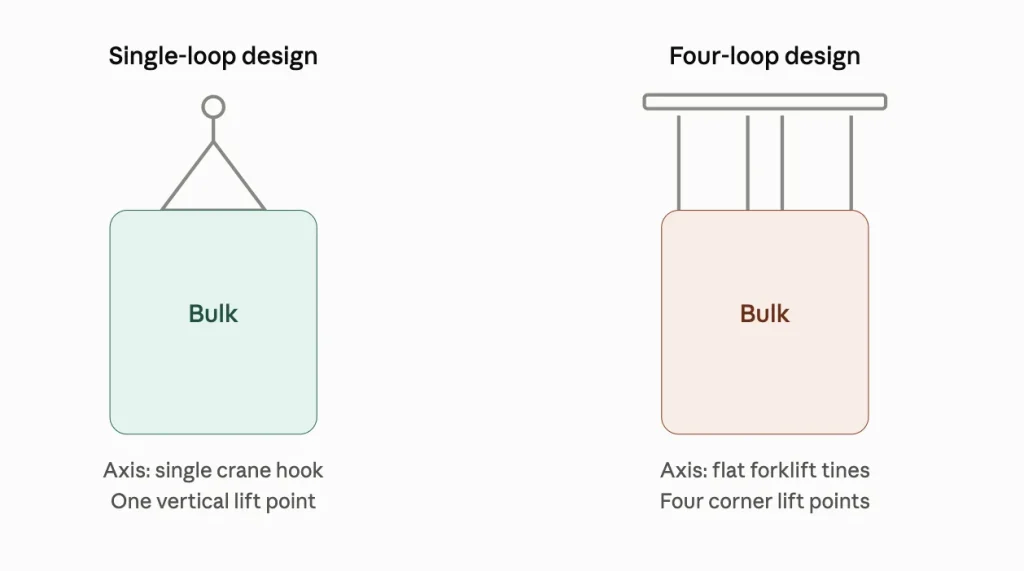
تقوم أكياس FIBC ذات الحلقة الواحدة بتركيز قوة الرفع في نقطة واحدة متكاملة لتمكين عملية رفع سريعة بواسطة عامل واحد باستخدام الرافعة. بينما توزع الأكياس ذات الأربع حلقات الوزن على أربع زوايا لتحقيق الثبات عند استخدام الرافعة الشوكية. يعتمد الاختيار الصحيح على معدات المناولة لديك، وكثافة المنتج، والبنية التحتية للشحن الإقليمية.
الفرق الهيكلي بين التصميم ذي الحلقة الواحدة والتصميم ذي الأربع حلقات
يكمن الاختلاف الجوهري في كيفية تعامل كل تصميم مع الشد الرأسي أثناء الرفع.
في أكياس FIBC ذات الحلقة الواحدة، يمتد نسيج جسم الكيس إلى الأعلى ليشكل نقطة رفع واحدة متكاملة، مما يلغي الحاجة إلى أحزمة مخيطة بشكل منفصل تمامًا. وهذا يقلل من تعقيد التصنيع مع زيادة نسبة القوة إلى الوزن إلى أقصى حد. عندما ترفع خطاف الرافعة الكيس، تتجه الحمولة الكاملة إلى محور رأسي واحد، مما يعني أن مشغلًا واحدًا يمكنه إدارة الخط دون الحاجة إلى عامل ثانٍ لتوجيه الحلقات إلى مكانها.
أما التصميمات ذات الأربع حلقات فتقسم نفس الحمولة عبر أربع نقاط متميزة مخيطة في زوايا كيس ذي لوحة على شكل حرف U أو ذي أربع لوحات. فبدلاً من توجيه الشد إلى نقطة واحدة، يتوزع الإجهاد بالتساوي على جميع الزوايا الأربع، مما يحافظ على توازن الكيس عند رفعه بواسطة الرافعة الشوكية. يمنع هذا التوازن الكيس من التأرجح أو الميلان عند نقله عبر أرضيات المستودعات غير المستوية أو تحميله على الشاحنات المسطحة.
لماذا تهيمن التصميمات ذات الحلقة الواحدة والحلقتين على موانئ أوروبا وأفريقيا
تعمل البنية التحتية للموانئ في جميع أنحاء أوروبا وأفريقيا بشكل شبه كامل على الرافعات العلوية ومعدات التعبئة الآلية القائمة على الخطاف، وهذا هو السبب الرئيسي وراء هيمنة التصميمات ذات الحلقة الواحدة والحلقتين على طرق التجارة عبر هذه المناطق.
تتيح الحلقات المتكاملة إجراء تغييرات سريعة وتعبئة متسلسلة سريعة في هذا النوع من الإعدادات بالضبط. يمكن لسفينة تحميل اليوريا السائبة أو الأسمدة التجارية نقل آلاف الأطنان في الساعة، حيث يقوم مشغلو الرافعات بربط نقطة نسيج واحدة فقط لكل وحدة بدلاً من إدارة أربعة أحزمة منفصلة.
نمت سوق أكياس FIBC ذات الحلقتين جنبًا إلى جنب مع هذه البنية التحتية للموانئ لسبب محدد: توفر التكوينات ذات الحلقتين تحسينًا متواضعًا في الاستقرار مقارنة بالأكياس ذات الحلقة الواحدة، مع الحفاظ على سرعة التغيير قريبة من عمليات الخطاف الواحد. بالنسبة للمشغلين الذين يرغبون في مزيد من التوازن دون التخلي عن المناولة السريعة التي تجعل الأنظمة القائمة على الخطاف جديرة بالاستخدام، فإن هذه المنطقة الوسطى لها جاذبية حقيقية.
عندما تتطلب ساحات الرافعات الشوكية تكوينات متعددة الحلقات
ليست كل الأسواق تعمل على البنية التحتية للموانئ القائمة على الرافعات. تعتمد الكثير من العمليات بدلاً من ذلك على لوجستيات الرافعات الشوكية القياسية، وتميل تلك الساحات بشكل شبه كامل إلى التكوينات متعددة الحلقات.
بالنسبة للمتطلبات الإقليمية المتخصصة خارج الموانئ الآلية، يمكن أن يوفر التوريد من خلال شريك تصدير أكياس FIBC ذات الحلقة الزاوية في الهند إعدادات بديلة مناسبة لأنظمة الشحن الأساسية. ولكن بالنسبة للصناعات الثقيلة عالية السعة مثل المعالجة الكيميائية أو التعدين، تظل أكياس FIBC ذات الأربع حلقات القياسية هي الطريقة الأساسية للحفاظ على استقرار الأحمال الثقيلة والكثيفة أثناء النقل والتخزين.
قواعد المناولة وفحوصات السلامة لمنع تمزق النسيج
تركز النماذج ذات الحلقة الواحدة الحمولة الكاملة في نقطة علوية واحدة، مما يعني أن الرافعات يجب أن ترفع عموديًا تمامًا للحفاظ على سلامة النسيج. يؤدي السحب الجانبي أو جر الكيس عبر الأرضية إلى وضع ضغط غير متساوٍ على المادة ويمكن أن يمزق المقبض المتكامل.
يجب ألا يحاول مشغلو الرافعات الشوكية أبدًا رفع كيس ذي نقطة واحدة بشوكة خام إلا إذا كانوا يستخدمون ملحق خطاف رافعة متخصصًا ومستديرًا مصممًا لتجنب قطع مادة البولي بروبيلين.
فحوصات السلامة الحرجة للرفع السائب:
- افحص حلقة النسيج العلوية المتكاملة بحثًا عن تآكل بسبب الأشعة فوق البنفسجية قبل كل رفع
- حافظ على عامل أمان صارم بنسبة 5:1 لجميع عمليات الرحلة الواحدة
- تأكد من أن خطاف الرافعة خالٍ تمامًا من النتوءات الحادة أو الصدأ
- لا تقف أبدًا أسفل حاوية سائبة أثناء نقل الرافعة العلوية في الميناء
تحمل معظم الأكياس ذات النقطة الواحدة تصنيف عامل أمان بنسبة 5:1، مما يعني أنها مصممة لرحلات الاستخدام الفردي ويجب ألا يتم تحميلها أبدًا بما يتجاوز سعة وزنها المحددة.
التحكم في التصنيع واختبارات السلامة من مصنع واحد
غالبًا ما تكافح شركات التجارة الصغيرة لتلبية المواصفات العالمية المخصصة، وهنا تكمن الميزة الحقيقية لمؤسسة متكاملة بين المصنع والتجارة مثل مجموعة رانتشن. تقوم رانتشن بتصميم ونسج واختبار تحميل كل من أكياس FIBC ذات الحلقة الواحدة وأكياس السائبة ذات الأربع حلقات بالكامل داخل مصنعها، وتدير إنتاجًا واسع النطاق مزودًا بخطوط سحب أسلاك دقيقة، وآلات نسج دائرية عالية السرعة، وأنظمة خياطة آلية مصممة للتعامل مع الطلبات المخصصة بكميات كبيرة.
يقوم فريقنا الهندسي بتخصيص تصميم كل كيس ليتناسب مع إعداد المصنع الخاص بك ولوائح الشحن الإقليمية. إذا كنت تشحن مساحيق كيميائية دقيقة إلى أوروبا، فإننا نبني أكياسًا مخصصة ذات حلقة واحدة مع بطانات PE داخلية مقذوفة بشكل مشترك مخيطة في اللحامات الخارجية، مما يمنع البطانة من الالتواء أو الانزلاق أثناء التعبئة الآلية السريعة. إذا كانت عملياتك تنقل مواد تعدين ثقيلة وحادة لشحنات الموانئ الأفريقية أو تحتاج إلى تكوينات حلقات زاوية تتوافق مع معايير الرافعات الشوكية الهندية، فإننا نصنع أكياس FIBC متينة ومتعددة الطبقات بأربع حلقات مع طبقات مزدوجة الخياطة وتثبيت ضد الأشعة فوق البنفسجية مصممة لتحمل التخزين الخارجي القاسي دون أن تتحلل.
من أطوال الحلقات المخصصة إلى طبقات النسيج المضادة للكهرباء الساكنة المتخصصة، توفر رانتشن سلسلة توريد مباشرة من المصنع تحافظ على سير العمليات العالمية بأمان وفي الموعد المحدد في جميع المناطق التي نخدمها، دون إخفاقات التسليم التي تأتي من العمل من خلال وسطاء غير مؤهلين.
Related News
Other news you might be interested in
كيفية اختيار حقيبة FIBC السائبة المناسبة لتغليف صناعي أكثر أمانًا وكفاءة
اختر حقيبة FIBC السائبة من خلال مطابقة هيكلها مع منتجك وعملية المناولة ومتطلبات الامتثال والوجهة. استخدم المراجعة الفنية والاختبار التجريبي وتحليل التكلفة الإجمالية لتقليل المخاطر.
استراتيجيات التعبئة والتغليف السائبة المستدامة لعصر التصنيع الحديث
اكتشف كيف تعمل أكياس السائبة من نوع FIBC عالية الأداء على تقليل نفايات التعبئة والتغليف، ومنع فقدان المنتج، وتحسين مقاييس الاستدامة. تعرف على الميزات الرئيسية والنتائج الواقعية وخارطة طريق تنفيذ خطوة بخطوة لتحسين استراتيجية التعبئة والتغليف السائبة لديك.
Want to know more?
Get in touch with us for more information about our services and products.