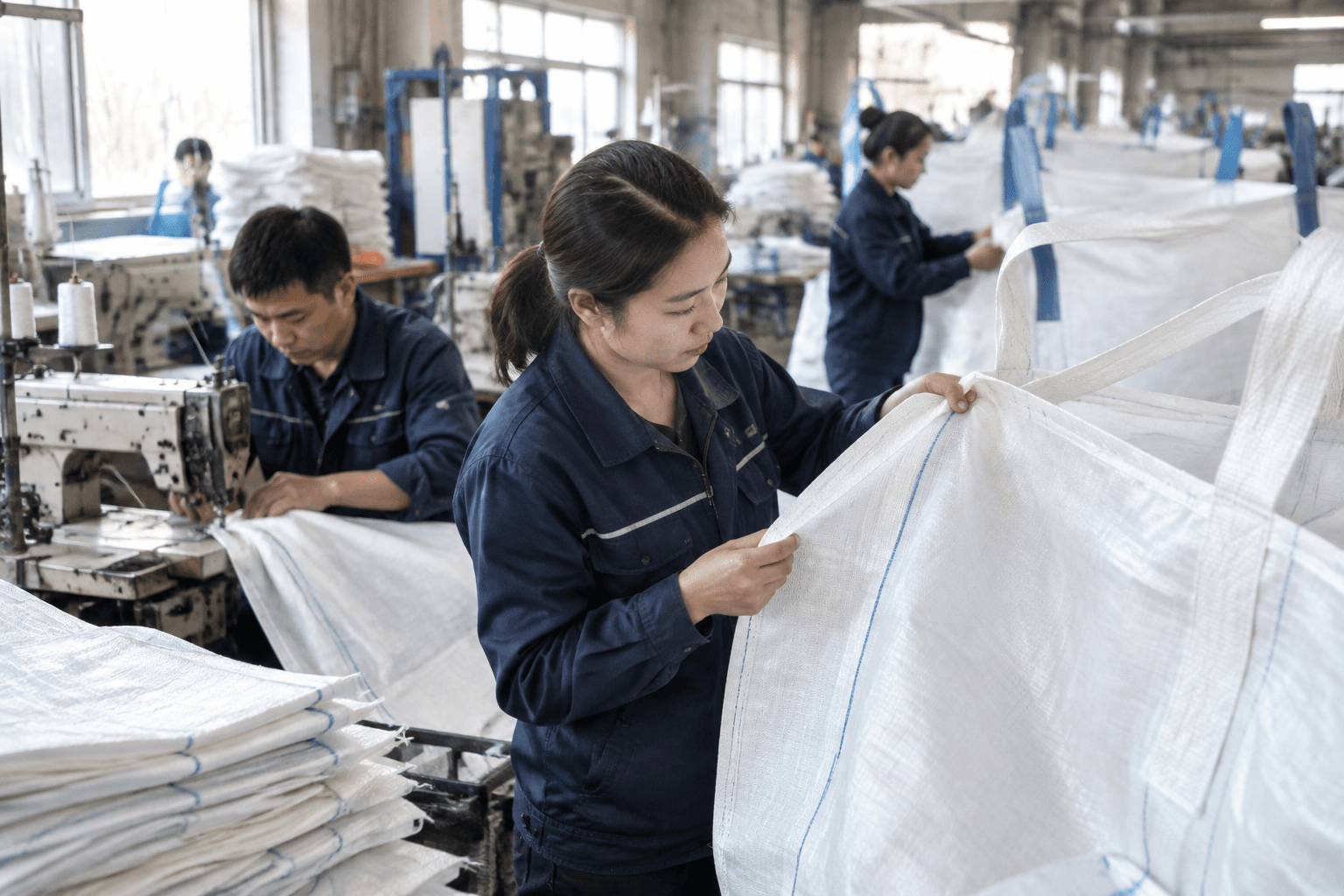
第140届广交会:吨包袋、集装袋与PP编织包装的出口市场新趋势
RUNCHEN
作者RUNCHEN 拥有 25 年以上 FIBC 吨袋生产与销售经验,自有生产设施和稳定的批量生产能力,专注于 FIBC 集装袋、吨袋、太空包及定制工业包装解决方案。
New Export Opportunities for FIBC Bulk Bags at the Canton Fair
International buyers attending the 140th Canton Fair are balancing several packaging priorities: protecting bulk materials during handling and transport, managing costs, using materials efficiently, and meeting customer and destination-market requirements.
For importers, brands, distributors, and industrial procurement teams, sourcing is no longer just about finding the lowest-priced bulk bag. The right FIBC bulk bag, jumbo bag, or PP woven packaging solution can support efficient loading, reduce damage risks, simplify warehouse handling, and improve consistency across export shipments.
Public disclosures from sectors such as healthcare and brewing show growing attention to packaging material use, resource efficiency, and waste prevention. These disclosures are not direct performance benchmarks for the FIBC industry, but they reflect a wider purchasing shift: buyers increasingly expect packaging suppliers to deliver value through appropriate design, materials, and production control.
This guide helps buyers turn trade fair discussions into a practical sourcing process. Use it to assess suppliers, prepare comparable RFQs, verify technical claims, and move from exhibition leads to export-ready cooperation.
Export Sourcing Trends: From Unit Price to Total Packaging Value
Price remains important, but professional buyers compare more than the cost per bag. They consider whether the packaging suits the material, filling and discharge processes, warehouse conditions, transport route, and intended use.
Review a competitive FIBC bulk bag quotation alongside:
- Load capacity and required safety performance
- Bag structure and compatibility with handling equipment
- Filling and discharge efficiency
- Suitability for palletizing, container loading, and storage
- Risk of damage during filling, lifting, transport, and unloading
- Batch consistency and quality control
- Supplier responsiveness on samples, revisions, and delivery coordination
Lightweight packaging and source reduction are also relevant sourcing topics. For example, companies such as China Resources Beer have discussed packaging design and material selection in ESG reporting. Progress in bottles, cans, cartons, or other packaging categories should not be assumed to represent FIBC industry performance.
Medical-sector packaging data can provide background on growing interest in resource efficiency. However, figures cited without a clear indicator, baseline, and calculation method should not be presented as FIBC industry statistics or as directly transferable ROI.
For export procurement, include total cost of ownership in supplier comparisons. Ask how a proposed specification may affect filling speed, discharge performance, transport space, storage, labor, product protection, and suitability for the commodity.
Key Export Buying Criteria for FIBC Bulk Bags and PP Woven Packaging
FIBC bulk bags—also called jumbo bags or flexible intermediate bulk containers—are used to store and transport a wide range of dry bulk materials. The right specification depends on the product, filling process, lifting and discharge methods, transport environment, customer requirements, and intended conditions of use.
Before requesting a quotation, confirm:
- Bag type, shape, dimensions, and target volume
- Rated load and applicable safety requirements
- Top construction, such as an open top, duffle top, or filling spout
- Bottom construction, such as a flat bottom or discharge spout
- Lifting-loop arrangement and equipment compatibility
- Requirements for an inner liner, moisture barrier, or contamination protection
- Printing, handling marks, product identification, and destination-market labeling
- Outer packing, pallet requirements, and export shipment arrangements
For PP woven packaging, verify fabric construction, coating or lamination, sewing details, reinforcement points, appearance standards, print quality, and batch consistency. A specification may look suitable on paper but perform differently if stitching, cutting, folding, coating, or packing controls are not clearly defined.
Do not assume one specification suits every product just because nominal capacity is similar. Share the material characteristics and operating process with the supplier. Confirm critical details through samples, drawings, or an approved specification before mass production.
Match Packaging Solutions to the Application
Application requirements should guide product selection. Buyers considering a square-bottom structure for particular stacking, loading, or handling workflows can include the COSEK Brown Square Bottom FIBC Bulk Bag in their comparison. Confirm that its dimensions, load requirements, lifting arrangement, filling method, and discharge configuration fit the project.
For electronic components and other products requiring electrostatic management, buyers can evaluate the COSEK Black Anti-Static Bulk Bag for Cleanroom Electronic Components Packaging. Verify the relevant technical requirements against the product, cleanliness expectations, operating environment, handling steps, and customer standards.
A product name alone does not establish suitability. Request a specification sheet covering construction, use conditions, available options, and project documentation. This is especially important for controlled environments, sensitive components, or applications with specific compliance requirements.
Complete sample evaluation, technical document review, and agreement on acceptance criteria before placing a volume order. A supplier that explains where a configuration is appropriate—and where further validation is needed—offers a more useful basis for decision-making than a generic assurance.
Supplier Evaluation: Turn Trade Fair Conversations into Verifiable Decisions
A productive Canton Fair meeting should give you information you can verify after the exhibition. Confirm whether the supplier can consistently manufacture your required FIBC bulk bag or PP woven packaging structure, rather than relying only on a similar booth sample.
Ask suppliers to explain:
- Proposed raw materials and construction options
- Controls for weaving, coating, cutting, sewing, printing, and packing
- Pre-shipment inspection procedures
- Batch identification and traceability
- Sample, specification revision, and artwork approval processes
- Procedures for quality issues, urgent changes, and delivery coordination
- Export packing, shipment terms, and documentation support
Request project-specific product specifications, test information, and compliance documents where required. Check that each document applies to the product under discussion, including its test conditions and scope. Documentation for one bag design should not automatically be treated as validation for another design with different dimensions, loops, liners, coatings, or construction.
For larger orders, establish written acceptance standards, sample approval procedures, and nonconformance handling arrangements. This helps prevent misunderstandings when production scales from exhibition samples to export volumes.
Make Sustainable Procurement Requirements Actionable
Turn sustainability expectations into measurable packaging requirements. Instead of simply asking for a lighter bag, assess whether material reduction can maintain the performance needed for safe filling, lifting, storage, transport, and discharge.
A lighter construction is not automatically better if it increases breakage, complicates handling, or causes product loss. Evaluate material and structure alongside product protection, lifting methods, stacking conditions, transport distance, humidity exposure, and destination-market requirements.
Buyers and suppliers can define practical project indicators, including:
- Packaging material use per unit of packed product
- Potential opportunities to optimize the specification
- Damage, leakage, or handling feedback from trial shipments
- Batch consistency and deviation records
- Conformity between approved samples and production
Appropriate targets depend on baseline data and operating conditions. Corporate ESG disclosures can inform supplier assessment questions, but cross-industry data should not be presented as evidence that a specific FIBC project will deliver the same results.
Prepare Efficient Canton Fair Inquiries and Comparable Quotations
Suppliers can make more useful recommendations when buyers provide a clear project brief. Before meeting FIBC bulk bag and PP woven packaging manufacturers, prepare the core details about the commodity, process, and order plan.
- Material type, density, flow characteristics, and sensitivity to moisture or contamination
- Target filling weight and bag capacity
- Required dimensions and preferred structure
- Filling and discharge methods
- Lifting equipment, storage method, and transport environment
- Destination market and applicable customer requirements
- Expected order quantity, trial volume, and purchasing schedule
Ask suppliers for more than a unit price. Request the recommended specification, sample arrangements, quantity-based pricing, production lead time, shipment terms, packing details, and available documentation. This gives your team a consistent basis for comparing suppliers after the fair.
For the COSEK Brown Square Bottom FIBC Bulk Bag, confirm the intended use, dimensions, load capacity, and filling, lifting, and discharge requirements. For the COSEK Black Anti-Static Bulk Bag for Cleanroom Electronic Components Packaging, clarify electrostatic-management expectations and the validation materials needed for the application.
After the exhibition, assess suppliers on requirement fit, technical responsiveness, verification capabilities, sample quality, export readiness, and commercial terms. The best partner is not necessarily the one with the lowest initial price, but the one able to support a consistent, verified, commercially workable packaging program.
From Trade Fair Lead to Long-Term Supply
Step 1: Share the application, commodity characteristics, target bag type, and purchasing plan to request an initial specification recommendation and formal quotation.
Step 2: Review product information and confirm samples, testing needs, documentation, and acceptance standards. Refine the specification if adjustments are needed.
Step 3: Use the approved sample and written specification as the basis for a trial order. Evaluate product quality, delivery performance, handling results, and any issues during use.
Step 4: Use trial results to discuss ongoing supply, specification optimization, quality reviews, and long-term purchasing arrangements.
COSEK supports export projects with FIBC bulk bags, jumbo bags, and PP woven packaging solutions tailored to your material, handling process, and delivery requirements. Send COSEK your target bag type, cargo details, required specifications, and estimated order quantity to request a tailored quotation.
相关资讯
您可能感兴趣的其他资讯
Want to know more?
Get in touch with us for more information about our services and products.