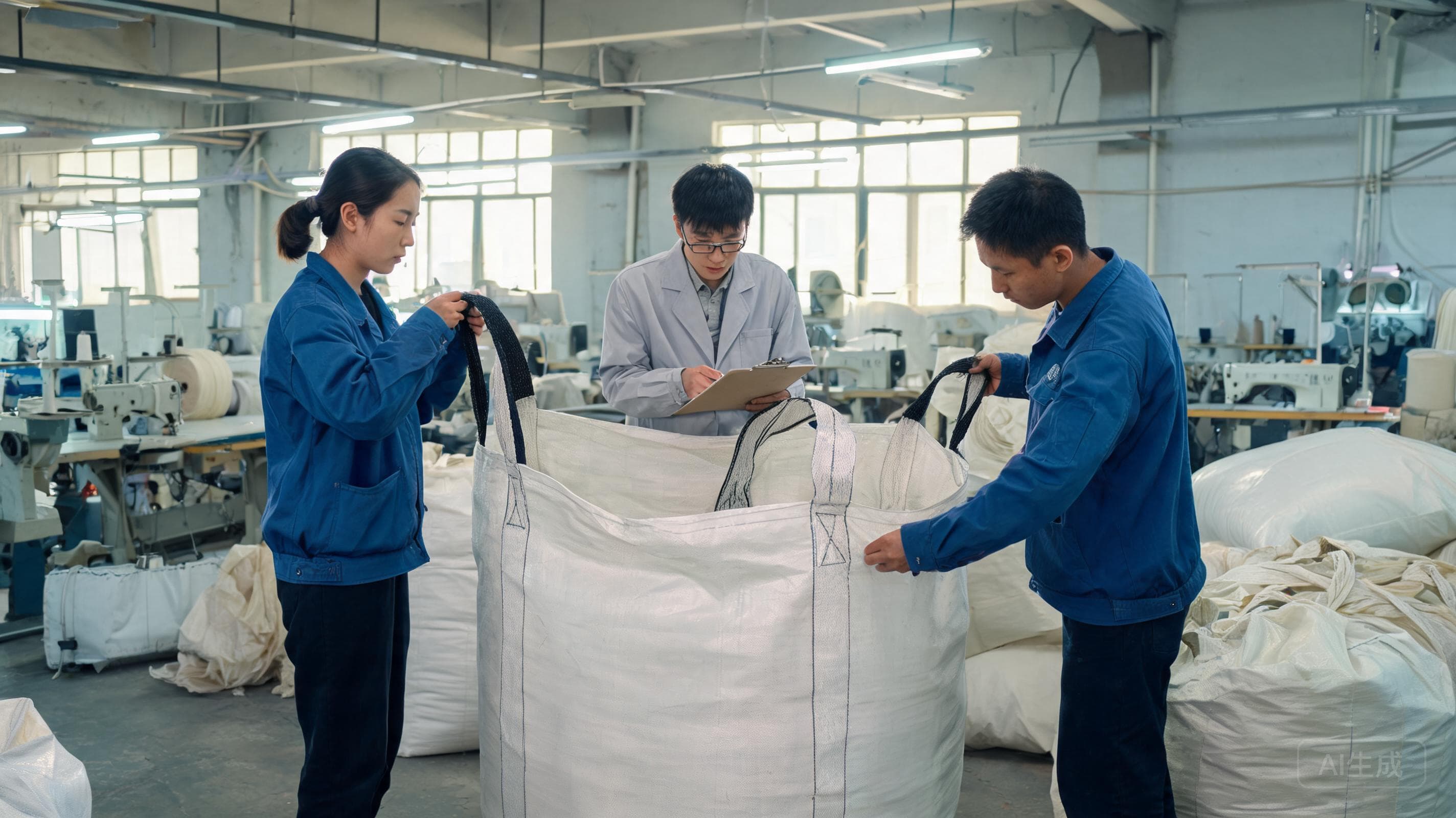
How to Choose a FIBC Manufacturer for Safer, More Reliable Bulk Packaging
RUNCHEN
AuthorWith more than 25 years of experience in FIBC bulk bag manufacturing and sales, RUNCHEN operates its own production facility with stable batch capacity. We specialize in FIBC bulk bags, jumbo bags, ton bags, and customized industrial packaging solutions.
When a bulk bag fails, the cost reaches beyond the packaging line
A failed FIBC can put workers and products at risk, interrupt filling and handling, and lead to damaged goods or rejected shipments. Choosing a manufacturer affects more than the bag: it can influence operating continuity, customer commitments, and your ability to meet applicable safety and regulatory requirements.
Requirements vary with the product, process, and destination. A suitable design for one application may not be right for another, so start by defining how the bag will be used and which risks it must address.
Review the full handling cycle, including filling, lifting, storage, transport, and discharge. A capable manufacturer will help assess these conditions and explain how the proposed bag design addresses them.
This guide offers a practical way to evaluate FIBC manufacturers, match bag construction to your application, and request a quotation based on specifications you can review and compare.
Start with the material, process, and shipment—not a generic bag specification
Begin with the product going into the bag. Share its weight, flow characteristics, sensitivity to moisture or contamination, and any special handling requirements. A free-flowing grain, fine powder, and static-sensitive component may require different design considerations, even at the same capacity.
Next, map the operating conditions. Explain how the bag is filled, lifted, stored, transported, and discharged. Include storage duration, transport route, and expected exposure to weather or other environmental conditions. Filling equipment and discharge setup can also affect a design’s suitability.
Clarify your priorities. You may need stronger product protection, cleaner handling, faster filling, fewer packaging components, or documentation for a particular market. Ask the supplier to explain how each recommended feature supports those priorities. A product name or broad performance claim is not a substitute for an application-specific explanation.
Match FIBC construction to the risks your operation needs to control
Different applications call for different questions and design reviews. Treat product options as a starting point for discussion, then confirm that the construction and documentation fit your product, process, and destination.
- Dangerous goods: Discuss the certification scope, intended contents, handling conditions, and documentation required for your application. Evaluate the COSEK White UN Certified Dangerous Goods FIBC Bulk Bag against those requirements; do not assume a product category alone establishes suitability.
- Leakage control: If containing product is a priority, review the construction and intended use conditions of the COSEK White Cylindrical Leak-Proof Bulk Bag.
- Food and agricultural products: Define hygiene, material, visibility, and handling requirements. Compare the COSEK White and Red Food-Grade Bulk Bag and the COSEK Light Blue Food-Grade FIBC for Visible Contents for applications such as sugar, flour, or grain.
- Static-sensitive products: Discuss the electrostatic protection required by your process and verify that the proposed bag suits actual operating conditions. Include the COSEK Black Anti-Static Bulk Bag for Cleanroom Electronic Components Packaging in your evaluation where relevant.
- Smaller-volume or specialized workflows: Consider whether the COSEK Small Bulk Bag better fits your handling process.
- Square-bottom requirements: Review the COSEK Brown Square Bottom FIBC Bulk Bag alongside filling, stacking, and discharge needs.
- Integrated packaging requirements: Explain the intended use and specifications when discussing the COSEK Light Blue Integrated FIBC.
- General industrial use: Use the COSEK White General-Purpose FIBC Bulk Bag as a baseline for comparing capacity, construction, and handling features.
- Moisture-sensitive grain, feed, or chemical raw materials: Assess the COSEK Black Moisture-Proof FIBC against storage and transport conditions.
These options are candidates for review, not automatic recommendations. Ask the manufacturer to connect each proposed feature to a stated requirement and identify any applicable limits or conditions.
Use certification and quality controls to reduce procurement uncertainty
Ask which standards, tests, and certifications apply to the specific bag and intended use. Request current documentation and verify its scope, validity, and relevance to the destination market. Do not assume a broad product description proves compliance.
For food-related packaging, define the material and hygiene controls your sourcing program requires. Ask how production, storage, inspection, and handling procedures support those controls, and confirm the answers apply to the proposed product and manufacturing process.
Third-party guidance can inform due diligence, but it should not replace supplier-specific evidence. Determine which workplace and supply-chain requirements apply to your program, then verify how a prospective supplier addresses them.
Request information about raw-material controls, in-process inspections, finished-product checks, traceability, and the handling of nonconforming bags. Before approving production, agree on samples, test methods, acceptance limits, and the records you expect to receive. This gives procurement, quality, operations, and safety teams a shared basis for approval.
Evaluate the manufacturer’s ability to deliver consistently
A strong product proposal matters only if the manufacturer can produce it consistently and deliver it when needed. Review manufacturing capabilities, quality systems, production planning, product range, and experience with applications comparable to yours.
Ask how the supplier manages capacity, lead times, repeat orders, and communication when specifications or schedules change. Discuss customization and design reviews early. Resolve genuine application needs without adding complexity that offers no practical benefit.
Use public company information and customer or project references as due-diligence inputs, not proof of a particular FIBC outcome. Verify claims directly and do not treat them as evidence of a specific result unless that result is substantiated.
Where available, request application-specific references or documented case studies. Look for the original packaging problem, the solution used, and measurable outcomes. Confirm that the conditions are comparable to your own.
Compare total operating value, not just unit price
The lowest unit price may not represent the lowest cost in operation. Compare the bag price alongside handling, storage, product protection, inspection, and the potential disruption associated with packaging failure.
Consider how filling speed, stacking behavior, discharge performance, and bag-to-bag consistency affect labor and throughput. Include the potential cost of product loss, contamination, moisture exposure, or shipment delays where those risks apply.
Ask suppliers to separate confirmed performance data from estimates and document the assumptions behind projected savings or return-on-investment calculations. Validate expected benefits through a controlled trial or sample evaluation before placing a larger order.
Questions to ask before requesting an FIBC quotation
Prepare the information a manufacturer needs to recommend a suitable design and provide a comparable quote:
- What product will the bag hold, and what are its weight, flow, sensitivity, and handling characteristics?
- What dimensions, safe working load, and lifting configuration are required?
- How will the bag be filled and discharged, and are a liner or barrier features needed?
- Will it be used for food, dangerous goods, static-sensitive products, moisture-sensitive materials, or another defined application?
- Which certifications, test reports, material declarations, or traceability documents are required for the destination market and end use?
- What are the order quantity, sample requirements, target delivery date, shipping destination, and repeat-order expectations?
- Can the supplier provide a specification sheet, sample plan, and quotation that clearly state assumptions and exclusions?
A complete brief makes it easier to compare proposals on a like-for-like basis and identify missing information before production begins.
Turn a packaging review into a practical supplier shortlist
Create a scorecard covering application fit, safety and compliance evidence, quality controls, manufacturing reliability, communication, and total operating value. Apply the same criteria to every supplier so a persuasive presentation or low unit price does not outweigh a gap in the evidence.
Prioritize manufacturers that explain recommendations in terms of your product and process—not just their catalog. Request matched samples or a specification review for relevant candidates, such as the COSEK White General-Purpose FIBC Bulk Bag, the COSEK White and Red Food-Grade Bulk Bag, or another application-specific design.
Record test outcomes and approval criteria so procurement, operations, quality, and safety teams can make a consistent decision. Treat broad industry references and unverified return-on-investment claims as prompts for questions, not proof. Request evidence tied directly to the proposed bag and intended use.
Request an application-specific FIBC review and quotation
Share the product being packed, operating conditions, required capacity, destination, and any certification or handling requirements. Include your existing bag specification or photos, if available, so the manufacturer can identify potential gaps and prepare a like-for-like comparison.
Discuss whether a technical review, product recommendation, sample, or quotation is the right next step. Clear requirements at the outset help both sides assess fit before an order is placed.
Related News
Other news you might be interested in
How to Choose a FIBC Manufacturing Partner That Reduces Risk and Improves Supply Reliability
Evaluate FIBC manufacturers on technical fit, documented quality controls, food-contact requirements, and supply continuity—not just unit price—to reduce sourcing risk and protect operations.
How to Choose the Right FIBC Bulk Bag for Safer, More Reliable Packaging Operations
Use this practical guide to match FIBC construction, handling, safety, and documentation requirements to your product and process—and prepare for a focused supplier quote.
Want to know more?
Get in touch with us for more information about our services and products.