From Warehousing to Transportation: FIBC Bulk Bags Boost the Supply Chain Efficiency of Bulk Materials
RUNCHEN
AuthorWith more than 25 years of experience in FIBC bulk bag manufacturing and sales, RUNCHEN operates its own production facility with stable batch capacity. We specialize in FIBC bulk bags, jumbo bags, ton bags, and customized industrial packaging solutions.
Storage: More Stable Stacking Improves Space Utilization
Warehousing is the first efficiency checkpoint in the bulk material supply chain. For materials such as powders, granules, plastic resins, minerals, and food ingredients, whether the packaging remains neat after filling directly affects pallet placement, racking management, and container loading efficiency.
Conventional packaging often bulges at the sides or becomes unstable after filling, making stacking less orderly and increasing the difficulty of forklift handling and warehouse management. In contrast, more structurally stable FIBC bulk bags help create more standardized material units, making centralized stacking, batch transfer, and inventory management easier.
Baffled FIBC bulk bags feature internal baffle panels and are suitable for loose materials such as powders, granules, and flakes. Their advantage is that they help maintain a more regular square shape after filling, reducing side bulging and thereby improving stacking stability and warehouse space utilization. For industries such as chemicals, plastics, minerals, construction, and food ingredients, this type of product helps companies build a more efficient material management system at the warehousing stage.
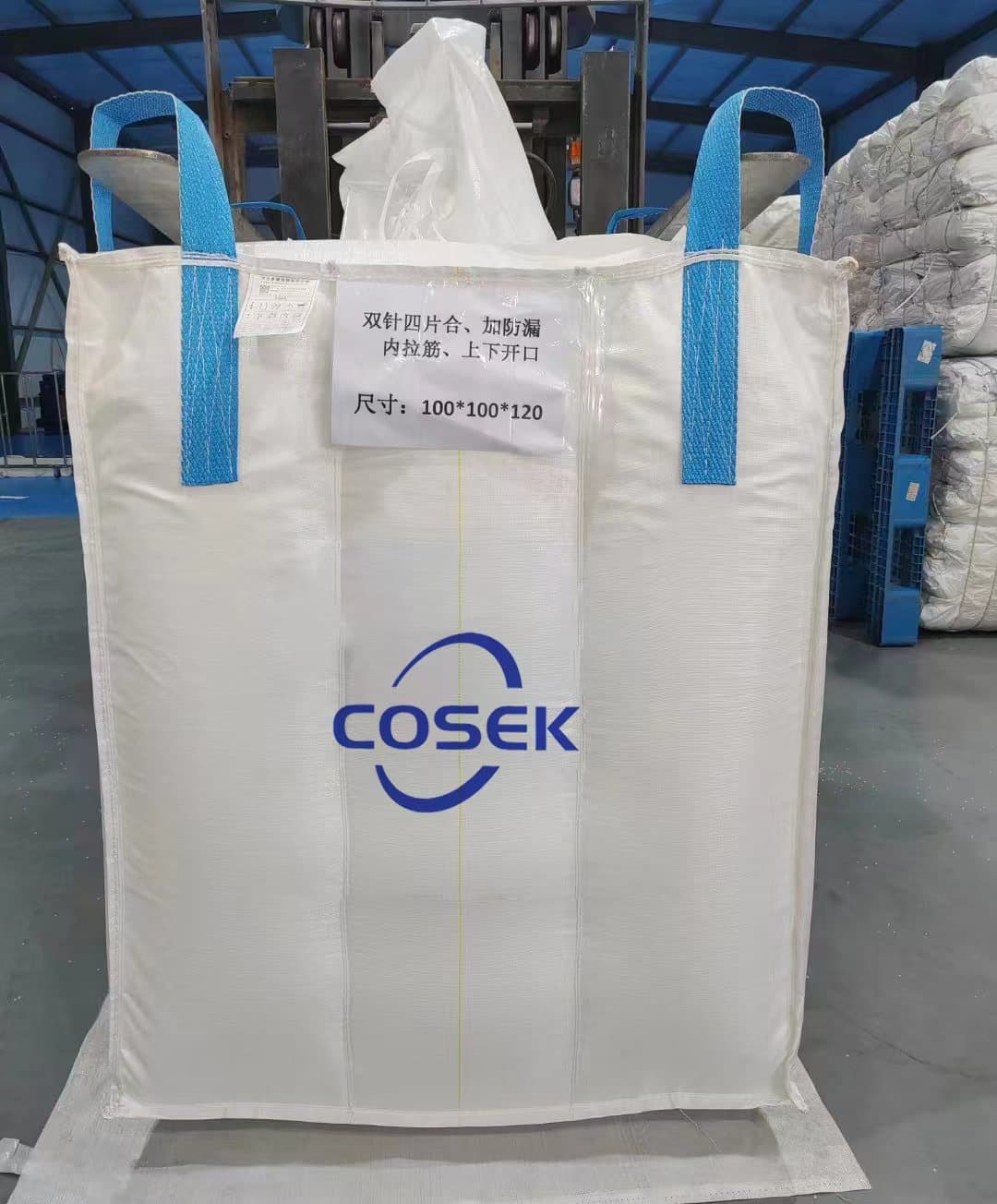
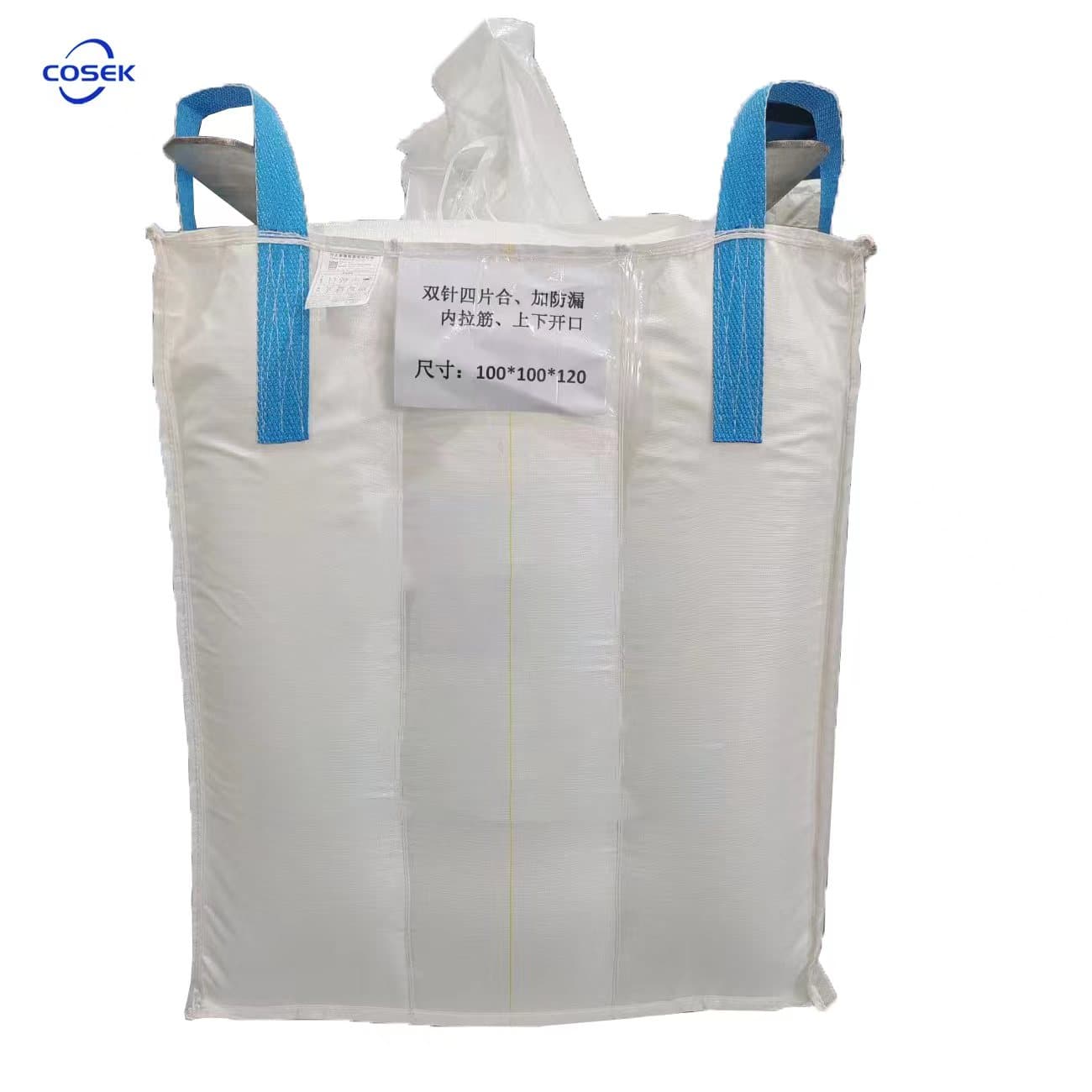
Internal Reinforcement Ton Bag
Transportation: Reducing Handling Losses and Protecting Material Safety
After bulk materials leave the warehouse and enter the transportation stage, they must go through loading, container shipping, port handling, long-distance delivery, and other links. If the packaging lacks sufficient load-bearing capacity, sealing performance, or suitability for the material, it can easily lead to damage, moisture exposure, leakage, and additional rehandling costs.
Therefore, transportation efficiency is not only about “fitting more,” but also about whether the package can keep the material stable throughout long-distance circulation. For moisture-sensitive materials such as grains, feed, and chemical raw materials, moisture resistance is especially important.
For these scenarios, the COSEK black moisture-proof bulk bag uses PP woven fabric with a PE anti-seepage liner, making it suitable for grains, feed, chemical raw materials, and other materials that require moisture protection. Its structure helps reduce the risk of moisture-related deterioration, making it suitable for outdoor storage and long-distance transportation, while also helping companies reduce losses caused by inadequate packaging protection.
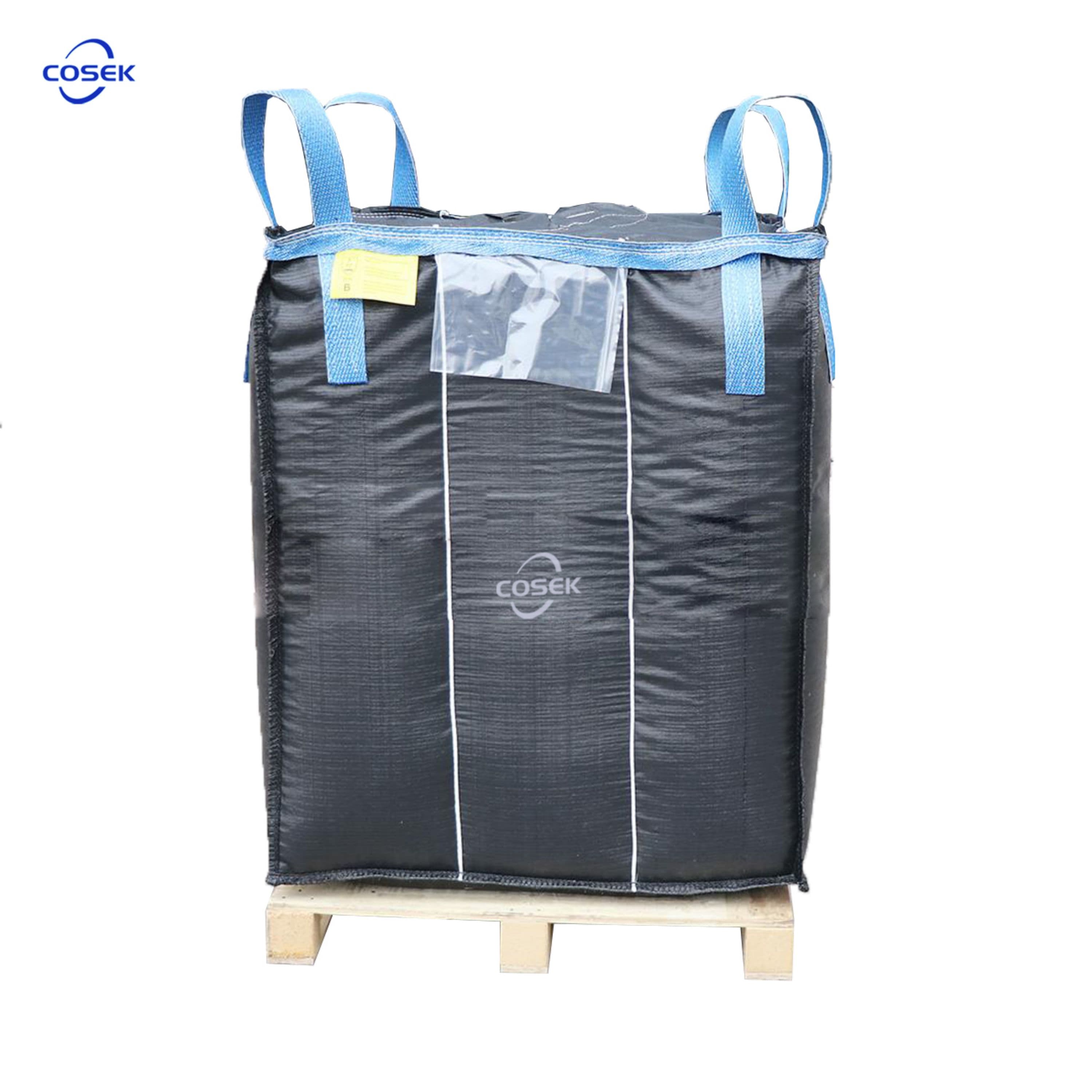
COSEK black moisture-proof ton bag
From Packaging Selection to Supply Chain Efficiency Improvement
As global industrial supply chains place increasing demands on delivery speed, cost control, and safe transportation, the value of FIBC bulk bags is expanding from a simple packaging tool to a supply chain efficiency management asset. The right bulk bag product can help companies reduce warehousing waste, improve loading and unloading convenience, and lower damage and material loss during transportation.
For bulk material companies, choosing FIBC bulk bags should not be based on unit price alone. Instead, it should be evaluated comprehensively based on material type, storage conditions, transportation distance, stacking method, and protection requirements. Only when packaging matches the actual supply chain scenario can the efficiency value of bulk bags in warehousing and transportation be fully realized.
From warehousing to transportation, FIBC bulk bags are becoming an increasingly important part of the bulk material supply chain. In the future, as the food, chemical, agriculture, and industrial raw material sectors continue to demand more efficient logistics, bulk bag products will play a role in more specialized scenarios, helping companies achieve more stable and efficient material circulation.
Related News
Other news you might be interested in
How to Choose the Right FIBC Bulk Bag for Safer, More Efficient Industrial Packaging
Choose an FIBC bulk bag by matching its construction to your product, handling process, compliance needs, and destination. Use technical review, pilot testing, and total-cost analysis to reduce risk.
Sustainable Bulk Packaging Strategies for the Modern Manufacturing Era
Discover how high-performance FIBC bulk bags reduce packaging waste, prevent product loss, and improve sustainability metrics. Learn key features, real-world results, and a step-by-step implementation roadmap to optimize your bulk packaging strategy.
Want to know more?
Get in touch with us for more information about our services and products.