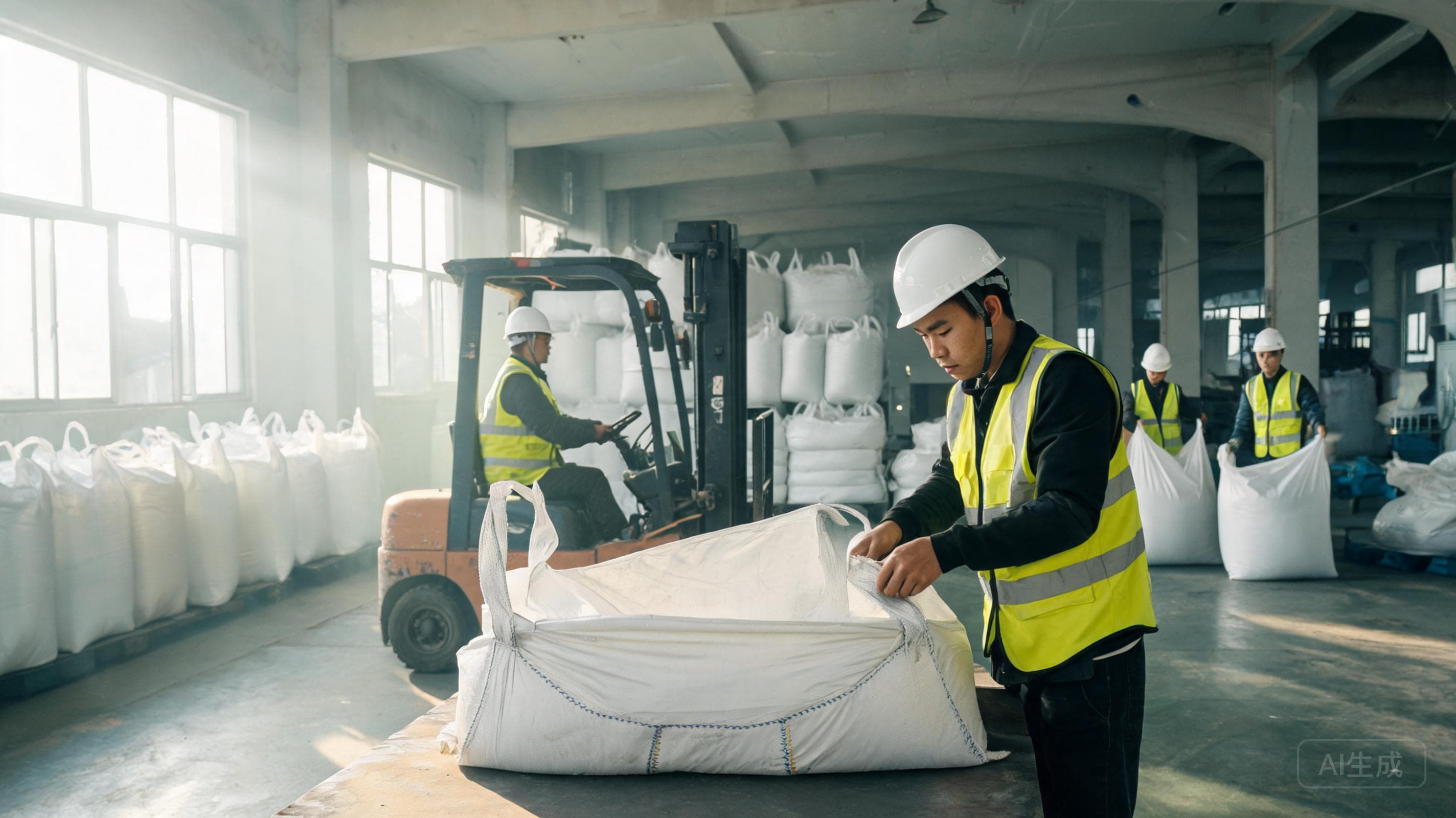
Maximizing Supply Chain Safety and Efficiency: The Role of Advanced FIBC Solutions in Modern Manufacturing
RUNCHEN
AuthorWith more than 25 years of experience in FIBC bulk bag manufacturing and sales, RUNCHEN operates its own production facility with stable batch capacity. We specialize in FIBC bulk bags, jumbo bags, ton bags, and customized industrial packaging solutions.
Introduction: Navigating Turbulent Markets with Reliable Packaging
The manufacturing sector is navigating a perfect storm of economic pressures—fluctuating import volumes, volatile raw material costs, and persistently squeezed profit margins. Recent industry reports indicate that supply chain disruptions are no longer temporary anomalies but structural realities that demand strategic responses. In this environment, operational efficiency and workplace safety have shifted from operational concerns to critical competitive differentiators. Manufacturers who fail to optimize their logistics and material handling processes risk losing ground to more agile competitors.
Flexible Intermediate Bulk Containers (FIBCs) have emerged as a strategic investment that directly addresses these challenges. Far from being a commodity purchase, the right bulk packaging solution can mitigate supply chain risks, reduce total cost of ownership, and ensure compliance with increasingly stringent safety regulations. When your packaging fails, the entire operation suffers—from production line stoppages to damaged customer relationships. Advanced FIBCs represent a proactive approach to protecting both your workforce and your bottom line.
The Hidden Costs of Inadequate Bulk Packaging
Substandard FIBCs create a cascade of hidden costs that quietly erode profitability. Product contamination from inferior fabric or improper manufacturing can result in rejected shipments, recall expenses, and irreparable damage to your brand reputation. Workplace accidents—often triggered by bag failure under load or inadequate safety features—lead to lost workdays, regulatory fines, and increased insurance premiums. In high-risk manufacturing environments, the cost of a single safety incident can exceed the total annual savings from choosing cheaper packaging.
Industry data consistently shows that safety incidents and operational inefficiencies directly impact profitability far more than the upfront price of packaging materials. A bag that splits during lifting not only loses its contents but also halts production, requires cleanup, and demands rework. These disruptions compound quickly in just-in-time manufacturing environments. The selection of FIBCs that meet rigorous safety standards—including GOTS certification for organic material integrity—and are tailored to specific industrial applications is not an expense; it is an investment in operational continuity.
Engineering Safety and Performance: Key Features to Demand in FIBCs
Not all bulk bags are created equal. The engineering behind advanced FIBCs addresses specific pain points that directly impact worker safety, product integrity, and warehouse efficiency. When evaluating packaging solutions, demand these critical design elements:
Anti-static properties are non-negotiable for flammable environments. Type B and Type C FIBCs prevent the accumulation of static electricity that can ignite combustible dust or vapors. For cleanroom electronic component manufacturing, the COSEK Black Anti-Static Bulk Bag provides the electrostatic discharge protection required to safeguard sensitive components from damage during transport and storage.
Tear-resistant fabrics extend the operational lifespan of your packaging and prevent catastrophic failures. Abrasive materials like silica sand, metal shavings, or sharp-edged aggregates quickly degrade standard polypropylene. A tear-resistant FIBC maintains structural integrity even when subjected to rough handling and repeated lifting cycles, reducing replacement frequency and waste.
Square-bottom designs deliver measurable efficiency gains. Unlike traditional round-bottom bags that waste cubic space and create unstable stacks, square-bottom FIBCs maximize pallet utilization and warehouse density. The COSEK Brown Square Bottom FIBC allows stable stacking that improves load stability during transit and increases storage capacity by up to 20% in the same footprint.
For heavy-duty applications requiring maximum load capacity, the Yellow Reinforced FIBC incorporates cross-corner and body reinforcement that distributes stress evenly across the bag structure. This design prevents seam failure and allows safe handling of materials weighing up to 2,000 kilograms, ensuring worker safety in demanding industrial settings.
Case in Point: How Advanced FIBCs Deliver ROI and Compliance
Consider a composite case from a mid-sized chemical manufacturer that switched from low-cost imported FIBCs to high-quality engineered bulk bags. The company was experiencing a 3% product contamination rate due to fabric degradation and inadequate moisture barriers, resulting in rejected customer orders and rework costs exceeding $250,000 annually. Worker injuries from bag failures—including one serious back injury from a collapsed stack—had driven insurance premiums up by 18% year-over-year.
By transitioning to anti-static, tear-resistant FIBCs with square-bottom configurations, the manufacturer achieved measurable improvements within two quarters. Contamination rates dropped to below 0.5%, eliminating nearly all rejection-related costs. The improved stackability reduced warehouse space requirements by 15%, lowering storage expenses and enabling more efficient inventory management. Employee injury claims related to packaging failures fell to zero, contributing to a 12% reduction in insurance premiums.
Critically, the switch to GOTS-certified FIBCs aligned the company with international sustainability and quality standards. This certification enhanced their brand reputation among environmentally conscious clients and opened access to European and North American markets that require documented compliance with organic material standards. The ROI calculation was compelling: total annual savings exceeded $400,000 against a packaging cost increase of $85,000—a return of nearly 5:1 on the packaging investment.
Selecting the Right FIBC Partner: Beyond Price
Choosing an FIBC supplier based solely on unit price is a costly mistake. The true cost of packaging includes failure rates, downtime, safety incidents, and compliance gaps. When evaluating potential partners, assess their quality certifications, customization capabilities, and technical support infrastructure. A supplier that offers only standard catalog products may not have the engineering expertise to address your specific material handling challenges.
Look for a manufacturer that understands local market conditions—including regulatory requirements, climate considerations, and logistics infrastructure—and can provide solutions that balance cost and performance. The ideal partner offers comprehensive testing documentation, batch traceability, and responsive customer service that helps you optimize your packaging specifications over time.
COSEK has established a proven track record as a trusted FIBC manufacturer delivering durable, compliant, and high-performance bulk bags across diverse industries. Their engineering team collaborates with clients to develop custom solutions that address unique material properties, handling equipment, and environmental conditions. This partnership approach ensures that your packaging investment delivers maximum protection and efficiency, not just the lowest invoice price.
Conclusion: Future-Proof Your Operations with Strategic FIBC Investments
In uncertain economic times, proactive measures distinguish thriving manufacturers from those merely surviving. The packaging choices you make today directly influence your ability to weather supply chain volatility, maintain safety standards, and protect profit margins. Substandard FIBCs are a false economy that exposes your operations to contamination risks, workplace hazards, and logistical inefficiencies that compound over time.
Assess your current bulk packaging solutions critically. Are they engineered to handle your specific materials? Do they meet the safety standards required in your industry? Are they optimized for space utilization and worker protection? If the answer to any of these questions is uncertain, upgrading to advanced FIBCs is a strategic move that enhances safety, efficiency, and profitability simultaneously.
Contact COSEK for a complimentary consultation and quote tailored to your specific operational needs. Our team will evaluate your current packaging performance, identify improvement opportunities, and recommend FIBC solutions that deliver measurable ROI while ensuring regulatory compliance. The right packaging partner transforms a routine procurement decision into a competitive advantage.
Related News
Other news you might be interested in
Optimizing Bulk Packaging for Industrial Resilience: A Strategic Guide for Manufacturers
Discover how strategic FIBC selection enhances safety, compliance, and efficiency in manufacturing. Learn to reduce hidden costs, boost productivity, and future-proof your supply chain with actionable insights and real-world ROI examples.
Optimizing Bulk Bag Performance for Industrial Safety and Efficiency
Discover how choosing the right bulk bags can cut costs, boost safety, and improve efficiency. Learn key selection criteria, innovative designs, and real-world ROI from proven case studies.
Want to know more?
Get in touch with us for more information about our services and products.