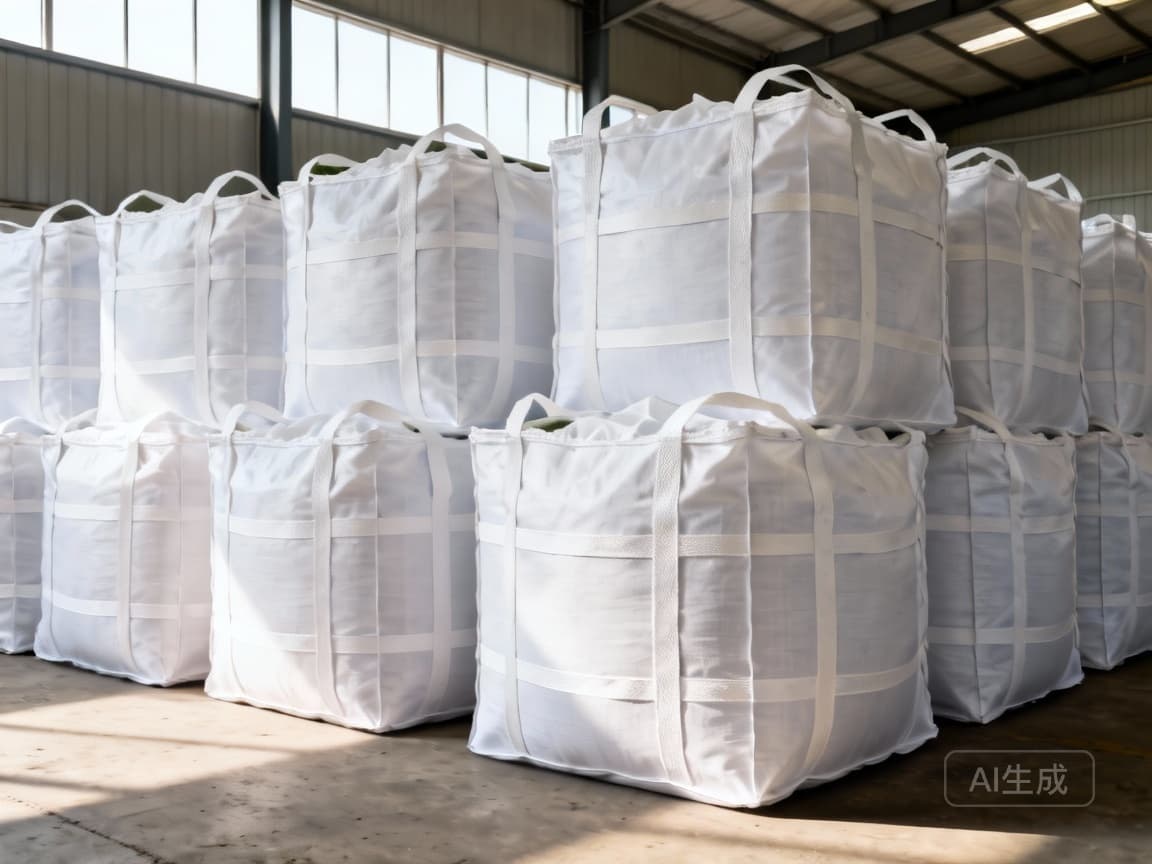
30000 tons of seaweed fertilizer market: How professional ton bags can improve logistics efficiency by 30% and ensure quality # 96
RUNCHEN
AuthorWith more than 25 years of experience in FIBC bulk bag manufacturing and sales, RUNCHEN operates its own production facility with stable batch capacity. We specialize in FIBC bulk bags, jumbo bags, ton bags, and customized industrial packaging solutions.
From 54.3 Million Tons of Seaweed Fertilizer: How Professional FIBCs Extract Hidden Profit
The global market for seaweed-based fertilizers, valued at over $27 billion, represents a premium segment of the agricultural inputs industry. With an average price of $5,000 per ton, every granule carries significant value and brand promise. Yet, for producers in this high-stakes market, a critical component of the supply chain is often overlooked: the humble Flexible Intermediate Bulk Container (FIBC), or ton bag. Conventional thinking treats packaging as a cost center. For high-value, moisture-sensitive products like seaweed fertilizer, this view is a costly mistake. Inefficient packaging leads to a paradox of "space versus cost," where losses in logistics efficiency and product integrity silently erode hard-won margins. This article shifts the paradigm, positioning the professional FIBC not as a simple container, but as a strategic tool for profit protection and extraction within specialized supply chains.
Dissecting the Hidden Costs: The "Drum Phenomenon" and Its Impact
The core inefficiency plaguing many bulk operations is the "drum phenomenon." When a standard FIBC is filled, hydraulic pressure from the product causes the bag's sides to bulge outward, creating an unstable, rounded shape resembling a drum. This seemingly minor physical defect triggers a cascade of operational and financial losses.
Quantifying the Triple Threat to Profitability
For a seaweed fertilizer producer, the costs are tangible and severe:
- Warehousing Inefficiency: A bulging bag cannot be stacked neatly or safely to its full potential. This reduces effective storage density by an estimated 15-20%. On a per-square-meter basis, the warehouse floor is holding less valuable product, increasing effective storage costs and limiting output capacity.
- Compromised Logistics: Irregular shapes create wasted space in shipping containers and trucks. As evidenced by the success case of Suzhou Xingchen New Material Group Co., Ltd., moving to a structurally stable FIBC design directly contributed to saving 30% in transportation costs. This is achieved by maximizing load per vehicle, reducing total shipments.
- Product Integrity Risk: This is the most insidious cost. Unstable stacking increases the risk of collapse and damage. More critically, for hygroscopic materials like seaweed fertilizer, a distorted bag can stress seams and compromise inner liners, allowing moisture ingress. This leads to caking, nutrient degradation, and ultimately, customer rejection or product downgrades—a direct assault on both revenue and brand reputation.
"The physical stability of the product is a key factor affecting the storage and logistics efficiency of downstream customers," notes the implementation experience from Dongxing Plastic Industry. The "drum phenomenon" is therefore not an aesthetic issue, but a fundamental flaw in the load unit's design.
The Engineering Solution: Beyond "Internal Loops" to a Systems Approach
The industry response, proven by manufacturers like Zibo Muguang Plastic Products Co., Ltd. and Suzhou Xingchen, is the internal reinforcement FIBC. The solution, however, is not merely a product feature but a holistic systems philosophy for bulk handling.
Deconstructing the Stabilized Load Unit
Professional FIBCs for high-value fertilizers are engineered with several key principles:
- Structural Innovation - The Internal Loop System: As implemented by the cited companies, high-strength fabric loops are sewn into the bag's four inner corners. When the bag is filled, these loops engage, converting downward tension into inward constraining force. This counteracts the hydraulic pressure, maintaining a straight, square profile from empty to full to empty again. This is the direct antidote to the "drum phenomenon."
- Material Science for Product Protection: Structure is futile without a barrier. For seaweed fertilizer, the FIBC system combines a robust, UV-stabilized polypropylene (PP) outer shell with a critical inner component: a form-fit liner bag. This separate, sealed polyethylene liner acts as a primary moisture barrier, and its "form-fit" design ensures it moves with the outer bag without tearing. Options like coated PP fabrics or laminated layers offer additional protection for extreme conditions.
- Customization for Flow-Through Efficiency: A square bag is only beneficial if it fits the process. Leading providers offer shapes like U-panel designs or true cubes to optimize filling, stacking, and discharge. A U-panel bag, for instance, can facilitate complete emptying in certain discharge stations, minimizing residue and cross-contamination risk.
From Case Study to Your ROI: A Practical Implementation Framework
The success of Suzhou Xingchen provides a compelling proof point. The question for a production manager or procurement executive is: "How do I translate this to my operation?" Moving from theory to action requires a disciplined assessment.
A Four-Step Audit for Packaging Efficiency
Conduct this internal audit to quantify your current pain and potential gain:
- Measure Your "Drum": In your warehouse, photograph and measure stacked conventional FIBCs. What is the actual stack profile? How many layers can you safely achieve? Calculate the gap volume between bulging bags compared to a theoretical straight-walled stack.
- Calculate Spatial Loss: Convert the wasted cubic volume from Step 1 into a financial metric. If you could store 15% more product in the same warehouse, what is the value of that freed capacity? Alternatively, what rental cost could you avoid?
- Analyze Logistics Waste: Review shipping manifests. What is the average weight or volume load per truck? Consult with a technical FIBC supplier to model the increased packing density achievable with stable, square bags. Estimate the reduction in weekly or monthly shipments.
- Assess Quality Risk: Scrutinize quality control logs and customer complaints. How many incidents of moisture-related caking, unusual compaction, or liner failure have occurred? Assign a conservative cost to these events, including reprocessing, waste, and potential lost sales.
The total potential savings from steps 2, 3, and 4 represent the true value pool. The investment is not just the price difference between bags, but the implementation cost against this total saving. The ROI calculation becomes clear and compelling.
Conclusion: Securing Competitive Advantage in a Premium Market
In the 54.3-million-ton global seaweed fertilizer market, competition is fierce, and margins are precious. Operational excellence is non-negotiable. The choice of bulk packaging is a strategic supply chain decision with direct bottom-line consequences. By adopting professionally engineered, internally reinforced FIBC systems, producers can transform a cost center into a profit-protection center. They secure product quality, maximize logistics asset utilization, and ultimately, defend the premium value of their product from the warehouse to the field. In an industry built on sustainable growth, the most immediate sustainability win may be sustaining your own profitability through smarter, more efficient packaging.
Related News
Other news you might be interested in
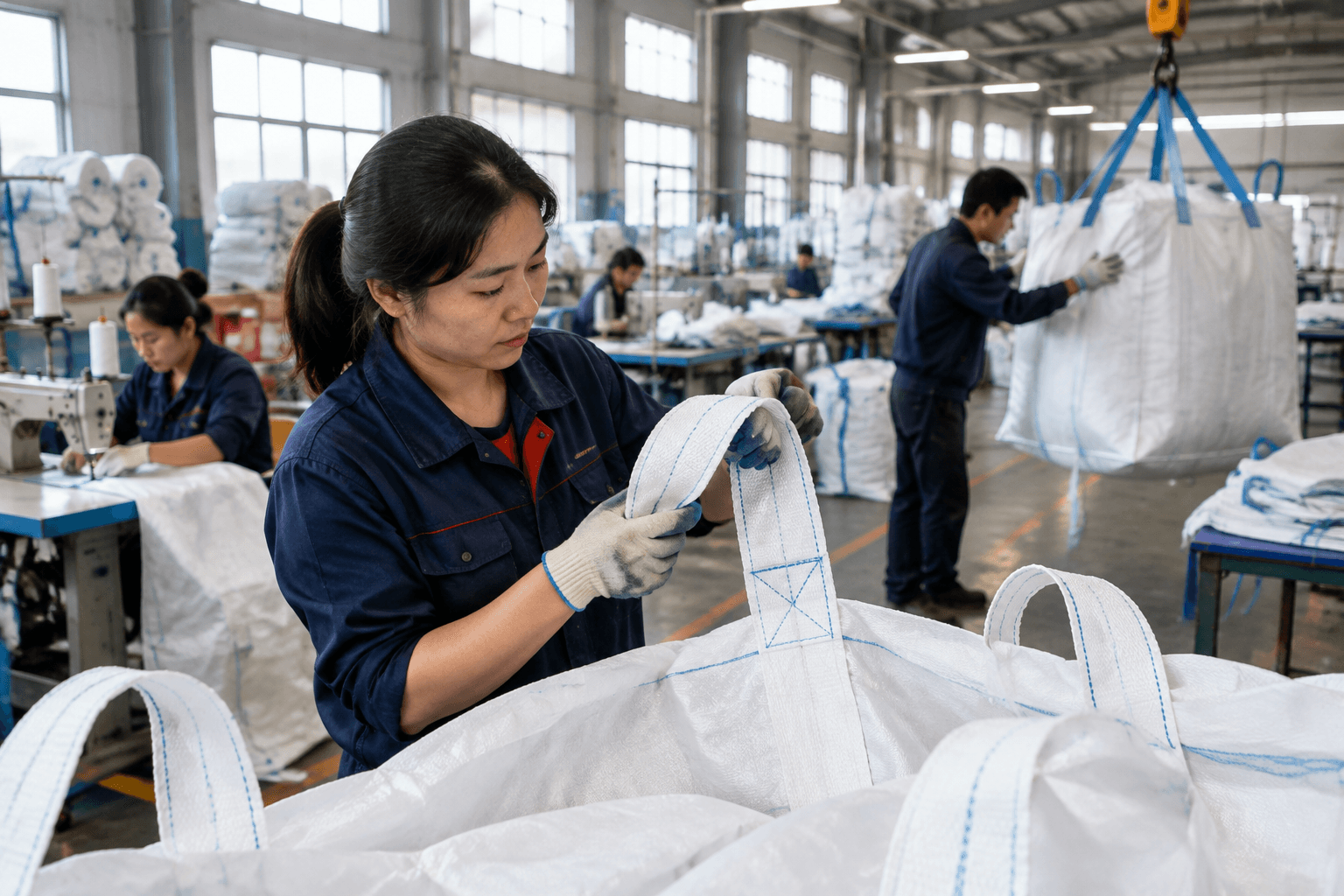
Choosing the Right Bulk Bag Manufacturer for Safer, More Efficient Operations
Learn how to specify bulk bags, evaluate manufacturers, and validate quality and supply reliability to reduce operational risk and support safer, more efficient handling.
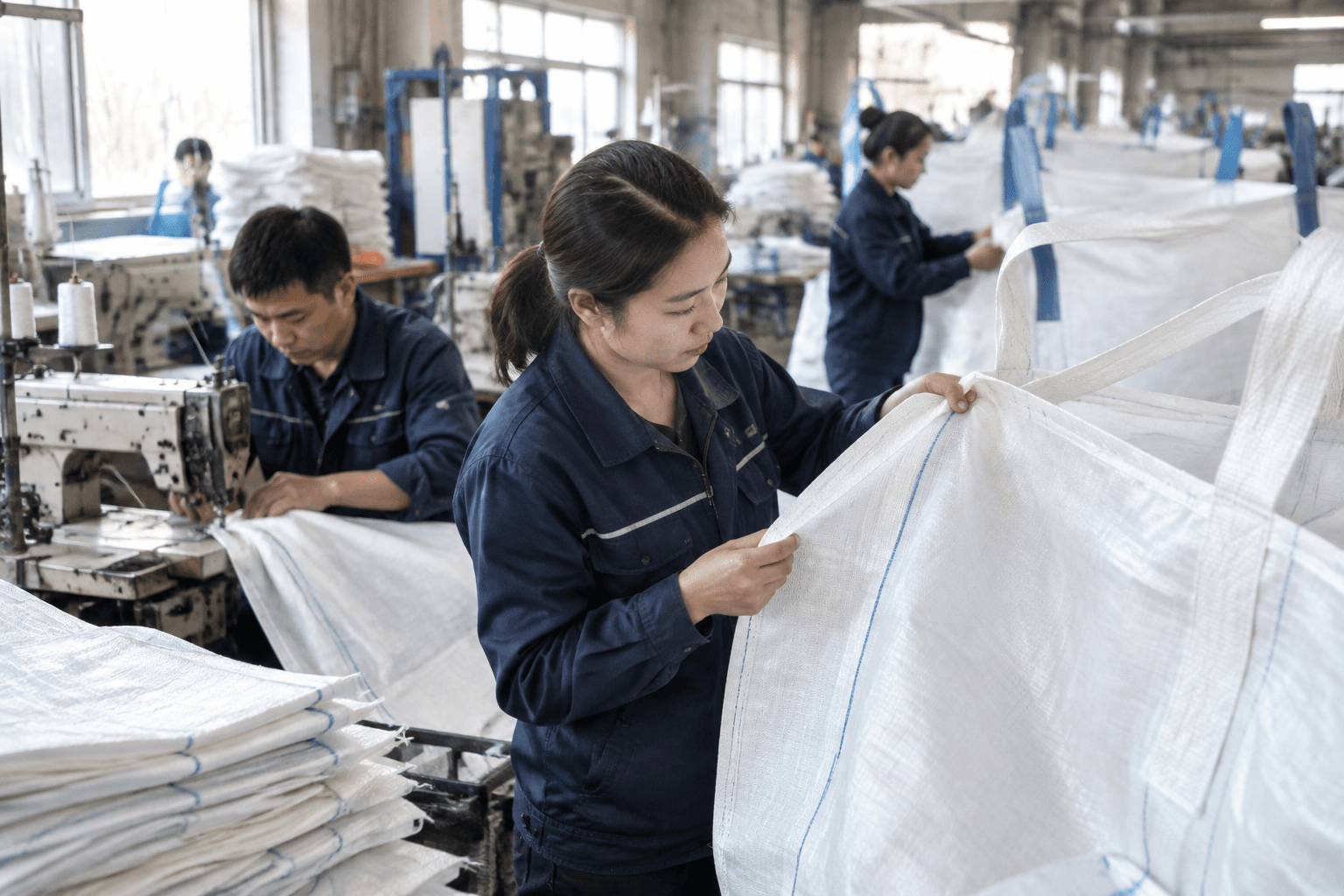
The 140th Canton Fair: New Trends in the Export Market for FIBC Bulk Bags, Jumbo Bags, and PP Woven Packaging
Explore how export buyers can evaluate FIBC bulk bags and PP woven packaging beyond unit price. Get practical guidance on specifications, supplier verification, sustainability requirements, and RFQs—and prepare your next sourcing conversation with COSEK.
Want to know more?
Get in touch with us for more information about our services and products.