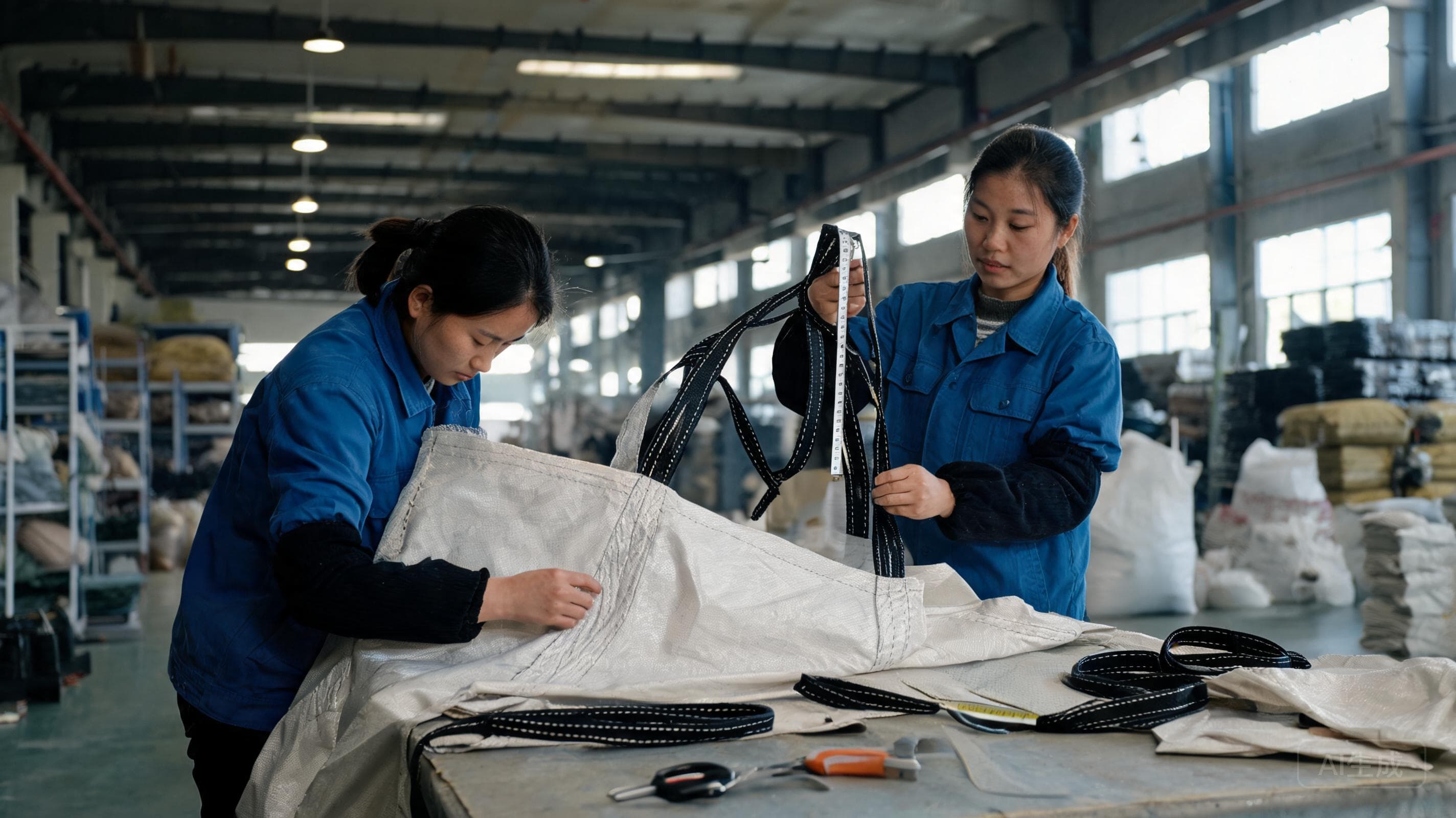
Choose the Right FIBC Bulk Bag Supplier for Safer, More Reliable Packaging
RUNCHEN
AuthorWith more than 25 years of experience in FIBC bulk bag manufacturing and sales, RUNCHEN operates its own production facility with stable batch capacity. We specialize in FIBC bulk bags, jumbo bags, ton bags, and customized industrial packaging solutions.
When Bulk Bag Problems Put Your Operation at Risk
For procurement and operations teams, a bulk bag is more than a container. Leaks, moisture ingress, inconsistent specifications, or a poor fit with filling and discharge equipment can disrupt an entire process. The stakes are higher when handling hazardous or static-sensitive materials, where an unsuitable design can create safety and compliance concerns.
Consequences can include rework, production delays, damaged goods, rejected shipments, and avoidable costs. These problems often start with a mismatch between the bag design and the application—not simply with the purchase price.
Packaging decisions involve a growing range of performance, safety, and supply considerations. WEPACK 2025, for example, promotes a gathering of more than 100 packaging experts addressing over 300 packaging issues. For buyers, that breadth reinforces the value of a structured evaluation. This guide explains how to compare FIBC designs, verify requirements, and prepare for a qualified quotation.
Start with the Application, Not the Bag Catalogue
Before comparing products, define what the bag must contain and how it will be used. Document the material’s particle size, density, flow behavior, moisture sensitivity, and any food-contact, hazardous-material, or electrostatic-control requirements. These details influence fabric, construction, liner, closure, and discharge choices.
Map the full process: filling, storage, lifting, transport, discharge, and whether the bag will be disposed of or reused. Confirm target capacity and dimensions, lifting configuration, filling and discharge spouts, liner requirements, and storage conditions. Include the equipment and operating practices the bag must accommodate.
When requesting a price, ask the supplier to state its assumptions and identify unanswered questions. A quote based on incomplete specifications may look precise while leaving critical application risks unresolved.
Match FIBC Construction to Material and Handling Requirements
Compare U-panel, circular, and other construction options in terms of strength, shape retention, filling method, and available warehouse space. A bag that stands and stacks well in one operation may be a poor fit for another, so evaluate the design within your actual handling process.
Assess coated or uncoated fabric, liners, seams, and closures against moisture exposure, leakage risk, and product-protection needs. Review the safe working load (SWL) and safety factor alongside lifting methods, handling frequency, and applicable regulations. Do not assume that a similar-looking bag has the same capacity or performance.
For smaller quantities or specialized handling, the COSEK Small Bulk Bag may be worth evaluating. Confirm its capacity and configuration against your material, equipment, and workflow before selecting it.
Select a Bag Design for Each Product Category
Use product categories as a starting point, not as a substitute for a specification review. Each proposed bag still needs to match your material, handling conditions, and documentation requirements.
- General industrial materials: Consider the COSEK White General-Purpose FIBC Bulk Bag. Confirm the dimensions, load rating, and discharge configuration your operation requires.
- Food products: Review the COSEK White and Red Food-Grade Bulk Bag or the COSEK Light Blue Food-Grade Bulk Bag with Visible Contents, intended for applications such as sugar, flour, and grain. Verify food-contact documentation and cleanliness controls, and determine whether visible contents are useful in your workflow.
- Moisture-sensitive grain, feed, or chemical raw materials: Assess the COSEK Black Moisture-Proof Bulk Bag. Specify the level of moisture protection required; do not rely on color or a product name as evidence of performance.
- Hazardous materials: Evaluate the COSEK White UN Certified Dangerous Goods FIBC Bulk Bag. Confirm that its certification and packaging instructions align with the specific material and intended transport conditions.
- Cleanroom electronics and static-sensitive materials: Assess the COSEK Black Anti-Static Bulk Bag for Cleanroom Electronic Components Packaging. Confirm the electrostatic-protection classification required for your application.
- Controlled discharge and a stable square footprint: Compare the COSEK Brown Square Bottom FIBC Bulk Bag with other configurations suited to your equipment and storage needs.
- Liquid-sensitive or leakage-prone contents: Review the COSEK White Cylindrical Leak-Proof Bulk Bag and define the containment performance required under your handling conditions.
- Integrated design requirements: Consider the COSEK Light Blue Integrated FIBC and clarify which components or functions are integrated into the requested configuration.
Build Safety and Compliance into the Specification
Separate general-purpose packaging needs from regulated applications. Food-contact, dangerous-goods, and electrostatic-control requirements call for specific documentation and verification. Request current test reports, product records, traceability information, and evidence that the proposed configuration is appropriate for its intended use.
For UN bags, confirm the material classification, filling and closure instructions, and transport conditions with qualified compliance personnel. Check certification against the actual material and use; do not treat it as blanket approval for every application.
Supplier due diligence should also consider factory safety and worker conditions. GOTS implementation guidance, for example, discusses monitoring conditions and preparing first-aid facilities for heat-related emergencies. Use applicable standards and audits to assess relevant supplier practices; this guidance does not certify an FIBC product.
Finally, agree how changes to fabric, dimensions, liners, printing, or production sites will be communicated and approved. Change control helps protect consistency across repeat orders.
Assess Supplier Capability Beyond the Unit Price
Compare total landed cost, including freight, packaging, inspection, storage, rejected units, and the operational cost of bag failure or poor fit. A lower unit price may not be the lower-cost choice if it increases handling time, damage, or rework.
Ask about production capacity, lead times, minimum order quantities, quality-control checkpoints, sample availability, and contingency planning. If your application requires custom dimensions, printing, liners, or spouts, confirm that the supplier can reproduce the approved specification consistently across repeat orders.
Request references or application examples relevant to your material and industry rather than relying on broad experience claims. Clarify quotation validity, payment terms, delivery responsibilities, and the process for addressing nonconforming goods before placing an order.
Use Market Signals to Inform Procurement, Not Replace Verification
Packaging exhibitions such as WEPACK 2025 give industry participants a place to discuss operational challenges and emerging solutions. Coverage from Advantage Austria’s AUSTRIAN BUSINESS IN CHINA can also provide context on cross-border business and supplier markets. Neither source verifies a specific supplier’s claims or a particular bag’s performance.
A market forecast for bulk bag discharge equipment cites 3.20% growth through 2032. Treat this as directional context for handling-system investment, not evidence that a particular FIBC will meet your requirements.
Use market information to frame questions about automation, discharge compatibility, and supply resilience. Then validate the answers through specifications, samples, and documented tests.
Validate the Bag Before Committing to Volume
Request a sample or pilot order that matches the proposed production specification, including fabric, seams, liner, closures, and printing. A sample that differs from the final configuration cannot provide a reliable basis for approval.
Test filling, lifting, stacking, storage, transport, and discharge under representative operating conditions. Define measurable acceptance criteria in advance, such as dimensions, weight, safe working load, leakage or moisture performance, cleanliness, and equipment compatibility.
Include operations, quality, safety, and procurement stakeholders in the review. Document results, corrective actions, and the approved sample so future orders can be checked against the same standard.
Make the Business Case with Evidence
Establish a baseline for packaging cost, damage rates, filling and discharge time, handling incidents, and rejected shipments. Use customer-specific data to estimate the value of fewer damaged loads, less repacking, improved line efficiency, or better storage utilization.
Avoid relying on generic ROI promises. Ask for comparable case evidence and confirm that the materials, process, and operating conditions match your own. Supplier audits, product test records, and documented customer outcomes can inform your decision; GOTS implementation material and Advantage Austria business coverage provide context, not FIBC performance case studies.
After implementation, set a review period and compare actual results with the approved baseline. This helps determine whether the selected design is delivering the expected operational value.
A Practical FIBC Supplier Shortlist Checklist
- Does the supplier understand your product, operating environment, and applicable safety or compliance requirements?
- Can the supplier document the proposed bag’s materials, construction, load rating, and relevant test or certification status?
- Are filling, lifting, storage, and discharge requirements reflected in the specification?
- Can the supplier provide samples, a pilot run, quality records, and a clear change-control process?
- Are lead time, order quantity, landed cost, and after-sales support suitable for your operation?
- Can the supplier explain how its recommendation differs from alternatives and why it fits your application?
Request an Application Review and Tailored Quote
For a useful recommendation, prepare details about your material, target capacity, dimensions, handling process, moisture or contamination concerns, and any food-contact, dangerous-goods, or electrostatic requirements. Include expected order volume, delivery destination, required delivery window, and customization needs. These details give a supplier a stronger basis for recommending a product, sample, specification review, or quotation.
Confirm fit and documentation before scaling orders, and choose a supplier prepared to discuss performance, consistency, and total operating value. Contact our team to review your FIBC application and request a tailored recommendation and quote.
Related News
Other news you might be interested in

Choosing the Right FIBC Supplier: A Practical Guide to Safer, More Reliable Bulk Packaging
Compare FIBC options, supplier capability, documentation, and application fit. Use this practical checklist to prepare a clear brief and validate your choice before scaling an order.
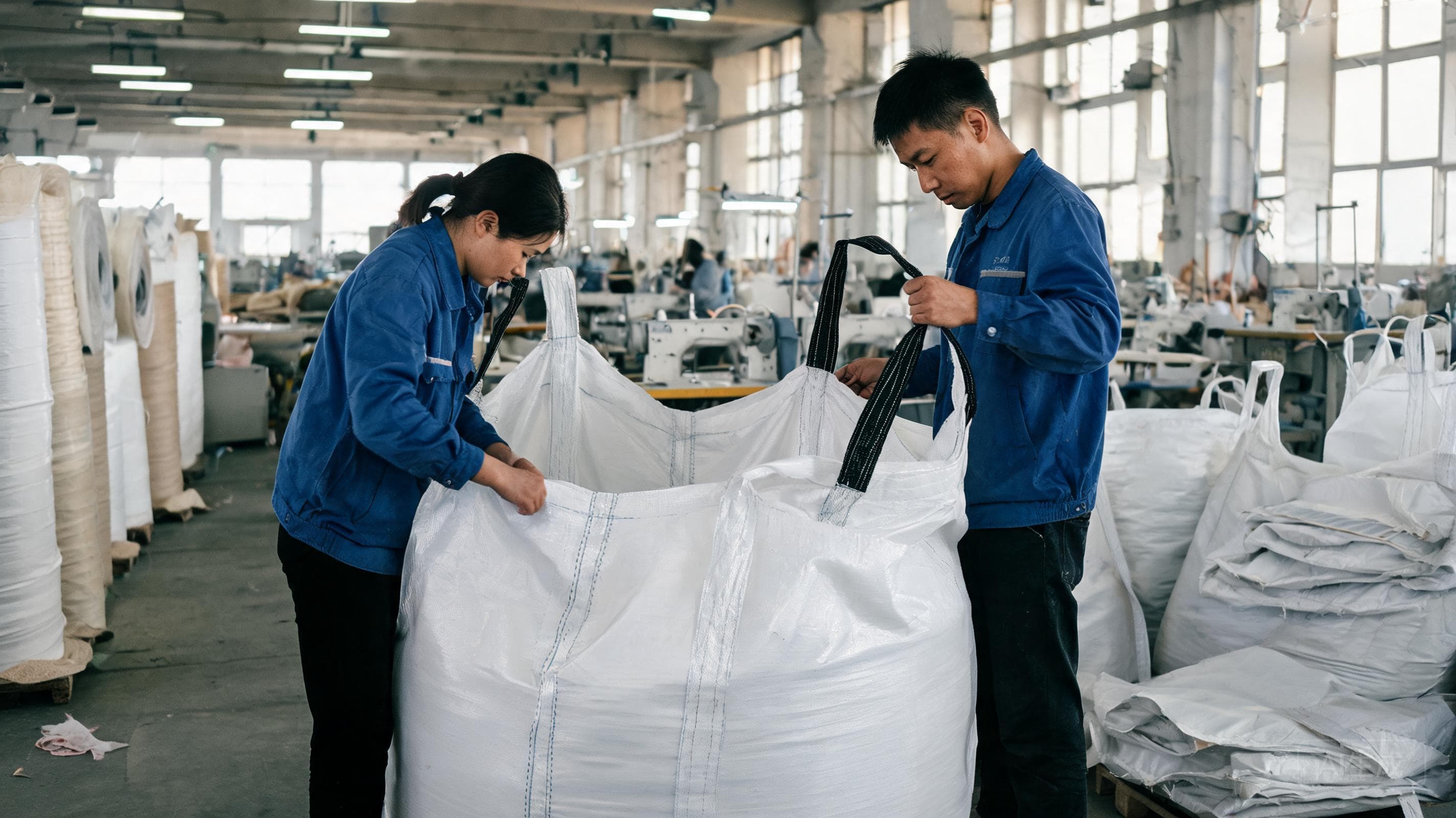
How to Choose a Bulk Bag Manufacturer for Safer, More Reliable Packaging
Learn how to assess FIBC manufacturers, match bag construction to your product and process, verify compliance, and compare total cost before requesting a tailored quotation.
Want to know more?
Get in touch with us for more information about our services and products.