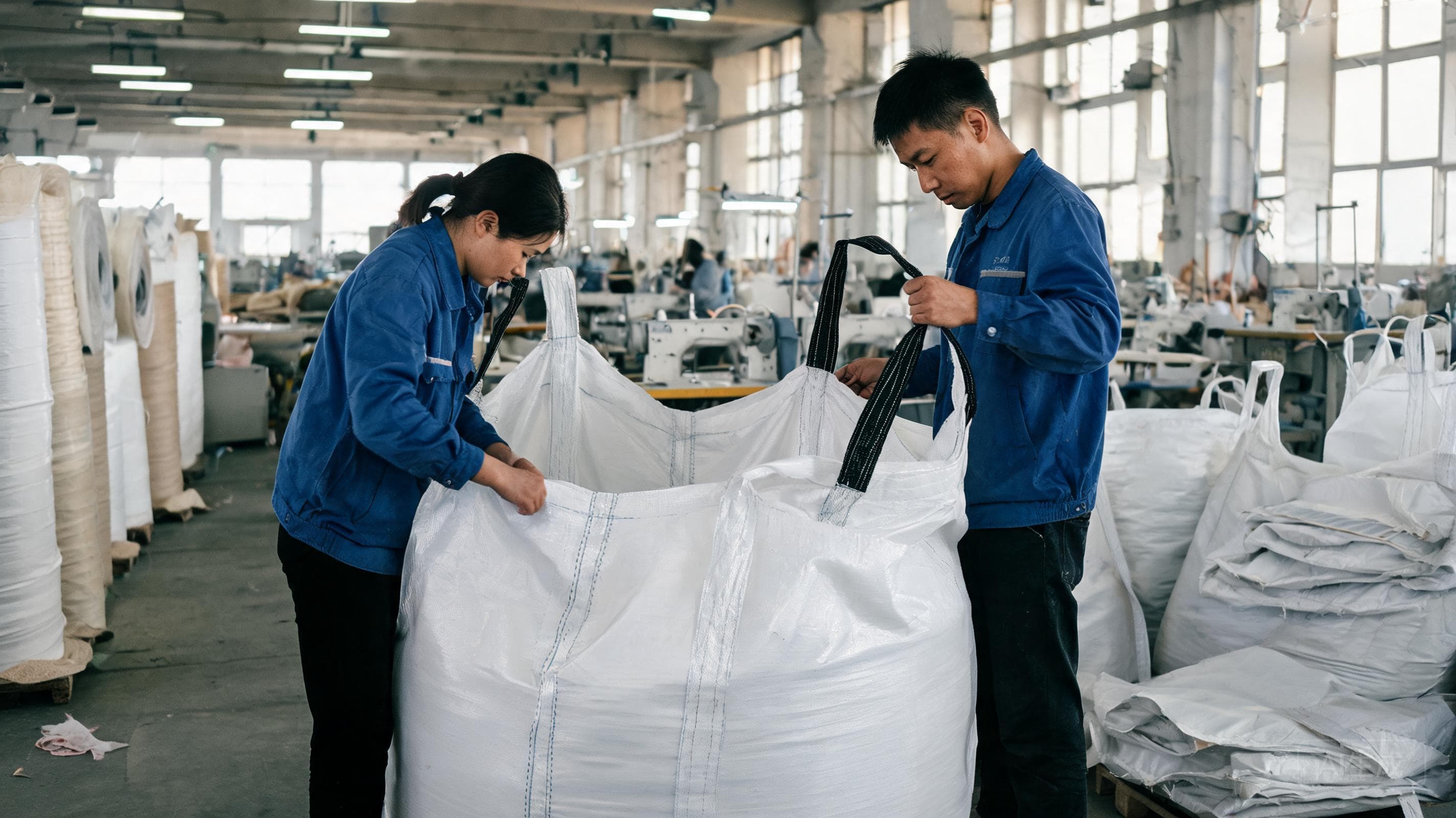
How to Choose a Bulk Bag Manufacturer for Safer, More Reliable Packaging
RUNCHEN
AuthorWith more than 25 years of experience in FIBC bulk bag manufacturing and sales, RUNCHEN operates its own production facility with stable batch capacity. We specialize in FIBC bulk bags, jumbo bags, ton bags, and customized industrial packaging solutions.
When a bulk bag fails, the cost goes beyond the bag
A leaking seam, moisture-damaged contents, contamination, static discharge, or handling incident can disrupt an entire operation. Even an intact bag can cause delays if its dimensions, filling configuration, or discharge design do not suit the product and equipment. The result can be lost product, interrupted production, extra labor, and avoidable safety risks.
Sourcing teams need to balance product protection, worker safety, compliance, lead times, and landed cost—not simply compare unit prices. This guide offers a practical way to assess a bulk bag manufacturer and match FIBC specifications to your operating requirements.
Start with the product, process, and risk profile
A reliable specification begins with what the bag will contain and how it will be used. Document the material’s particle size, flow behavior, bulk density, moisture sensitivity, food-contact requirements, and any hazardous or combustible properties. These details influence fabric, closures, liners, construction, and the controls needed during filling and discharge.
Map the complete handling cycle: filling, lifting, storage, transport, discharge, and disposal or reuse. Note conditions that could affect performance, including outdoor storage, humidity, temperature, automated filling lines, and potential exposure to electrostatic discharge.
Before requesting a quotation, provide the manufacturer with practical information: product samples or data sheets, target capacity, filling and discharge methods, and destination-market requirements. Complete application details help the manufacturer propose a relevant specification and accurate price.
Match FIBC construction to the application
Fabric, coating or liner options, seams, lifting loops, top and bottom configurations, and printing should be selected according to the material, equipment, handling conditions, and protection requirements.
- For general industrial use, consider the COSEK White General-Purpose FIBC Bulk Bag as a starting point for a requirements-based specification.
- For square-bottom handling or stacking needs, evaluate the COSEK Brown Square Bottom FIBC Bulk Bag against your filling, palletizing, and storage setup.
- For smaller-volume applications, assess the COSEK Small Bulk Bag and confirm its capacity and compatibility with the intended workflow.
- For a cylindrical design where leakage control is a priority, review the COSEK White Cylindrical Leak-Proof Bulk Bag. Clarify what the leak-proof specification covers, including the product, closures, and relevant testing requirements.
Ask the manufacturer to explain how the proposed construction addresses your operating conditions. A product name alone cannot establish suitability for a particular material or process.
Specify protection for moisture, food, and sensitive materials
Protection needs vary by product and destination. For moisture-sensitive grain, feed, or chemical raw materials, examine the COSEK 黑色防潮吨包袋 粮食/饲料/化工原料防水包装 and confirm the level of moisture protection your application requires. Discuss exposure duration and conditions rather than relying on a general description.
For food and agricultural products, evaluate the COSEK White and Red Food-Grade Bulk Bag and verify the food-contact documentation relevant to your target market. For visible contents and product identification, consider the COSEK 浅蓝色食品级吨包袋 可见内容物设计 食用糖/面粉/谷物集装袋, checking that visibility and food-contact requirements are both addressed.
Where an integrated construction is needed, review the COSEK Light Blue Integrated FIBC and confirm its design details and compatibility with your filling and discharge equipment.
Material selection, cleanliness, storage, and handling controls all contribute to product protection. Do not rely on bag color or a product name as proof that a specific requirement has been met.
Address hazardous goods and electrostatic risk before production
For dangerous goods, consider the COSEK White UN Certified Dangerous Goods FIBC Bulk Bag. Verify that the exact bag design, certification, and intended use meet applicable transport requirements. Certification for one design or application should not be assumed to cover another.
For cleanroom or electronic-component packaging, assess the COSEK Black Anti-Static Bulk Bag for Cleanroom Electronic Components Packaging against your site’s electrostatic-control procedures. Ask the manufacturer to explain applicable test methods, documentation, handling instructions, and limits of use.
A product label is not a substitute for application-specific verification. Review worker safety throughout filling and discharge, including grounding or bonding procedures where applicable, equipment safeguards, and staff training.
Use compliance and supplier controls to reduce procurement risk
Build a specification checklist covering dimensions, safe working load, safety factor, fabric and seam requirements, closures, printing, packaging, inspection, and required documents. Confirm which certificates and test reports apply to the exact product and shipment, and check that product names, ratings, and traceability details are consistent.
Responsible sourcing also involves supplier practices, not just product claims. Guidance such as Global Organic Textile Standard (GOTS) implementation material highlights workplace conditions and preparedness, including monitoring conditions and having first-aid facilities ready for heat-related emergencies. Use this as a prompt to ask suppliers about their operational controls.
Ask how the manufacturer manages incoming materials, production consistency, in-process checks, finished-product inspection, nonconformities, and corrective actions. Before a high-volume order, confirm export experience, communication practices, sample approval steps, production capacity, and contingency plans.
Evaluate total cost and supply reliability, not just the quoted price
Compare total cost of ownership, including bag price, filling-line efficiency, product loss, storage utilization, transport, handling labor, damage claims, and disposal or reuse. A lower unit price may not be the lower-cost choice if the bag slows the line or increases product loss.
Request a quotation that separates specification assumptions from commercial terms. Clarify minimum order quantity, lead time, sample costs, packaging, and delivery basis so you can compare offers consistently.
Use trial orders or controlled production runs to assess handling performance and product protection before scaling up. Market commentary can provide context, but it should not replace supplier verification. A forecast for the bulk-bag discharge equipment market is not a direct FIBC demand forecast.
Trade and market sources, including Advantage Austria’s AUSTRIAN BUSINESS IN CHINA coverage, can support background research. They are not a substitute for verifying a specific manufacturer’s capabilities, quality controls, and delivery performance.
A practical supplier comparison framework
Score shortlisted manufacturers on application understanding, specification support, compliance documentation, quality controls, customization capability, lead-time reliability, and responsiveness. Ask each supplier to identify assumptions and risks in the proposed design instead of accepting a price for an underspecified bag.
Request samples or drawings for technical review, then test representative bags under realistic filling, lifting, storage, and discharge conditions. Confirm how revisions are controlled so approved samples, production specifications, and repeat orders remain aligned.
If a supplier cites external case studies or market references, ask for measurable evidence such as reduced damage, fewer handling issues, or improved line efficiency. Do not infer a return on investment from a publication or certification guide alone.
Turn the right specification into a lower-risk sourcing decision
Define the product and process, identify risks, choose the appropriate FIBC construction, verify compliance, test samples, and validate commercial terms. The best bulk bag is designed and verified for your material, equipment, logistics route, and regulatory context.
Bring procurement, operations, quality, and EHS stakeholders together before requesting a production quotation. Share your product type, target capacity, filling and discharge method, destination market, and any moisture, food-contact, hazardous-goods, or static-control requirements so the manufacturer can assess the application accurately.
Related News
Other news you might be interested in
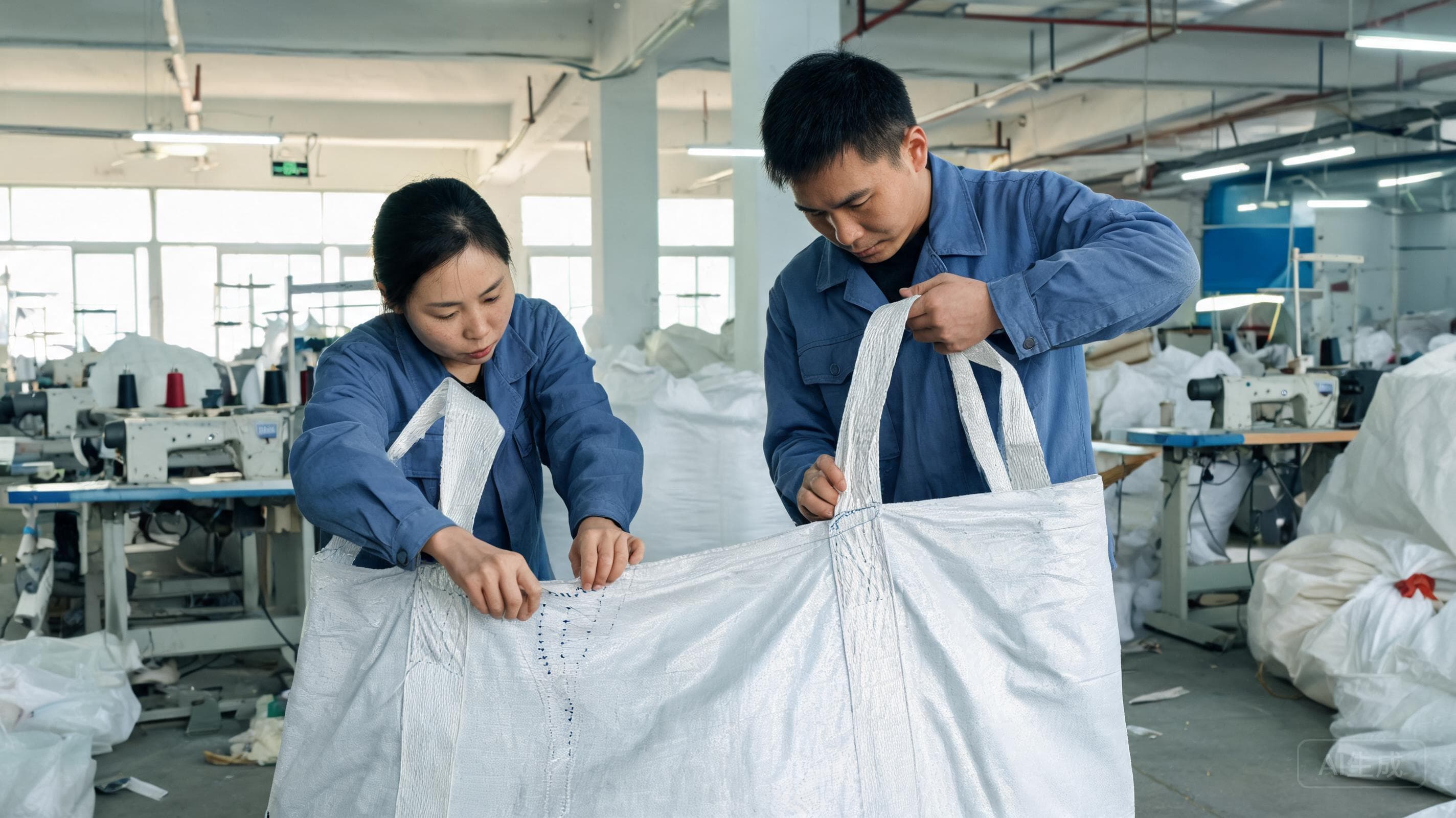
How to Choose a Bulk Bag Manufacturer That Protects Product, People, and Profit
Choose a bulk bag manufacturer with confidence. Learn how to match bag design to your application, verify quality and safety controls, and compare whole-life costs before ordering.
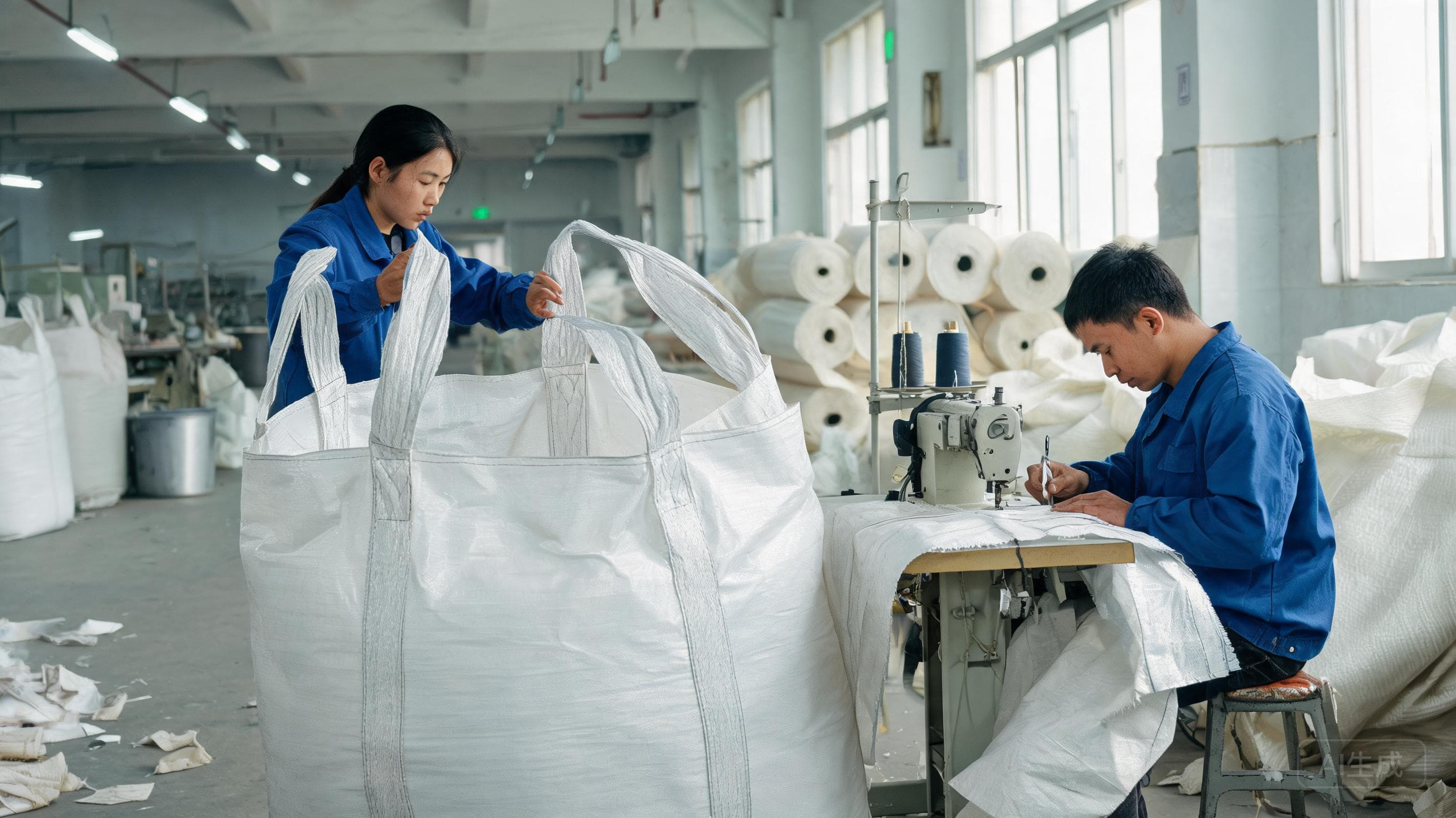
How to Choose a Reliable FIBC Manufacturer for Safer, More Efficient Bulk Packaging
Compare FIBC manufacturers on application fit, safety, quality controls, and total cost. Use this practical checklist to define requirements, validate performance, and request a tailored quote.
Want to know more?
Get in touch with us for more information about our services and products.