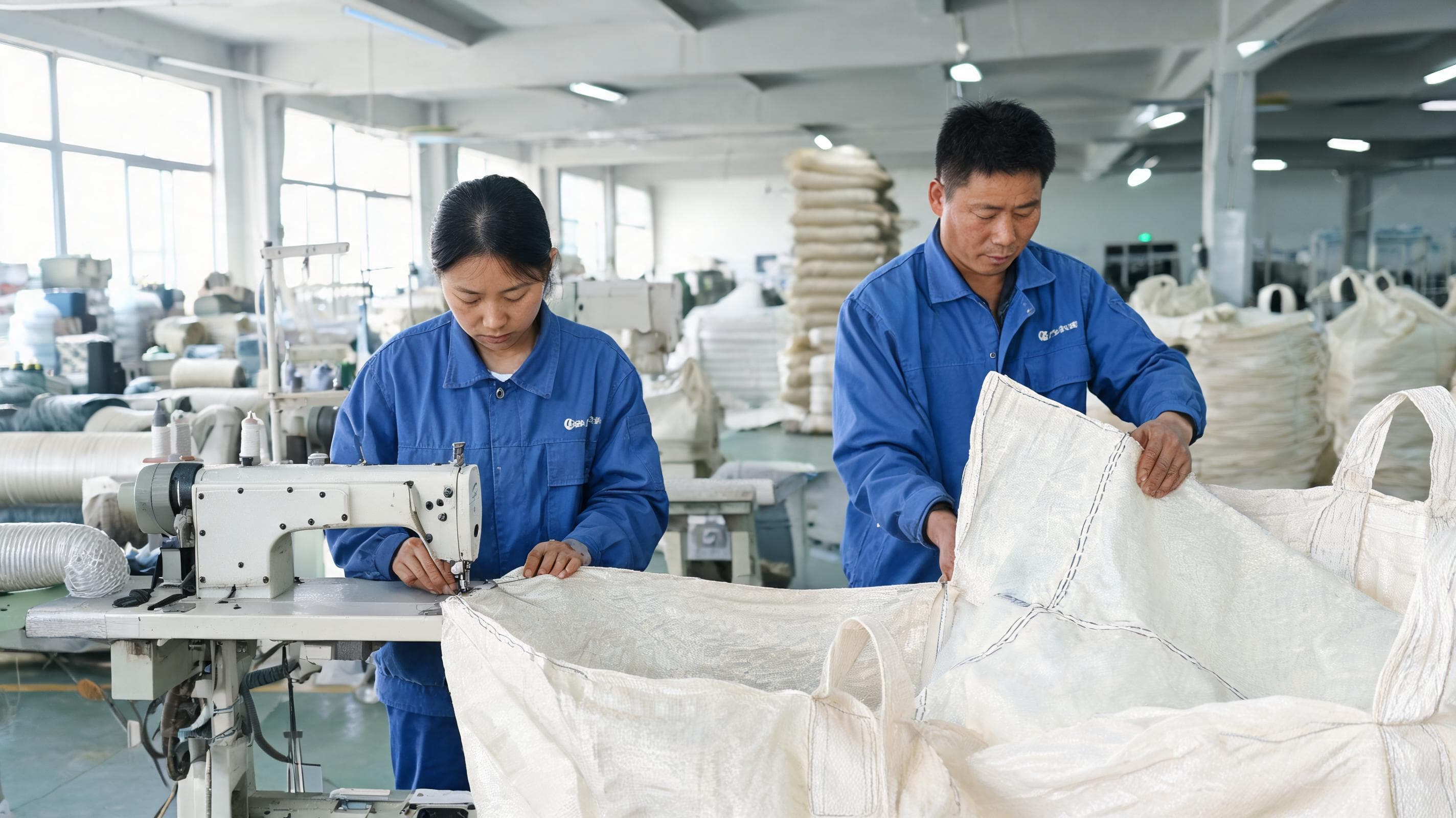
Choosing a Bulk Bag Manufacturer: A Practical Guide to Safer, More Reliable FIBC Sourcing
RUNCHEN
AuthorWith more than 25 years of experience in FIBC bulk bag manufacturing and sales, RUNCHEN operates its own production facility with stable batch capacity. We specialize in FIBC bulk bags, jumbo bags, ton bags, and customized industrial packaging solutions.
When a Bulk Bag Failure Becomes a Production Problem
A bulk bag that leaks, tears, or fails to perform as expected can quickly become more than a packaging issue. Procurement and operations teams may face product loss or contamination, dust, damaged goods, handling delays, inconsistent specifications, and uncertainty about whether the bag suits its contents and transport route.
Packaging decisions affect purchasing, production, quality, logistics, and safety. Selecting an FIBC is an operational decision—not just a matter of comparing unit prices.
A poor fit can lead to cleanup and disposal costs, production interruptions, rejected shipments, worker exposure, and reduced customer confidence. A sound sourcing process starts by defining the application, then qualifying a manufacturer against the requirements that matter. This guide offers a practical framework for assessing bulk bag needs before approving a specification or placing an order.
Start with the Application, Not the Catalog
Before comparing products, document how the bag will be used. Capture the product type, bulk density, flow characteristics, moisture sensitivity, filling and discharge methods, storage conditions, transport mode, and whether the bag is intended for reuse. Include the route from filling through final delivery, since every stage can affect construction and handling requirements.
Bag dimensions, safe working load (SWL), safety factor, lifting configuration, liner requirements, and discharge features all influence compatibility with your process. Confirm that the bag works with the filling equipment, lifting attachments, storage footprint, and unloading method at your site. Specify requirements for the actual application rather than relying on a general-purpose description.
Involve production, quality, EHS, logistics, and procurement early. Operators and warehouse teams may identify practical constraints that are not obvious from a purchasing specification. A clear requirements brief also helps COSEK recommend a suitable construction rather than defaulting to a broad, general-purpose option.
Match Bag Design to Product and Process
Different workflows call for different bag formats. For routine dry-material handling, the COSEK White General-Purpose FIBC Bulk Bag can be a starting point for evaluating capacity, fabric, lifting loops, and filling or discharge requirements. Confirm the specification against your material and equipment before requesting a sample or production order.
Where base stability and storage footprint matter, consider the COSEK Brown Square Bottom FIBC Bulk Bag. Its form may suit applications where bag placement in storage or during handling is an important operating requirement. Verify dimensions and loaded behavior within your own storage and transport setup.
For leak-sensitive applications, the COSEK White Cylindrical Leak-Proof Bulk Bag is an option to assess. Confirm product compatibility and the containment performance required; a product name alone does not establish suitability for every material or operating condition.
Smaller batches, sampling, or lower-volume workflows may be better served by the COSEK Small Bulk Bag. A smaller format can improve handling efficiency when a full-size FIBC does not match the quantity being moved. The COSEK Light Blue Integrated FIBC is another option to evaluate when an integrated construction or distinctive appearance fits the application.
Share your product and process details with COSEK to discuss product fit and request a quotation based on your requirements.
Address Food, Moisture, and Visibility Requirements
Food-related packaging decisions require more than a product label. Confirm documented material suitability, manufacturing controls, cleanliness expectations, traceability, and applicable regulatory requirements for your product and destination market. Request relevant specifications and supporting documentation before approval.
The COSEK White and Red Food-Grade Bulk Bag can be evaluated for food-related applications, subject to confirmation of required specifications and documentation. For buyers considering a visible-contents design for sugar, flour, or grain handling, the COSEK 浅蓝色食品级吨包袋 可见内容物设计 食用糖/面粉/谷物集装袋 is another product to discuss. Confirm that its construction and visibility meet the needs of the material, process, and applicable requirements.
Moisture risks can arise during outdoor staging, transit, condensation, or warehouse storage. Map where exposure may occur and determine the protection needed for the product and route. The COSEK 黑色防潮吨包袋 粮食/饲料/化工原料防水包装 may be considered for grain, feed, or chemical-material packaging, but verify that its actual moisture-protection construction meets your use case.
Plan for Static Control and Dangerous Goods Compliance
Static-control needs depend on the material, environment, filling and discharge process, and site procedures. Work with qualified safety personnel to determine the applicable bag type and grounding practices for the specific operation. The COSEK Black Anti-Static Bulk Bag for Cleanroom Electronic Components Packaging is an option to assess when static control and protection of electronic components are key considerations.
For regulated dangerous goods, the COSEK White UN Certified Dangerous Goods FIBC Bulk Bag may be suitable for evaluation. Before ordering, check the certification scope, packaging instructions, product classification, and shipment conditions against the intended use. Request current certification and technical documentation for the specific bag. A product name alone does not establish suitability for a particular shipment.
Include packaging selection in broader factory safety planning, including hazard controls and safe operating procedures. Confirm that bag handling, filling, and discharge procedures account for the hazards present at your site.
Evaluate the Manufacturer’s Quality and Safety Controls
Ask how the manufacturer controls and records each production stage: incoming materials, weaving, coating or lamination, sewing, inspection, and finished-goods release. Request relevant test reports, traceability details, inspection criteria, and a clear explanation of how nonconforming product is identified and managed.
Assess whether the supplier can maintain consistency across repeat orders, communicate specification changes, and provide production updates. These controls matter when packaging is tied to production continuity or customer requirements. Ask how changes to materials, dimensions, or construction are reviewed and approved.
Supplier due diligence can also include workplace conditions. GOTS implementation guidance refers to monitoring conditions and having first-aid facilities ready for heat-related emergencies. This highlights how worker welfare and site safety can form part of broader supplier audits. GOTS guidance is relevant only when the materials, certification scope, and customer requirements make it applicable; it is not a universal FIBC certification.
Use Samples and Trials to Reduce Buying Risk
Approve a written specification before sample production. As applicable, it should cover dimensions, fabric, SWL, safety factor, loop design, liner, seams, printing, and closure details. A documented specification gives both parties a shared reference for the sample, trial, and production order.
Define trial criteria in advance. These may include filling performance, discharge behavior, compatibility with lifting equipment, stacking or storage behavior, product protection, and operator feedback. Gather input from the people who fill, move, store, and empty the bags—not only the purchasing team. Usability issues often emerge during routine handling.
Agree how results will be recorded and what changes are needed before production approval. To begin a technical review, share your current bag specification, product details, and estimated annual demand with COSEK. This helps identify missing information and determine whether a sample or further validation is appropriate.
Compare Total Cost and Operational Return
Unit price is only one part of the cost. Consider product loss, labor, filling and discharge speed, storage efficiency, damage claims, disposal, and order variability. A lower-priced bag may not be the most economical choice if it leads to additional handling or product loss. A higher-priced option should likewise be justified by measurable performance in your operation.
Build a comparison using your own baseline data rather than generic savings claims. Potential pilot measures include leakage incidents, handling interruptions, load stability, and packaging-related rejection rates. Define how each measure will be tracked, the assumptions used, and the review period.
References such as GOTS implementation guidance, Austrian Business in China, and Joincare Pharmaceutical Group Industry Co., Ltd. 2023 may provide context for broader sourcing or industry discussions. However, the available materials do not provide directly attributable FIBC performance or return-on-investment figures. Support any claimed return with trial data, documented assumptions, and a defined measurement period.
Assess Supply Reliability and Customization Capability
Before placing a recurring order, review production capacity, lead times, minimum order quantities, forecast flexibility, export experience, and contingency planning. Ask how the manufacturer manages artwork approval, custom dimensions, special colors, liners, documentation, and changes between purchase orders.
Responsiveness and problem resolution matter alongside price, especially when packaging is connected to production continuity. Discuss who will manage specification questions, production updates, and escalations. For cross-border sourcing discussions, publications such as Austrian Business in China can provide context, but verify market claims against current, relevant data.
For safety-critical, regulated, or high-volume applications, consider requesting a manufacturing review or completing a supplier questionnaire. These steps help establish whether the manufacturer’s controls and capacity align with your sourcing needs before you commit to repeat orders.
A Practical Bulk Bag Supplier Qualification Checklist
- Confirm the product, application, capacity, filling and discharge method, storage conditions, and transport route.
- Verify the required construction, dimensions, SWL, safety factor, material compatibility, liner, and handling features.
- Request applicable quality records, test documentation, certification details, traceability information, and sample-approval procedures.
- Check food-contact, static-control, moisture-protection, or dangerous-goods requirements against the specific application and relevant regulations.
- Review production capacity, lead time, repeat-order controls, customization process, and escalation contacts.
- Define trial acceptance criteria and commercial measures before moving from sample to production.
Turn Your Packaging Specification into a Sourcing Conversation
The right FIBC fits your material, process, compliance needs, and supply plan—not simply the lowest-priced bag. COSEK’s range, from general-purpose and square-bottom bags to food-grade, anti-static, moisture-protection, leak-proof, small-format, and UN-certified options, provides a starting point for an application-specific discussion.
Prepare your product details, target capacity, filling and discharge method, destination market, and estimated order volume. COSEK can review your requirements, identify missing information, and discuss suitable specifications and validation needs before preparing a commercial proposal.
Related News
Other news you might be interested in
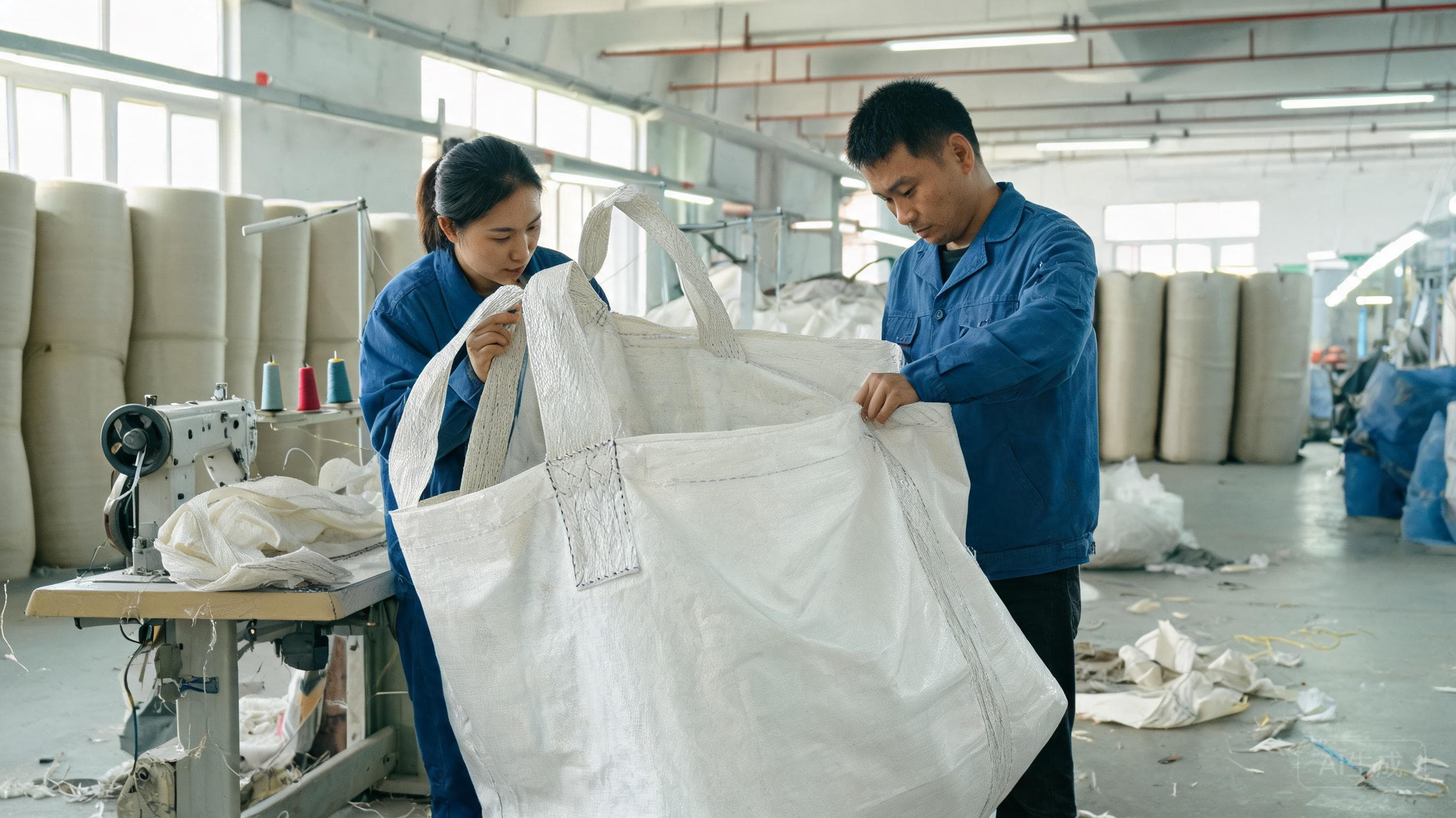
How to Choose the Right FIBC Manufacturer for Safer, More Reliable Bulk Packaging
Learn how to assess FIBC specifications, quality controls, documentation, and supplier capabilities to reduce sourcing risk and select bulk packaging suited to your operation.

How to Choose a Bulk Bag Manufacturer That Reduces Packaging Risk and Total Cost
Compare bulk bag manufacturers by application fit, verified compliance, quality controls, and total cost—not unit price alone. Use this checklist to qualify a supplier before scaling.
Want to know more?
Get in touch with us for more information about our services and products.