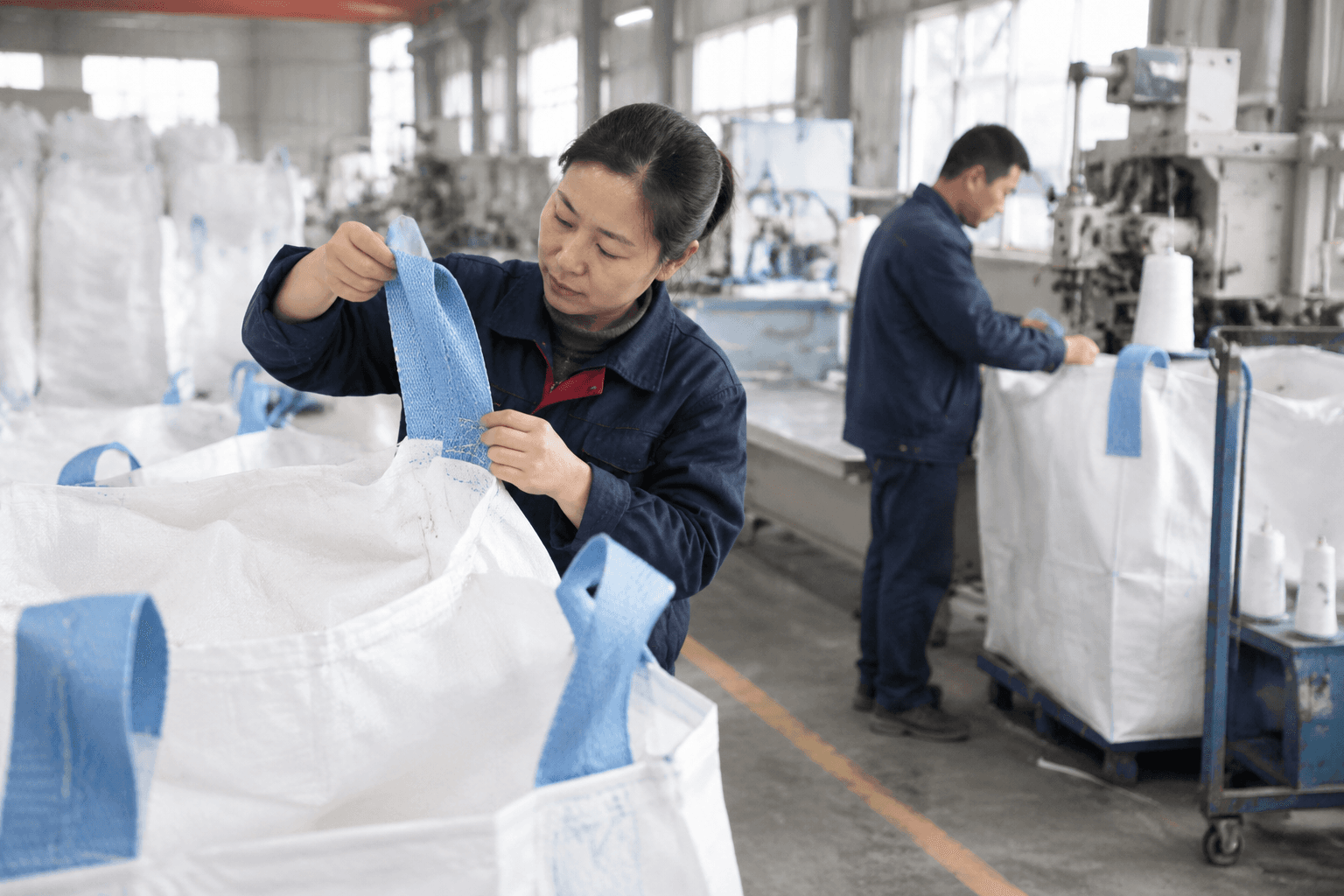
Choosing the Right FIBC Bulk Bag: A Procurement Guide for Safer, More Reliable Packaging
RUNCHEN
AuthorWith more than 25 years of experience in FIBC bulk bag manufacturing and sales, RUNCHEN operates its own production facility with stable batch capacity. We specialize in FIBC bulk bags, jumbo bags, ton bags, and customized industrial packaging solutions.
When packaging failures become supply-chain problems
For procurement, operations, and quality teams, a bulk bag is more than a line item. The wrong FIBC bulk bag can damage goods, create contamination concerns, delay shipments, complicate handling, and trigger costly supplier disputes. When bag design does not match the material, filling method, lifting equipment, or transport route, product loss and avoidable disruption can follow.
Logistics pressures make packaging reliability increasingly important. The 2024 ISTA China Annual Conference discussed the era of 100 billion parcels and the growth of circular packaging. While this is a logistics-sector signal rather than a direct measure of FIBC demand, it reinforces a practical procurement reality: packaging must perform consistently through storage, handling, and transport.
FIBC bulk bags offer an efficient way to move and store many dry bulk materials, but there is no one-size-fits-all configuration. Capacity, fabric, liner, loop design, filling method, discharge system, static-control needs, and certification requirements should all match the application.
This guide helps buyers turn a broad packaging requirement into a clear specification, a qualified supplier shortlist, and a lower-risk purchasing decision.
Start with the load, process, and destination
Start with the product, not the bag. Before requesting a quotation, document the material and how it behaves in your operation. Include target fill weight, bulk density, particle size, flow characteristics, moisture sensitivity, dust generation, contamination concerns, and any electrostatic risk.
Then map the complete handling cycle:
- How will the bag be filled?
- What lifting equipment will be used?
- Will bags be palletized, stacked, or stored outdoors?
- How will they be transported and unloaded?
- Is controlled discharge required?
- Will the bag be disposed of after use or considered for reuse under approved conditions?
Shipment conditions matter too. Export routes, container-loading practices, warehouse conditions, local regulations, customer requirements, and destination handling all influence the right FIBC specification. A bag suited to domestic forklift handling may not be appropriate for a long export journey, humid storage, or a tightly controlled production facility.
Ask each supplier to review the application before quoting. A low unit price is not a useful comparison when proposed bags differ in fabric weight, construction, lifting loops, liners, safety features, or documentation. Meaningful price comparisons start with a shared specification.
Match bag construction to the application
Once the application is defined, match the bag construction to the job. A complete FIBC specification should address capacity, dimensions, safe-handling requirements, loop configuration, fabric type, filling inlet, discharge outlet, liner needs, and printing or identification requirements.
These choices affect more than appearance. Appropriate dimensions can improve container utilization and warehouse stacking. The right filling and discharge configuration can reduce handling time and support cleaner product flow. Suitable fabric and liner selections can help protect moisture-sensitive or contamination-sensitive materials. Clear printing can support lot identification, handling instructions, and traceability.
Request a drawing or specification sheet with every quotation. This gives procurement, operations, and quality teams a practical way to compare proposed configurations and identify differences before placing an order.
For standard bulk-handling requirements, the COSEK White General-Purpose FIBC Bulk Bag can be a starting point for a specification discussion. Where storage or handling conditions favor a stable square-bottom format, the COSEK Brown Square Bottom FIBC Bulk Bag may provide a useful reference configuration. In either case, base the final selection on your material, equipment, target capacity, and shipment requirements.
Address static-control and cleanroom requirements
Evaluate static control early, particularly when handling fine powders, electronic components, sensitive materials, or products used in controlled environments. Do not assume every FIBC bulk bag provides the same level of electrostatic protection. Bag construction, intended use, grounding procedures, facility conditions, and handling practices all matter.
Ask the manufacturer to clarify the bag’s intended application, static-control design, available testing documentation, operating limitations, and handling precautions. Include your internal EHS and quality stakeholders in the review before finalizing a packaging decision.
For electronic components and cleanroom-related packaging requirements, consider the COSEK Black Anti-Static Bulk Bag for Cleanroom Electronic Components Packaging as a discussion point. Confirm that the proposed specifications align with your facility procedures, cleanliness expectations, product sensitivity, and documented safety requirements.
Early cross-functional review helps prevent a common problem: purchasing a bag that appears suitable in a product description but does not fit the site’s actual grounding, cleanliness, or material-handling process.
Verify compliance for dangerous-goods shipments
Dangerous-goods packaging decisions require careful review. Confirm the exact material classification and applicable transport requirements before selecting an FIBC. A product description alone is not evidence that a packaging configuration is appropriate for a specific shipment.
Request current certification and supporting documentation relevant to the intended application. Check whether the proposed bag configuration, use conditions, filling weight, handling method, and shipment mode match the documented requirements. If the bag will be used across multiple regions or transport modes, make sure the review addresses each applicable route and requirement.
The COSEK White UN Certified Dangerous Goods FIBC Bulk Bag may be considered for qualifying applications, subject to verification of the required certification, applicable regulations, and final product specifications. Build document review and shipment approval into your purchasing workflow rather than relying on a product name or general certification claim.
Evaluate manufacturers on quality, consistency, and evidence
A reliable FIBC supplier should be able to explain how quality is managed from incoming materials through finished-product inspection. Ask about raw-material controls, production checks, inspection procedures, traceability, nonconforming-product handling, and corrective-action processes.
For a meaningful supplier evaluation, request evidence relevant to your application:
- Applicable test reports and quality documentation
- Specification sheets and technical drawings
- Sample approval or pre-production sample options
- Traceability and lot-identification practices
- Production lead times and repeat-order controls
- References or relevant application experience, where appropriate
Compare suppliers against one consistent specification. If one quotation includes a liner, heavier fabric, a different loop design, or additional inspection requirements while another does not, the prices are not directly comparable.
Broad market statistics should be treated as background context, not proof of FIBC performance. For example, an aluminium-industry report may cite 130.4 million tonnes of metallurgical alumina output during a historical period, but that figure does not establish bulk-bag demand, bag quality, or the suitability of a particular FIBC design. Base procurement decisions on documented specifications and application-specific evidence.
Compare total cost of ownership, not just the quoted price
The lowest quoted bag price can become the highest operational cost if it contributes to slow filling, poor stackability, damaged product, difficult discharge, delayed shipments, or frequent quality claims. Evaluate total cost of ownership across the complete handling cycle.
Consider packaging cost, filling efficiency, labor time, forklift handling, storage density, transport damage, product loss, quality holds, disposal, and approved reuse considerations. The right bag configuration can support more predictable operations, but assess the business case using your own shipment volumes, incident history, and handling data—not generic savings claims.
Request quotations that clearly state construction details, tolerances, testing scope, minimum order quantity, lead time, customization charges, and delivery terms. This helps your team confirm what is included before making a price-based decision.
Before committing to larger volumes, use a pilot order or controlled trial where practical. Test filling, lifting, storage, transport, discharge, and product condition. A pilot provides operational evidence that is more useful than assumptions based on a quotation alone.
Separate relevant evidence from unrelated statistics
External figures can add context to a marketing discussion, but they should not be presented as direct proof of FIBC market size, product performance, compliance, or customer savings unless the source clearly supports that conclusion.
For example, a cited 0.10% figure from a research-track data-sampling reference has no clear connection to bulk-bag performance. It should not be used as an FIBC benchmark or evidence of expected quality outcomes. Logistics, industrial-output, and academic research figures may also describe different industries, time periods, or methodologies.
When assessing a manufacturer, prioritize evidence that directly applies to your purchase decision: product drawings, applicable certifications, material and construction details, quality documentation, sample evaluations, and measured pilot results. If you use external data in internal presentations or supplier marketing materials, verify the original source, publication date, definition, methodology, and relevance before relying on it.
Build a supplier shortlist and prepare a useful RFQ
A detailed RFQ helps suppliers provide a more accurate recommendation and makes responses easier to compare. Share the product characteristics, target fill weight, required dimensions, handling method, filling and discharge preferences, destination, expected order volumes, and delivery schedule.
Clearly identify any special requirements, including:
- Anti-static or electrostatic-control requirements
- Cleanroom or electronics-related use
- Dangerous-goods certification needs
- Food-contact, contamination-control, or liner requirements
- Custom printing, labels, or traceability information
- Specific loop configurations or lifting methods
- Export packaging and destination-market requirements
Ask suppliers to identify their assumptions, exclusions, supplied documentation, sample lead times, production lead times, and reorder arrangements. This is especially important when your operation requires custom construction or recurring deliveries.
Use a documented supplier scorecard to compare technical fit, quality evidence, compliance support, production consistency, service responsiveness, delivery reliability, and total cost. A structured review reduces the risk of selecting a supplier based on an incomplete price comparison.
Turn a packaging decision into a lower-risk procurement process
A reliable FIBC procurement process follows a clear sequence: define the application, confirm safety and compliance requirements, align the bag specification with the handling process, verify supplier evidence, and validate the final configuration through a sample or pilot where appropriate.
Whether you need a general-purpose bulk bag, a square-bottom format, anti-static packaging for sensitive components, or a dangerous-goods solution, select a bag that meets documented operational requirements rather than assuming a standard design will fit.
Share your material, handling process, target capacity, and shipment requirements with COSEK. Contact COSEK to request FIBC specifications, discuss a custom configuration, or get a quotation for your application.
Related News
Other news you might be interested in
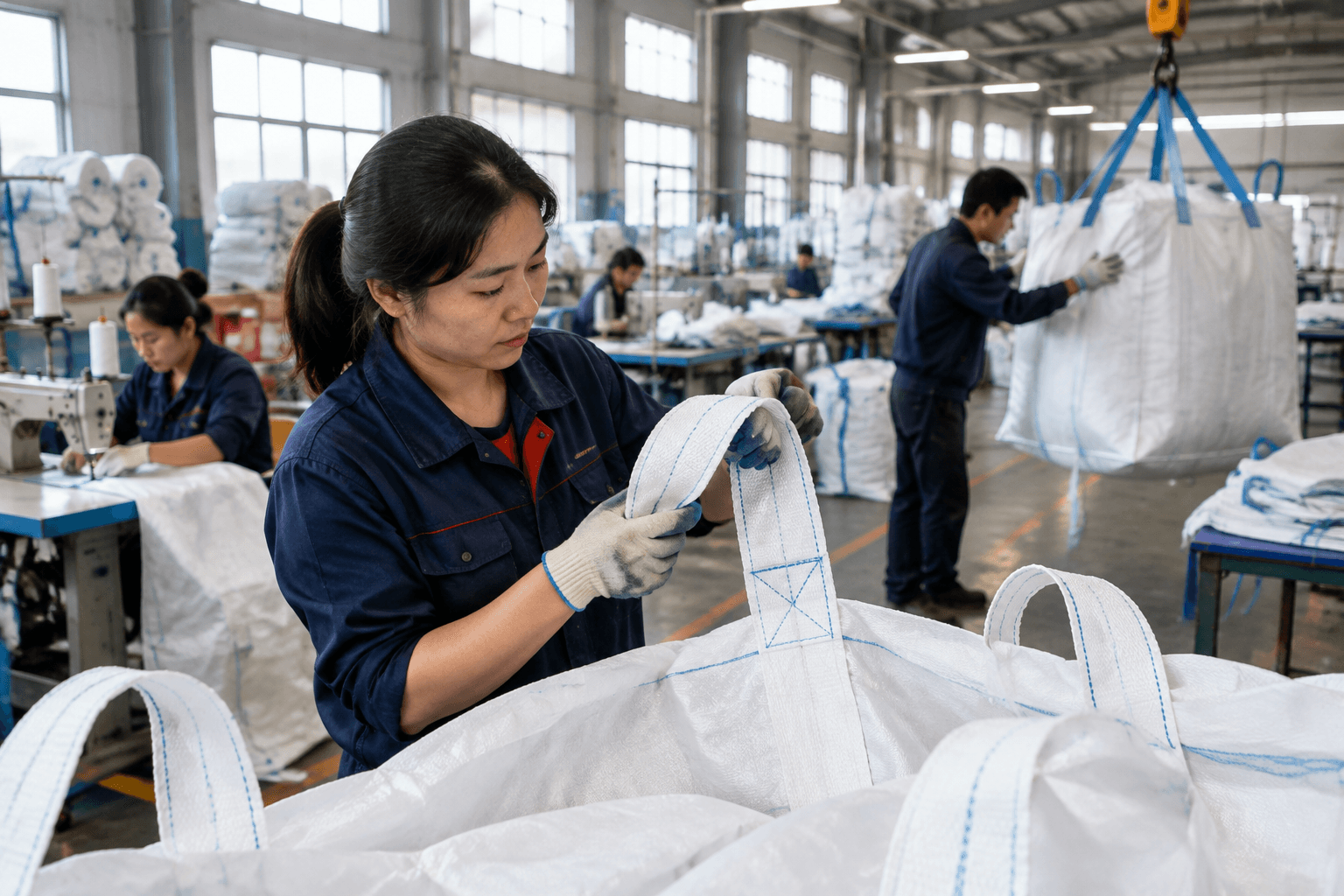
Choosing the Right Bulk Bag Manufacturer for Safer, More Efficient Operations
Learn how to specify bulk bags, evaluate manufacturers, and validate quality and supply reliability to reduce operational risk and support safer, more efficient handling.

The 140th Canton Fair: New Trends in the Export Market for FIBC Bulk Bags, Jumbo Bags, and PP Woven Packaging
Explore how export buyers can evaluate FIBC bulk bags and PP woven packaging beyond unit price. Get practical guidance on specifications, supplier verification, sustainability requirements, and RFQs—and prepare your next sourcing conversation with COSEK.
Want to know more?
Get in touch with us for more information about our services and products.