Choosing the Right FIBC Bulk Bag Manufacturing Partner for Reliable, Efficient Packaging Operations
RUNCHEN
AuthorWith more than 25 years of experience in FIBC bulk bag manufacturing and sales, RUNCHEN operates its own production facility with stable batch capacity. We specialize in FIBC bulk bags, jumbo bags, ton bags, and customized industrial packaging solutions.
Why FIBC Performance Matters to Production
For rice producers, chemical manufacturers, pharmaceutical companies, water-treatment suppliers, mineral processors, and other bulk-material businesses, packaging directly affects output, labor utilization, product quality, shipment timing, and customer confidence.
Inconsistent bulk bags can cause filling delays, poor positioning, leakage, dust release, rework, handling risks, and product loss. Even high-capacity filling equipment cannot deliver its planned throughput when the packaging format is unstable or incompatible with the line.
An FIBC is not an isolated consumable. Its dimensions, lifting configuration, inlet and outlet design, fabric strength, seam quality, and equipment compatibility influence the performance of the entire packaging workflow. COSEK supports application-focused requirements with solutions including the COSEK Small Bulk Bag, COSEK Light Blue Integrated FIBC, and COSEK White Cylindrical Leak-Proof Bulk Bag.
The Business Cost of Unsuitable Bulk Bags
A bag that appears economical on a purchase order can become expensive on the production floor. Poorly matched FIBCs can cause filling-machine stoppages, slower operator workflows, unstable lifting, damaged goods, dust release, contamination concerns, and shipment delays.
Total cost may include manual intervention, leakage, rejected loads, cleaning time, disposal, replacement bags, customer claims, and reduced confidence in product quality. Dimensional consistency is particularly important for automated filling, palletizing, warehousing, forklift handling, and container loading.
When bag dimensions, loop positions, inlets, or weight distribution vary between batches, operators may need to correct each bag manually. Measure current downtime, fill-cycle time, leakage, rejected bags, cleaning requirements, and operator interventions before changing specifications or suppliers.
What to Evaluate in an FIBC Manufacturing Partner
Manufacturing Control
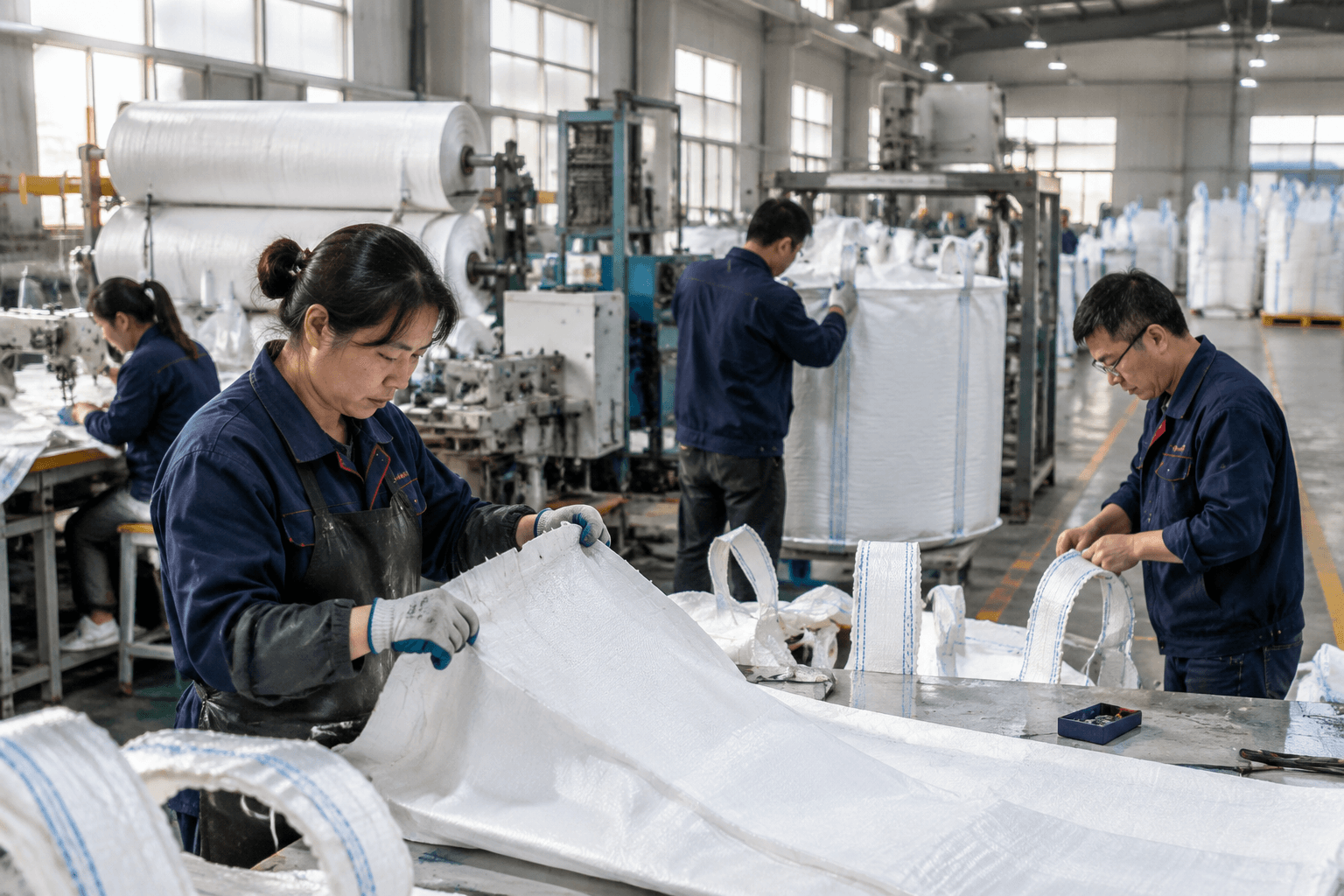
Confirm whether the supplier directly controls fabric production, cutting, sewing, printing, inspection, and final packing or manages these processes through a verified quality system. Understand where critical operations occur and how batch consistency is maintained.
Application Engineering
A capable manufacturer should translate material characteristics, filling methods, discharge requirements, storage conditions, and transport conditions into an appropriate specification. This includes fabric construction, dimensions, coating, liner, inlet, outlet, lifting arrangement, and safety factor.
Quality and Traceability
Ask how the supplier controls fabric weight, tensile strength, seam integrity, dimensions, lifting loops, liner fit, printing, and discharge components. Request records linking raw-material lots, production batches, inspection results, and shipment details.
Customization and Capacity
Verify the supplier's ability to provide tailored dimensions, coated or uncoated fabric, liners, fittings, printing, handling configurations, and packaging methods. Capacity should cover pilot orders, recurring supply, seasonal peaks, urgent replenishment, and expected growth.
Communication and Compliance
Review technical response times, sample approval, production updates, corrective-action procedures, and after-sales support. Request applicable test reports, quality documentation, export experience, and product-specific declarations before production begins.
Match FIBC Design to the Application
The best bulk bag specification starts with the product and process rather than a generic description. Assess particle size, bulk density, moisture sensitivity, flow behavior, abrasiveness, temperature, static-charge risk, and contamination sensitivity.
Confirm whether bags are filled manually, on single-lane or multi-lane equipment, or through a specialized dosing line. Inlet shape, opening behavior, loop stability, and dimensional repeatability must match the equipment.
Define the discharge method, including standard bottom, spout discharge, full-open discharge, or a leak-resistant design. Also specify forklift access, crane lifting, pallet use, stacking height, storage duration, container loading, transport distance, humidity, UV exposure, dust control, and moisture protection.
Fine powders, pharmaceutical materials, food-related products, chemicals, minerals, and water-treatment materials may require different fabric, liner, coating, containment, cleanliness, and documentation standards.
COSEK Small Bulk Bag
The COSEK Small Bulk Bag is designed for applications requiring a more compact format than a conventional large FIBC. It may suit lower-volume batches, specialty materials, sampling operations, regional distribution, or facilities with limited handling and storage space.
A compact format can also support easier positioning in workflows that include manual handling. Before approval, confirm capacity, dimensions, lifting arrangement, fabric specification, inlet, discharge configuration, material density, and handling method.
COSEK Light Blue Integrated FIBC
The COSEK Light Blue Integrated FIBC is suited to buyers seeking coordinated handling features and consistent visual identification. A controlled color can support warehouse organization, product differentiation, packaging-line management, and a consistent presentation across product grades.
Evaluate the complete configuration, including fabric construction, safety factor, dimensions, loop arrangement, printing, liner, and compatibility with filling and lifting equipment. A technical drawing and sample review should precede repeat production.
COSEK White Cylindrical Leak-Proof Bulk Bag
The COSEK White Cylindrical Leak-Proof Bulk Bag is intended for applications where containment, clean appearance, and reduced material escape are priorities. It may suit fine powders, granules, chemicals, pharmaceutical ingredients, minerals, and other bulk products requiring controlled containment.
Cylindrical construction and leak-resistant design can help reduce weak points during filling, handling, transport, and discharge. However, performance depends on the complete system: fabric, seams, liner, inlet, outlet, production controls, inspection, product behavior, pressure, vibration, and transport conditions.
Request an application review and sample evaluation before moving to full-scale production.
Improve Automated Packaging Efficiency
Automated filling equipment performs best when bags have repeatable dimensions, stable loops, correctly positioned inlets, reliable seams, and predictable weight distribution. These controls support consistent fill cycles with fewer operator interventions.
Packaging-line performance depends on the interaction between machinery, material flow, and bag design. Common sources of friction include inconsistent opening, misaligned filling inlets, unstable suspension loops, variable dimensions, poor balance, and unsuitable discharge behavior.
When integrating FIBCs into a new or upgraded line, review filling-head dimensions, suspension points, inflation requirements, product flow, target fill weight, pallet size, and downstream handling with both the bag and equipment manufacturers.
Quality Assurance and Leak Prevention
Reliable FIBCs require controlled processes from incoming materials through shipment release. Inspect woven fabric, thread, webbing, liners, coatings, labels, and accessories against approved specifications before production.
In-process controls should cover cutting accuracy, sewing, seam strength, loop placement, inlet and outlet attachment, liner installation, printing, and contamination prevention. Final inspection should address appearance, dimensions, bag weight, stitching integrity, lifting performance, component fit, and finished packing.
Depending on the application, testing may include tensile strength, seam strength, elongation, lifting performance, drop performance, leakage resistance, and static-control properties. Agree the test plan before production and maintain documented corrective-action and batch-traceability procedures.
Documentation and Responsible Supply-Chain Management
Requirements vary by product, destination market, transport mode, and customer quality system. Confirm applicable expectations for food-contact use, pharmaceutical materials, hazardous goods, antistatic performance, cleanliness, labeling, export documentation, and customer-specific declarations.
Supplier evaluation should also cover business processes, data governance, employee practices, information protection, and change control. Technical drawings, customer specifications, test data, and commercial information should be handled under clear confidentiality and documentation procedures.
Build the Business Case for a Supplier Change
Evaluate supplier changes through total cost of ownership rather than unit price alone. Measure leakage, downtime, manual handling, rejected shipments, cleaning, replacement packaging, storage inefficiency, and customer claims.
Then estimate potential gains from improved fill-cycle consistency, lower material loss, fewer stoppages, better inventory planning, and stronger shipment presentation. Run a controlled pilot with an agreed product, bag quantity, line, performance criteria, and review period.
Compare baseline and trial results using throughput, downtime, defect rate, leakage incidents, operator feedback, fill-cycle time, and delivered cost per packed unit. Document the results in a supplier scorecard before wider rollout.
FIBC Supplier Qualification Checklist
- Can the supplier provide the required capacity, dimensions, safety factor, lifting configuration, inlet, outlet, liner, coating, and printing?
- Does the supplier understand your material and filling or discharge process?
- Are fabric, thread, seams, loops, liners, and accessories controlled through documented inspections?
- Can the manufacturer provide samples, drawings, test reports, and batch traceability before mass production?
- Can production capacity support current demand, seasonal peaks, and forecast growth?
- Can the supplier maintain consistency across repeat orders and production batches?
- Are corrective actions, root-cause analysis, lead times, minimum order quantities, packing, and shipping terms clearly defined?
- Will the proposed bag deliver measurable gains in reliability, efficiency, containment, product protection, or total cost?
Why Partner with COSEK
COSEK is positioned as an application-oriented FIBC supplier helping industrial buyers align bag design with filling, handling, storage, transport, and discharge requirements. The goal is to develop a specification that fits the actual operating environment.
The COSEK Small Bulk Bag, COSEK Light Blue Integrated FIBC, and COSEK White Cylindrical Leak-Proof Bulk Bag address different packaging requirements. Final selection should reflect material characteristics, target capacity, filling process, containment needs, handling methods, and destination-market expectations.
A technical review before quotation can include material assessment, process analysis, dimension confirmation, equipment compatibility, sample approval, quality-document alignment, packaging, and shipping requirements.
Request a Technical Review and Quotation
Send COSEK your material type, target capacity, bag dimensions, filling method, discharge method, lifting requirements, liner or coating needs, destination market, and estimated order volume.
Contact COSEK now to request an application review, technical drawing, sample evaluation, and tailored FIBC quotation. Compare suppliers on measurable performance, documented quality controls, delivery reliability, and total cost—not price alone.
Conclusion
Reliable FIBCs do more than contain product. The right design can improve line efficiency, labor productivity, cleanliness, shipment reliability, product protection, and customer satisfaction.
The strongest sourcing decisions connect application fit, automation compatibility, leak prevention, quality consistency, documentation, responsible manufacturing, and total cost of ownership to measurable operating outcomes.
Related News
Other news you might be interested in
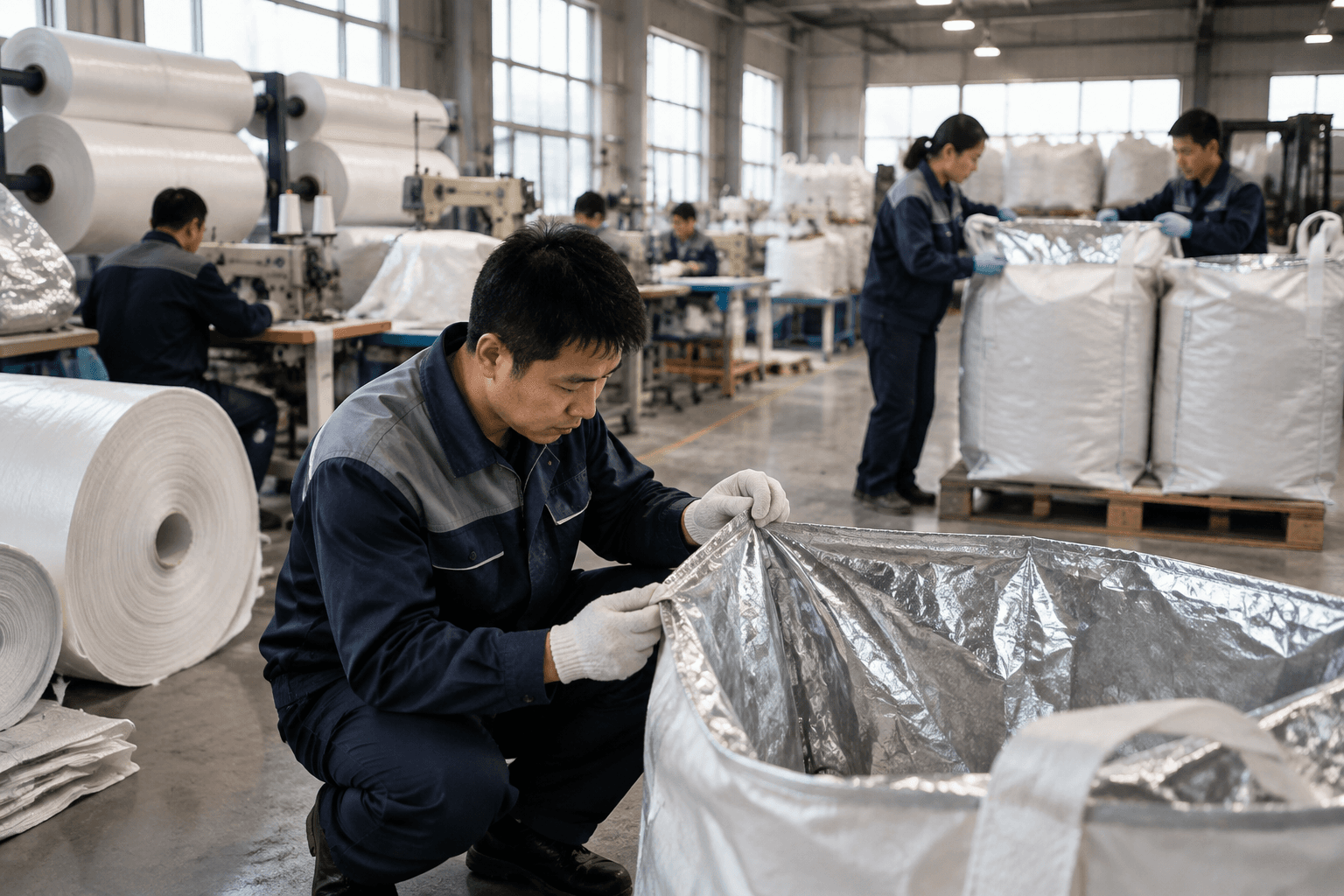
Engineered Ton Bags for Zero-Defect Packaging: Conductive, Formed Liner, and Aluminum Foil Solutions
Discover how conductive ton bags, formed liner bags, and aluminum foil bags eliminate static risk, liner failures, and moisture damage. Request a free packaging assessment and ROI projection.
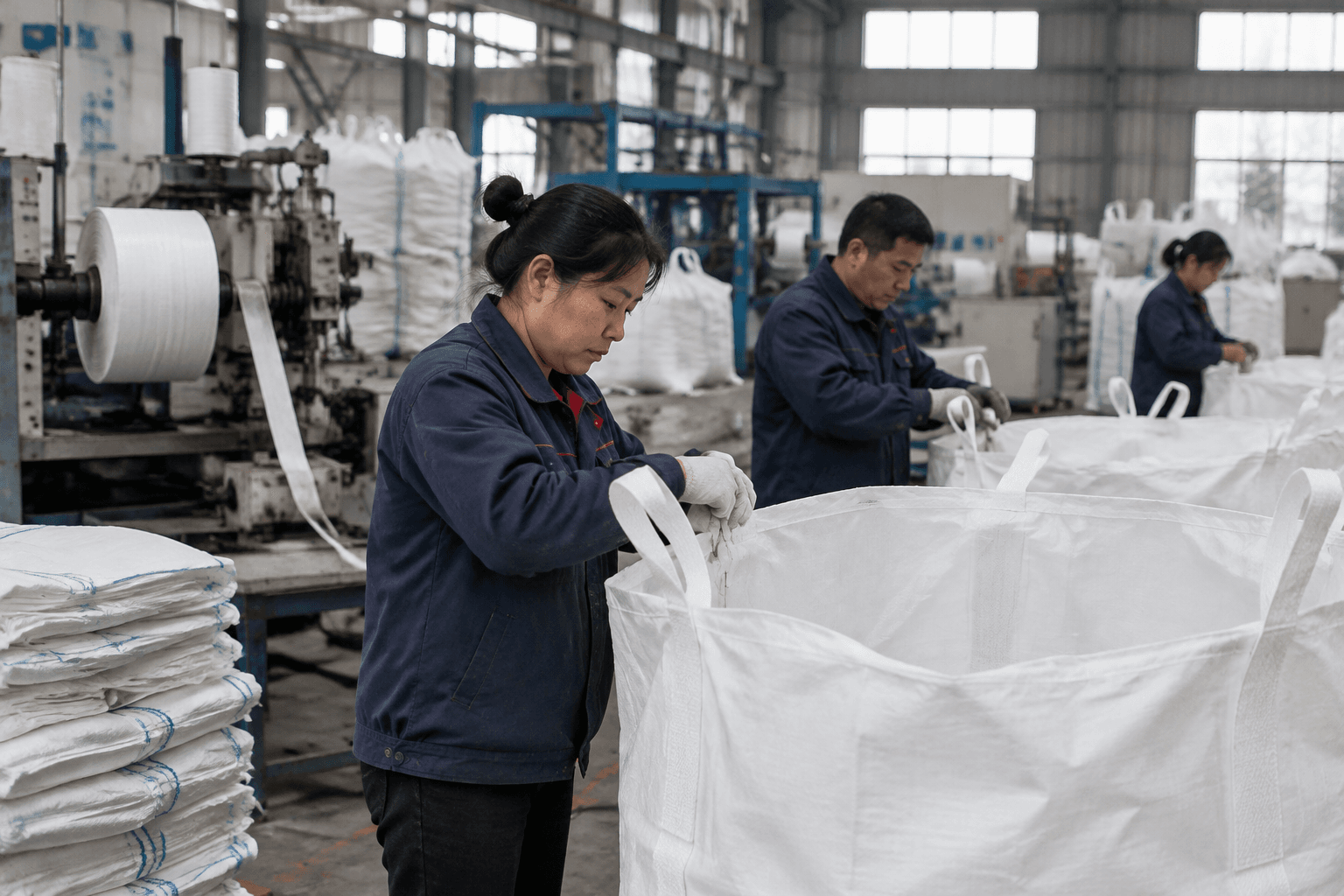
How Super Sacks Differ From Bulk Bags, FIBC Bags and Others
Super sacks, bulk bags, and FIBC bags are not interchangeable. Learn the key differences, how engineered bulk bags reduce waste and speed filling, and how to get a free sample kit and quote.
Want to know more?
Get in touch with us for more information about our services and products.