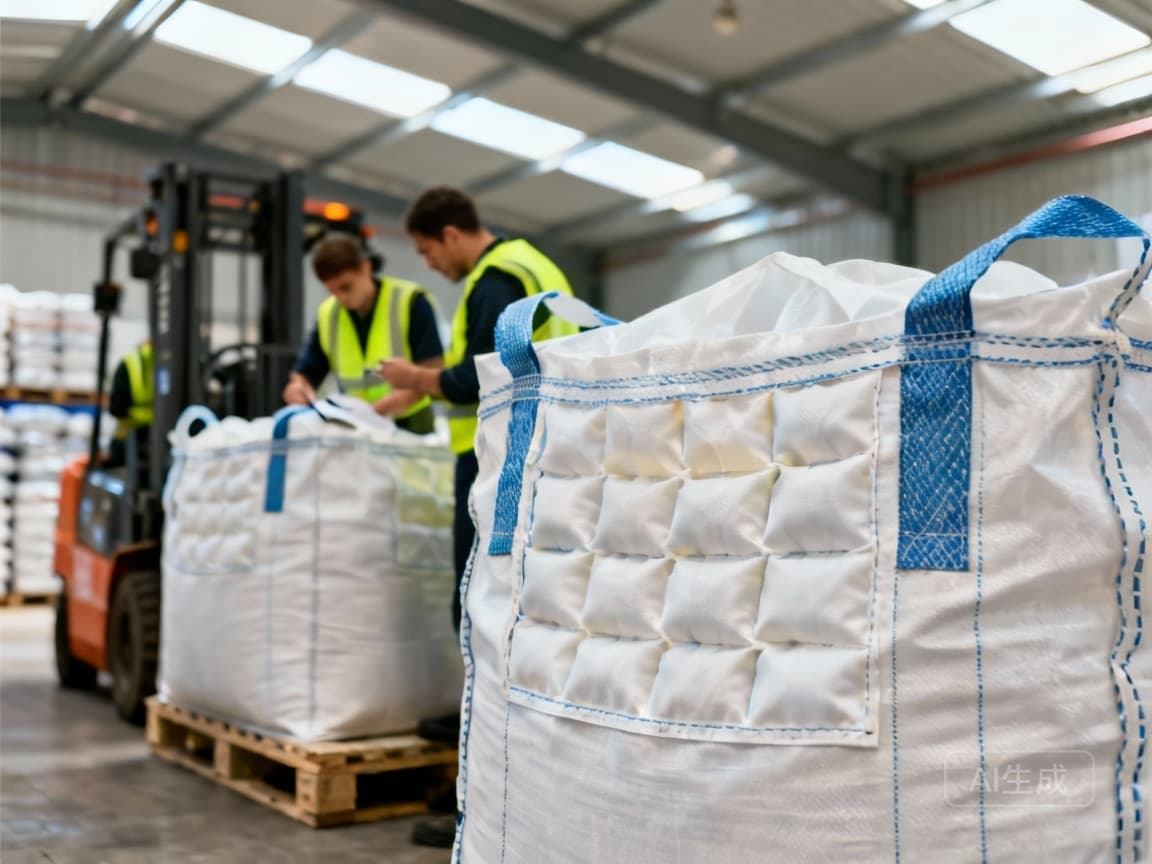
Engineer Your FIBC for 30% Logistics Savings & ESG Compliance #103
RUNCHEN
AuthorWith more than 25 years of experience in FIBC bulk bag manufacturing and sales, RUNCHEN operates its own production facility with stable batch capacity. We specialize in FIBC bulk bags, jumbo bags, ton bags, and customized industrial packaging solutions.
Beyond the Bag: Engineering Your FIBC for ESG Compliance, Logistics Efficiency, and Brand Advantage
For decades, the Flexible Intermediate Bulk Container (FIBC), or bulk bag, has been viewed as a simple, utilitarian vessel—a cost of doing business. Today, that perception is a strategic liability. Driven by stringent environmental regulations, relentless pressure on supply chain costs, and the rise of B2B e-commerce, the humble ton bag is undergoing a radical transformation. It is evolving from a passive container into a critical, designable node within a sustainable and efficient supply chain. Leading manufacturers are no longer just selling bags; they are providing integrated solutions for compliance, efficiency, and brand value. This article provides a strategic framework for procurement and operations leaders to leverage this shift, turning packaging from a silent cost into a source of competitive advantage.
Pillar 1: Decoding the Mandate – Why Single-Material is Your Supply Chain's New "Passport"
The shift toward single-material FIBCs is often framed solely as an environmental initiative. While sustainability is a core driver, the underlying force is a fundamental change in regulatory and economic accountability. The move to mono-material structures, typically based on polypropylene (PP), is becoming a prerequisite for market access and risk mitigation.
The Data-Driven Imperative
The market trajectory is unmistakable. The global single-material packaging market is on a robust growth path, valued at $3.94 billion in 2024 and projected to reach $5.63 billion by 2029, with a consistent Compound Annual Growth Rate (CAGR) exceeding 7%. This growth is not speculative; it's fueled by concrete, irreversible drivers: the rise of Extended Producer Responsibility (EPR) schemes, increased plastic waste collection mandates, and surging e-commerce sales.
From "Optional" to "Essential": The EPR Factor
EPR regulations are rewriting the rulebook. By extending the responsibility for post-consumer packaging waste to the brand owner, these policies make recyclability a direct financial concern. Complex, multi-material packaging is difficult and expensive to recycle, leading to higher fees for producers. A FIBC constructed from a single polymer type, like PP, dramatically simplifies the recycling stream, reducing EPR-related costs and compliance headaches. As one industry expert notes,
"Under EPR frameworks, packaging design is no longer just an engineering decision; it's a financial and compliance statement. Single-material design is the clearest path to reducing future liability."
This aligns directly with the experience of manufacturers like Changzhou Bairuisi Packaging Material Co., Ltd., which develops high-barrier, high-cleanliness FIBCs and food-grade bulk bags. These products aren't just about containing material; they are engineered responses to industries facing stringent contamination prevention and recyclability requirements. Their proactive development of such solutions demonstrates an understanding that compliance is now a core component of product value.
Pillar 2: The Value Engineering Framework – Quantifying Total ROI
True strategic sourcing requires looking beyond the unit price per bag. Value engineering assesses the FIBC's impact across the entire logistics chain. Here is a practical framework to evaluate the total return on investment (ROI).
Step 1: Engineer for Density and Stability
The classic "bulging" or "barrel" effect of a loaded standard FIBC is a silent profit killer. It creates unstable pallets, wastes precious container and warehouse space, and increases handling risks. The solution is structural engineering. For instance, Suzhou Xingchen New Material Group Co., Ltd. addresses this head-on with its internal baffle (inner拉筋) design. This innovation ensures the bag maintains a stable, cubic shape when filled.
Implementation Guidance:
- Conduct a Loaded Volume Analysis: Measure the dimensions of your current loaded bags versus their stated volume. The difference is wasted space.
- Calculate the Cascade Effect: Stable, cubic bags can increase container utilization by 15-25%. This translates directly into fewer shipments, lower freight costs, and reduced carbon emissions. Xingchen's reported 30% savings in transportation costs stems from this precise principle.
- Factor in Warehousing: Stable bags stack safely and higher, optimizing warehouse cube utilization.
Step 2: Integrate Functional Technologies for Risk Mitigation
Protecting high-value or hazardous contents justifies premium engineering. Technologies like static control are not mere features; they are insurance policies.
Implementation Guidance:
- Map Your Hazard Profile: Are you packaging fine powders, flammable materials, or sensitive electronic components? Each requires a specific solution.
- Specify Precisely: Understand the differences between Type C (conductive) and Type D (dissipative) anti-static bags. For example, Xingchen's use of nano high-performance conductive technology and Bairuisi's Type-D anti-static design offer different pathways to the same goal: preventing incendiary discharges. The correct choice depends on your operational environment and material properties.
- Quantify the Avoided Cost: The ROI here is the value of a prevented explosion, contamination incident, or product loss. This often dwarfs the packaging cost.
Step 3: Leverage the Bag as a Brand and Data Asset
The e-commerce boom extends to B2B. The unboxing experience matters, even for industrial parts. A durable, clean, and professionally printed FIBC enhances brand perception and can serve as a data node.
Implementation Guidance:
- Audit Your Touchpoints: How many people handle your FIBC from your dock to your customer's facility? Each is a brand impression.
- Explore Smart Integration: Inquire about integrating sewn-in RFID tags or robust QR codes. This transforms the bag into a trackable asset, improving logistics visibility and enabling easy access to material safety data sheets (MSDS) or certificates of analysis.
Pillar 3: Forging a Strategic Partnership, Not a Transaction
Procuring engineered FIBCs requires a shift from a price-based vendor relationship to a capability-based partnership. Your manufacturer should act as a consultant for your supply chain's future.
Evaluating a Strategic Partner
Move beyond basic RFQs. Engage potential partners with questions that probe their strategic value:
- Compliance Foresight: "How are you preparing for the 2029 single-material market landscape? Can you guide us through evolving EPR regulations in our target regions (EU, North America, Asia)?"
- Innovation & Customization Capability: "Can you share a case study where you co-developed a solution for a unique challenge, similar to Bairuisi's approach of developing customized products for diverse industry needs?"
- Supply Chain Resilience: "What is your operational footprint to ensure reliable delivery?" A network like Xingchen's six production bases and eight factories demonstrates scalability and risk mitigation against regional disruptions.
- Commitment to Trust: Does their philosophy align with building long-term trust? Principles like Bairuisi's emphasis on gaining client recognition before cooperation indicate a focus on sustainable success over short-term sales.
The Path Forward: A Blueprint for Joint Innovation
Propose a pilot project to solve a forward-looking challenge. For example: "Can we collaborate to develop a prototype fully compostable, single-material FIBC for our organic product line? We will share our field requirements, and you provide the material science and design expertise." This aligns with the market's growing interest in biodegradable materials and positions both companies at the forefront of the industry.
Conclusion: Engineering Your Supply Chain's Future
The data is clear: the $5.6+ billion single-material packaging market is not a niche but the new mainstream. Companies like Xingchen and Bairuisi showcase that the response is not just better bags, but smarter systems. By applying the Value Engineering Framework—1) designing for compliance and density, 2) integrating technology for total risk/cost reduction, and 3) partnering with manufacturers strategically—you can transform your FIBC from a commodity expense into a powerful lever. It becomes an instrument for achieving ESG compliance, unlocking double-digit logistics savings, and strengthening your brand in an increasingly transparent world. The question is no longer what bag to buy, but what value you intend to engineer into your supply chain.
Related News
Other news you might be interested in
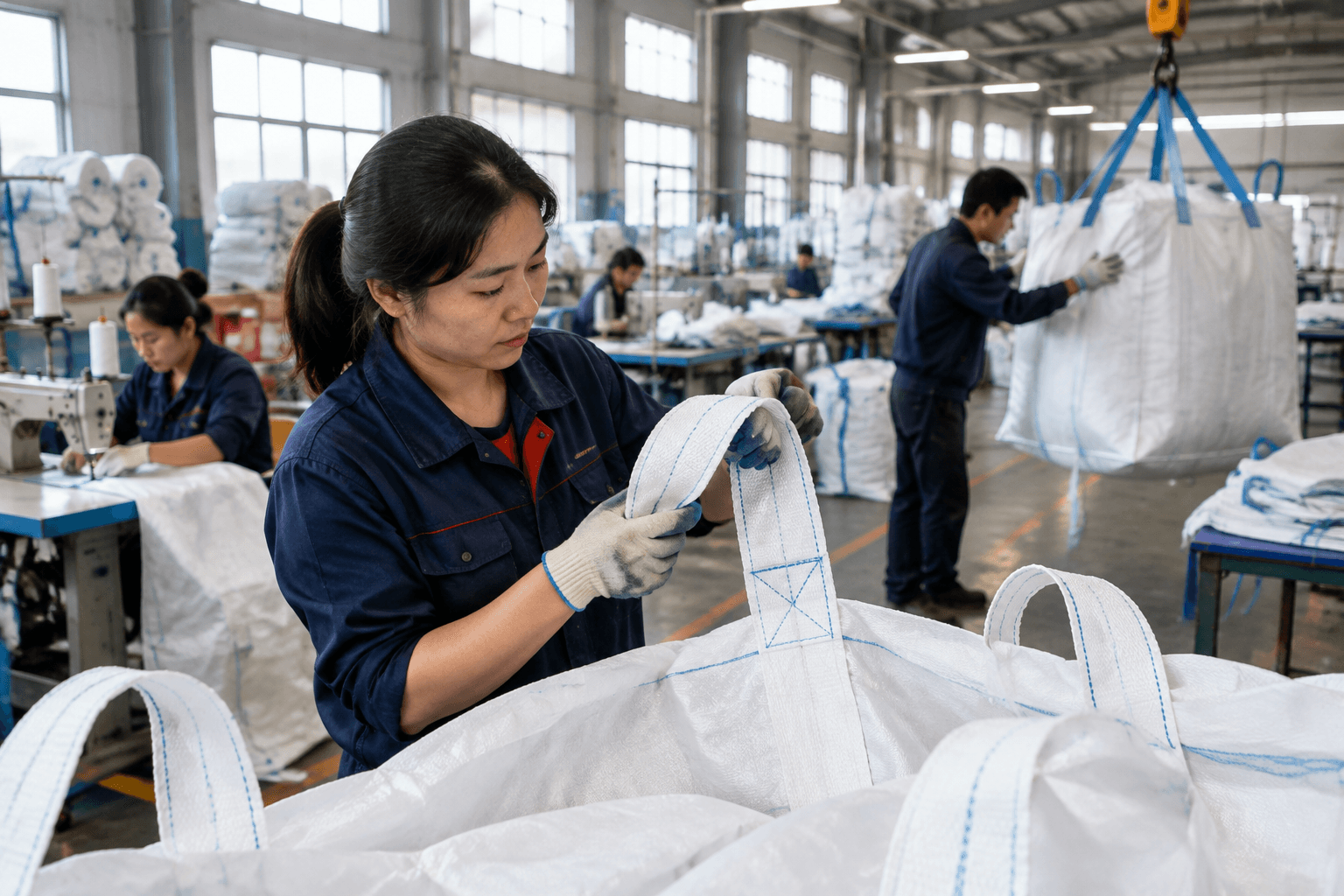
Choosing the Right Bulk Bag Manufacturer for Safer, More Efficient Operations
Learn how to specify bulk bags, evaluate manufacturers, and validate quality and supply reliability to reduce operational risk and support safer, more efficient handling.
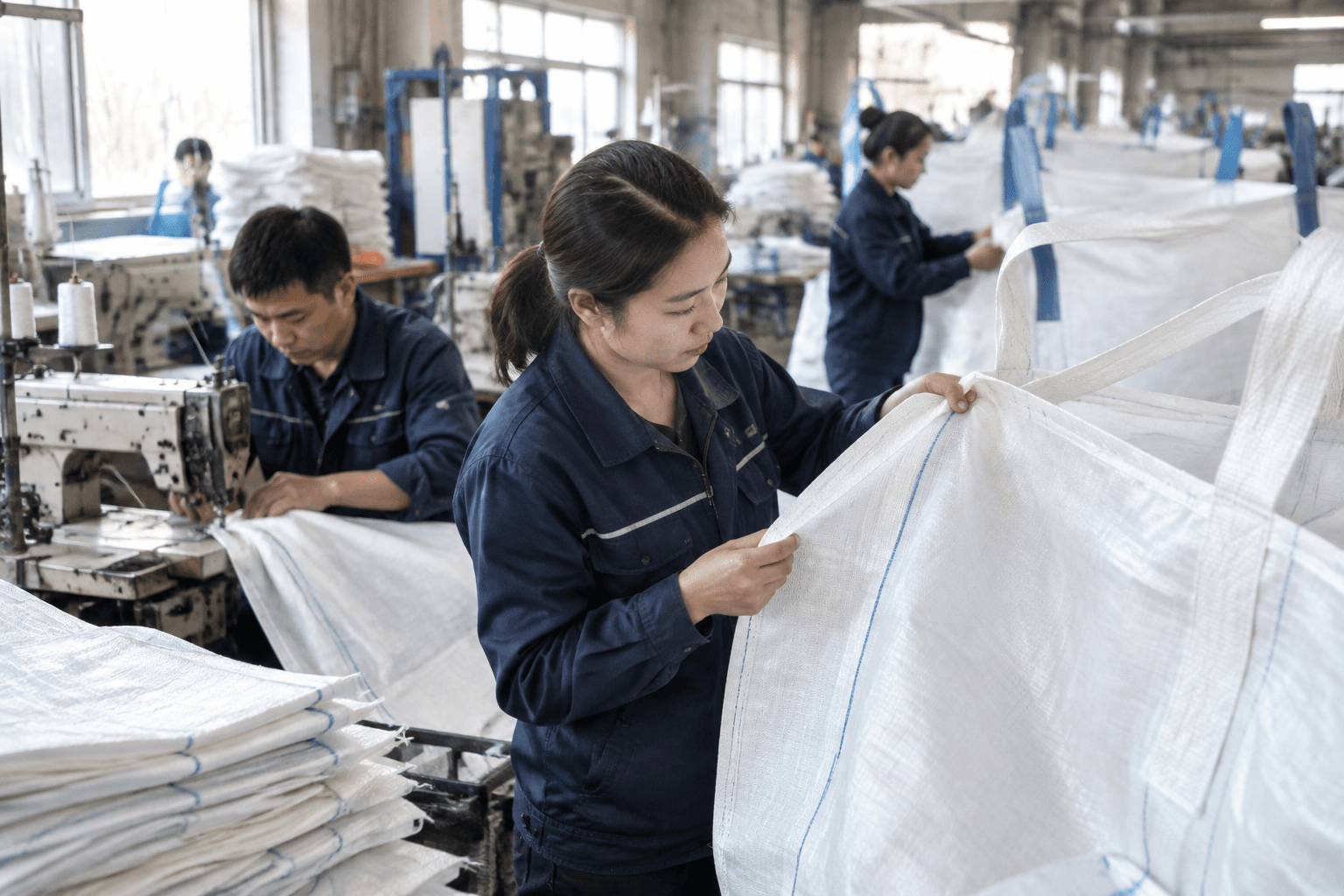
The 140th Canton Fair: New Trends in the Export Market for FIBC Bulk Bags, Jumbo Bags, and PP Woven Packaging
Explore how export buyers can evaluate FIBC bulk bags and PP woven packaging beyond unit price. Get practical guidance on specifications, supplier verification, sustainability requirements, and RFQs—and prepare your next sourcing conversation with COSEK.
Want to know more?
Get in touch with us for more information about our services and products.