FIBC Strategy Cuts ESG Risk 35% & Secures Global Supply Chains
RUNCHEN
AuthorWith more than 25 years of experience in FIBC bulk bag manufacturing and sales, RUNCHEN operates its own production facility with stable batch capacity. We specialize in FIBC bulk bags, jumbo bags, ton bags, and customized industrial packaging solutions.
The Hidden ESG Lever in Your Global Supply Chain: Rethinking FIBC as a Strategic Asset
For global procurement and supply chain leaders, the Flexible Intermediate Bulk Container (FIBC or吨袋) has long been viewed as a simple, commoditized packaging consumable—a line item to be sourced at the lowest cost. However, this tactical view is becoming a strategic liability. As market insights reveal, global supply chains face dual pressures: escalating ESG (Environmental, Social, and Governance) compliance demands from regions like the EU and North America, and the complex logistics of expanding into high-growth emerging markets. In this new landscape, the humble吨袋 transforms from a cost center into a critical lever for building resilient, sustainable, and compliant operations. Strategic FIBC sourcing is no longer about saving pennies per bag, but about mitigating multi-million dollar risks and securing your global footprint.
From Compliance Burden to Value Proof
The push for sustainable operations is reshaping procurement criteria. Market data indicates that green packaging now commands 80% of market share in key sectors, driven by policy and consumer preference. For multinational corporations, this extends beyond their direct operations into their entire value chain. A company’s ESG report is only as credible as its weakest link, including the packaging used by its raw material suppliers.
Consider the case of Samsonite International S.A. and its "Our Responsible Journey" initiative. For such a program to hold weight, every element of the supply chain, including transport packaging for components, must align with sustainable principles. If a supplier uses non-recyclable, non-traceable FIBCs, it creates a hidden compliance gap. This shifts the procurement conversation from mere price negotiation to verifying supplier certifications, material traceability, and end-of-life recyclability. Your FIBC supplier becomes a partner in your ESG compliance, turning a potential burden into a verifiable value proof.
Engineering Resilience for Emerging Market Frontiers
Expansion into growth regions like Southeast Asia, the Middle East, and Africa—now key targets for the Chinese packaging industry’s global integration—presents unique logistical challenges. Infrastructure variability, extreme climates, and differing operational standards can render generic, one-size-fits-all packaging solutions ineffective, leading to costly cargo damage, contamination, and safety incidents.
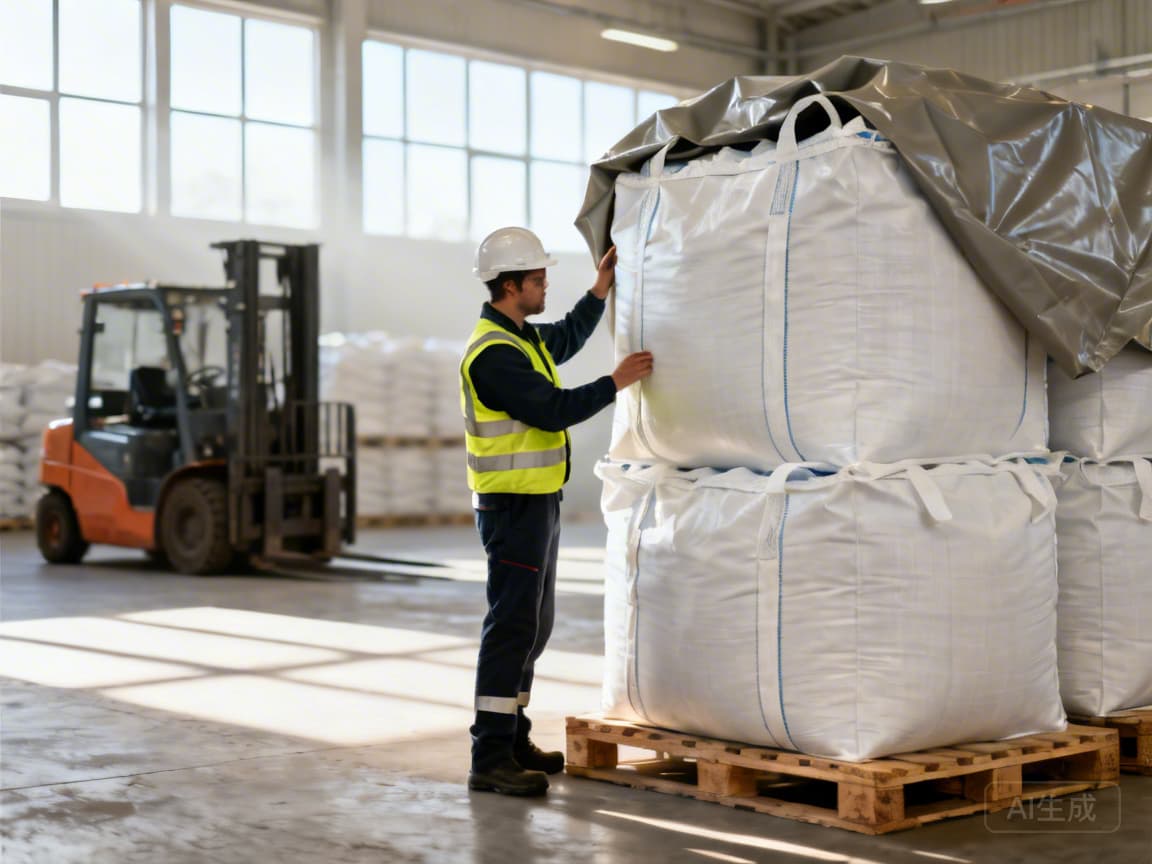
This is where an engineered, strategic approach to FIBC design is critical. The operational guidelines from companies like 山东鲁塑包装有限公司 (Shandong Lusu Packaging) provide a blueprint for risk mitigation. Their emphasis on correct lifting (using all loops, avoiding斜挂), using pallets for forklift handling, and protecting bags from UV and moisture during outdoor storage are not just maintenance tips; they are specific countermeasures for real-world conditions:
- High Heat/Humidity (Southeast Asia): Requires specific coatings and breathable fabrics to prevent moisture condensation and material degradation.
- Dusty Environments (Middle East): Demands secure, sealed closures and dust-proof designs to prevent product contamination.
- Rudimentary Port Handling (Certain Regions): Necessitates reinforced lifting loops and abrasion-resistant materials to withstand non-standard operations.
By collaborating with a technical FIBC provider to tailor solutions to these specific "risk maps," companies move beyond hoping for the best to engineering resilience into their supply chain’s physical flow.
Building a Closed-Loop, Lifecycle Management Strategy
The final step in strategic FIBC sourcing is adopting a full lifecycle management perspective, aligning with the industry’s deep transformation toward a green, circular economy. This framework moves from a transactional purchase to managing an asset for its entire useful life, maximizing both economic and environmental returns.
True supply chain sustainability is not just buying a 'green' product once; it's about systematically managing its journey from procurement to reuse or recycling, turning waste into value.
A practical lifecycle management framework involves three phases:
- Strategic Procurement: Source FIBCs designed for circularity—using recycled materials (rPP) and designed for easy recycling. Integrate ESG metrics into your supplier scorecard.
- Optimized In-Use Phase: Implement standardized training, based on proven guidelines like Lusu’s, to maximize the number of safe trips per bag. This directly lowers the Total Cost of Ownership (TCO) and minimizes waste.
- Managed End-of-Life: Establish a take-back or recycling channel with your supplier or a dedicated partner. Explore models like deposit schemes to ensure high return rates, transforming used bags from liability into feedstock for new products.
Quantifying this closed-loop system demonstrates its strategic value: reduced raw material procurement, lower waste disposal costs and fees, decreased carbon footprint, and a fortified brand reputation for sustainable stewardship.
Conclusion: The Strategic Imperative
In an era defined by volatility and heightened accountability, supply chain decisions must be evaluated through the lenses of risk, resilience, and responsibility. The data is clear: market leadership requires integrating ESG and operational excellence across the entire value chain. By redefining FIBC sourcing from a tactical cost-saving exercise to a strategic partnership for compliance and resilience, global companies can unlock significant value. They secure their supply chains against physical and regulatory disruption, future-proof their operations, and build a tangible, defensible record of sustainable practice. The bag is no longer just a container; it is a cornerstone of a modern, responsible global enterprise.
Related News
Other news you might be interested in
How to Choose the Right FIBC Supplier for Safer, More Reliable Bulk Packaging
Learn how to match FIBC design to your product and handling needs, assess supplier quality, compare total costs, and prepare a stronger request for quotation.
How to Choose the Right FIBC Bulk Bag Supplier for Safer, More Profitable Operations
Choose an FIBC supplier by matching bag design to your material and handling process, verifying quality controls, planning for supply continuity, and measuring total operating cost.
Want to know more?
Get in touch with us for more information about our services and products.