From Cost to Compliance: How FIBC Engineering Cuts TCO & Boosts ESG #102
RUNCHEN
AuthorWith more than 25 years of experience in FIBC bulk bag manufacturing and sales, RUNCHEN operates its own production facility with stable batch capacity. We specialize in FIBC bulk bags, jumbo bags, ton bags, and customized industrial packaging solutions.
From Cost to Compliance: How FIBC Engineering Cuts TCO & Boosts ESG
For decades, the Flexible Intermediate Bulk Container (FIBC), or bulk bag, has been viewed as a simple, low-cost consumable—a necessary expense in the logistics chain. This perception positions it as a cost center, a line item to be minimized. However, a paradigm shift is underway. Leading global supply chains, particularly in high-stakes sectors like automotive and chemicals, are re-evaluating every component for its impact on Total Cost of Ownership (TCO) and Environmental, Social, and Governance (ESG) compliance. Through the lens of advanced engineering and real-world application, the FIBC is being redefined from a passive container into an active, strategic asset. This transformation is powerfully demonstrated by innovations from China's manufacturing sector, which directly address the dual pressures of efficiency and compliance facing global buyers.
The Geometry of Cost: How FIBC Design Reshapes Logistics Economics
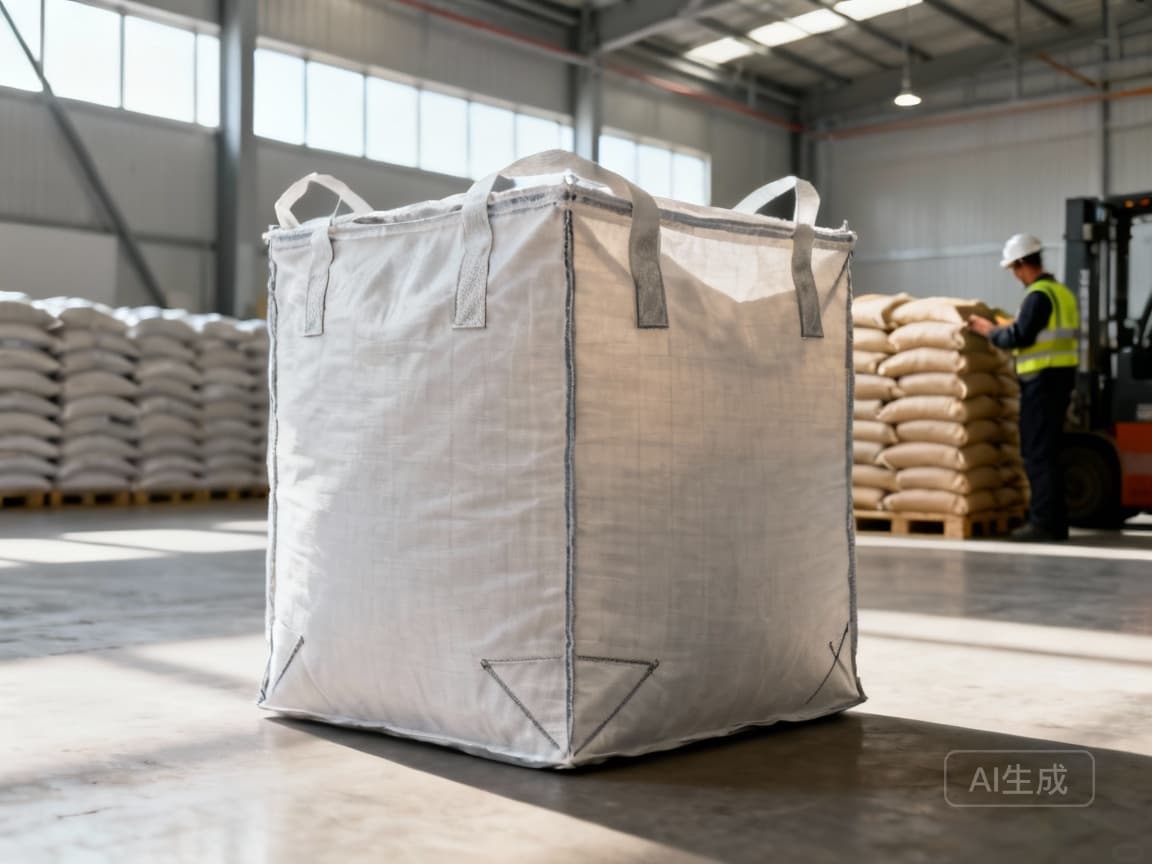
The true cost of a bulk bag is not its purchase price, but its total impact on the supply chain. A common failure point is the "barrel bulge" or "drum phenomenon," where a standard bag distends at the middle when filled. This is not merely an aesthetic issue; it is a geometric flaw with cascading financial consequences.
The Ripple Effect of Wasted Space
Consider the data from a real-world implementation by Suzhou Xingchen New Material Group Co., Ltd. Their client faced significant losses in container utilization due to this deformation. When a bag bulges, it fails to form a neat, cubic stack. This irregularity creates dead space in shipping containers, trailers, and warehouse racks. The cumulative effect is substantial:
- Reduced Load Capacity: A container that could hold 20 perfectly stacked bags might only fit 16-18 deformed ones.
- Increased Shipments: More trips are required to move the same volume of material, raising fuel, labor, and handling costs.
- Inefficient Warehousing: Unstable, bulging stacks reduce safe stacking height, wasting vertical storage space and complicating automated retrieval.
Xingchen's engineered solution was the internal baffle (or internal loop) FIBC. By sewing reinforced fabric loops at the bag's inner corners, the bag maintains a rigid, rectangular prism shape when filled. This simple yet profound engineering intervention directly attacks the root cause of space waste.
The implementation experience from Xingchen shows that this design not only creates a rule-shaped bag for easier stacking but can lead to reported savings of up to 30% in transportation costs by maximizing cubic space utilization in every shipment.
Implementation Guidance: Assessing Your Space Efficiency
- Conduct a Load Test & Audit: Photograph and measure your current filled FIBCs in their transport configuration (e.g., on a pallet in a container). Calculate the actual cubic volume they occupy versus the theoretical volume of a perfect cube.
- Quantify the Gap: Multiply the wasted cubic space per shipment by your annual shipment frequency and your average cost per cubic meter/foot for transport and storage.
- Test Engineered Alternatives: Pilot internal baffle bags with a key material. Measure the stacking stability, achieved density, and final load dimensions. The ROI calculation becomes clear when comparing trips saved and warehouse density gained.
Beyond Containment: The FIBC as Your ESG and Safety Compliance Enabler
As global supply chains face intensifying scrutiny, compliance is no longer optional. The "S" and "G" in ESG bring tangible requirements for worker safety, community protection, and ethical sourcing. For industries like automotive—where China is a top-tier supplier with over $45 billion in parts exports in 2021—and chemicals, packaging is a critical link in the compliance evidence chain.
Linking Engineering to International Standards
A standard bag is inadequate for sensitive, hazardous, or high-value materials. The engineering must match the risk. Xingchen Group's solutions for chemical and hazardous material packaging illustrate this principle. Their multi-functional custom FIBCs integrate features like:
- Conductive or static-dissipative fabric using nano-high-performance conductive technology.
- Leak-proof sleeves and PE liner bags.
- Waterproof outer layers.
These are not just "features"; they are direct responses to stringent international standards. For instance, conductive FIBCs are essential for operations falling under the ATEX Directive in the EU, which governs equipment in explosive atmospheres. Using non-compliant packaging can jeopardize entire shipments, violate safety protocols, and fail customer audits.
Furthermore, under frameworks like the automotive industry's IATF 16949 or the chemical industry's Responsible Care®, suppliers must prove they mitigate risks throughout the production and logistics process. A properly specified, certified FIBC provides documented proof of due diligence in product safety and handler protection.
Implementation Guidance: Building a Compliant Packaging Specification
- Map Your Compliance Landscape: Identify all regulations (e.g., ATEX, OSHA, REACH) and customer-specific codes of conduct that apply to your shipped materials and destination markets.
- Specify by Function, Not Just Description: Move from "we need a sturdy bag" to "we require a Type C, conductive FIBC with a safety factor (SF) of 6:1, tested for 5:1 load securement, featuring a sealed PE liner, compliant with IEC 61340-4-4."
- Demand Certification and Documentation: Partner with suppliers who provide test certificates, material safety data sheets for the fabric, and traceability for raw materials. This documentation is vital for ESG reporting and audit trails.
Engineering for Value: Securing High-Stakes Global Supply Chains
The ultimate test of packaging is its ability to preserve the value and integrity of the product it carries. This is especially critical for high-value raw materials—from specialty chemicals and pharmaceutical intermediates to premium food additives like those used in products such as Dippin' Dots. Here, FIBC engineering transitions from cost management to value insurance.
The Science of the Safety Factor
A key engineering concept is the Safety Factor (SF), often expressed as a ratio like 5:1 or 6:1. As evidenced by Xingchen's capability to design to these ratios, the SF is not arbitrary. It defines the bag's engineered breaking strength relative to its rated capacity. A bag with a 5:1 SF and a 1-ton capacity is designed to withstand 5 tons of force before failure. This margin accounts for dynamic forces during lifting, transportation shocks, and variable filling densities.
- SF 3:1: May be suitable for stable, uniform powders with gentle handling.
- SF 5:1 or 6:1: Essential for dense, sharp, or valuable materials, or for complex logistics involving multiple handoffs.
For a high-value material like a specialty chemical or a premium organic fertilizer averaging $5,000 per ton, the loss of a single bag due to failure represents a direct financial hit and a potential supply chain disruption. The engineering specification of the FIBC directly mitigates this risk.
Implementation Guidance: Selecting the Right Safety & Protection Level
- Evaluate Product Sensitivity: Is the material moisture-sensitive (requiring foil liners), light-sensitive, prone to contamination, or highly valuable? Each factor dictates a design requirement.
- Audit Your Handling Cycle: Document every touchpoint from filling to end-use: drop height, type of forklift, transportation duration, and storage conditions. More aggressive cycles demand higher safety factors and robust features.
- Adopt a Total Cost of Failure Model: Weigh the premium for a higher-SF, multi-feature bag against the potential cost of product loss, cleanup, downtime, and reputational damage from a failure. For high-value goods, the engineering investment is unequivocally justified.
Conclusion: The Strategic Path Forward
The evolution of the FIBC from commodity to engineered component mirrors the broader trajectory of "Made in China 2025" and the expectations of the global market: a shift from volume to value, from basic function to integrated, intelligent solution. The data and cases from leading Chinese manufacturers like Xingchen Group prove that sophisticated FIBC engineering delivers measurable TCO reduction through space optimization and risk mitigation, while simultaneously building a stronger foundation for ESG compliance.
Procurement and supply chain leaders must now ask more strategic questions: Is our packaging a hidden cost sink or a lever for efficiency? Is it a compliance vulnerability or a demonstrable asset? By applying the engineering principles and implementation frameworks outlined here, businesses can transform their bulk packaging from a passive cost center into an active driver of resilience, responsibility, and competitive advantage in the global arena.
Related News
Other news you might be interested in
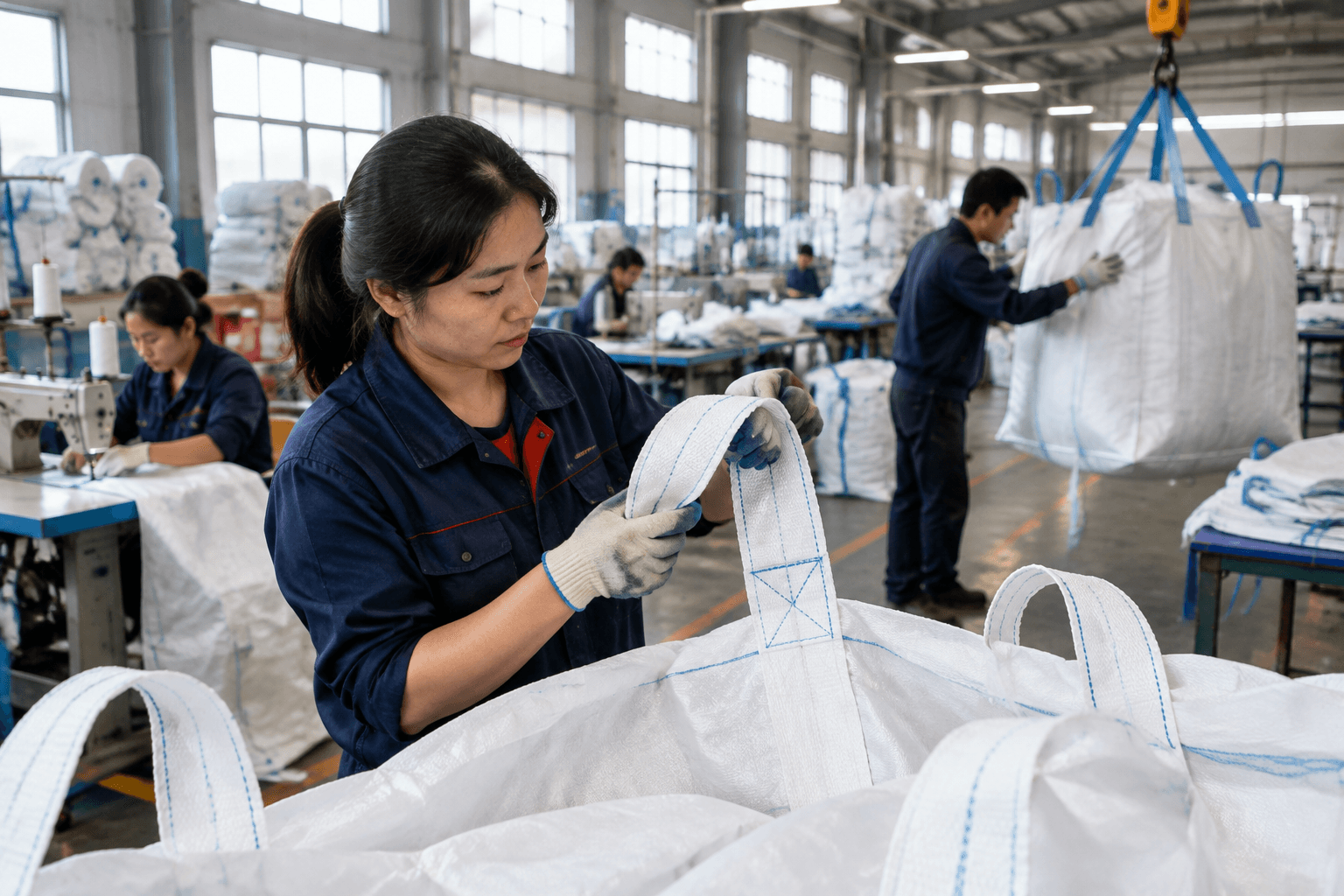
Choosing the Right Bulk Bag Manufacturer for Safer, More Efficient Operations
Learn how to specify bulk bags, evaluate manufacturers, and validate quality and supply reliability to reduce operational risk and support safer, more efficient handling.
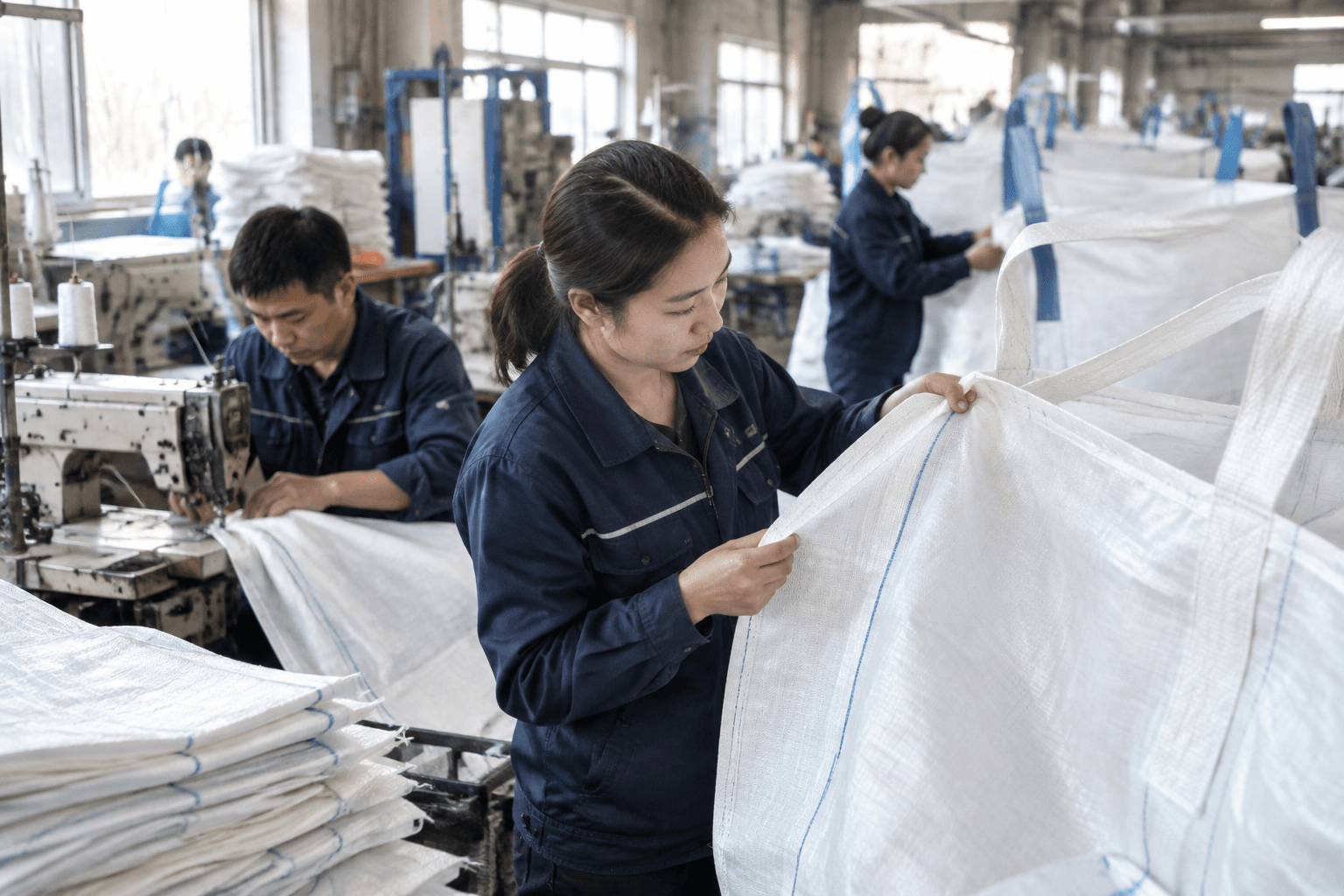
The 140th Canton Fair: New Trends in the Export Market for FIBC Bulk Bags, Jumbo Bags, and PP Woven Packaging
Explore how export buyers can evaluate FIBC bulk bags and PP woven packaging beyond unit price. Get practical guidance on specifications, supplier verification, sustainability requirements, and RFQs—and prepare your next sourcing conversation with COSEK.
Want to know more?
Get in touch with us for more information about our services and products.