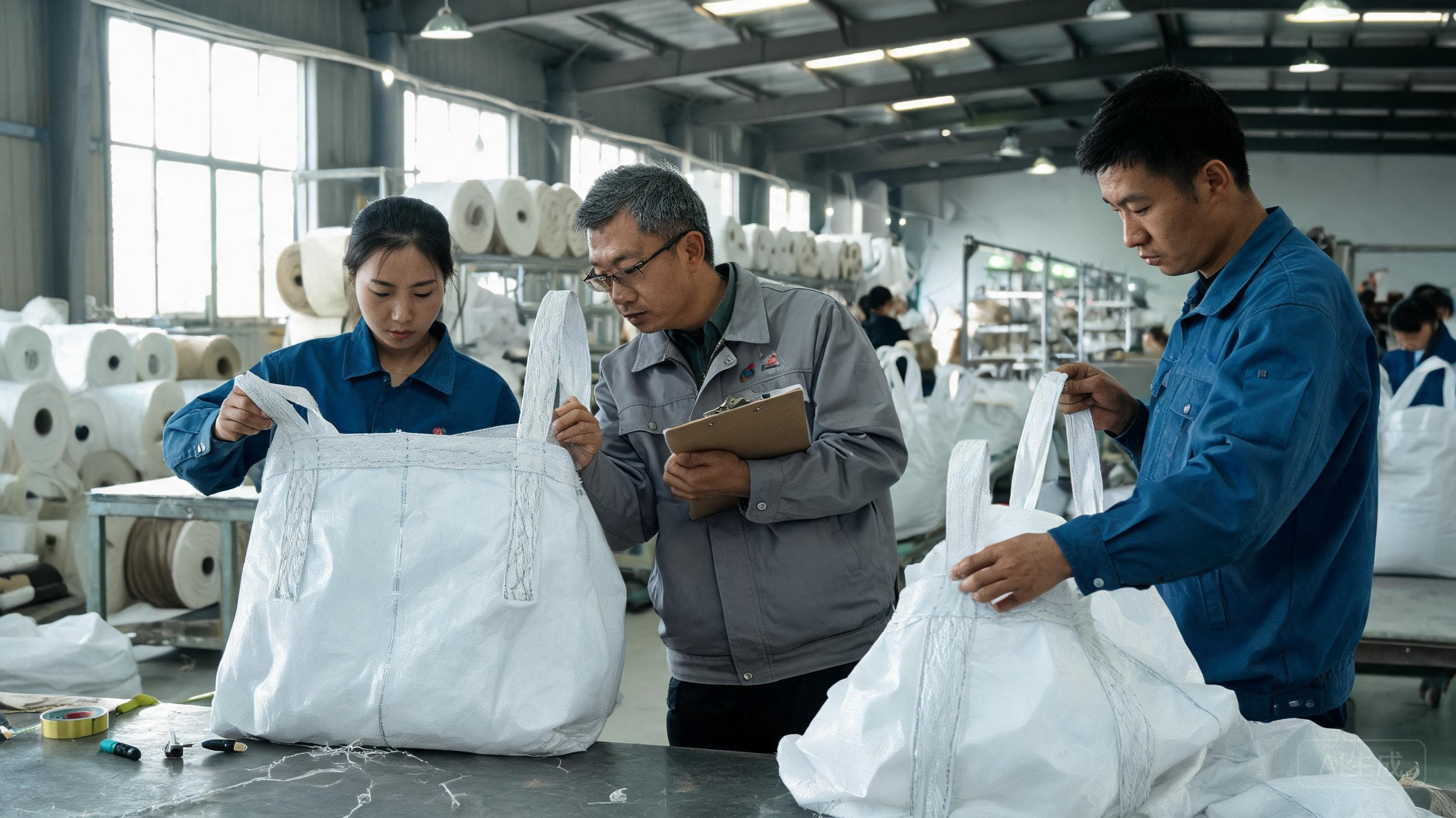
How to Choose a Bulk Bag Manufacturer That Protects Product Quality and Reduces Supply Risk
RUNCHEN
AuthorWith more than 25 years of experience in FIBC bulk bag manufacturing and sales, RUNCHEN operates its own production facility with stable batch capacity. We specialize in FIBC bulk bags, jumbo bags, ton bags, and customized industrial packaging solutions.
When a bulk bag becomes a business-critical decision
For procurement, operations, and quality teams, a flexible intermediate bulk container (FIBC) is more than packaging. A mismatch in construction, handling design, or product compatibility can affect worker safety, product integrity, filling efficiency, and delivery schedules. Choosing a bulk bag manufacturer is a decision about production continuity and supply risk—not simply unit price.
Requirements vary by application. Food producers may need clean, clearly identifiable bags and appropriate food-contact documentation. Chemical handlers may need moisture protection or certified dangerous-goods packaging. Electronics manufacturers may require static-control measures aligned with their handling and grounding procedures.
The range of considerations reflects wider industry interest in packaging performance. The 2025 WEPACK World Packaging Industry Expo promoted discussion among more than 100 packaging experts on over 300 packaging issues. For buyers, the practical challenge is turning those considerations into a bag specification and supplier-selection process that works on the factory floor.
This guide outlines how to match FIBC design and manufacturer capabilities to your operating requirements—and how to request a quotation based on a documented specification.
Start with the material, handling process, and end use
Before comparing products or requesting prices, define what the bag must contain and how it will be used. Document the product’s flow characteristics, sensitivity to moisture or contamination, and applicable food-contact, chemical, or transport requirements. Free-flowing grain, fine powder, and electronic components can call for very different packaging considerations.
Map the bag’s full journey: filling, lifting, storage, transport, and discharge. Include the filling equipment, lifting method, warehouse conditions, transport mode, discharge equipment, and whether the bags will be reused. A bag that performs well during filling may still be unsuitable if it cannot be stacked securely or discharged cleanly at its destination.
Translate these conditions into requirements such as safe working load, safety factor, dimensions, filling and discharge spouts, liner, lifting loops, and printing or identification. Ask each prospective supplier to distinguish requirements confirmed by the written specification from those that depend on testing, intended use, or applicable regulations.
Match FIBC construction to the job—not just the price
FIBC construction affects filling, stacking, storage, and discharge. Compare integrated, square-bottom, cylindrical, and general-purpose designs against your equipment and site conditions rather than choosing by appearance or price alone.
For food ingredients such as sugar, flour, and grain, assess the COSEK 浅蓝色食品级吨包袋 可见内容物设计 食用糖/面粉/谷物集装袋 and the COSEK Light Blue Integrated FIBC against your specification. Confirm that construction, materials, identification, and documentation meet the intended application and destination-market requirements.
Where stacking stability or a particular warehouse layout matters, evaluate the COSEK Brown Square Bottom FIBC Bulk Bag. For smaller-volume applications, consider the COSEK Small Bulk Bag. Check both against the required capacity, handling method, and operating environment.
When containment and leak prevention are priorities, review the COSEK White Cylindrical Leak-Proof Bulk Bag and confirm its suitability for the product and handling conditions. For routine bulk handling, the COSEK White General-Purpose FIBC Bulk Bag may be a starting point, subject to confirmation of load, construction, and use requirements.
Address food safety, moisture, static, and regulated transport requirements
Food and feed buyers should define hygiene expectations, material traceability, contamination controls, and required food-contact documentation before approving a bag. Evaluate the COSEK White and Red Food-Grade Bulk Bag and the COSEK 浅蓝色食品级吨包袋 可见内容物设计 食用糖/面粉/谷物集装袋 for food-related applications, then verify the specific documentation and intended-use suitability required in your market. A product description alone does not establish compliance for every food, facility, or destination.
For materials vulnerable to moisture, assess the COSEK 黑色防潮吨包袋 粮食/饲料/化工原料防水包装. Confirm whether the complete bag configuration—including any liner or closure—fits the expected storage duration, transport conditions, and exposure risks.
For electronic components or cleanroom-related packaging, consider the COSEK Black Anti-Static Bulk Bag for Cleanroom Electronic Components Packaging. Request evidence that the bag’s properties align with your handling and grounding procedures; a product label does not replace an assessment of the complete process.
For dangerous goods, review the COSEK White UN Certified Dangerous Goods FIBC Bulk Bag alongside the substance classification, applicable packaging instructions, and shipment requirements. Verify that the certification scope and validity cover the intended use and configuration.
Assess manufacturer quality systems and production controls
A reliable bulk bag manufacturer should be able to explain how it controls incoming materials, weaving and coating, sewing, inspection, finished-goods release, and lot traceability. Ask how those controls apply to the specific bag you plan to order—not just to the supplier’s general product range.
Request relevant test reports and documentation for the proposed configuration. A general brochure or unsupported claim does not demonstrate that a particular bag meets your load, product-contact, performance, or regulatory requirements. Check how the manufacturer manages nonconformance, corrective actions, sample approval, change control, and consistency across repeat orders.
If supplier-site safety and working conditions are part of your procurement policy, include them in due diligence. GOTS implementation guidance, for example, addresses monitoring conditions and having first-aid facilities ready to manage heat-related emergencies. Confirm which standards and requirements apply to the facility and product under review.
Keep supplier credentials separate from product evidence. A management-system credential may inform your supplier assessment, but it does not automatically establish that a specific bag configuration complies with a product or transport requirement.
Evaluate the commercial case beyond unit price
Compare total landed cost, including freight, packaging efficiency, storage footprint, filling and discharge labor, product-loss risk, and the potential cost of quality failures. Bag dimensions and construction can also affect palletization, container utilization, stacking stability, and warehouse throughput.
Before committing to a large order, use samples and controlled trials to check fit with filling lines, lifting equipment, and discharge systems. Agree on what will be evaluated and record the results. Avoid unsupported return-on-investment promises: establish a baseline for damage, leakage, line interruptions, or handling time, then measure performance after a specification change.
Market forecasts can provide context, but they do not prove a particular supplier’s performance. A published bulk-bag discharger market outlook citing 3.20% growth through 2032 may indicate interest in bulk-handling solutions; verify the report’s scope and methodology before using it in planning.
Use supplier credibility as a screening signal, not a substitute for evidence
Trade and industry sources such as Advantage Austria’s AUSTRIAN BUSINESS IN CHINA coverage can help buyers understand cross-border business context. They should not be treated as product certification or proof of a customer’s operating results. Packaging events such as WEPACK can help buyers track market discussions and supplier developments, but an event introduction should lead to a documented technical and commercial evaluation.
Request comparable references, representative samples, production-capability details, and documentation relevant to your application. For any claimed success story or return on investment, ask about the application context, measurement period, baseline, and supporting evidence before using the result to inform a sourcing decision.
Build a shortlist with a structured supplier evaluation
Use the same evaluation criteria for each candidate so quotations are genuinely comparable. Score suppliers on application fit, quality controls, compliance documentation, customization capability, lead time, communication, and total cost.
Ask shortlisted manufacturers to confirm dimensions, safe working load, safety factor, fabric and liner requirements, lifting and discharge design, printing, and packing details in a written specification. For customized orders, check sample consistency and agree on a pre-production approval process.
Clarify forecast requirements, minimum order quantities, production capacity, delivery terms, inspection arrangements, and escalation contacts. A technical questionnaire helps every bidder respond to the same requirements and makes capability gaps easier to identify before an order is placed.
Turn the specification into a lower-risk sourcing decision
Bring the application, product characteristics, handling environment, applicable requirements, and required documents together in a single sourcing brief. Select a bag construction and product option only after confirming the specification and validating samples or test results where appropriate.
For a first order or a specification change, set agreed acceptance criteria and review the pilot with operations, quality, and procurement before repeat ordering. Keep approved specifications, sample approvals, and change records on file so future orders remain consistent.
Request a specification-based quotation from COSEK
For a relevant recommendation, share your product type, target bag capacity, filling and discharge method, handling conditions, destination market, and any required food-grade, anti-static, moisture-resistance, or dangerous-goods documentation. This information helps match your application to options such as the COSEK Light Blue Integrated FIBC, COSEK Brown Square Bottom FIBC Bulk Bag, COSEK Small Bulk Bag, COSEK White Cylindrical Leak-Proof Bulk Bag, and COSEK White General-Purpose FIBC Bulk Bag.
Application-specific options include the COSEK Black Anti-Static Bulk Bag for Cleanroom Electronic Components Packaging, COSEK White UN Certified Dangerous Goods FIBC Bulk Bag, COSEK White and Red Food-Grade Bulk Bag, and COSEK 黑色防潮吨包袋 粮食/饲料/化工原料防水包装. Confirm final suitability against your written requirements and the documentation needed for your use.
Related News
Other news you might be interested in

How to Choose a Reliable FIBC Bag Manufacturer for Safer, More Efficient Bulk Packaging
Compare FIBC manufacturers on application fit, quality controls, compliance, delivery, and total cost. Use this practical checklist to define requirements and plan your next order.
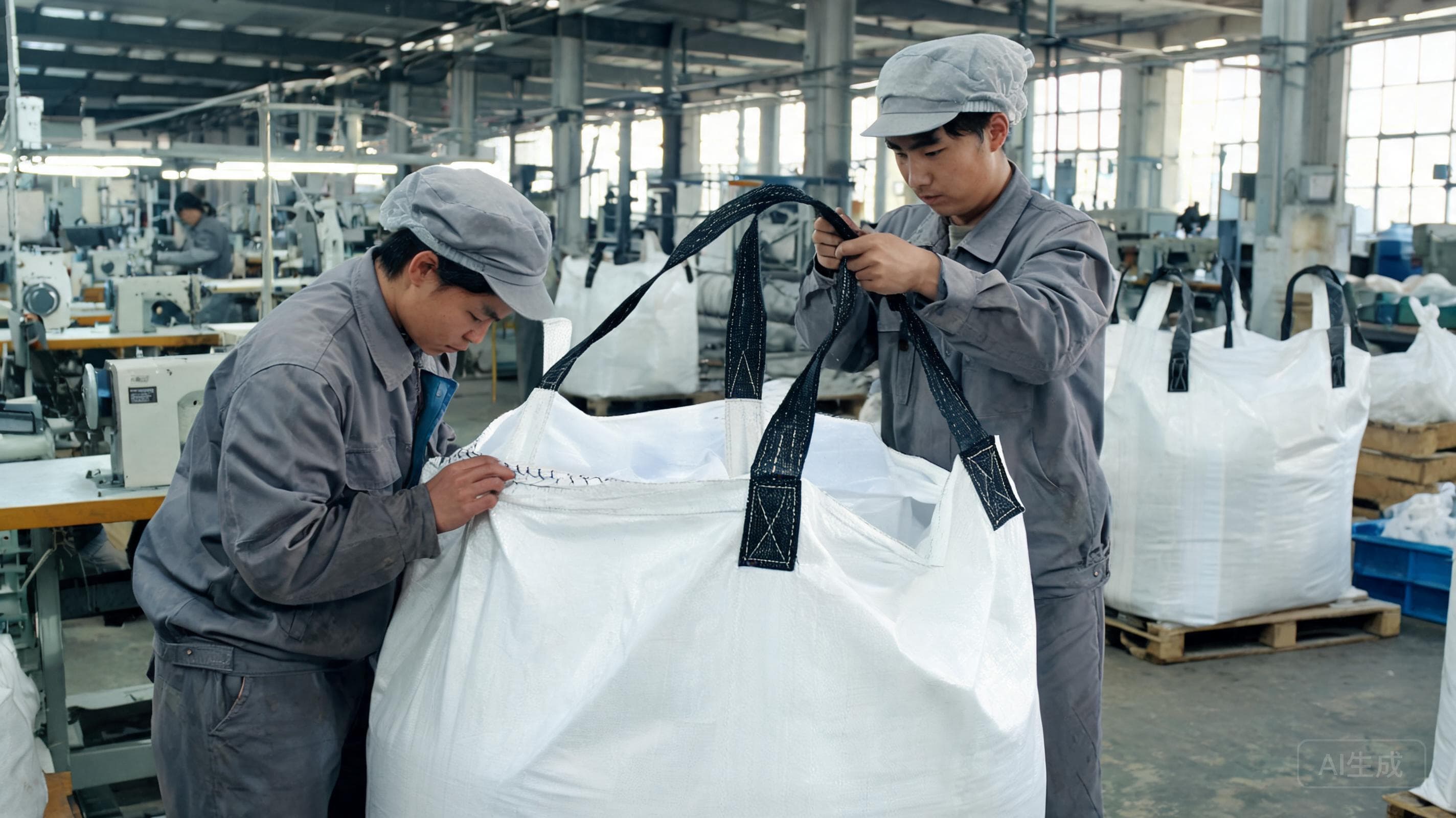
Choosing the Right FIBC Supplier: A Practical Guide to Safer, More Reliable Bulk Packaging
Define your application, verify bag performance and supplier quality, and compare equivalent specifications to choose FIBCs that support safer, more reliable operations.
Want to know more?
Get in touch with us for more information about our services and products.