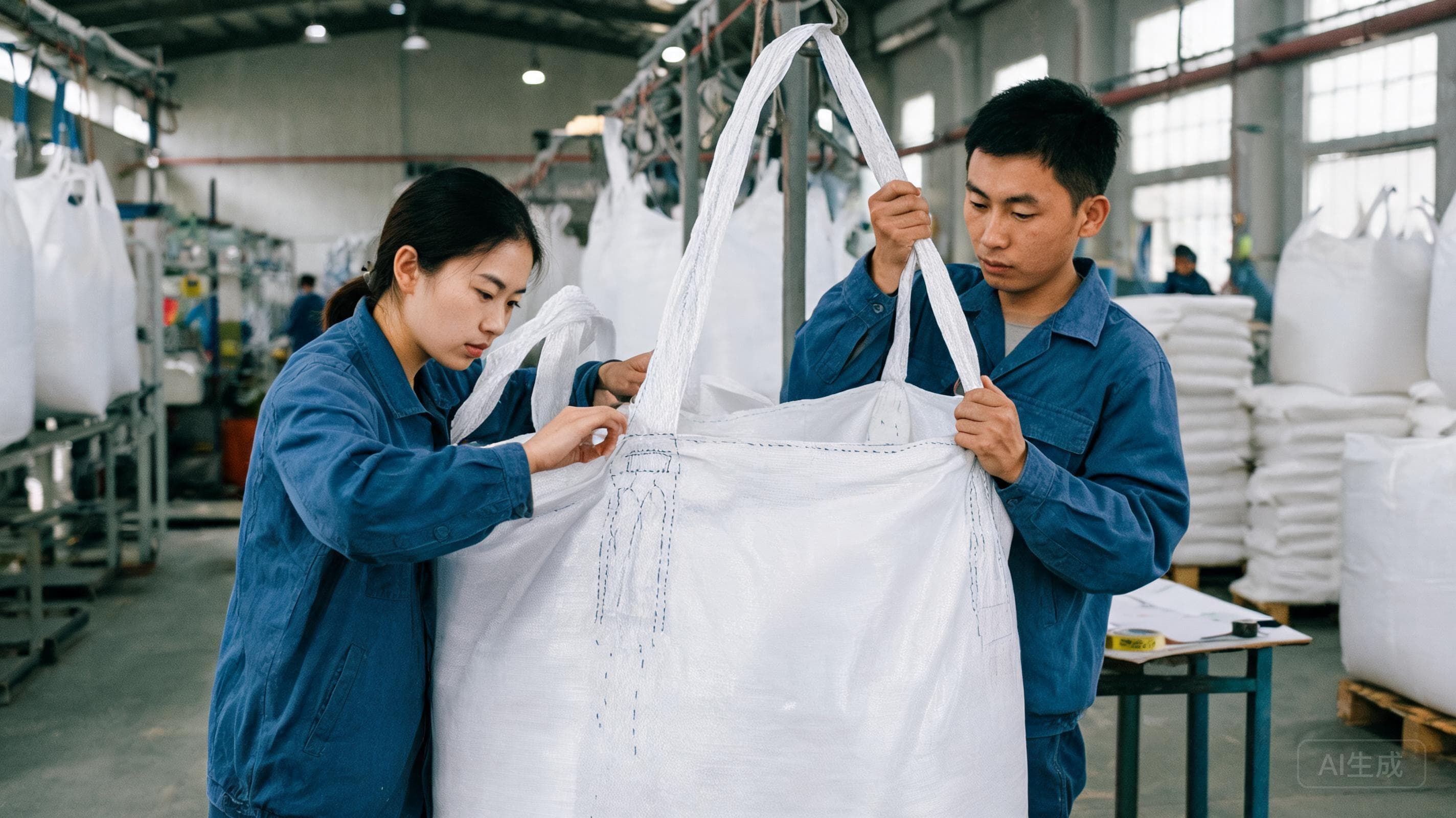
How to Choose a FIBC Manufacturer That Protects Product Quality, Compliance, and Total Cost
RUNCHEN
AuthorWith more than 25 years of experience in FIBC bulk bag manufacturing and sales, RUNCHEN operates its own production facility with stable batch capacity. We specialize in FIBC bulk bags, jumbo bags, ton bags, and customized industrial packaging solutions.
Why FIBC supplier selection matters
Flexible intermediate bulk containers (FIBCs) are one part of a larger logistics system, but their performance can affect product quality, handling efficiency, and compliance. A poorly matched bag may contribute to product loss, contamination, handling problems, or costly delays.
Buyers must assess fabric, liner compatibility, lifting loops, filling and discharge features, and supporting documentation. A structured evaluation helps identify a manufacturer whose capabilities match the application and reduces the risk of specification gaps.
Start with the application, not a generic bag specification
Before contacting suppliers, define what the bag will carry. Document the product’s physical and chemical characteristics, target capacity, storage conditions, and sensitivity to moisture, contamination, or static discharge. Fertilizer, food-grade powders, and electronic components can require very different designs.
Map the full handling journey, from filling and lifting to transport, storage, discharge, and disposal or reuse. Consider forklift access, rack clearance, stacking loads, and discharge equipment. Involve production, quality, safety, logistics, and regulatory teams so the specification reflects actual operating conditions.
Match FIBC construction to material and handling requirements
Evaluate dimensions, safe working load, safety factor, lifting-loop configuration, seam strength, fabric weight, coating, liner, and filling and discharge features. Confirm each parameter against the contents, equipment, and handling conditions. A design suited to free-flowing granules may not work for a cohesive or moisture-sensitive powder.
Validate candidate designs against the actual product and process, rather than comparing specifications on paper alone. Assess ventilation, moisture management, and contamination control for the specific application. For operations where airflow is a design requirement, review the COSEK Ventilated Bulk Bag and confirm suitability before finalizing the specification.
Make regulatory and safety requirements part of the specification
Define applicable regulatory and safety requirements at the start of the sourcing process. For dangerous goods, confirm that the bag’s current certification and documentation cover the exact configuration, substance, and transport conditions. Certification for a similar construction may not be sufficient.
Where a UN-certified FIBC is required, consider the COSEK White UN Certified Dangerous Goods FIBC Bulk Bag, subject to verification of its certification scope for the intended use. For static-sensitive or cleanroom applications, specify electrostatic performance, grounding procedures, cleanliness expectations, and required records. The COSEK Black Anti-Static Bulk Bag for Cleanroom Electronic Components Packaging may merit evaluation; verify that its characteristics meet your protocols.
As part of supplier qualification, review traceability, inspection records, test documentation, and change-control procedures. These controls help establish whether compliance can be maintained and demonstrated across orders.
Check filling, storage, and discharge efficiency
Assess how the bag will work with filling equipment, pallets or racks, warehouse clearances, and the end customer’s discharge process. A bag that fills slowly, stacks poorly, or causes discharge delays can increase operating costs.
Review shape retention under load, stacking behavior, access to discharge features, and compatibility with handling equipment. The COSEK Brown Square Bottom FIBC Bulk Bag offers a square-bottom format that may suit certain storage or handling configurations. Compare designs against your process rather than assuming one shape is right for every operation.
Evaluate manufacturing controls and supplier reliability
Assess the manufacturer’s quality processes, including incoming-material checks, in-process inspections, finished-product testing, lot traceability, and nonconformance handling. Ask how the supplier manages capacity, production planning, sample approval, and communication when specifications or demand change.
Request evidence relevant to your order, such as quality records, audit results, product documentation, and written service expectations. Broader business-practice reports may provide context, but they do not establish a manufacturer’s FIBC performance. Verify supplier claims against records and agreed requirements.
Compare total cost of ownership, not just unit price
Unit price is only one part of total cost of ownership (TCO). Include filling and discharge efficiency, storage utilization, freight, inspection effort, product-loss risk, and any special compliance or handling costs. A higher-priced bag may still reduce overall costs if it improves throughput, storage, or discharge performance.
Test proposed design changes with samples or a controlled trial before relying on projected savings. Confirm what the quotation includes, such as customization, testing, documentation, packaging, delivery terms, and repeat-order controls. Compare technical fit, compliance evidence, quality consistency, lead-time reliability, and commercial terms alongside price.
Verify references and performance claims
Ask for references or documented case studies involving comparable materials, handling conditions, and compliance requirements. Results from a different application may not translate to your operation.
Check the source, unit, metric, and relevance of any numerical claim before using it in an ROI analysis. Ask suppliers to distinguish independently verified results from customer-reported outcomes, and confirm the measurement period, baseline, and assumptions behind claimed savings. Management guidance is not a substitute for product certification or manufacturing evidence.
FIBC supplier qualification checklist
- Confirm the application, bag dimensions, capacity, handling configuration, and fabric or liner requirements.
- Specify applicable food-contact, chemical, dangerous-goods, electrostatic, cleanliness, or other requirements, and request evidence for the exact configuration.
- Review sample approval, inspection criteria, traceability, change control, delivery commitments, and quality-issue resolution.
- Align purchasing, operations, quality, and safety teams on acceptance criteria before approving production.
- Document open questions and obtain written confirmation of critical specifications before placing an order.
Request a specification review and tailored quotation
Compare shortlisted manufacturers against five priorities: application fit, verified compliance, manufacturing consistency, operational efficiency, and total cost. Ask each supplier to review the same requirements before final quotations so you can make a meaningful comparison.
Share your product details, handling conditions, target bag configuration, and compliance needs with COSEK. Contact COSEK to request an application review, evaluate a sample, or get a tailored quotation for a ventilated, UN-certified, anti-static, or square-bottom FIBC.
Related News
Other news you might be interested in
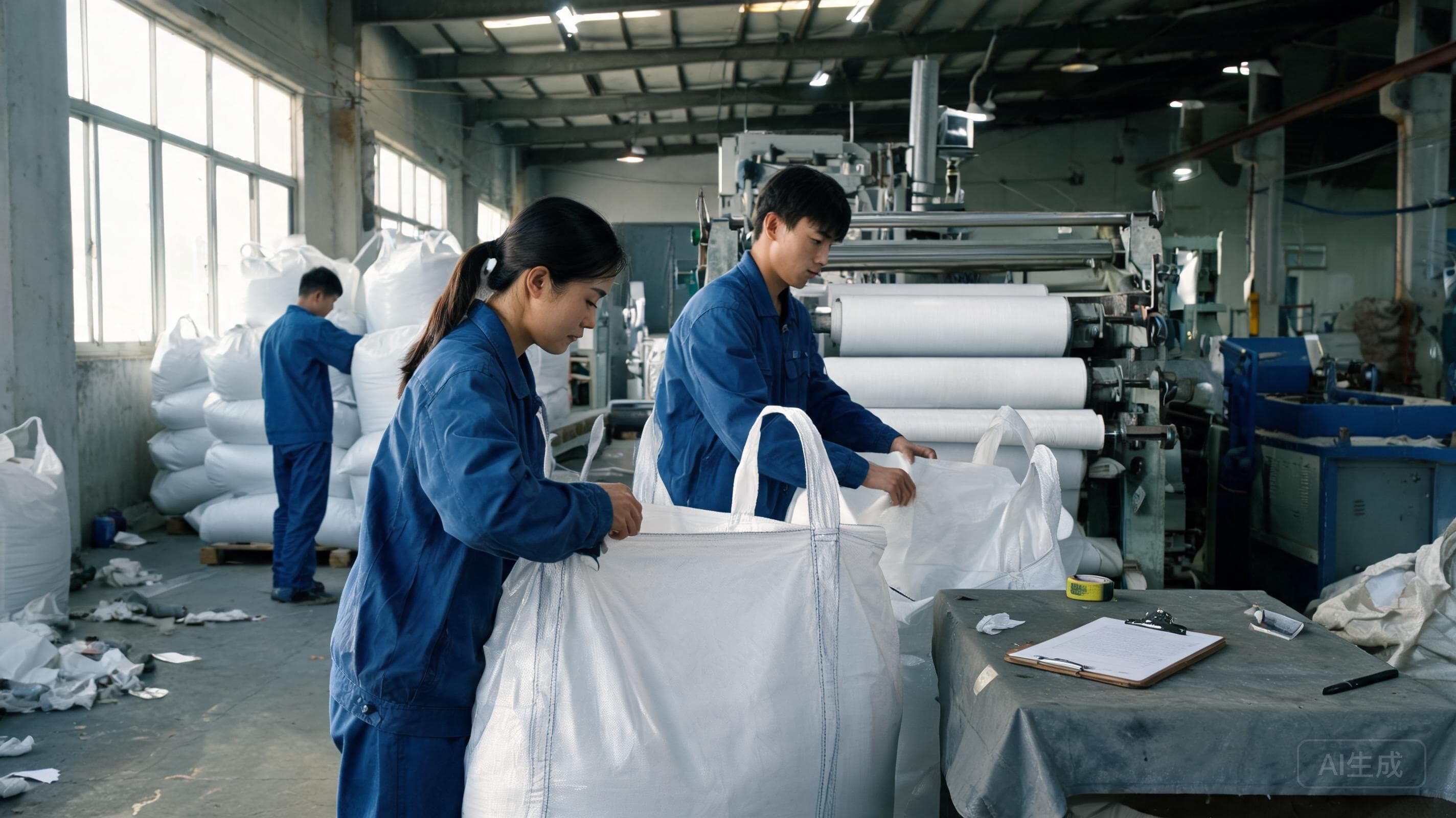
Choosing a Bulk Bag Manufacturer: Reduce Packaging Risk and Improve Supply Reliability
Use a practical supplier qualification framework to match FIBC specifications to your material, equipment, compliance needs, and delivery schedule—and reduce sourcing risk.

How to Qualify a Bulk Bag Manufacturer for Reliable, Compliant Packaging Supply
Use this practical framework to assess bulk bag specifications, quality controls, compliance, delivery reliability, and total cost before choosing a manufacturing partner.
Want to know more?
Get in touch with us for more information about our services and products.