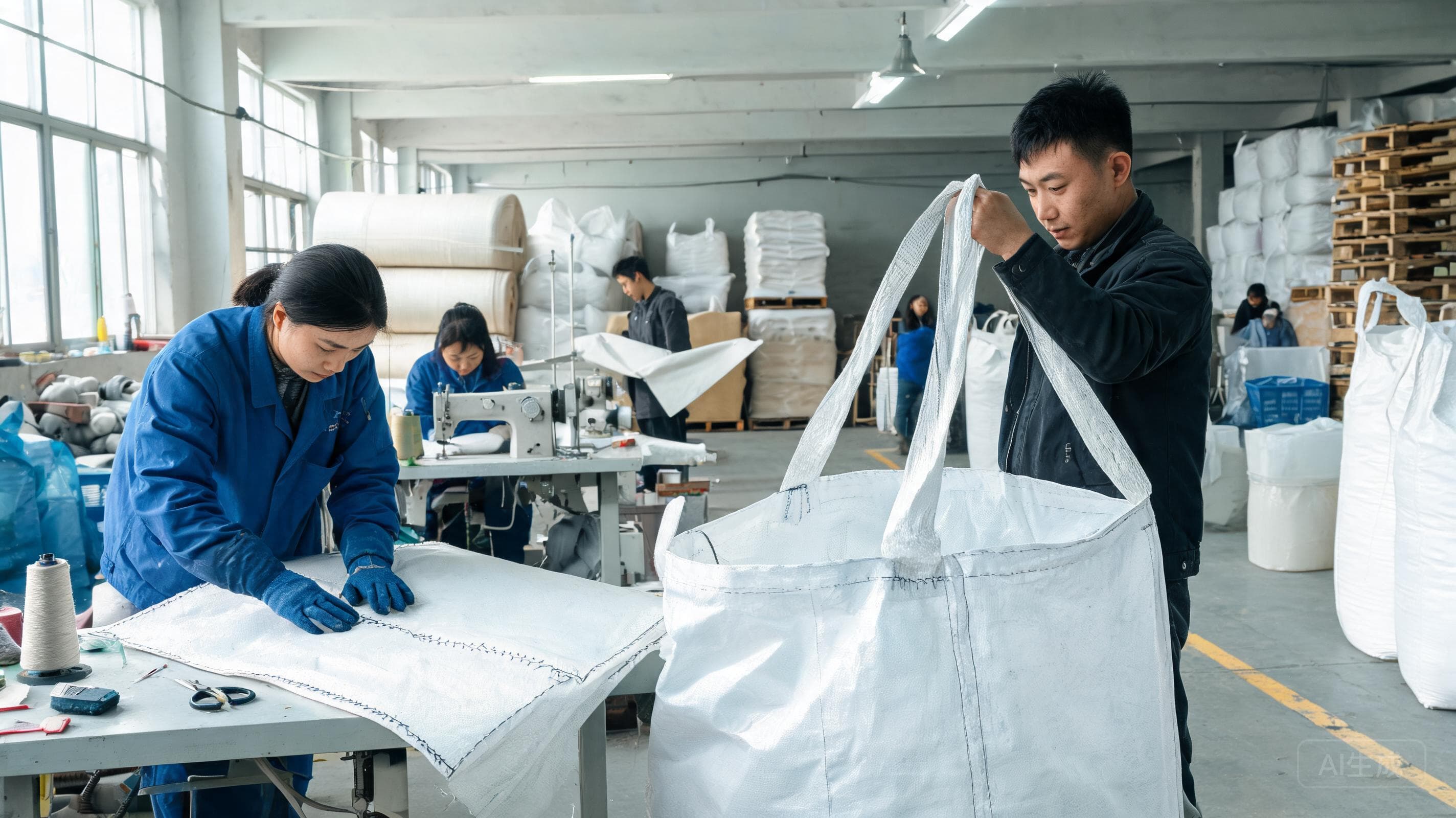
How to Select High-Performance FIBC Bags for Safer, More Sustainable Bulk Material Handling
RUNCHEN
AuthorWith more than 25 years of experience in FIBC bulk bag manufacturing and sales, RUNCHEN operates its own production facility with stable batch capacity. We specialize in FIBC bulk bags, jumbo bags, ton bags, and customized industrial packaging solutions.
Why FIBC Selection Is a Strategic Purchasing Decision
Choosing an FIBC bag is no longer a simple unit-price decision. Manufacturers, healthcare companies, food producers, chemical processors, and electronics businesses must reduce avoidable packaging waste, protect high-value materials, improve handling safety, and document operational performance.
A bag that fails during filling, storage, transport, or discharge can create costs far beyond its purchase price. Leakage, contamination, moisture damage, static hazards, slow discharge, cleanup, replacement packaging, production delays, and rejected shipments can quickly undermine an apparently low-cost purchase.
The right FIBC is specified for the material and the complete handling cycle. Buyers should evaluate construction, fabric, liners, discharge systems, safety features, quality controls, documentation, and supplier capability before committing to volume production.
The Business Impact of Choosing the Wrong Bulk Bag
Insufficient fabric strength, inconsistent weaving, weak seams, or inadequate lifting-loop attachment can cause deformation, rupture, or product spillage. These failures may expose workers to hazards and disrupt loading, transport, storage, and production schedules.
Moisture ingress is a major concern for hygroscopic powders, food ingredients, pharmaceutical materials, minerals, and chemicals. If the bag body, liner, top closure, or discharge outlet does not provide the required barrier performance, the product may clump, degrade, lose flowability, or fail inspection.
Contamination controls are equally important. Food, pharmaceutical, medical, and high-purity applications may require controlled manufacturing, clean storage, protective outer packaging, foreign-material prevention, traceability, and documented product-contact controls. A white bag is not automatically food-grade, and a bag described as clean is not automatically suitable for sensitive materials.
Electrostatic risk must also be assessed. Combustible powders, flammable environments, and static-sensitive electronic materials may require an antistatic, dissipative, or conductive FIBC designed for the application. Do not select a bag based only on color or general marketing language.
What Packaging Reporting Means for FIBC Procurement
Corporate reporting increasingly treats packaging consumption as an indicator of operating efficiency and environmental performance. Reporting from companies such as CR Medical demonstrates why packaging is no longer an incidental purchasing expense. Procurement decisions can affect resource use, reporting quality, and progress against internal sustainability objectives.
China Resources Beer’s ESG reporting discusses packaging materials, lightweighting, and source reduction while emphasizing that material optimization must not compromise product quality. The same principle applies to FIBC bags: reduce material use where possible, but maintain the required safe working load, safety factor, durability, cleanliness, and handling performance.
Any reported percentage, including a 15% figure, should be used only in its original context. Before citing it in sales materials or ROI calculations, verify the source document, reporting year, unit of measurement, denominator, organizational boundary, and exact scope.
For FIBC procurement, these trends translate into practical requirements: optimize material usage, maintain consistent quality, document production controls, provide traceability, and measure packaging performance in real operating conditions.
FIBC Construction Features Buyers Should Evaluate
An FIBC should be specified using more than external dimensions and advertised capacity. Fabric weight, denier, weave structure, coating, seam design, lifting loops, liner, and bottom construction all influence performance.
- Fabric construction: Review fabric weight, denier, weave consistency, tensile strength, and abrasion resistance against the actual filling weight, stacking conditions, storage duration, and transport route.
- Safe working load and safety factor: Confirm the required safe working load and safety factor for the intended use. These values must match the filling weight, lifting method, and single-trip or approved multi-trip application.
- Seams and lifting loops: Check stitch quality, seam configuration, loop attachment, reinforcement, and corner construction to support safe lifting and load distribution.
- Coated or uncoated fabric: Coated fabric may improve moisture resistance and dust containment, while uncoated fabric may provide greater breathability where product characteristics require it.
- Inner liner: A liner may be necessary for fine powders, moisture-sensitive materials, high-purity products, odor control, or contamination prevention.
- Top and bottom design: Match filling inlets, duffle tops, discharge spouts, closures, and outlet protection to the filling and emptying equipment.
Before requesting a quotation, define the bag dimensions, cubic capacity, filling weight, required safe working load, safety factor, stacking arrangement, inlet and outlet design, and transport conditions. Ask for test records, batch traceability, quality-control procedures, and confirmation that finished bags meet the agreed specification.
Selecting an FIBC for Different Applications
The correct FIBC depends on particle size, bulk density, flowability, moisture sensitivity, temperature, abrasiveness, chemical compatibility, and electrostatic behavior. A fine hygroscopic powder requires a different solution from coarse aggregate, a food ingredient, or a static-sensitive electronics material.
Review the complete handling cycle:
- How is the product filled?
- Will bags be palletized, stacked, or stored outdoors?
- Are bags lifted by forklift, crane, or both?
- Will containers be loaded for export transport?
- How is material discharged, and what level of dust control is required?
- Is disposal, approved reuse, or return logistics part of the supply-chain model?
Applications may require a standard bulk bag, food-grade construction, moisture-barrier liner, tear-resistant fabric, antistatic design, baffle bag, specialized discharge system, or customized labeling. Cleanroom handling, food-contact declarations, pharmaceutical controls, export documentation, and batch traceability should be confirmed before production begins.
Yellow Reinforced FIBC Bag for Demanding Industrial Handling
The Yellow Reinforced FIBC Bag is designed for buyers who need visible identification and reinforced construction for demanding industrial handling. A yellow bag body can improve visual recognition in warehouses, production areas, and loading operations, while reinforcement can support higher-stress lifting, transport, and storage conditions when matched to the required safe working load.
This design may suit industrial raw materials, construction products, minerals, agricultural materials, and other bulk goods where durability and identification are important. Confirm the fabric specification, reinforcement locations, seam configuration, lifting-loop design, inlet, outlet, closure requirements, and safety factor before ordering. Reinforcement does not replace correct filling limits, safe lifting methods, or proper storage practices.
COSEK White Food-Grade FIBC Bag for Hygienic and Moisture-Sensitive Products
The COSEK 白色食品级吨包袋 无菌防潮集装袋 医药/食品专用大容量袋 is intended for food, pharmaceutical, medical, and other hygiene-sensitive bulk materials where cleanliness, moisture management, and contamination prevention are central requirements.
Evaluate controlled manufacturing conditions, protective packing, liner selection, top and bottom closures, foreign-material controls, and traceability. Moisture-barrier performance depends on the liner, coating, seam treatment, and closure design and should be validated against actual storage and transport conditions.
Food-grade or pharmaceutical suitability must be supported by applicable documentation, declarations, testing, and manufacturing controls. It should never be assumed from the product name, white color, or general product category. Confirm product-contact requirements, aseptic or sterilization expectations, filling configuration, discharge method, shelf-life conditions, and sampling requirements.
COSEK Tear-Resistant FIBC Bulk Bag for Abrasive Materials
The COSEK Tear-Resistant FIBC Bulk Bag is suited to applications where abrasion, sharp particles, repeated movement, rough loading environments, or long-distance transport increase the risk of fabric damage. Minerals, aggregates, chemicals, industrial powders, recycled materials, and irregular particles can place greater stress on conventional bulk bags.
Evaluate tear resistance together with tensile strength, seam strength, fabric construction, load distribution, loop design, and handling procedures. Stronger fabric cannot compensate for overloading, dragging across sharp surfaces, forklift damage, or unsuitable storage.
Provide the supplier with product photos, bulk density, fill weight, loading method, transport route, storage conditions, and any history of bag damage. This information supports a more reliable recommendation on fabric grade, reinforcement, coating, liner, and lifting configuration.
COSEK Blue Antistatic FIBC Bag for Electronics and Static-Sensitive Applications
The COSEK 蓝色防静电吨包袋 内置透气窗 防爆型集装袋 电子行业专用 is a specialized option for electronics-related materials and processes where electrostatic-risk management is important. Selection must be based on the material, filling and discharge process, ambient conditions, grounding method, and operating-environment classification.
The built-in ventilation window may support airflow or process requirements where appropriate. However, the ventilation design must remain compatible with dust containment, moisture protection, product purity, and material characteristics.
Terms such as “explosion-proof” and “antistatic” should not be accepted as marketing labels alone. Confirm the FIBC type, applicable test method, conductive or dissipative properties, grounding procedure, liner compatibility, discharge configuration, and site safety requirements before purchase.
Balancing Sustainability, Performance, and Total Cost
Sustainability should be treated as a performance requirement, not as a reason to reduce fabric weight without validation. Lightweighting is beneficial only when the FIBC continues to meet safety, durability, cleanliness, filling, transport, and product-protection requirements.
Compare total cost of ownership across purchase price, filling and discharge speed, product loss, residue, damage, rejection rates, labor, cleanup, warehouse utilization, container loading, replacement frequency, disposal costs, and approved reuse opportunities.
A more durable bag may reduce product loss or replacement frequency, but reuse should be considered only where it is permitted, safe, and appropriate for the material, hygiene requirements, and supply chain. Request information on material composition, production controls, waste-management practices, suitable recycled-content options, and end-of-life guidance.
Quality Assurance Questions for FIBC Manufacturers
- What are the safe working load and safety factor, and how were they tested?
- Which fabric, thread, liner, coating, and lifting-loop specifications are used?
- How are incoming materials, weaving, cutting, sewing, cleaning, inspection, and final packing controlled?
- Can the supplier provide batch traceability, inspection records, samples, and relevant compliance documentation?
- What controls apply to food-grade, pharmaceutical, medical, antistatic, and other specialized products?
- How are dimensional consistency, seam strength, contamination prevention, and foreign-material risks controlled?
- Can the supplier support custom printing, warning labels, QR codes, palletization, container loading, and export documentation?
- What are the lead time, minimum order quantity, sample process, and quality-claim response procedure?
A capable manufacturer should explain its production controls clearly and provide documentation that matches the actual bag specification. Vague claims without test evidence, traceability, or written specifications create avoidable purchasing risk.
FIBC Specification Checklist for Procurement Teams
- Product details: Product form, particle size, bulk density, flowability, moisture sensitivity, temperature, abrasiveness, and chemical characteristics.
- Load requirements: Safe working load, safety factor, dimensions, cubic capacity, filling weight, and stacking requirements.
- Construction: Bag body, coating, liner, top inlet, bottom outlet, closure, lifting loops, baffles, and reinforcement.
- Special requirements: Food-grade, pharmaceutical, medical, antistatic, conductive, dissipative, or explosion-risk requirements.
- Process details: Filling equipment, discharge equipment, lifting method, grounding process, storage duration, warehouse conditions, and transport mode.
- Identification: Color, printing, warning labels, batch coding, documentation, packaging format, and delivery schedule.
- Acceptance plan: Sample approval, inspection criteria, inspection frequency, and corrective-action expectations.
- Commercial goals: Target price, total-cost objectives, performance trade-offs, and sustainability priorities.
Why Supplier Capability Matters
A technically suitable bag can still fail commercially if the manufacturer cannot maintain consistent quality, stable lead times, responsive communication, and reliable export support. The strongest supplier relationship combines product selection, sampling, customization, inspection, packaging, and logistics coordination.
Evaluate production capacity, export experience, quality systems, specialized product lines, communication speed, sample turnaround, and after-sales support. Early supplier involvement can reduce redesign cycles, prevent specification gaps, and improve launch timing for new facilities, product lines, and packaging conversions.
COSEK can support buyers comparing reinforced, food-grade, tear-resistant, antistatic, moisture-resistant, and customized FIBC solutions. The most effective starting point is a review of the material, process, performance risks, and commercial requirements.
Recommended Evaluation Process Before a Bulk Order
- Provide the application profile: Share the material type, bulk density, expected load, handling process, operating environment, and current packaging problems.
- Review the recommendation: Request a proposed construction, technical drawing, specification sheet, and relevant documentation.
- Test representative samples: Evaluate filling, lifting, storage, transport, discharge, and visual condition under real or representative operating conditions.
- Confirm acceptance criteria: Agree on inspection frequency, packaging format, delivery schedule, quality documentation, and corrective-action procedures.
- Start with a controlled order: Use a pilot shipment or controlled production order before committing to full annual volume.
- Measure results: Track damage rate, filling and discharge time, product loss, handling incidents, packaging consumption, and customer feedback.
Build a Strong Business Case for FIBC Conversion
Compare more than bag price. Calculate annual spending on bags, liners, pallets, labor, damaged products, rejected packaging, cleanup, emergency replacements, and transport inefficiencies.
Measure the financial impact of leakage, moisture damage, contamination, static incidents, transport failures, and slow discharge. Then compare candidate solutions by total cost per usable ton or successful shipment rather than purchase price per bag.
Where supported by verified data, include reduced material consumption, fewer damaged products, lighter packaging, improved container utilization, or reduced waste. Do not use a general 15% figure from third-party reporting unless its scope, baseline, reporting period, and measurement basis have been verified.
Request an FIBC Specification Review
The best FIBC protects your product, supports safe handling, meets application-specific requirements, and improves total operating performance. Whether you need a reinforced industrial bag, a hygienic moisture-resistant design, a tear-resistant bulk bag, or an antistatic solution, the correct specification begins with your material and handling process.
Send your material type, bulk density, bag size, load weight, filling and discharge method, moisture or static concerns, storage conditions, and current packaging issues. COSEK can help define the specification, review compliance documentation, arrange samples, and prepare a customized quotation.
Request your FIBC specification review and receive a customized bulk bag quotation.
Related News
Other news you might be interested in
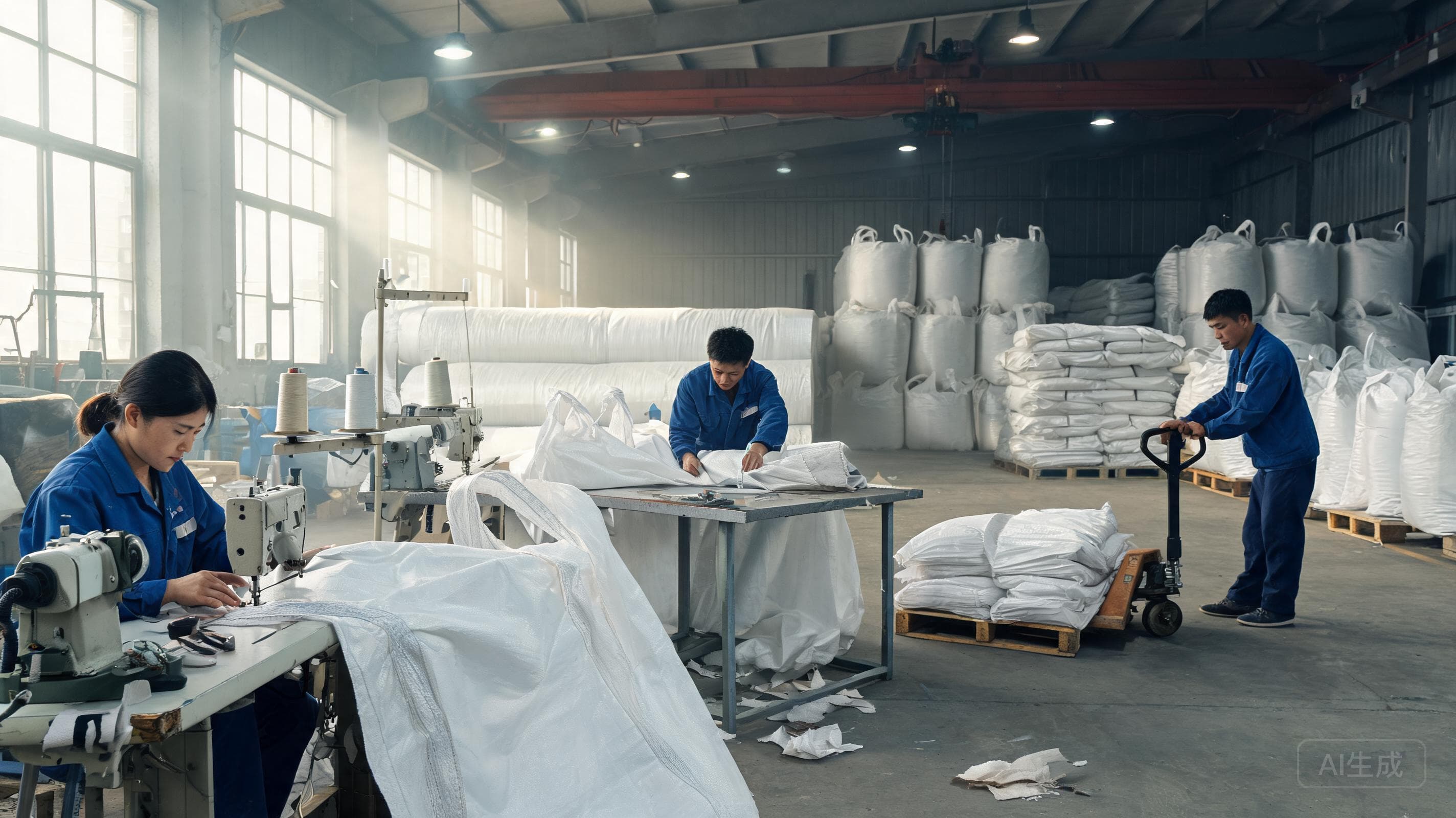
Sustainable Bulk Bag Solutions: Driving ESG Compliance, Cost Reduction, and Supply Chain Efficiency for Industrial Enterprises
See how COSEK bulk bags help industrial enterprises reduce packaging and logistics costs, support ESG reporting, protect product integrity, and improve supply chain efficiency with fit-for-purpose designs.
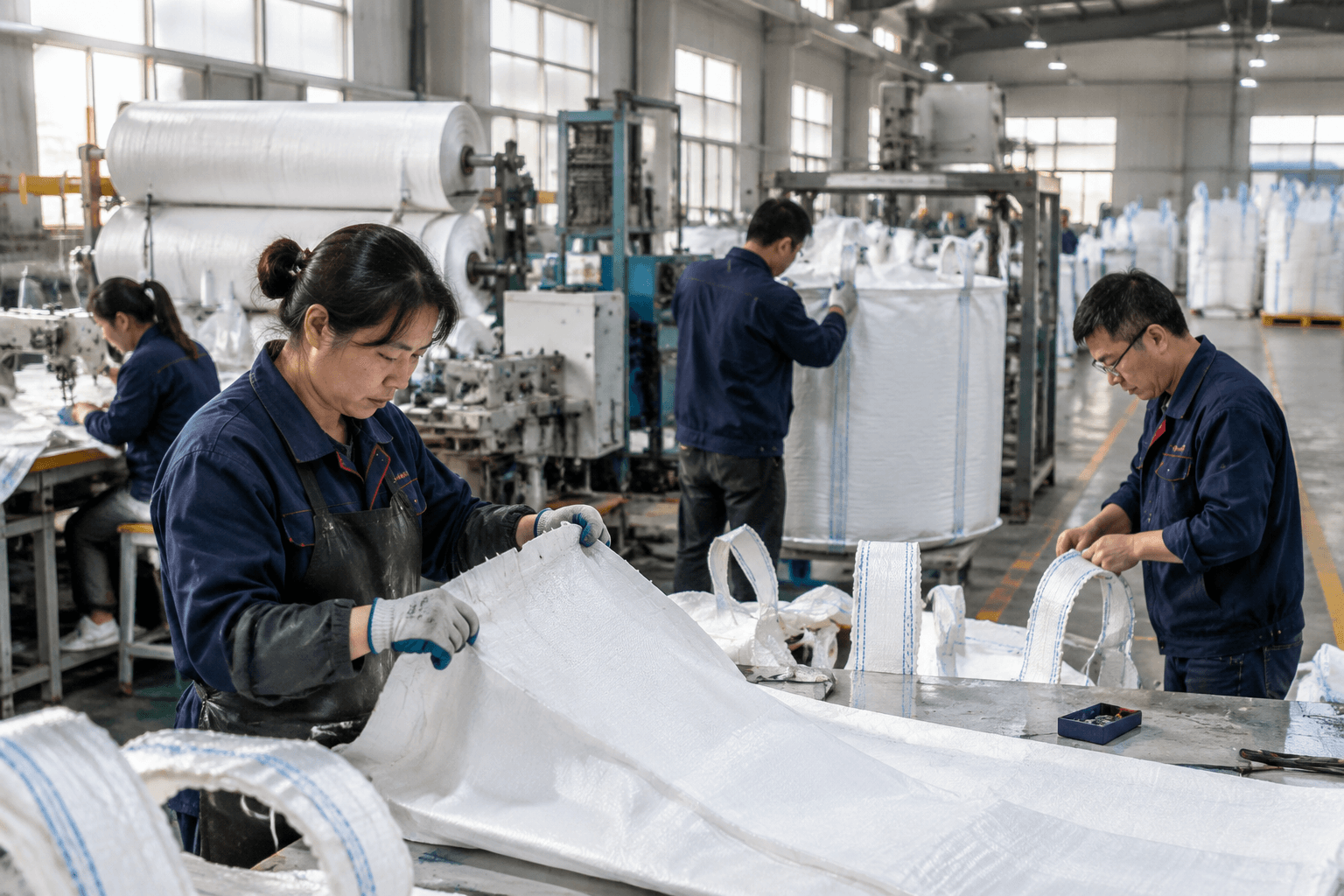
Choosing the Right FIBC Bulk Bag Manufacturing Partner for Reliable, Efficient Packaging Operations
Evaluate FIBC suppliers by application fit, quality control, automation compatibility, traceability, and total cost to improve containment, throughput, compliance, and supply reliability.
Want to know more?
Get in touch with us for more information about our services and products.