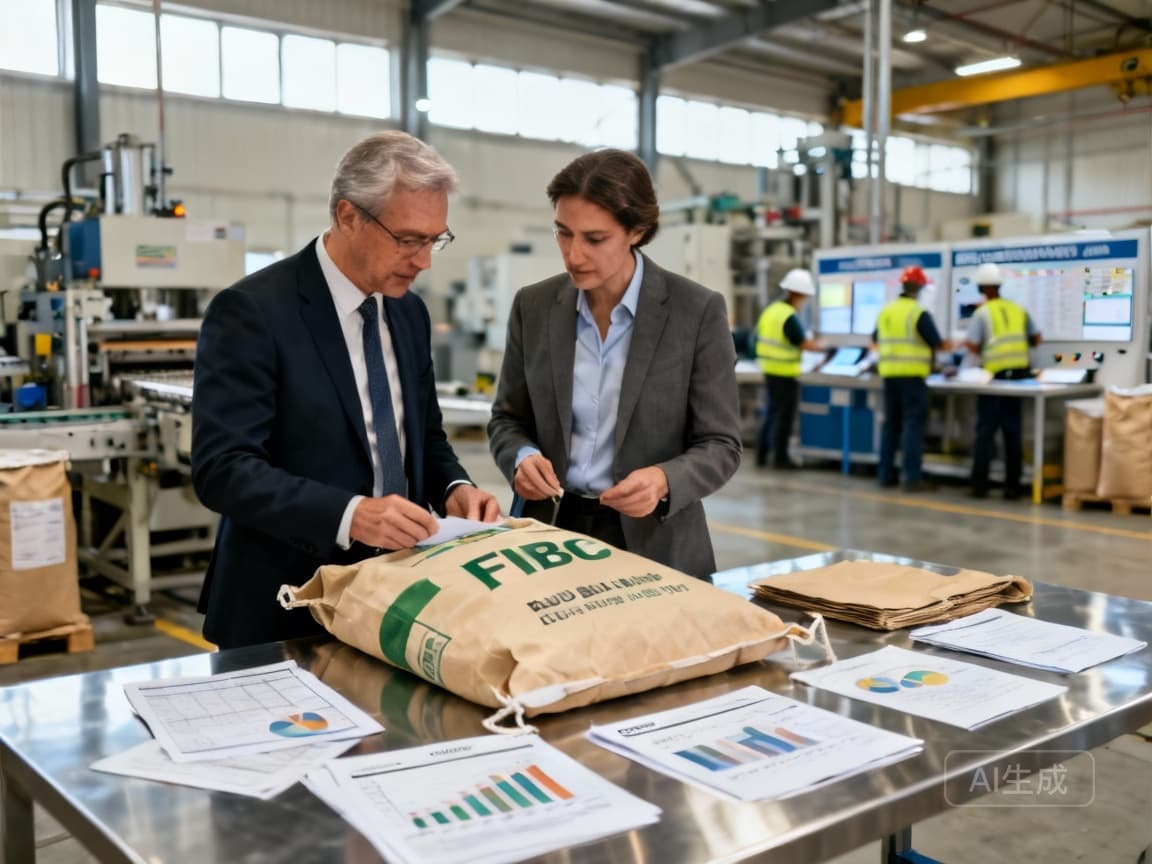
Measure ROI in FIBC Bags: Quantify Cost Savings & Efficiency Gains in Manufacturing #84

RUNCHEN
AuthorWith more than 25 years of experience in FIBC bulk bag manufacturing and sales, RUNCHEN operates its own production facility with stable batch capacity. We specialize in FIBC bulk bags, jumbo bags, ton bags, and customized industrial packaging solutions.
The Unmeasured Value: Building a ROI Framework for FIBC Bag Investments
Why do 85% of manufacturing companies struggle to accurately measure the true return on investment of their packaging materials? The answer lies in a critical industry blind spot: most FIBC bag procurement decisions are based on unit price rather than total cost of ownership. As the global bulk bag market grows from $6.6 billion in 2024 to a projected $12.0 billion by 2035 (5.6% CAGR), this measurement gap represents significant unrealized value for manufacturing operations.
The ROI Measurement Gap in Bulk Packaging
Traditional cost analysis fails to capture the comprehensive value of strategic FIBC bag selection. While North America's $2.3 billion market (2024) and Europe's projected $3.2 billion market (2035) demonstrate substantial investment, most organizations lack standardized frameworks to quantify returns. Drawing from ROI Institute's methodology implemented across 44 countries with 3,000 certified professionals, we've developed a specialized framework for bulk bag investments.
The Four-Dimensional FIBC ROI Measurement Framework
Quality Dimension: Protecting Product Value
The quality dimension quantifies how FIBC bags prevent defects and preserve product integrity. Instrumental's case study demonstrates how proper bulk bag selection prevented 10,000 defective components from entering production streams, delivering ROI that exceeded initial projections. Calculate quality value using this formula:
Quality ROI = (Defect Prevention Value + Product Protection Savings) / Bag Investment Cost
For practical implementation: track reduction in product damage claims, measure moisture protection effectiveness, and document contamination prevention incidents. Assign monetary values to each prevented event based on historical cost data.
Operational Efficiency Dimension: Streamlining Processes
Operational efficiency measures time savings, labor reduction, and space optimization. Consider these calculable benefits:
- Loading/Unloading Time Reduction: Measure time saved per bag handled × labor cost × annual volume
- Storage Space Optimization: Calculate square footage savings × facility costs per square foot
- Throughput Improvement: Quantify additional units processed per hour × operational margin
Implementation tip: Conduct time-motion studies before and after FIBC implementation to establish baseline metrics and measure improvements.
Sustainability Dimension: Environmental and Compliance Value
With sustainable packaging markets growing at 5.6% CAGR, environmental considerations deliver tangible ROI. Measure:
- Reuse cycle cost allocation: (Bag cost ÷ number of uses) versus single-use alternatives
- Recycling revenue: Weight of recyclable material × market rates
- Carbon emission reduction: Tons of CO2 equivalent avoided × carbon credit value
- Compliance risk avoidance: Potential fines × probability of occurrence
Risk Mitigation Dimension: Preventing Costly Disruptions
Risk mitigation quantifies avoided losses from supply chain disruptions, safety incidents, and regulatory non-compliance. Reference Instrumental's experience where systematic value verification revealed higher-than-expected risk prevention benefits. Key metrics include:
- Product loss prevention from improved bag integrity
- Safety incident reduction through proper bag design selection
- Supply chain disruption avoidance from reliable packaging performance
Implementation Roadmap: From Theory to Measurement
Based on ROI Institute's implementation experience across global manufacturing organizations, successful ROI measurement requires structured planning and discipline. Follow this four-phase approach:
Phase 1: Assessment and Baseline Establishment
Define clear evaluation objectives aligned with organizational goals. Establish current performance baselines for: - Product damage rates - Handling times - Storage requirements - Safety incidents
Phase 2: Data Collection System Development
Create standardized tracking mechanisms for: - Bag performance metrics - Labor time requirements - Quality indicators - Incident reports
Phase 3: ROI Calculation Model Implementation
Implement the four-dimensional framework with customized weighting based on your operational priorities. Manufacturing environments with high-value products might weight quality dimension at 40%, while high-volume operations might emphasize operational efficiency.
Phase 4: Continuous Optimization and Validation
Regularly review and refine measurements based on actual performance data. Validate calculations against real-world outcomes and adjust assumptions as needed.
Industry-Specific Application Guide
Different FIBC bag types deliver distinct ROI profiles. Focus measurements accordingly:
- Baffle Bags: Emphasize loading efficiency and space utilization metrics
- Conductive Bags: Prioritize safety incident reduction and explosion risk avoidance
- Breathable Bags: Focus on product quality preservation and spoilage prevention
- FOIL Bags: Measure extended product shelf-life and preservation value
Moving Beyond Price-Per-Unit Thinking
The manufacturing companies achieving greatest success with FIBC investments recognize that true cost calculation extends far beyond purchase price. By implementing structured ROI measurement frameworks, organizations can make data-driven decisions that optimize total operational value. As market data indicates sustained growth in flexible packaging, those who master ROI measurement will gain significant competitive advantage in managing their bulk packaging investments.
Begin your measurement journey by selecting one product line or facility for initial framework implementation. Document both quantitative results and qualitative improvements, then scale successful approaches across your organization. The hidden value in your FIBC investments awaits discovery—systematic measurement makes it visible and actionable.
Related News
Other news you might be interested in
Choosing the Right Bulk Bag Manufacturer for Safer, More Efficient Operations
Learn how to specify bulk bags, evaluate manufacturers, and validate quality and supply reliability to reduce operational risk and support safer, more efficient handling.

The 140th Canton Fair: New Trends in the Export Market for FIBC Bulk Bags, Jumbo Bags, and PP Woven Packaging
Explore how export buyers can evaluate FIBC bulk bags and PP woven packaging beyond unit price. Get practical guidance on specifications, supplier verification, sustainability requirements, and RFQs—and prepare your next sourcing conversation with COSEK.
Want to know more?
Get in touch with us for more information about our services and products.