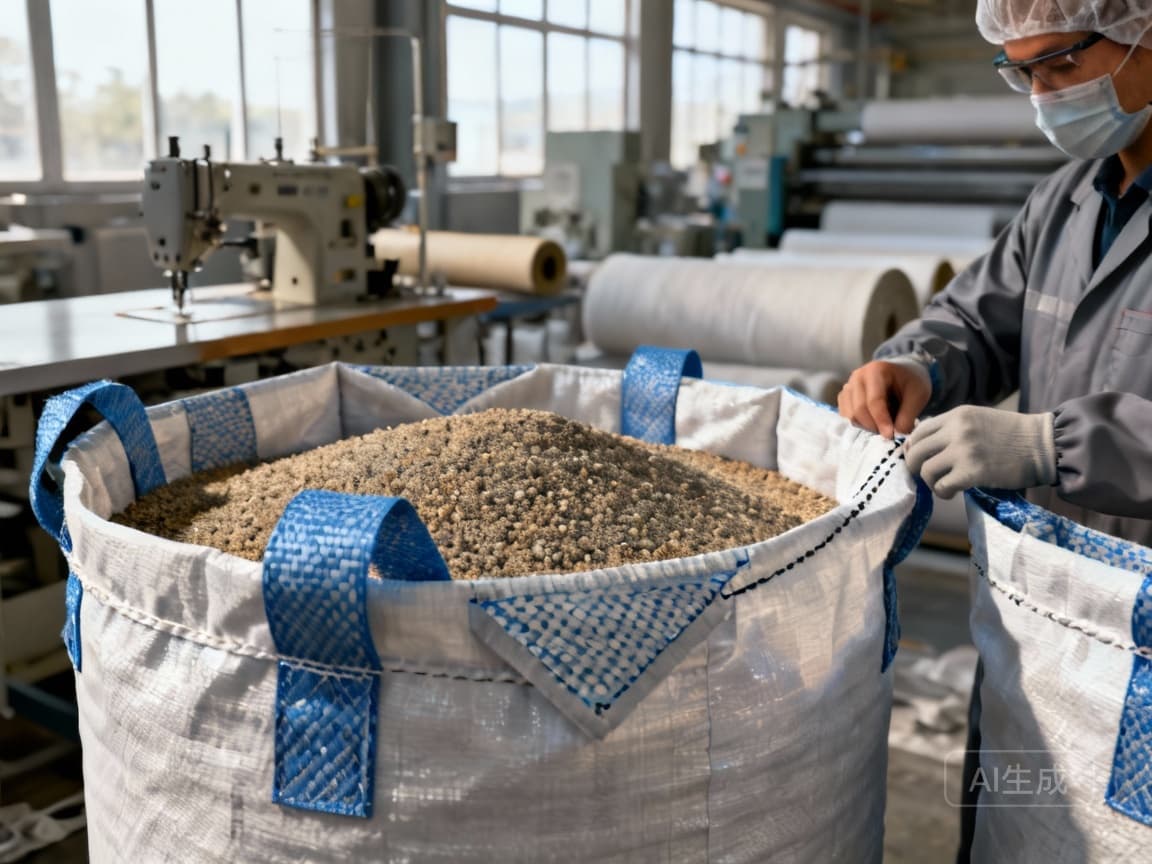
Secure $5K/Ton Cargo: A Guide to Custom FIBC Engineering for Sensitive Materials #100
RUNCHEN
AuthorWith more than 25 years of experience in FIBC bulk bag manufacturing and sales, RUNCHEN operates its own production facility with stable batch capacity. We specialize in FIBC bulk bags, jumbo bags, ton bags, and customized industrial packaging solutions.
Securing the $5,000/Ton Cargo: A Guide to Custom FIBC Engineering for Sensitive Materials
In the global market for high-value commodities, packaging is often the weakest link. Consider the data: the global market for seaweed-based fertilizers in 2024 reached approximately 543,000 tons, with an average market price of $5,000 per ton. For products commanding such a premium, the cost of failure—whether from moisture damage, contamination, or structural collapse during transit—is not merely an operational hiccup; it is a direct assault on profitability and brand integrity. Yet, many procurement and operations teams still rely on "standard" Flexible Intermediate Bulk Containers (FIBCs or bulk bags), treating them as a commodity purchase rather than a strategic, engineered component of the supply chain. This guide moves beyond generic solutions to detail how a custom FIBC engineering approach acts as a "value preservation system" for sensitive, high-value materials.
Redefining Risk: The True Cost of a Generic FIBC
The common challenges cited in the industry, such as the "bulging" or "drumming" phenomenon, are symptoms of a deeper issue: a mismatch between bag design and product/process requirements. Cases from companies like Suzhou Xingchen New Material Group Co., Ltd. and Zibo Muguang Plastic Products Co., Ltd. highlight how internal baffle (or "拉筋") designs solved deformation issues, leading to optimized storage and transportation cost savings of up to 30%. However, focusing solely on this one technical feature misses the broader point. For a $5,000/ton product like seaweed fertilizer, risks are multifaceted:
- Moisture & Contamination: Seaweed-based products, especially in powder form, are highly hygroscopic. A standard liner may not suffice in high-humidity maritime environments, leading to caking, nutrient degradation, and total spoilage.
- Structural Failure: Improperly calculated safety factors for dynamic forces during lifting, or unsupported stacking, can lead to catastrophic failure, dumping valuable product.
- Inefficient Handling: A bag not designed for specific filling or discharging equipment can cause residue, bridging, and increased labor time, negating the efficiency gains of bulk handling.
The risk is not just the loss of the product, but the cascading costs of customer disputes, emergency logistics, and reputational harm. Custom engineering starts with a thorough risk assessment of your product's entire journey.
The Anatomy of a Custom FIBC: Moving Beyond Internal Baffles
As demonstrated by the success cases, internal baffles are a powerful tool for maintaining a square, stackable shape, which is crucial for maximizing container and warehouse space. However, they are just one element in a holistic engineering checklist. A truly custom FIBC is built from a synergy of design, materials, and components, all tailored to the product's physical and chemical properties.
1. Material Science & Barrier Construction
The choice of fabric and coating is the first line of defense. For moisture-sensitive materials like seaweed fertilizer, a standard polypropylene (PP) weave is not enough.
- Base Fabric: Consider UV-stabilized PP for outdoor storage, or fabric treated with anti-static agents for products where dust explosion is a concern (common in fine powders).
- Barrier Technology: A simple polyethylene (PE) liner is a start, but for high-hygroscopic products, a multi-layer co-extruded liner or a laminate with superior moisture barrier properties (like EVOH) may be necessary. The choice between sewn-in and detachable liners also depends on cleaning and reuse requirements.
2. Structural & Seam Engineering
This is where the principle of the internal baffle is applied with scientific precision.
"The baffle structure is a key technology to enhance the morphological stability of the FIBC after loading," as noted in the implementation experience from Zibo Muguang Plastic Products. The critical engineering questions are: How many baffles? What is their width and tensile strength? How are they attached—with single, double, or box-stitched seams? The answers depend on the product's bulk density and the desired stacking load. For a dense product, wider, stronger baffles with reinforced stitching are non-negotiable.
3. Component Integration for Seamless Handling
Customization ensures the bag interfaces perfectly with your equipment.
- Filling Spout: Diameter and length must match the filling head to prevent dusting and spillage of valuable product.
- Discharge Spout: The design—such as a "duffle" style or specific chute—must facilitate complete, clean discharge into the receiving hopper to prevent waste and cross-contamination.
- Lifting Loops: Their configuration (e.g., 4-loop, 2-loop, cross-corner) and safety factor (typically 5:1 or 6:1) must be engineered for the bag's actual filled weight and your specific lifting apparatus.
A Framework for Collaboration: From Specification to Solution
Engaging with a FIBC manufacturer as a solutions partner, not just a vendor, is essential. To facilitate this, use the following actionable framework to develop your custom specification.
Step 1: Complete a Comprehensive Product & Process Profile
Provide your manufacturer with this critical data:
- Product Characteristics: Chemical composition, moisture sensitivity, bulk density (loose and packed), particle size, flowability, and any abrasive or corrosive properties.
- Process Parameters: Filling method (pressure, rate), maximum filling weight, stacking height and duration, and discharge method (gravity, pneumatic, etc.).
- Logistics & Storage Environment: Will bags be shipped via ocean container (high humidity)? Stored outdoors? Exposed to temperature extremes?
- Regulatory & Sustainability Requirements: Does the product or its destination require food-grade, biodegradable, or UN-certified packaging for hazardous materials? Is reusability a key goal for ESG metrics?
Step 2: Co-Develop and Validate the Design
A reputable manufacturer will use your profile to propose a engineered design, not just a catalog item. This includes:
- Providing CAD drawings or prototypes for review.
- Conducting or specifying pre-production tests, such as drop tests, vibration tests, or compression tests to validate stacking strength.
- For critical applications, starting with a pilot batch is a prudent investment to validate performance in real-world conditions before full-scale production.
Calculating True ROI: The Total Cost of Ownership (TCO) Model
The 30% logistics saving from the success case is compelling, but it's only one part of the financial picture. A custom engineered FIBC should be evaluated on its Total Cost of Ownership, which includes cost avoidance and value creation.
TCO = (Purchase Price + Operational Costs) - (Cost Avoidance + Efficiency Gains)
- Cost Avoidance: Quantify the reduction in product loss, rejected shipments, and customer credit notes. For a $5,000/ton product, preventing the loss of even a single ton pays for a significant number of premium bags.
- Efficiency Gains: Calculate savings from faster loading/unloading cycles, reduced cleaning time, and maximized shipping container utilization (more tons per container).
- Strategic Value: Factor in the brand value of delivering product in perfect condition and the sustainability benefits of reusable, durable packaging that reduces waste.
By framing the investment through a TCO lens, the higher initial cost of a custom-engineered FIBC is revealed as what it truly is: a value-preserving capital investment, not an expense.
Conclusion: Packaging as a Strategic Asset
In a competitive market where seaweed-based fertilizers and other high-value, sensitive materials command significant premiums, supply chain resilience is paramount. The data is clear: with global production in the hundreds of thousands of tons and prices at $5,000/ton, the stakes are too high for packaging to be an afterthought. As illustrated by the documented success with internal baffle designs, targeted engineering delivers tangible efficiency gains. By expanding this approach into a full-spectrum collaboration—encompassing material science, structural design, and process integration—you transform the FIBC from a simple container into a reliable, value-preserving strategic asset. The goal is not just to ship a product, but to guarantee its integrity and value from your production line to the end-user's field, securing your cargo and your competitive advantage.
Related News
Other news you might be interested in
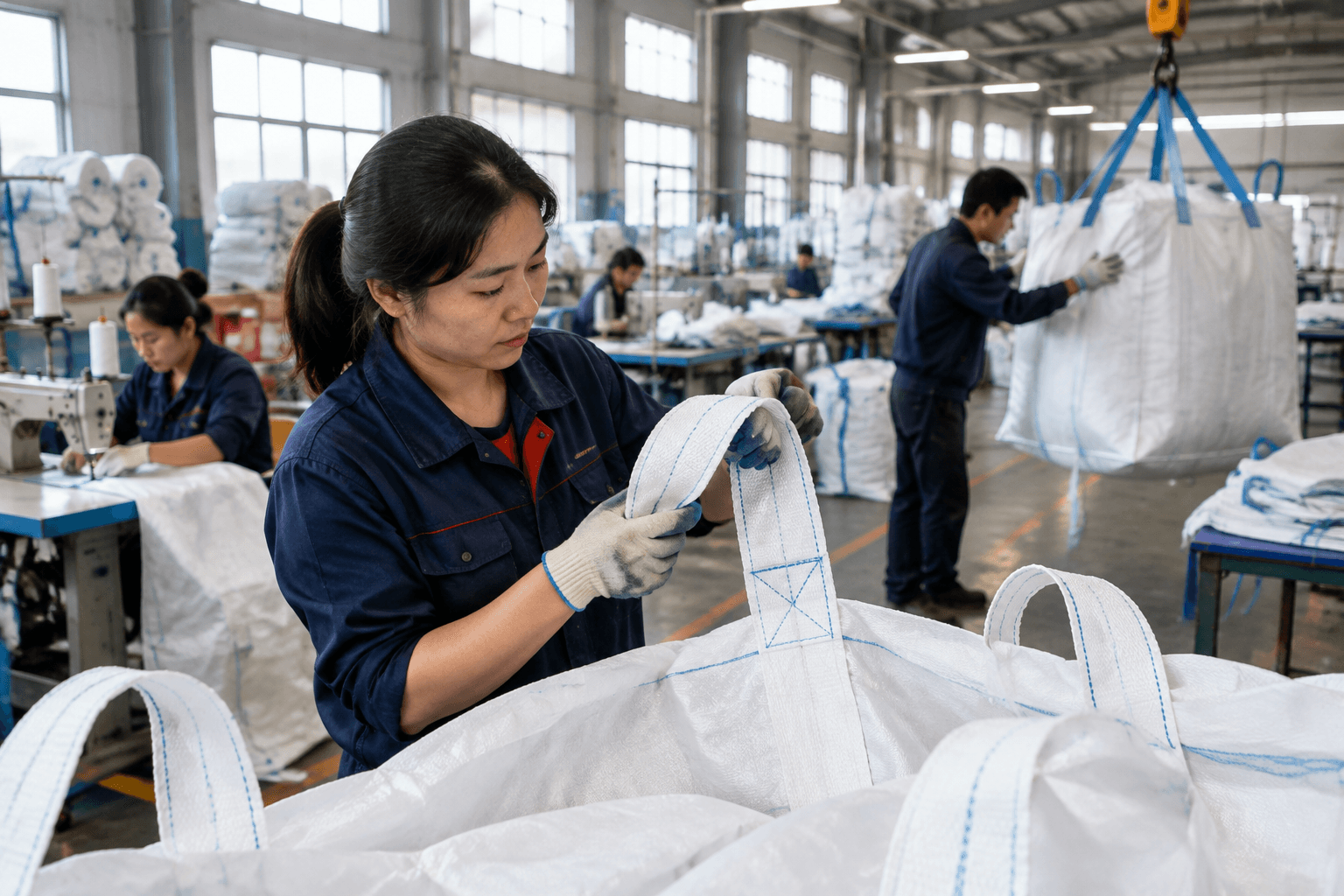
Choosing the Right Bulk Bag Manufacturer for Safer, More Efficient Operations
Learn how to specify bulk bags, evaluate manufacturers, and validate quality and supply reliability to reduce operational risk and support safer, more efficient handling.
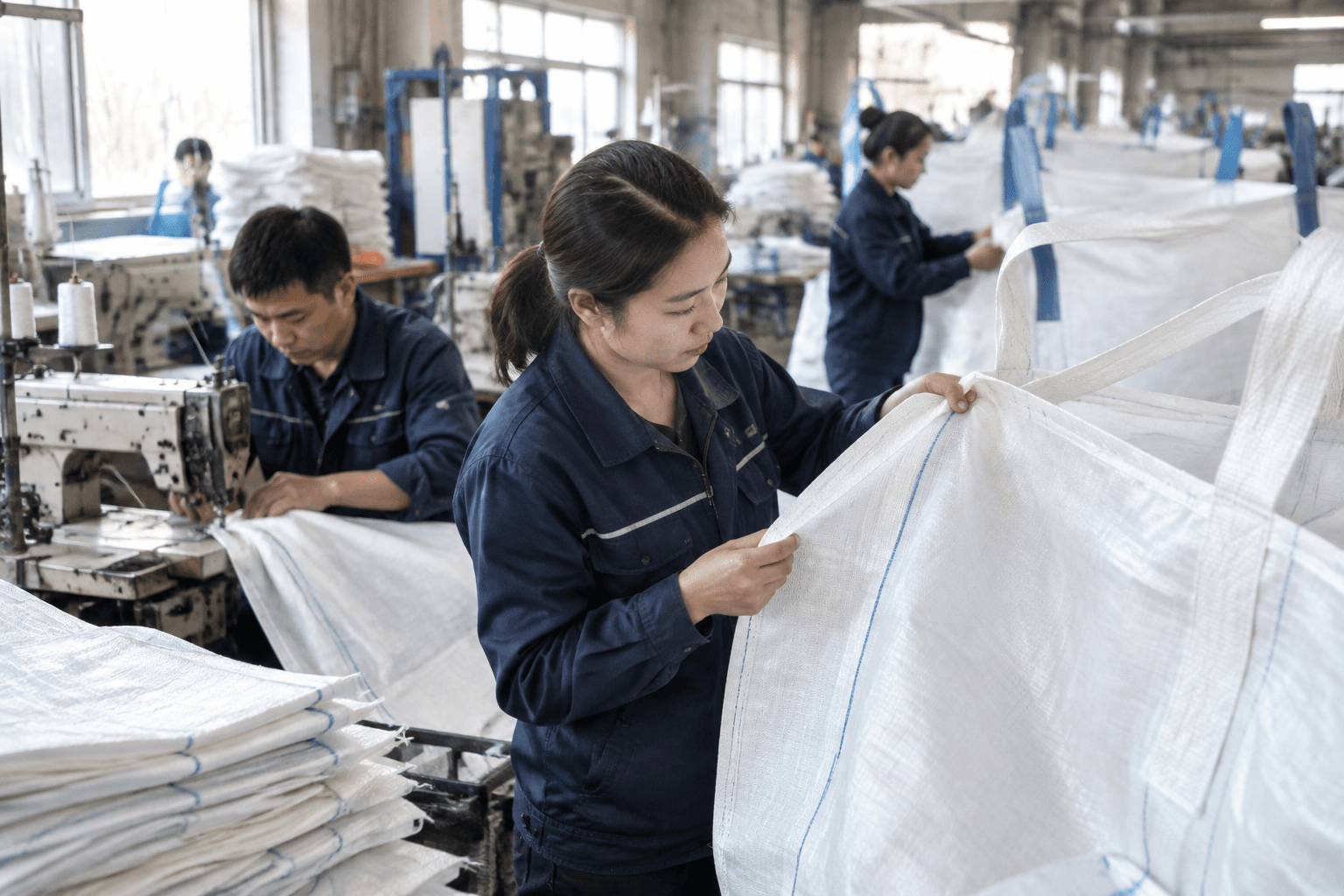
The 140th Canton Fair: New Trends in the Export Market for FIBC Bulk Bags, Jumbo Bags, and PP Woven Packaging
Explore how export buyers can evaluate FIBC bulk bags and PP woven packaging beyond unit price. Get practical guidance on specifications, supplier verification, sustainability requirements, and RFQs—and prepare your next sourcing conversation with COSEK.
Want to know more?
Get in touch with us for more information about our services and products.