Single material packaging grows by 7.3%: How to make ton bags a bonus in customer ESG reports
RUNCHEN
AuthorWith more than 25 years of experience in FIBC bulk bag manufacturing and sales, RUNCHEN operates its own production facility with stable batch capacity. We specialize in FIBC bulk bags, jumbo bags, ton bags, and customized industrial packaging solutions.
Single-Material Packaging Grows by 7.3%: How to Make FIBC Bags a Plus in Your Customers' ESG Reports
For suppliers of chemicals, food additives, and cosmetic ingredients, sustainability reports are transitioning from optional documents to critical business licenses. Downstream brands, especially in the trillion-dollar cosmetics industry, face immense pressure from consumers, investors, and regulations (such as Extended Producer Responsibility, EPR) to achieve transparency and circularity in their supply chains. Against this macro trend, every packaging link is under scrutiny—including bulk material transport packaging like Flexible Intermediate Bulk Containers (FIBC).
Traditionally, FIBC procurement decisions were primarily based on load capacity and unit price. However, the global single-material packaging market is projected to grow at a compound annual growth rate (CAGR) of 7.3%, reaching $5.63 billion by 2029. This clearly indicates that the "endpoint" of packaging has become the starting point for brand considerations. Your FIBC bags are no longer just logistics consumables; they are evolving into critical nodes for supply chain sustainability and operational resilience, directly impacting your performance in downstream customers' ESG evaluations.
From Cost Center to Value Lever: Redefining the Role of FIBC Bags
Positioning FIBC bags as an ESG "plus" requires thinking beyond basic "recyclable" labels and adopting a systemic approach. This involves the entire lifecycle, from material selection and design to usage and end-of-life treatment. For example, case studies from Shandong Lusu Packaging demonstrate that proper hanging and handling methods are crucial for FIBC longevity. Extending service life is itself the most direct sustainable practice, reducing waste and raw material consumption.
The deeper value lies in meeting the specific needs of downstream industries. Take the cosmetics sector, for instance, whose global packaging market is expected to exceed $400 billion by 2035, with sustainability as a core driver. Brands demand extremely high standards for ingredient purity, stability, and traceability. A batch of pigments or active ingredients compromised by improper packaging—due to moisture or contamination—could lead to product failure and brand reputation crises. Thus, ensuring intact ingredient delivery from supplier facilities to production lines becomes a key hidden value of FIBC bags.
"Solutions must be closely integrated with production processes and material characteristics."—This insight from Endema's FIBC unloading station case study precisely highlights the value of sustainable packaging: it must serve specific, high-quality production workflows.
A Systemic Framework for "Sustainable FIBC Bags"
To translate commitments into verifiable ESG value, suppliers need an actionable framework. Here are three core dimensions:
1. Materials & Design: Designing for Recycling
Single-material structures (e.g., pure polypropylene, PP) are foundational, as they significantly simplify recycling. But design details matter equally:
- Use virgin or traceable recycled materials, backed by relevant certifications.
- Simplify structures: Minimize composite plastics and hard-to-separate coatings.
- Detachable components: Design features like removable straps or zippers to facilitate material stream separation.
- Eco-friendly inks for labeling to avoid heavy metal contamination.
2. Operations & Efficiency: Ensuring Safety and Reducing Waste
Safe, efficient operations directly contribute to environmental and social governance (the S and G in ESG). Standardized practices based on real incident analysis not only eliminate safety risks but also extend FIBC lifespan. This includes:
- Detailed protocols for lifting, forklift handling, and storage (e.g., avoiding outdoor exposure to prevent accelerated aging).
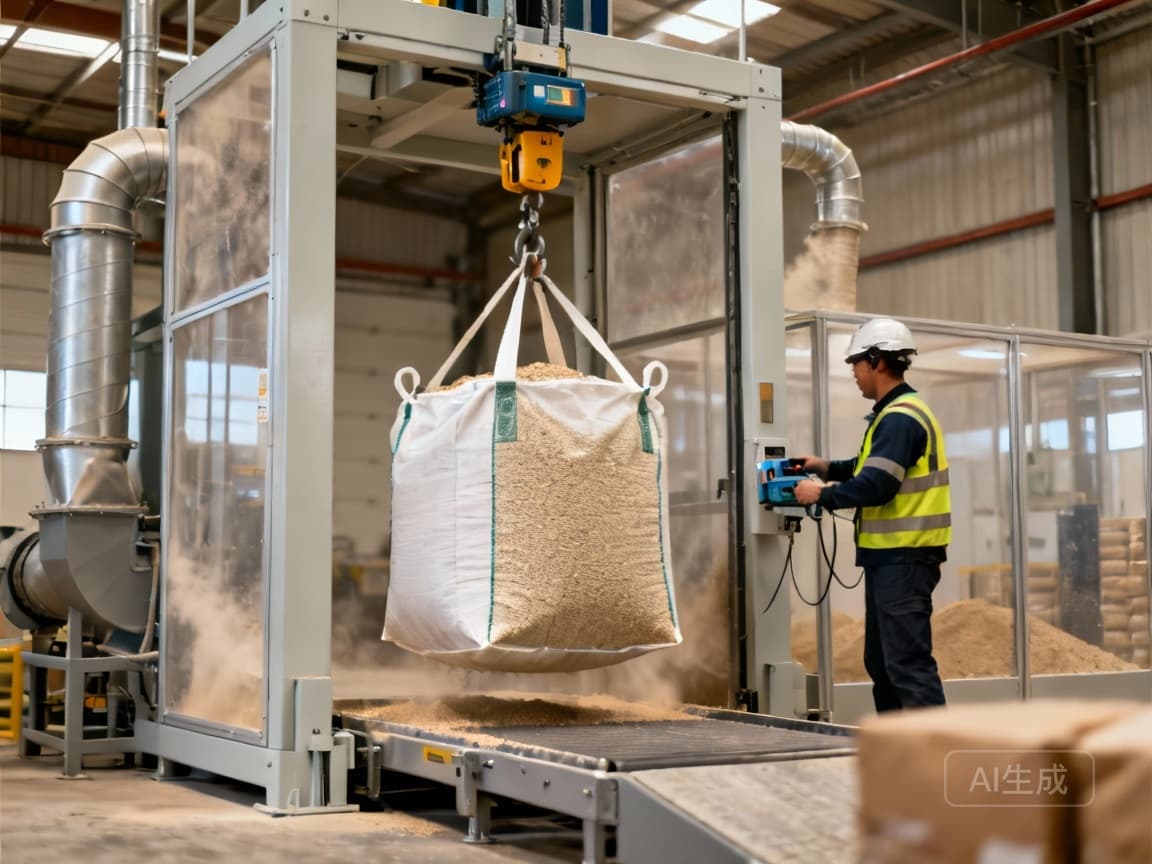
- Investing in modular FIBC unloading stations like Endema’s, enabling dust-free, enclosed discharge. This protects high-value ingredients (e.g., cosmetics) from contamination, improves worker conditions, reduces material loss, and complies with stringent standards like GMP.
3. Data & Certification: Providing Verifiable Evidence
ESG reports require data-backed claims. You can offer:
- Life Cycle Assessment (LCA) summaries showcasing carbon footprints.
- Mass balance certifications for recycled content.
- Compliance certificates meeting industry-specific standards (e.g., food-grade, pharmaceutical-grade).
Action Guide: From Self-Assessment to Strategic Dialogue
To act now, follow this roadmap:
- Internal audit: Evaluate gaps in your current FIBCs’ material purity, recyclability, and operational protocols.
- Supplier collaboration: Engage FIBC manufacturers in strategic discussions, demanding solutions and documentation aligned with the above framework. Explore flexible designs tailored to new/retrofitted facilities (optimizing layouts for new plants, modular integration for retrofits with minimal downtime).
- Value communication: Proactively showcase your sustainable packaging measures (e.g., waste reduction, improved ingredient purity) to downstream clients as part of your supply chain advantage.
Ultimately, when your FIBC choices align with customers’ sustainability goals, you deliver not just raw materials but solutions that mitigate compliance risks and enhance brand credibility. In the era of single materials and circular economies, transforming FIBCs from cost items to green value-adds is no longer forward-thinking—it’s a competitive necessity.
Related News
Other news you might be interested in
Choosing the Right FIBC Bulk Bag: A Procurement Guide for Safer, More Reliable Packaging
Use this practical FIBC procurement guide to define your application, compare specifications and suppliers, verify compliance, and request a bag configuration that fits your operation.
Choosing the Right Bulk Bag Manufacturer for Safer, More Efficient Operations
Learn how to specify bulk bags, evaluate manufacturers, and validate quality and supply reliability to reduce operational risk and support safer, more efficient handling.
Want to know more?
Get in touch with us for more information about our services and products.