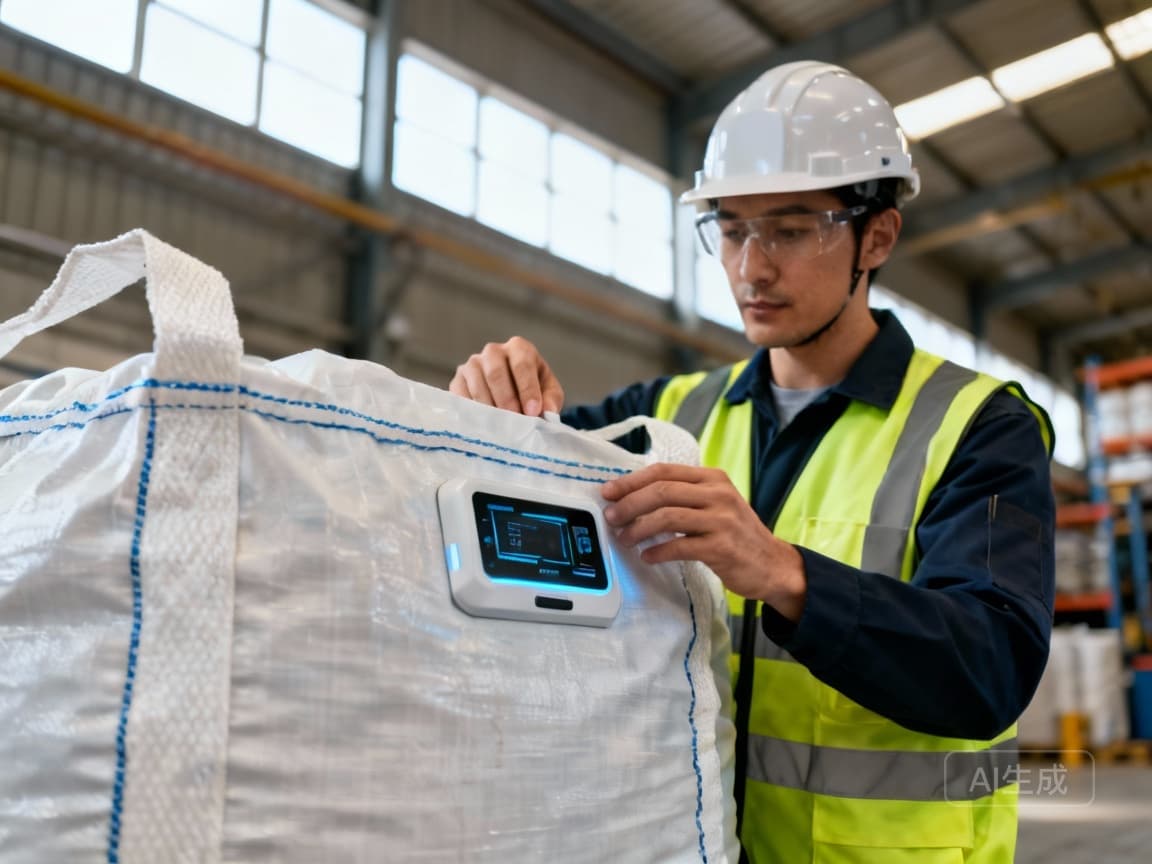
Transform FIBCs into Smart Data Nodes: Accelerate 35% ROI & Optimize Supply Chain
RUNCHEN
AuthorWith more than 25 years of experience in FIBC bulk bag manufacturing and sales, RUNCHEN operates its own production facility with stable batch capacity. We specialize in FIBC bulk bags, jumbo bags, ton bags, and customized industrial packaging solutions.
Transform FIBCs into Smart Data Nodes: Accelerate 35% ROI & Optimize Supply Chain
What does your customer truly purchase when they buy a Flexible Intermediate Bulk Container (FIBC)? Is it simply a vessel to hold 25 tons of material, or is it the safe, efficient, and low-cost movement and utilization of those 25 tons? The industry's traditional focus on cost-per-bag and load capacity is being eclipsed by a more powerful paradigm. Leading manufacturers are no longer just selling bags; they are deploying intelligent data nodes that optimize entire supply chains. By embedding digital capabilities into FIBCs, you can shift from a product-centric model to a value-driven partnership, accelerating ROI and building unbreakable customer loyalty.
The New Value Proposition: From Container to Connected Asset
The market is signaling a decisive shift. Insights reveal growing demand for automated packaging equipment and stricter environmental compliance driving innovation. Simultaneously, real-world success stories from enterprise software implementations provide a proven blueprint. For instance, the Shyft case study demonstrated that organizations using a comprehensive implementation strategy achieved a positive ROI 35% faster than those with minimal approaches. This principle is directly transferable to physical products. An FIBC is not the end of your transaction; it's the beginning of a data-rich journey through your client's operations.
By integrating low-cost tracking technologies like RFID or QR codes, a standard FIBC transforms into a smart sensor capturing critical data streams:
- Asset Intelligence: Unique ID, real-time location, and total lifecycle usage cycles.
- Operational Metrics: Weight data per fill (indicating consistency), timestamps for loading/unloading, and handling events.
- Condition Monitoring: Internal temperature and humidity for sensitive commodities like food or specialty chemicals.
This data moves the conversation from price to performance. For your client, it enables predictive replenishment, minimizes loss, verifies handling protocols, and provides auditable traceability. For you, it delivers invaluable insights into real-world product performance, informs R&D, and creates a foundation for recurring service revenue.
A Proven, Phased Implementation Framework
The journey from concept to quantified value must be managed, not rushed. Drawing from the proven methodology used by Fortune 500 companies implementing AI solutions—which achieved an average ROI of 544% through phased rollouts—we outline a clear three-step path for FIBC digitization.
Phase 1: Strategic Assessment & Pilot Design
Resist a full-scale launch. Begin by identifying the ideal pilot scenario: a high-value, condition-sensitive, or frequently handled material stream at a forward-thinking client. The goal is not to track everything, but to solve one specific, measurable operational pain point. Frame the pilot with a clear objective, such as "Reduce manual inventory counting time for Pilot Chemical X by 20%" or "Eliminate unaccounted loss of Premium Powder Y." This mirrors the "evaluate and pilot" stage critical to enterprise software success, ensuring early wins that build internal advocacy.
Phase 2: Technology Integration & Partnership
Select technology based on the data need and client infrastructure. Passive UHF RFID offers automated, bulk scanning for logistics hubs. Rugmented QR codes provide a lower-cost entry point for manual scanning. The key is seamless integration with the client's workflow, whether at the filling station, warehouse portal, or unloading dock. Emphasize partnerships with providers of automated packaging lines and handling equipment to create a cohesive data ecosystem. As seen in the Holland Mechanics case, where modular conveyor design improved logistics by 30%, interoperability is a force multiplier.
Phase 3: Data Delivery & Value Realization
The hardware is merely the enabler; the insight is the product. Develop a simple, clear dashboard for your client that translates raw data into actionable business intelligence. Show them not just where their bags are, but also trends in warehouse dwell time, potential filling inconsistencies, or environmental exposure risks. This phase is where you solidify the partnership. Discuss service models—perhaps a "Data-as-a-Service" subscription alongside the physical bag—that align your success with their operational improvements. The Shyft case's 92% adoption rate in the first three months was driven by clear value communication and support, a lesson directly applicable here.
Navigating Challenges and Securing Your Advantage
Adoption hurdles exist, including data security concerns, initial investment justification, and change management. Address these proactively by leveraging lessons from the case studies: secure executive sponsorship by linking the pilot to strategic goals like ESG reporting or supply chain resilience. Start small to manage cost and complexity. Most importantly, position this not as an IT project, but as an operational excellence initiative led by your team as the expert guide.
The industry is at an inflection point. As evidenced by projects like the 5,000-ton annual capacity expansion by Wenzhou Shangde Packaging, competition is scaling up. The winning strategy is to scale value. By transforming your FIBCs into intelligent data nodes, you move beyond the red ocean of cost competition. You become an indispensable partner in your client's supply chain, delivering accelerated, verifiable ROI and building the deep, data-driven relationships that define market leadership.
The question is no longer if this shift will happen, but which manufacturers will lead it. Begin by evaluating which product line or client partnership holds the most potential for your first smart data pilot.
Related News
Other news you might be interested in

Choosing the Right Bulk Bag Manufacturer for Safer, More Efficient Operations
Learn how to specify bulk bags, evaluate manufacturers, and validate quality and supply reliability to reduce operational risk and support safer, more efficient handling.

The 140th Canton Fair: New Trends in the Export Market for FIBC Bulk Bags, Jumbo Bags, and PP Woven Packaging
Explore how export buyers can evaluate FIBC bulk bags and PP woven packaging beyond unit price. Get practical guidance on specifications, supplier verification, sustainability requirements, and RFQs—and prepare your next sourcing conversation with COSEK.
Want to know more?
Get in touch with us for more information about our services and products.