Types of Closures for Bags: Understanding Different FIBC Bottom Designs

RUNCHEN
AuthorWith more than 25 years of experience in FIBC bulk bag manufacturing and sales, RUNCHEN operates its own production facility with stable batch capacity. We specialize in FIBC bulk bags, jumbo bags, ton bags, and customized industrial packaging solutions.
Types of closures for bags refer to the different ways an FIBC (Flexible Intermediate Bulk Container) or bulk bag is sealed and emptied. The closure determines how securely materials are stored and how efficiently they can be discharged. Choosing the right bottom design is crucial for preventing spillage, contamination, or material loss.
This guide explains the main FIBC types of closures, from flat bottoms to spout and petal closures, to help you choose the right design for your packaging needs. Whether you handle powders, grains, or construction materials, understanding these closures ensures safety, efficiency, and cost-effectiveness. For a general overview of your core packaging options, explore our dedicated page on FIBC BIG BAG solutions.
Flat Bottom: The Simplest Form of Closure
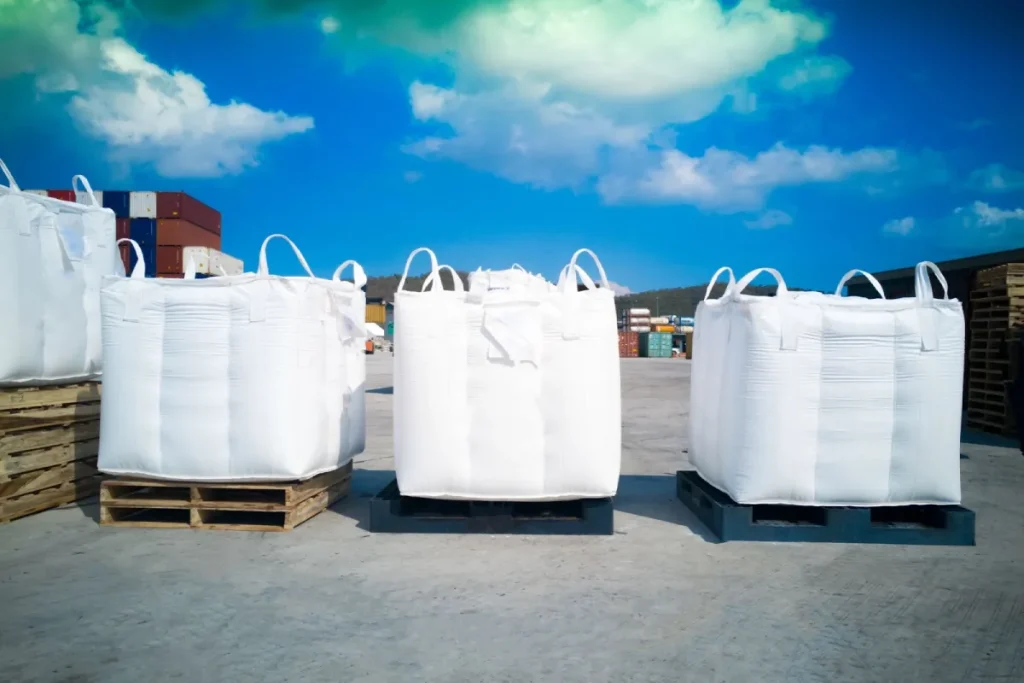
A Flat Bottom FIBC is the most basic design used in bulk packaging. It features a sealed base with no outlet or discharge opening. To empty the contents, the bag must be manually cut open or tilted.
Best for: One-time use and non-reusable bags where contents are disposed of all at once — such as sand, gravel, or solid construction waste.
Advantages:
- Simple, durable, and cost-effective
- Suitable for coarse or non-dusty materials
- No additional sewing or spout attachment required
While it lacks reusability, the flat bottom remains a popular choice due to its simplicity and strength.
Spout Bottom: Controlled and Efficient Discharge
The Spout Bottom FIBC is one of the most common types of closures for bags used for powders and granules. It features a cylindrical spout sewn into the base of the bag, which acts like a funnel for controlled discharge.
Benefits:
- Prevents product loss and reduces waste
- Allows easy and precise discharge
- Ideal for powders, pellets, or granular products
The spout can be tied or sealed with a cord when not in use, ensuring the materials stay protected from moisture and contamination.
Spout Bottom with Iris Closure: Added Dust Protection
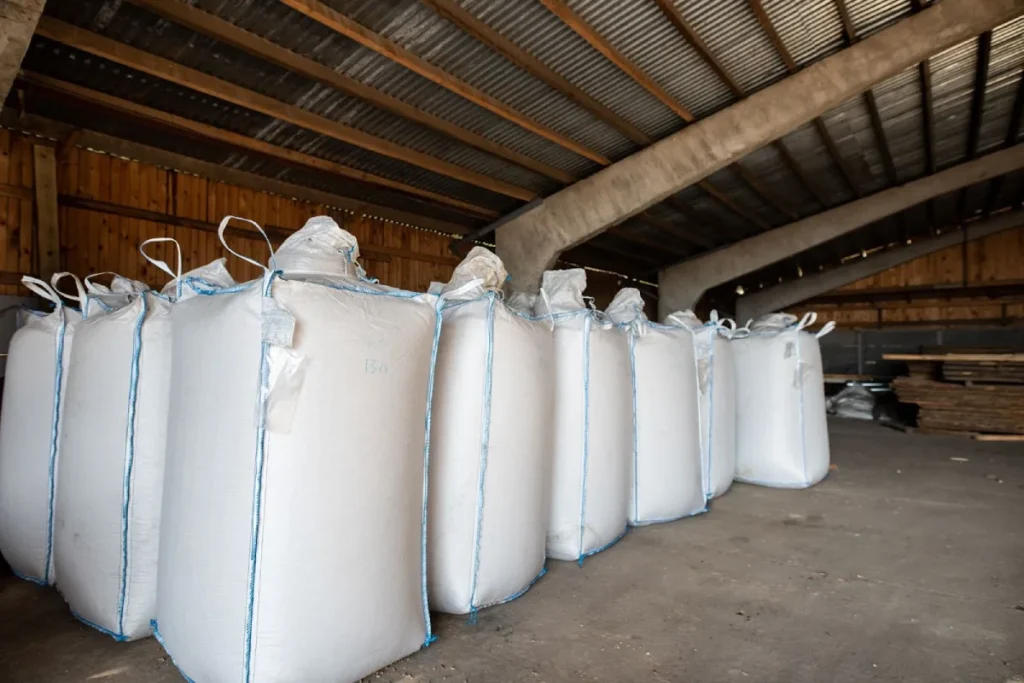
When handling fine or hazardous materials, a Spout Bottom with Iris Closure provides extra control. An iris closure acts as a secondary sleeve that wraps around the discharge spout. It can be tightened or loosened using a drawstring mechanism, controlling the flow of material precisely.
Ideal for: Chemical powders, fertilizers, and other fine particulate substances.
Why it matters:
- Reduces dust exposure during discharge
- Prevents contamination from air or moisture
- Improves safety in handling hazardous materials
This closure type is often recommended in industries that require strict environmental and safety compliance.
Petal Closure FIBC: Extra Protection and Durability
The Petal Closure FIBC, sometimes called a Star Closure, includes overlapping fabric flaps (petals) sewn beneath the discharge spout. These petals fold inward, covering the spout when not in use.
Key features:
- Adds a protective layer to prevent wear and tear
- Keeps the discharge spout clean and secure
- Reduces product leakage and contamination
This design is especially beneficial for long-term storage or transportation of sensitive materials. The Petal Closure FIBC combines safety with longevity, helping manufacturers reduce replacement costs and material loss.
Spout Bottom with Protection Flap: Reinforced for Heavy-Duty Use
A Protection Flap adds an external fabric cover over the discharge area, shielding the spout and seams from damage during transit.
Why it’s used:
- Protects against rough handling or abrasion
- Keeps the discharge area clean
- Extends the bag’s service life
This design is common in logistics and export packaging, where FIBCs are handled multiple times before reaching their destination.
Quick Discharge or Conical Base Bottom: For Sticky or Dense Materials
Some products, such as clay, slurries, or wet grains, don’t flow freely. The Conical Base Bottom FIBC solves this problem with a cone-shaped bottom that naturally guides material out through gravity.
Benefits:
- Reduces leftover residue
- Prevents clogging
- Speeds up the discharge of sticky materials
This design ensures efficient unloading and is ideal for industries dealing with viscous or dense materials.
B-Lock Closure Bottom Spout: Secure and Reusable
A B-Lock Closure, also known as a cord lock, replaces hand-tied knots with a secure locking mechanism. This helps operators open and close the discharge spout quickly and safely.
Advantages:
- Prevents accidental spills
- Saves time compared to manual tying
- Available in multiple lengths and sizes for different bag types
This system improves convenience and enhances safety, making it a popular feature in modern FIBC production. For handling corrosive materials that demand maximum security, you should use FIBCs designed for Top Benefits of Using FIBC Bulk Bags for Chemicals.
Why Choosing the Right FIBC Bottom Closure Matters
Selecting the right closure affects just how you fill and empty your bags but also how well your materials are protected and how your operations perform. Our product line of PE FILM BAG liners can be integrated to enhance protection regardless of the closure type.
Key considerations:
- Material type: Choose spout or conical bottoms for powders and sticky products.
- Handling process: Consider protection flaps or petal closures for repeated handling.
- Safety standards: Use iris closures or B-locks for hazardous or food-grade materials.
Understanding these FIBC types of closures helps you optimize both cost and safety across your packaging cycle.
Conclusion: Find the Perfect Closure for Your Bulk Bags
Understanding the types of closures for bags helps you select packaging that aligns with your material, safety, and handling requirements. From flat bottom to Petal Closure FIBC, each design serves a specific function — improving efficiency, reducing waste, and enhancing overall safety.
At RUNCHEN Group, we specialize in high-quality FIBC big bags, PP woven bags, BOPP bags, and PE film bags designed for modern industries. Explore our complete collection and find the closure design that fits your business best. Start your packaging project today, your trusted partner for durable, customizable bulk packaging solutions.
FAQs About Types of Closures for Bags
1.What is the most common type of bag closure?
The spout bottom is the most widely used closure because it allows controlled discharge and minimal spillage.
2.Which FIBC bottom design is best for sticky materials?
A conical base bottom or quick-discharge design works best for sticky or dense products.
3.How can I prevent dust when discharging bulk bags?
Using an iris closure or petal closure FIBC minimizes dust and keeps materials contained.
Related News
Other news you might be interested in

The 140th Canton Fair: New Trends in the Export Market for FIBC Bulk Bags, Jumbo Bags, and PP Woven Packaging
Explore how export buyers can evaluate FIBC bulk bags and PP woven packaging beyond unit price. Get practical guidance on specifications, supplier verification, sustainability requirements, and RFQs—and prepare your next sourcing conversation with COSEK.

How to Choose the Right FIBC Bulk Bag for Safer, More Efficient Industrial Packaging
Choose an FIBC bulk bag by matching its construction to your product, handling process, compliance needs, and destination. Use technical review, pilot testing, and total-cost analysis to reduce risk.
Want to know more?
Get in touch with us for more information about our services and products.