Conductive Ton Bag
Product Overview
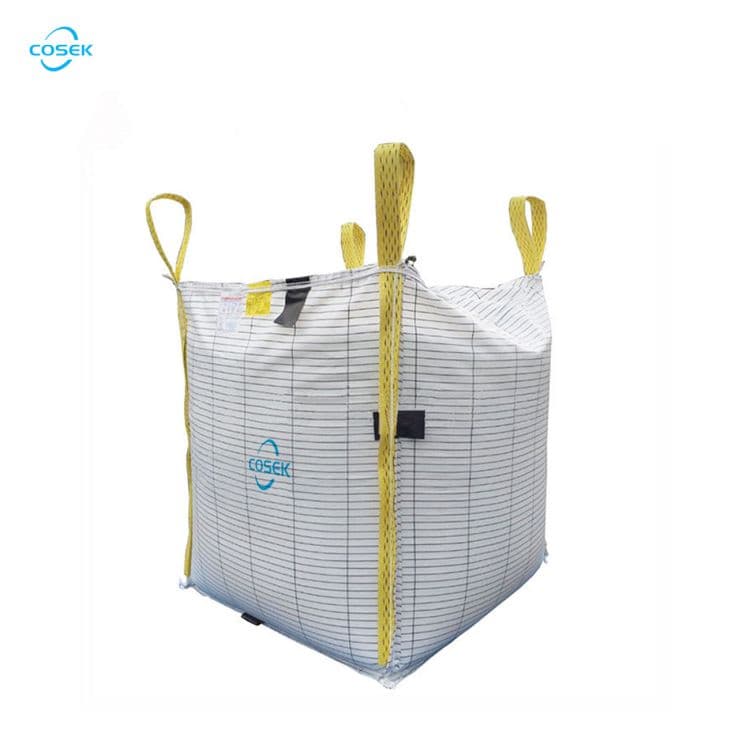
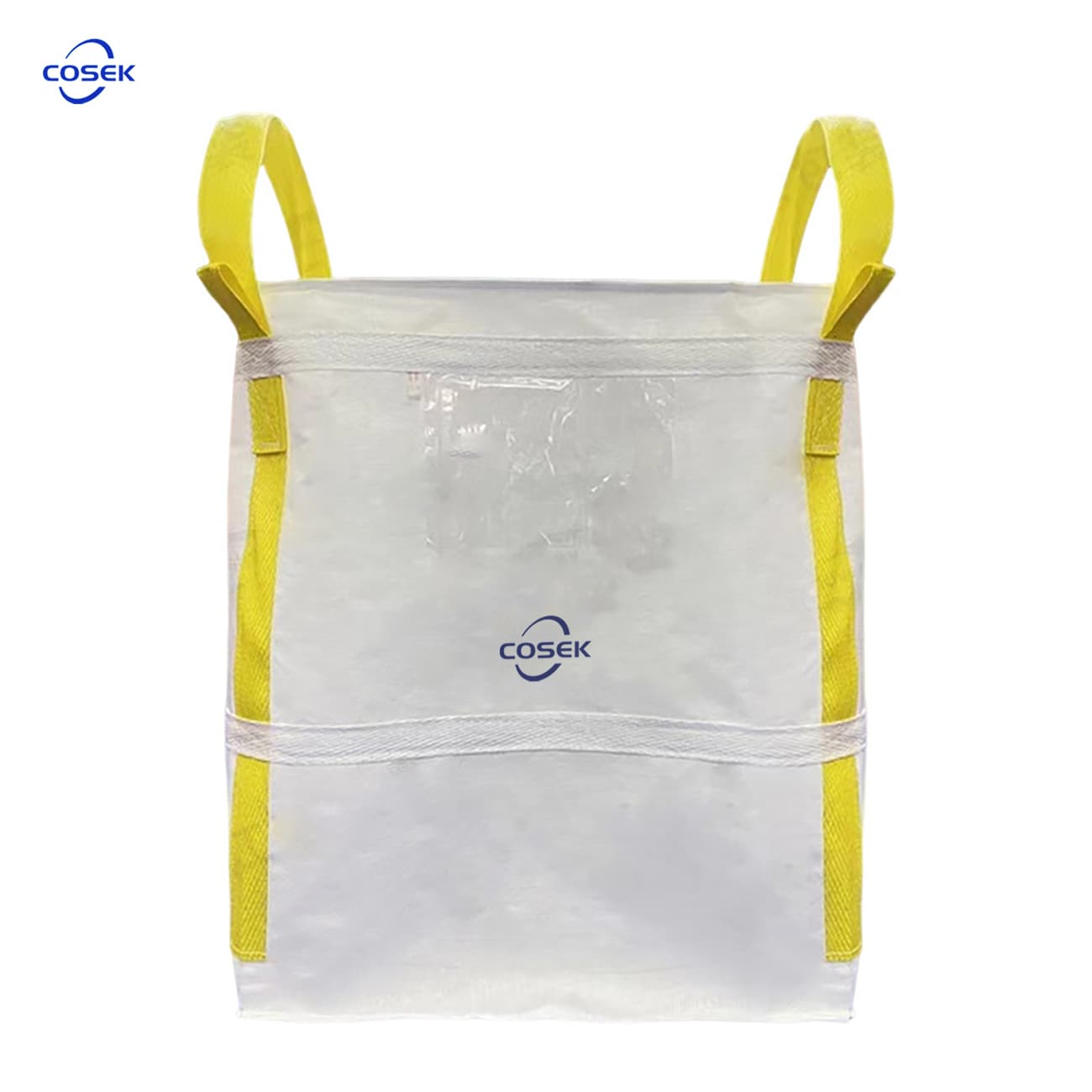
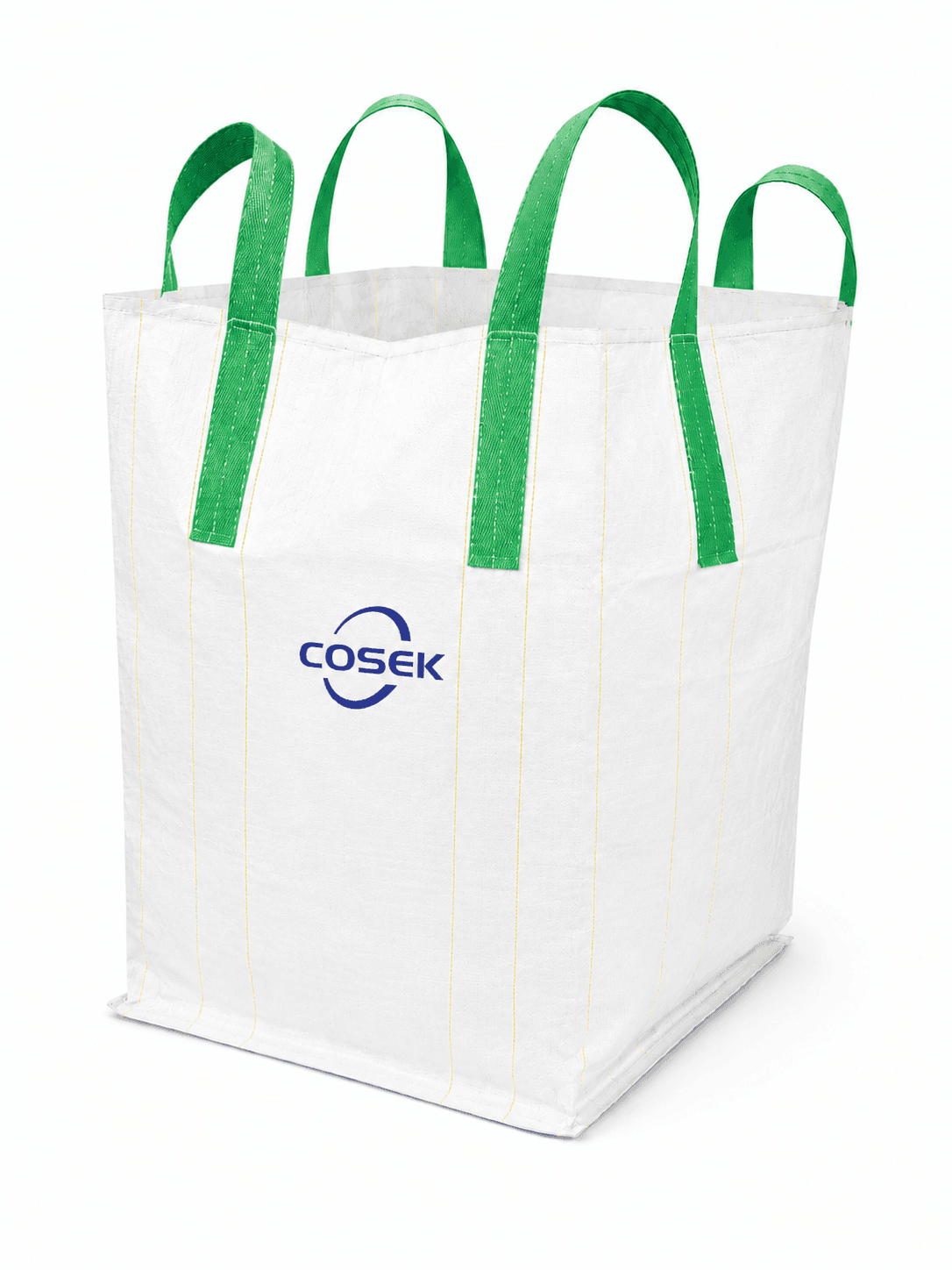
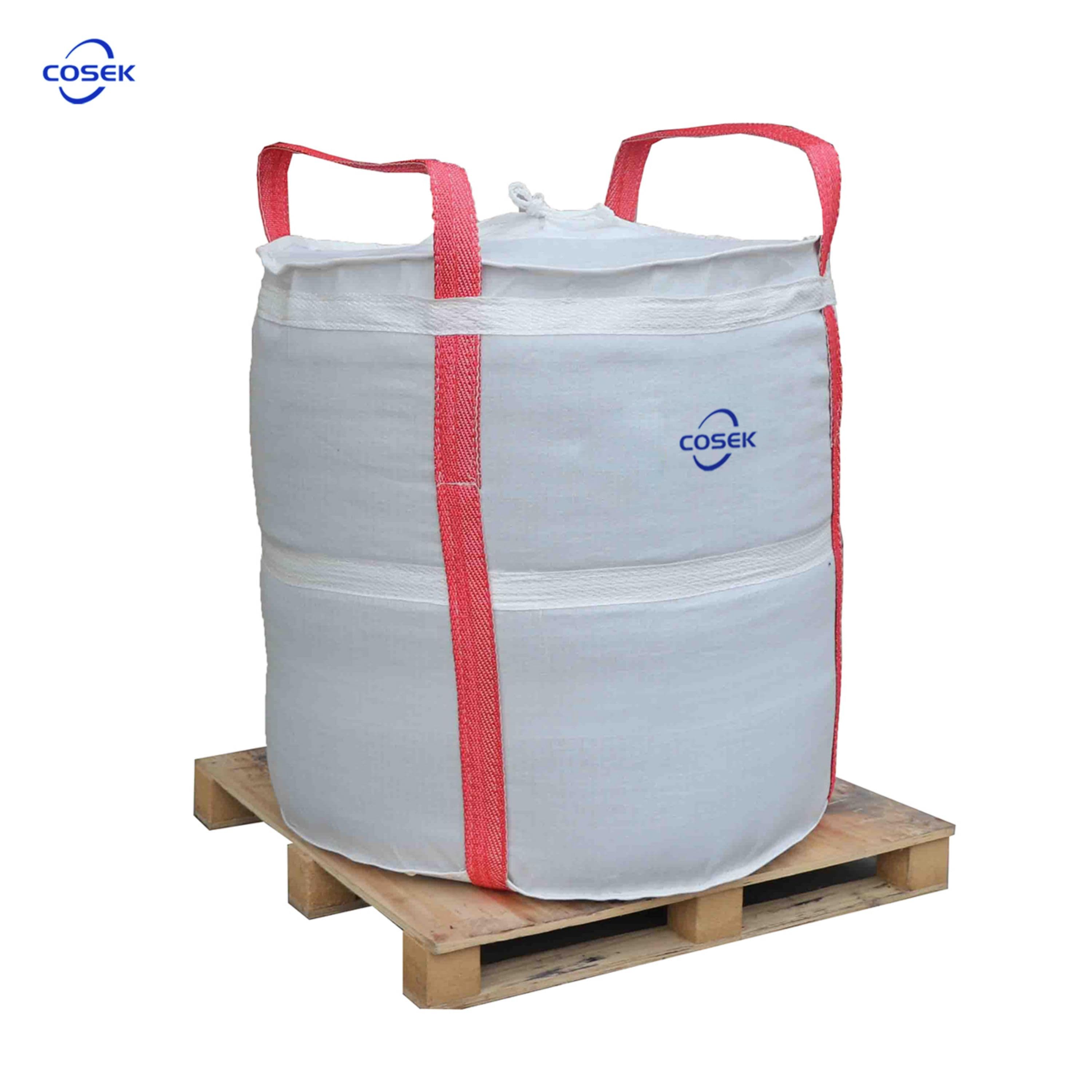
A conductive bulk bag is a flexible intermediate bulk container designed for the packaging, handling, and transportation of powders, granules, and chemical raw materials. It is suitable for working environments where static control is required during filling, discharging, and material transfer.
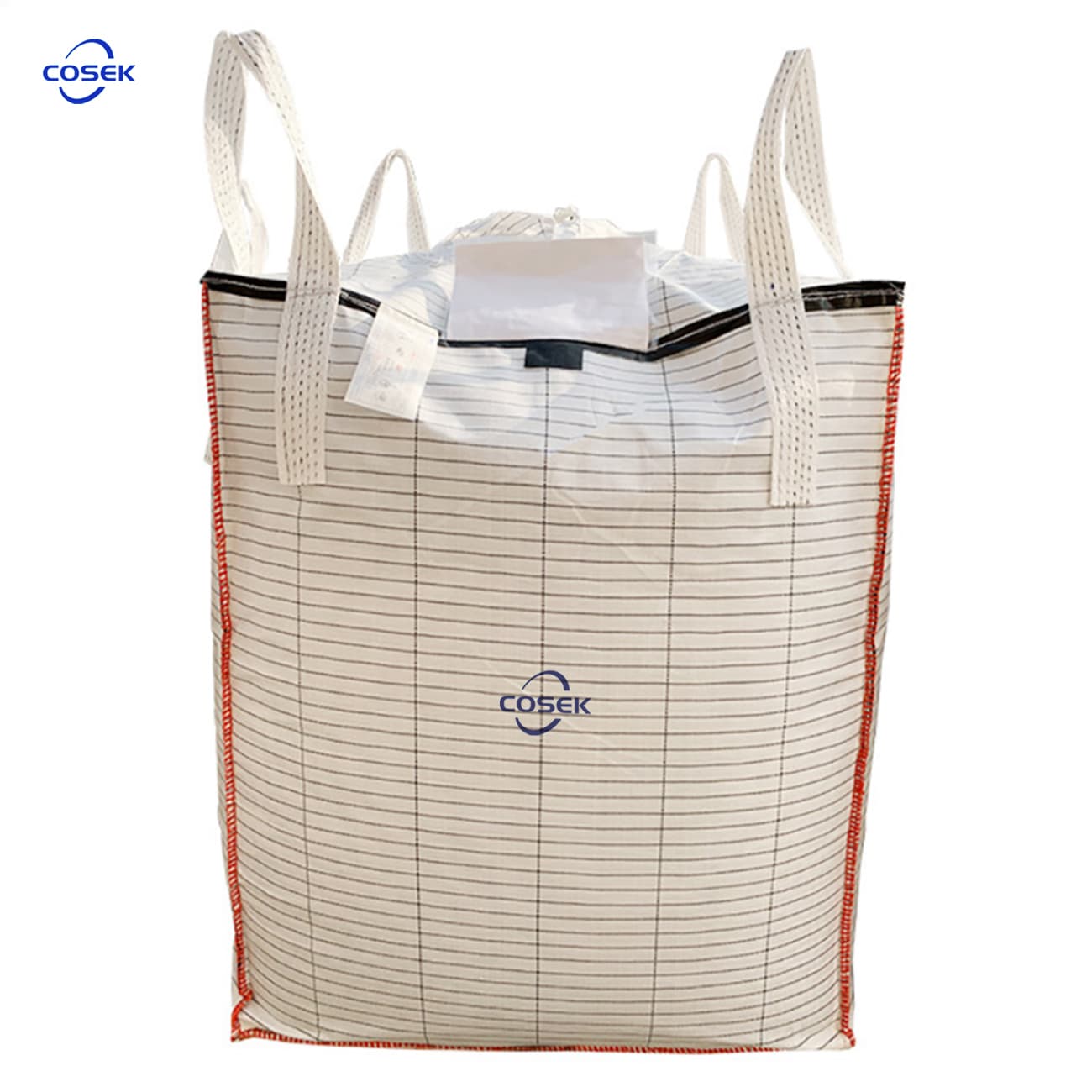
The bag body is typically made from woven polypropylene fabric with conductive yarns or conductive tapes integrated into the structure. Through grounding loops, grounding tabs, or designated grounding points, static electricity can be discharged when the bag is properly connected to a reliable ground. This helps reduce the risk of static accumulation caused by material friction, flow, and filling operations.
Conductive bulk bags are widely used in chemical, mineral powder, plastic resin, food additive, pharmaceutical raw material, coating powder, and other industrial bulk packaging applications.
Key Features
- Conductive structure design: Conductive yarns or tapes can be woven into the bag body to form a conductive network for static control applications.
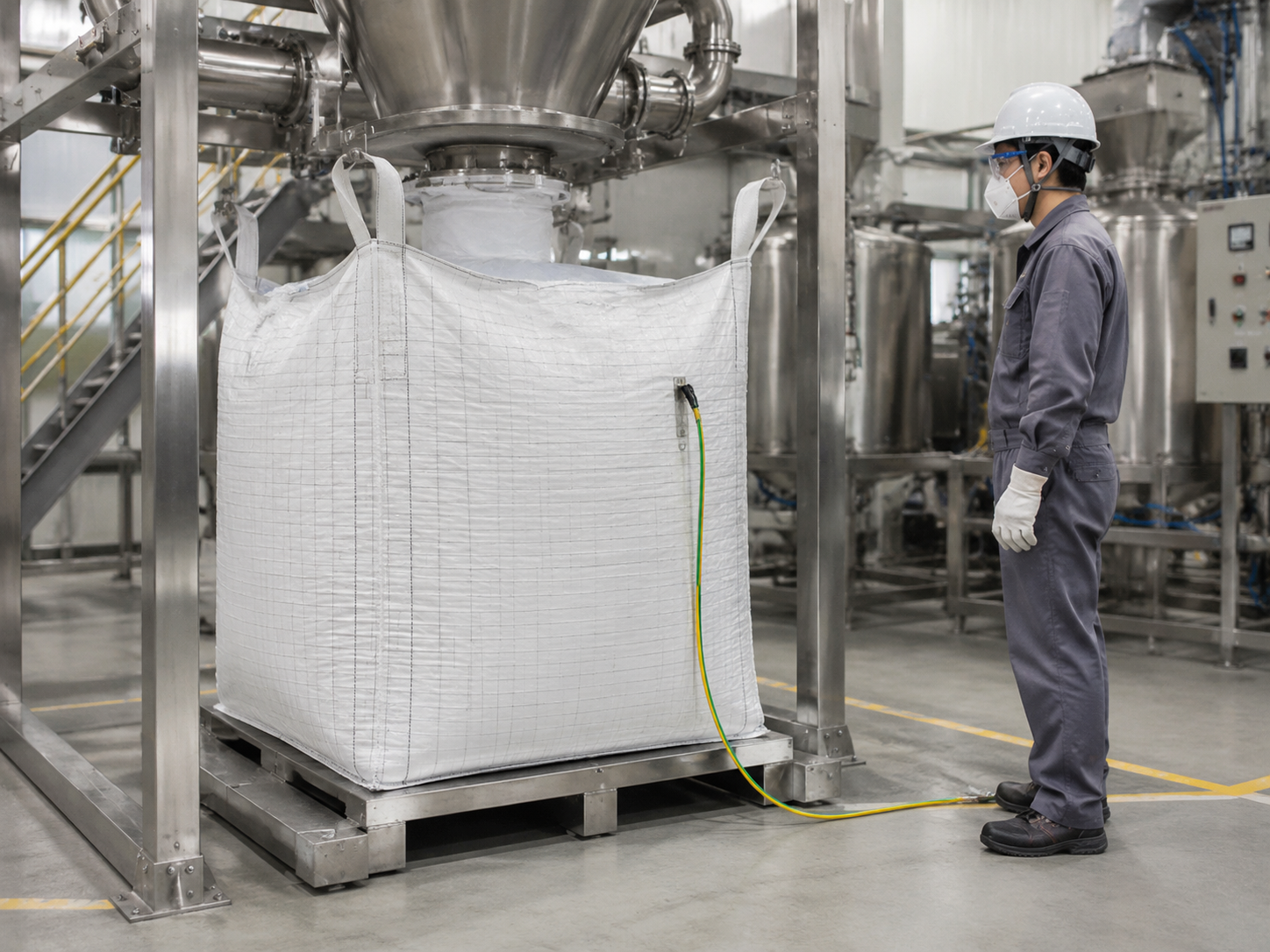
- Grounding-compatible operation: Type C conductive bulk bags should be connected to a reliable grounding point during filling and discharging.
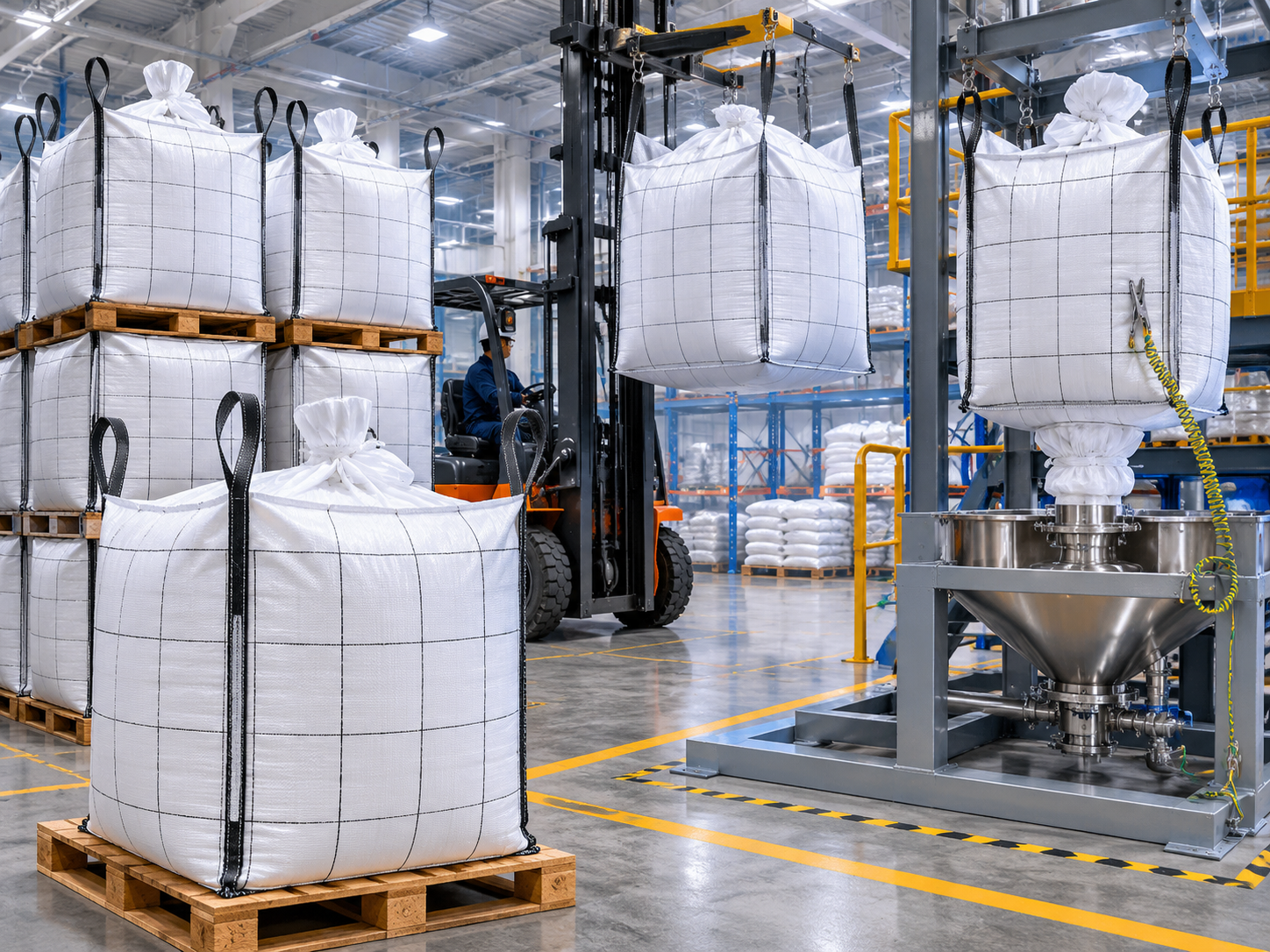
- Strong load-bearing performance: The bag can be designed with four lifting loops, cross-corner loops, or belt-type lifting structures to suit forklifts, cranes, and automatic filling systems.
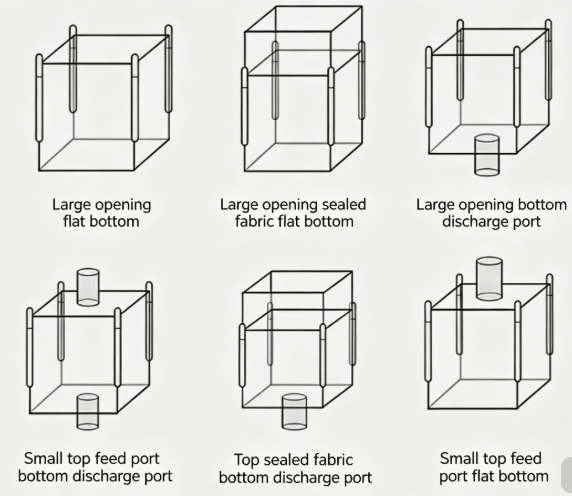
- Customizable filling and discharge options: Open top, duffle top, filling spout, flat bottom, discharge spout, and dust-proof covers are available.
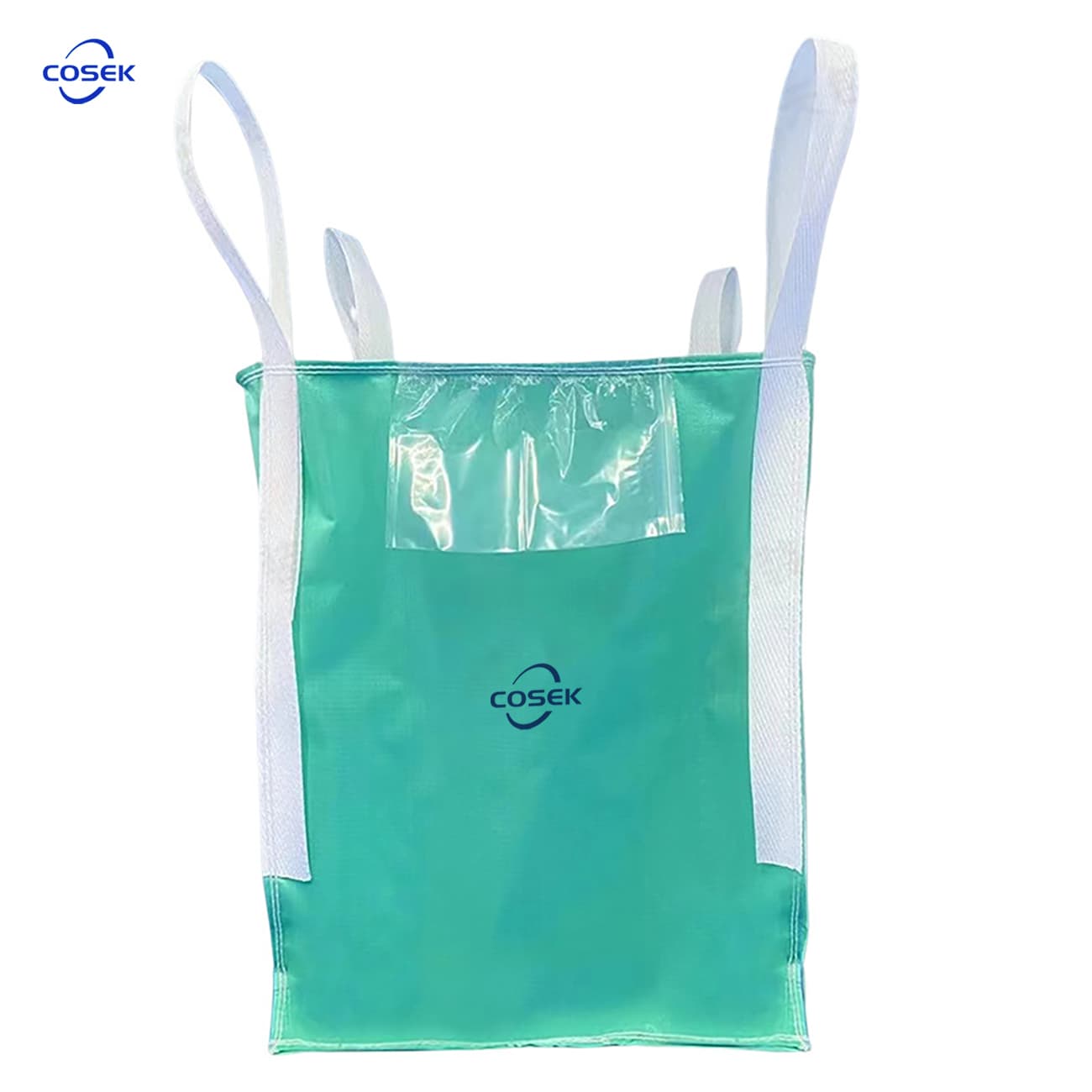
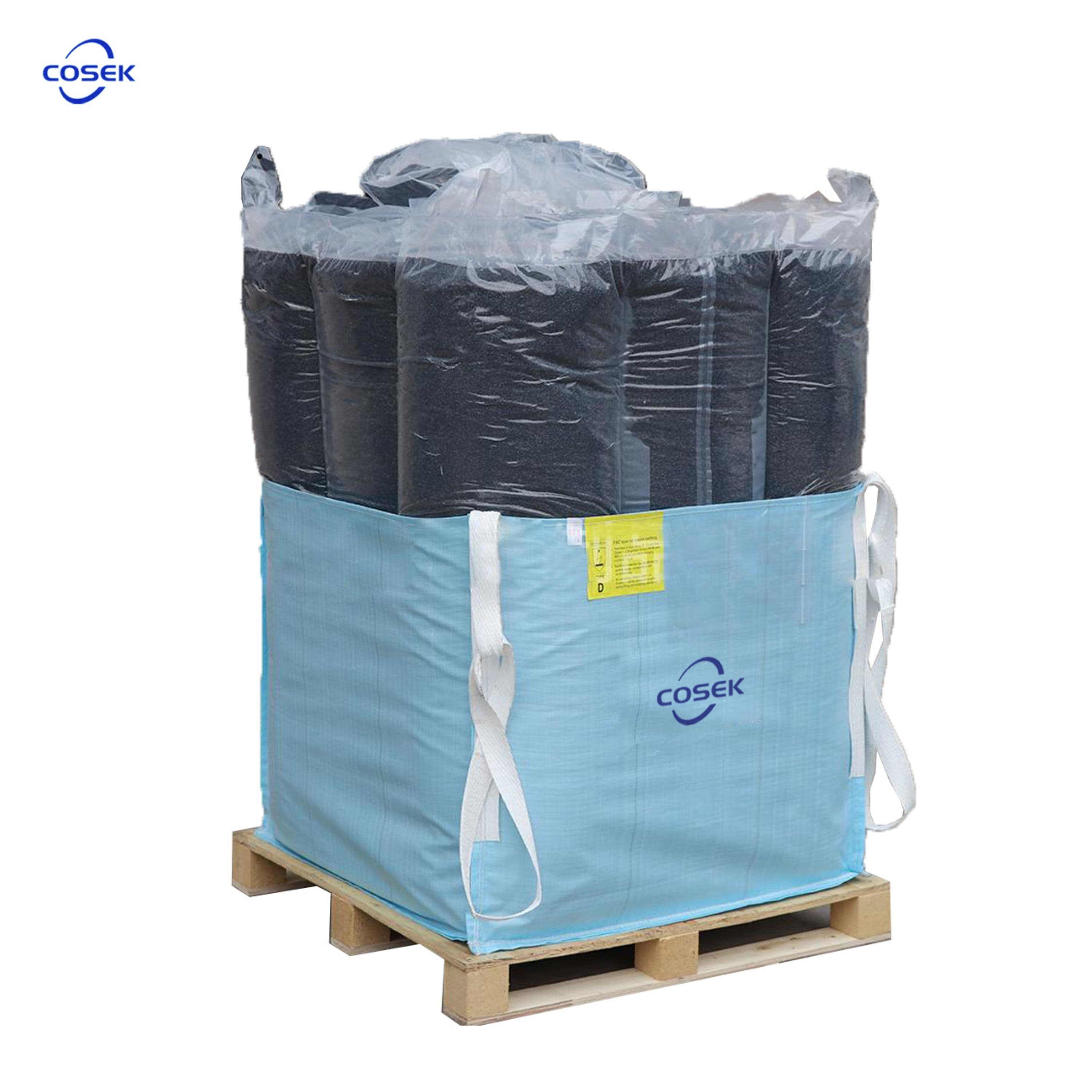
- Optional liner and lamination: PE liners, anti-static liners, composite liners, or laminated fabric can be added according to moisture-proof, dust-proof, and leakage-prevention requirements.
Typical Applications
Conductive bulk bags are suitable for powders and granules that may generate static electricity during flow, friction, filling, or discharging. Common applications include chemical powders, resin pellets, mineral powder, carbon black, additives, rubber auxiliaries, coating materials, and selected food industrial raw materials.
For applications involving combustible dust, flammable gases, or special explosion-risk zones, the appropriate FIBC type should be selected based on material properties, grounding conditions, and site safety requirements.
General Specifications
| Item | Available Options |
|---|---|
| Product Type | Conductive Bulk Bag / Type C FIBC |
| Main Material | Woven polypropylene fabric with conductive yarns or conductive tapes |
| Rated Load | Common options: 500kg, 1000kg, 1500kg, 2000kg; customizable |
| Safety Factor | Common options: 5:1 or 6:1, depending on application |
| Bag Shape | Square bag, circular bag, U-panel bag, four-panel bag |
| Lifting Style | Four-corner loops, cross-corner loops, belt-type lifting loops |
| Filling Style | Open top, duffle top, filling spout, filling spout with cover |
| Discharge Style | Flat bottom, discharge spout, star closure, protective flap |
| Liner Options | PE liner, anti-static liner, composite liner |
| Surface Treatment | Standard woven fabric, laminated fabric, dust-proof treatment |
| Printing | Single-color or multi-color printing available |
| Color | White, black, or customized |
| Transportation | Pallet stacking, forklift handling, container shipping |
Structural Details
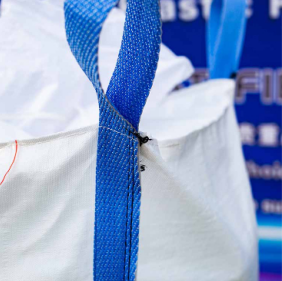
The key function of a conductive bulk bag lies in the continuity of its conductive path. The bag fabric, lifting loops, grounding point, and conductive yarns should work together to create a stable discharge route, allowing static electricity to be released when the bag is correctly grounded.
For materials that require an inner liner, the liner should be compatible with the conductive bag structure. A standard non-conductive liner may affect the static discharge path. In practical use, the conductive bulk bag should be connected to ground before filling and remain grounded during filling, handling, and discharging.


Purchasing Guide
When requesting a quotation or customization plan, buyers are encouraged to provide the material name, bulk density, target loading capacity, bag dimensions, filling and discharge structure, liner requirements, lamination requirements, site grounding conditions, and transportation method.
For projects with explosion protection, safety, or export compliance requirements, testing standards, labeling, batch traceability, packaging method, and shipping documents can also be confirmed to match the most suitable product solution.
FAQ
Q1: What is the difference between a conductive bulk bag and a standard bulk bag?
A conductive bulk bag includes conductive components and grounding points, making it suitable for applications where static control is required. A standard bulk bag is mainly used for general bulk packaging and does not provide the same conductive discharge design.
Q2: Does a conductive bulk bag need to be grounded during use?
Yes. Type C conductive bulk bags generally need to be reliably grounded during filling and discharging. Grounding is essential for the bag to perform its static control function.
Q3: Can the size and filling/discharge structure be customized?
Yes. Bag dimensions, lifting loops, filling spouts, discharge spouts, liners, lamination, printing, and packaging methods can all be customized according to order requirements.
Q4: Can conductive bulk bags be used in all hazardous environments?
Different materials and working environments have different static control requirements. The suitable FIBC type should be selected based on the material’s ignition sensitivity, dust or gas environment, grounding conditions, and on-site safety standards.
Get a Customized Solution
For quotation or sample support, please provide your material information, target loading capacity, bag size, working environment, and packaging requirements. We can recommend a suitable bag structure based on your filling, transportation, and discharging process.
Interested in this product?
Get in touch for more information, pricing, or custom requirements.