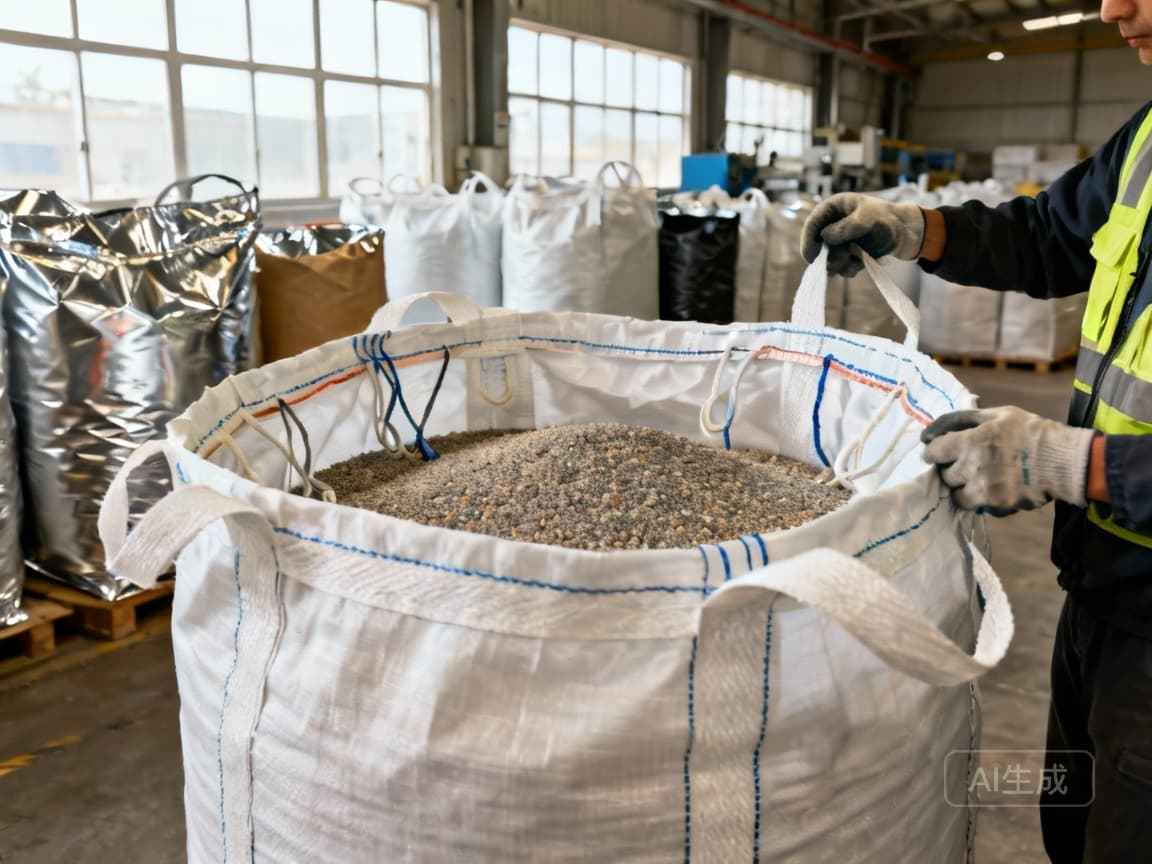
Beyond 2-Ton Rating: How FIBC Engineering Cuts Supply Chain Risk by 35% #93
RUNCHEN
AuthorWith more than 25 years of experience in FIBC bulk bag manufacturing and sales, RUNCHEN operates its own production facility with stable batch capacity. We specialize in FIBC bulk bags, jumbo bags, ton bags, and customized industrial packaging solutions.
Beyond 2-Ton Rating: How FIBC Engineering Cuts Supply Chain Risk by 35%
Imagine this scenario: a shipment of premium food-grade material arrives at a European port. The FIBCs (Flexible Intermediate Bulk Containers), or bulk bags, appear intact. However, upon unloading, moisture-induced clumping is discovered, rendering the entire batch non-compliant with stringent EU regulations. The consequences extend beyond product loss to costly delays, contractual penalties, and reputational damage. This situation highlights a critical industry oversight: selecting a bulk bag is often treated as a simple commodity purchase rather than a strategic engineering decision for supply chain risk management. The true value lies not in the stated 2-ton rating but in understanding how the bag will perform under the dynamic, often harsh conditions of your specific logistics chain. By shifting from a product-specification mindset to an application-risk analysis framework, leading companies are mitigating hidden costs and reducing supply chain disruptions by 35% or more.
Deconstructing "Strength": The Science Behind the Safety Factor
The industry standard of advertising a "2-ton bag" is a starting point, but it is dangerously incomplete. A static load rating in a controlled test environment bears little resemblance to the dynamic stresses of real-world handling. Forces exerted during a 1.8-meter drop from a loader, constant sway and shock during ocean transit, or uneven stress distribution during lifting create complex multi-directional forces.
From Static Load to Dynamic Stress Analysis
This is where engineering distinguishes standard suppliers from risk-management partners. Consider the "banana effect," where a bag bulges in the middle during lifting, over-stressing the fabric and seams. A bag without proper internal reinforcement may pass a simple top-lift test but fail catastrophically in this common scenario. The solution lies in integrated design, such as the internal baffles offered by manufacturers like Jinli Packaging. These are not mere "reinforcements"; they are engineered components that actively redistribute stress throughout the bag's body, creating a stable, cubic shape that maintains integrity during dynamic handling. Similarly, the choice between a 14-gauge or 20-gauge inner liner is a calculated trade-off between puncture resistance and flexibility, directly impacting performance during filling and discharge.
Implementation Guide: Conduct a "Dynamic Handling Audit" for your facility. Document the exact drop height from filling spouts, the type of lifting equipment used (clamp vs. loops), and the average transport duration and conditions. This data is the first step in moving from a generic to a custom-engineered FIBC solution.
The Barrier Function: When the Bag Interacts with the Contents
The bag is not a passive container; it is an active interface with your product. The wrong barrier property can degrade contents, cause hazardous reactions, or violate compliance, turning a packaging cost into a massive liability.
The Permeability Paradox and the Electrostatic Threat
Take the critical decision between breathable and impermeable bags. For minerals or certain chemicals, ventilated FIBCs are essential to prevent moisture buildup and dangerous gas accumulation. Conversely, for hygroscopic or oxidation-sensitive food-grade products, any moisture or oxygen ingress is unacceptable. Here, foil-lined bags, such as the 14-gauge aluminum foil bags specified by Jinli Packaging for food-grade exports, provide an absolute barrier, protecting product integrity and satisfying FDA or EU food contact regulations.
Perhaps the most underestimated risk is electrostatic discharge. In industries handling plastics, powders, or chemicals, a standard bag can become a capacitor, storing a dangerous charge. A conductive or static-dissipative FIBC is not an optional "premium" feature but a critical safety device, engineered to safely ground potential charges and prevent fires or explosions. This transforms the bag from packaging into a core component of your plant's safety protocol.
Implementation Guide: Create a Material Interaction Matrix. For each product, list its: moisture sensitivity, oxygen sensitivity, electrostatic propensity (minimum ignition energy), and hygiene requirements. This matrix directly maps to FIBC specifications—impermeable foil, conductive, food-grade liners—enabling a science-based selection.
Compliance: The Passport to Global Markets
The stable growth of FIBC markets in North America and Europe, with projections showing Europe reaching $3.2 billion by 2035, is built on a foundation of stringent and complex regulations. A "one-bag-fits-all" approach is a direct path to customs rejection and financial loss. Compliance must be engineered into the bag from the outset.
For food and pharmaceutical products, this means materials compliant with FDA 21 CFR or EU Regulation 10/2011 for food contact, ensuring no harmful migration. For industrial chemicals, UN certification for the transport of dangerous goods (like IMO standards) is non-negotiable. Furthermore, the global push for sustainability, evidenced by the 5.6% CAGR for the broader eco-friendly packaging market, adds another layer. It's no longer just about using recyclable polypropylene; it's about designing for the circular economy—considering the bag's end-of-life and ensuring it aligns with directives like the EU's Packaging and Packaging Waste Regulation (PPWR).
The Total Cost of Ownership: The True Measure of Value
Procurement focused solely on unit price is a high-risk strategy. The true cost of a FIBC is its Total Cost of Ownership (TCO), which includes:
- Purchase Price: The baseline.
- Handling & Efficiency: Does the bag's design (e.g., form-fit liner) allow for faster filling and complete, clean discharge, reducing labor time? Case studies show form-fit liners can reduce packaging labor by 30%.
- Damage & Loss Rate: What is the financial impact of a 0.5% failure rate versus a 0.1% rate on high-value cargo?
- Compliance & Disposal: The cost of a rejected shipment dwarfs bag cost. Similarly, the cost of certified recycling versus landfill disposal must be factored in.
By analyzing TCO, the marginally higher cost of a custom-engineered, application-specific bag is revealed as a significant net saving through risk avoidance and operational efficiency.
Conclusion: Partnering for Risk Mitigation
The journey from a bulk bag supplier to a supply chain risk partner begins with a shared language of engineering and application. The diverse product lines—from internal baffle to conductive bags—demonstrated by manufacturers with deep application experience, like Jinli Packaging across energy and food export sectors, are tools in a larger risk-mitigation toolkit.
The call to action is clear: move beyond the data sheet. Engage in a joint application review with a partner who asks forensic questions about your material, handling, and logistics. Provide the parameters from your Dynamic Handling Audit and Material Interaction Matrix. This collaborative, engineering-led approach is how leading firms are not just buying bags, but systematically engineering out supply chain risk, securing their operations, and protecting their bottom line in an increasingly complex global market.
Final Implementation Step: Download a comprehensive FIBC Application Assessment Worksheet to systematically document your product properties, handling conditions, and compliance requirements. Use this as the basis for your next technical review with your packaging partner.
Related News
Other news you might be interested in
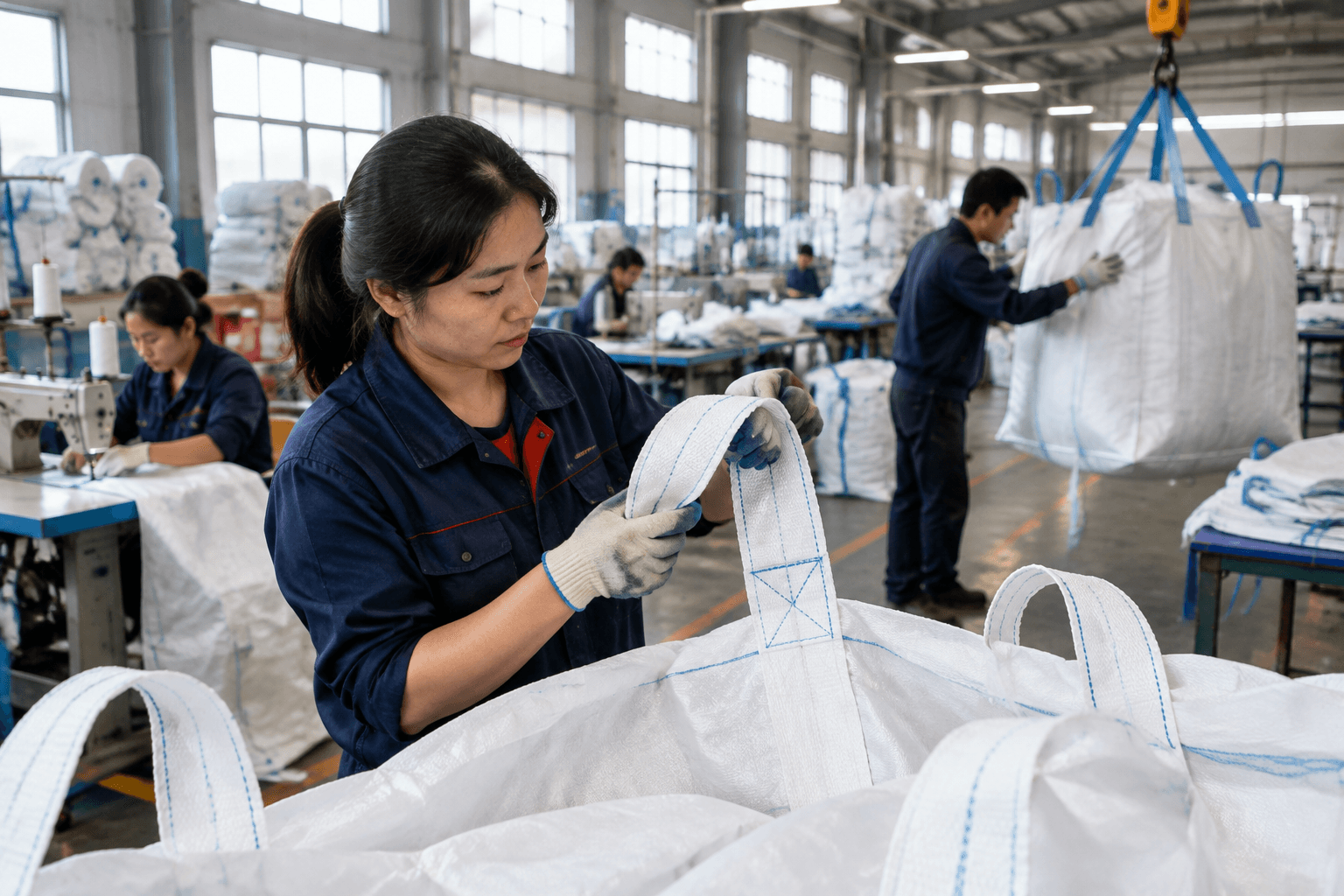
Choosing the Right Bulk Bag Manufacturer for Safer, More Efficient Operations
Learn how to specify bulk bags, evaluate manufacturers, and validate quality and supply reliability to reduce operational risk and support safer, more efficient handling.
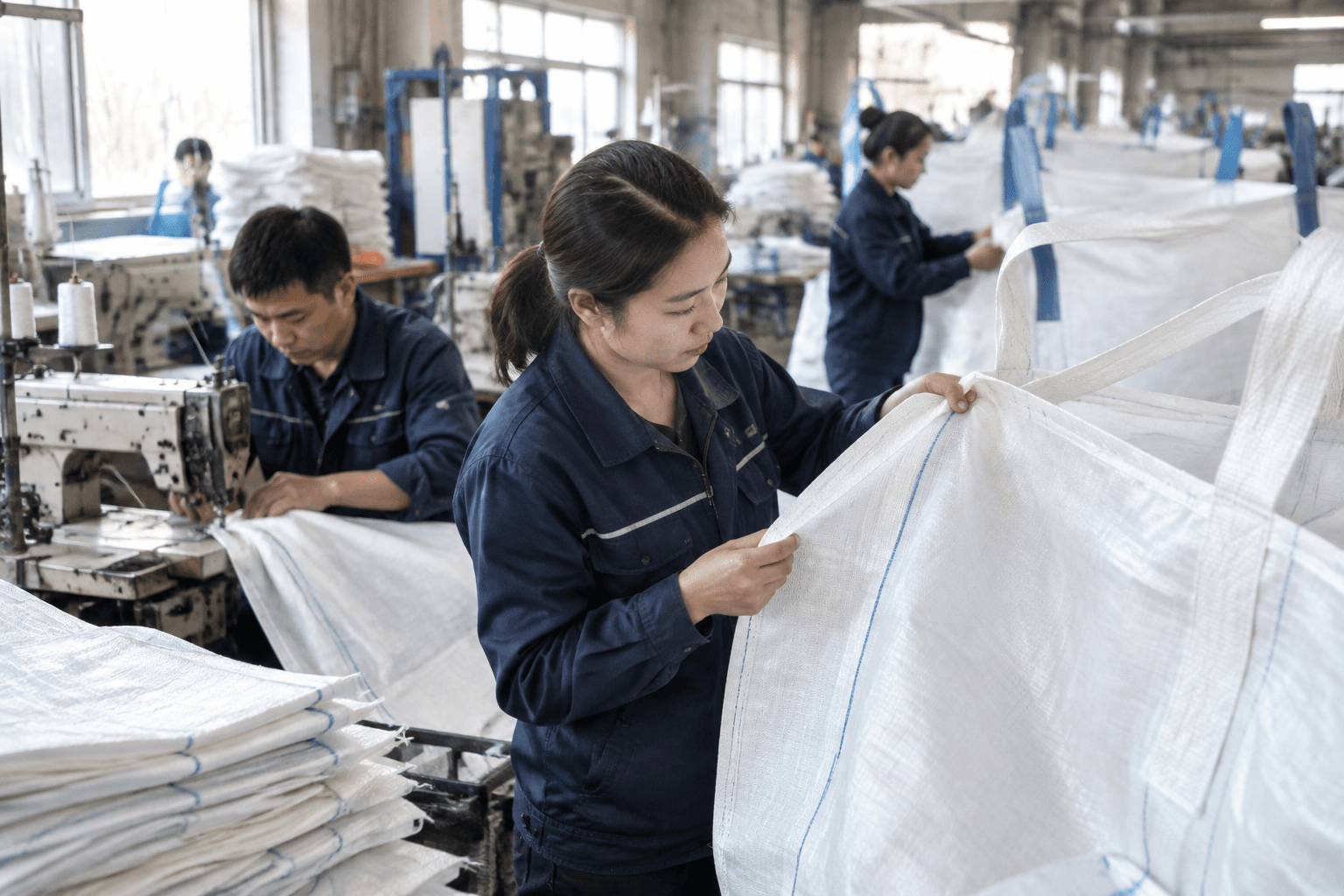
The 140th Canton Fair: New Trends in the Export Market for FIBC Bulk Bags, Jumbo Bags, and PP Woven Packaging
Explore how export buyers can evaluate FIBC bulk bags and PP woven packaging beyond unit price. Get practical guidance on specifications, supplier verification, sustainability requirements, and RFQs—and prepare your next sourcing conversation with COSEK.
Want to know more?
Get in touch with us for more information about our services and products.