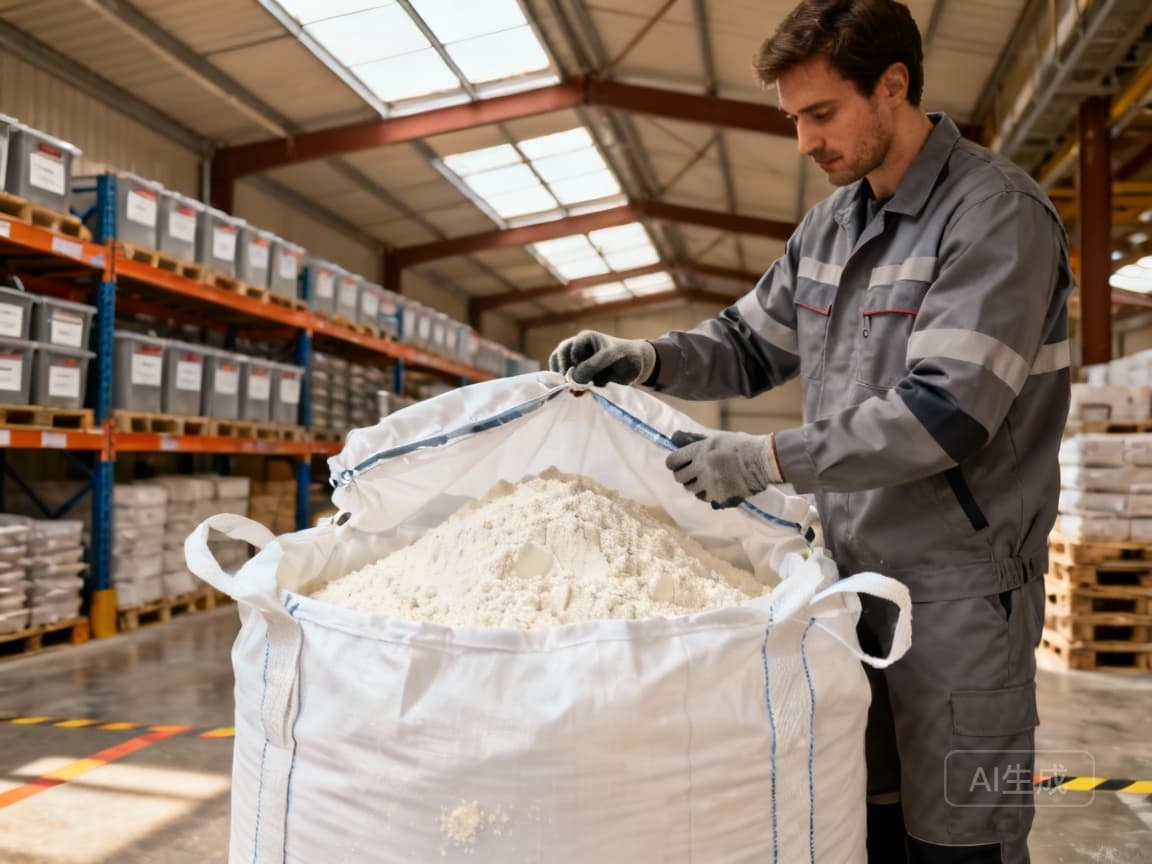
Did pharmaceutical revenue decline by 0.9%? How ton bags can help reduce costs and increase efficiency in their supply chain # 11
RUNCHEN
AuthorWith more than 25 years of experience in FIBC bulk bag manufacturing and sales, RUNCHEN operates its own production facility with stable batch capacity. We specialize in FIBC bulk bags, jumbo bags, ton bags, and customized industrial packaging solutions.
From Cost Center to Strategic Enabler: How FIBCs Drive Value in a Challenging Pharma Market
The latest data reveals a pivotal moment for China's pharmaceutical manufacturing sector, with revenue for large-scale enterprises declining by 0.9% in the first half of 2024. In an industry where innovation and global expansion are critical for growth, this pressure spotlights a universal truth for suppliers: your value is measured by your ability to solve your client's deepest operational challenges. For Flexible Intermediate Bulk Container (FIBC or bulk bag) manufacturers, this presents a unique opportunity to shift the conversation from simple container costs to becoming a strategic partner in supply chain resilience and efficiency.
The Downstream Pressure: A Catalyst for Packaging Innovation
The pharmaceutical industry's slight revenue dip is not an isolated event but a symptom of broader competitive and cost pressures. As companies like Health元药业集团 focus on growth (1.74% revenue increase in 2023) and others like 隆华新材 expand into advanced materials like polyether amine and nylon 66, their supply chains are under scrutiny. The mandate is clear: optimize every link for cost, flexibility, and compliance. Traditional packaging is often a hidden cost sink. Here, the FIBC transforms from a passive vessel into an active "efficiency lever."
Consider the parallel from a provided industrial automation case: a company facing market saturation and intense competition implemented process optimization and automation to streamline operations and reduce costs. The lesson is transferable. For a pharma or chemical manufacturer, a standard bulk bag is a commodity. But a bag designed for high-cycle reuse, easy cleaning, and optimal space utilization directly attacks operational waste. It turns a recurring purchase into a durable asset, reducing per-use cost and aligning with the client's need to "do more with less." This is the first step in value reframing.
Beyond Containment: Enabling Compliance and Market Access
The strategic outlook for pharma emphasizes "accelerating international product registration and certification" to boost overseas market share. This journey is fraught with regulatory hurdles where packaging is a critical gatekeeper. An FIBC is no longer just a bag; it's a compliance document and a risk mitigation tool.
Empowering a client's global ambitions requires deep expertise in design for regulation. This includes:
- Material Certification: Implementing food or pharmaceutical-grade liners and coatings that meet FDA, EU, or other regional standards.
- Safety Engineering: Integrating static control or flame-retardant properties for handling sensitive or hazardous materials.
- Performance Design: Creating highly sealed, moisture-barrier bags for hygroscopic materials like nylon 66 chips, protecting R&D investment and product integrity.
By mastering these specifications, the FIBC manufacturer moves from being a supplier to a crucial enabler of market access, protecting the client's brand and facilitating revenue in new regions.
Integrating with the Automated Supply Chain
The future of manufacturing is intelligent and automated. The success case of Holland Mechanics, which achieved a 30% improvement in logistics and 20% gain in efficiency through modular, flexible assembly line design, illustrates the power of system-wide thinking. For FIBCs, the next frontier is becoming a seamless component in the automated material handling ecosystem.
This requires designing for integration with bulk bag fillers, lifters, and automated unloaders. Key design considerations become strategic differentiators:
- Standardized Lifting Loops: Engineered for consistent, reliable engagement with automated guided vehicles (AGVs) or robotic arms.
- Discharge Compatibility: Spout design that ensures clean, complete, and dust-free emptying in automated discharge stations.
- Embedded Data Carriers: Incorporating RFID tags or QR codes (bag tags bulk) to turn each bag into a smart node, enabling real-time inventory tracking, batch traceability, and predictive logistics.
This evolution means the leading FIBC manufacturers of tomorrow will not just understand weaving; they will be experts in industrial logistics system integration.
A Call to Action: Reframing the Value Proposition
The data from the pharmaceutical sector is a canary in the coal mine for all downstream industries facing cost and innovation pressures. For FIBC manufacturers, the response is not to lower prices but to elevate perspective.
Begin by auditing your product portfolio and client conversations against this new framework:
- Do your solutions directly address a client's pressing business challenge, like entering a new regulated market or automating a warehouse?
- Can you articulate how your bag's design impacts the client's total cost of ownership, not just the unit price?
- Are you prepared to consult on how your FIBC integrates into the client's broader process flow, as seen in successful automation implementations?
By positioning your FIBC as a strategic component for supply chain efficiency, compliance assurance, and automation readiness, you build indispensable partnerships. In an era where downstream clients seek every possible advantage, your bulk bag becomes a tangible catalyst for their resilience and growth.
Related News
Other news you might be interested in
Choosing the Right Bulk Bag Manufacturer for Safer, More Efficient Operations
Learn how to specify bulk bags, evaluate manufacturers, and validate quality and supply reliability to reduce operational risk and support safer, more efficient handling.
The 140th Canton Fair: New Trends in the Export Market for FIBC Bulk Bags, Jumbo Bags, and PP Woven Packaging
Explore how export buyers can evaluate FIBC bulk bags and PP woven packaging beyond unit price. Get practical guidance on specifications, supplier verification, sustainability requirements, and RFQs—and prepare your next sourcing conversation with COSEK.
Want to know more?
Get in touch with us for more information about our services and products.