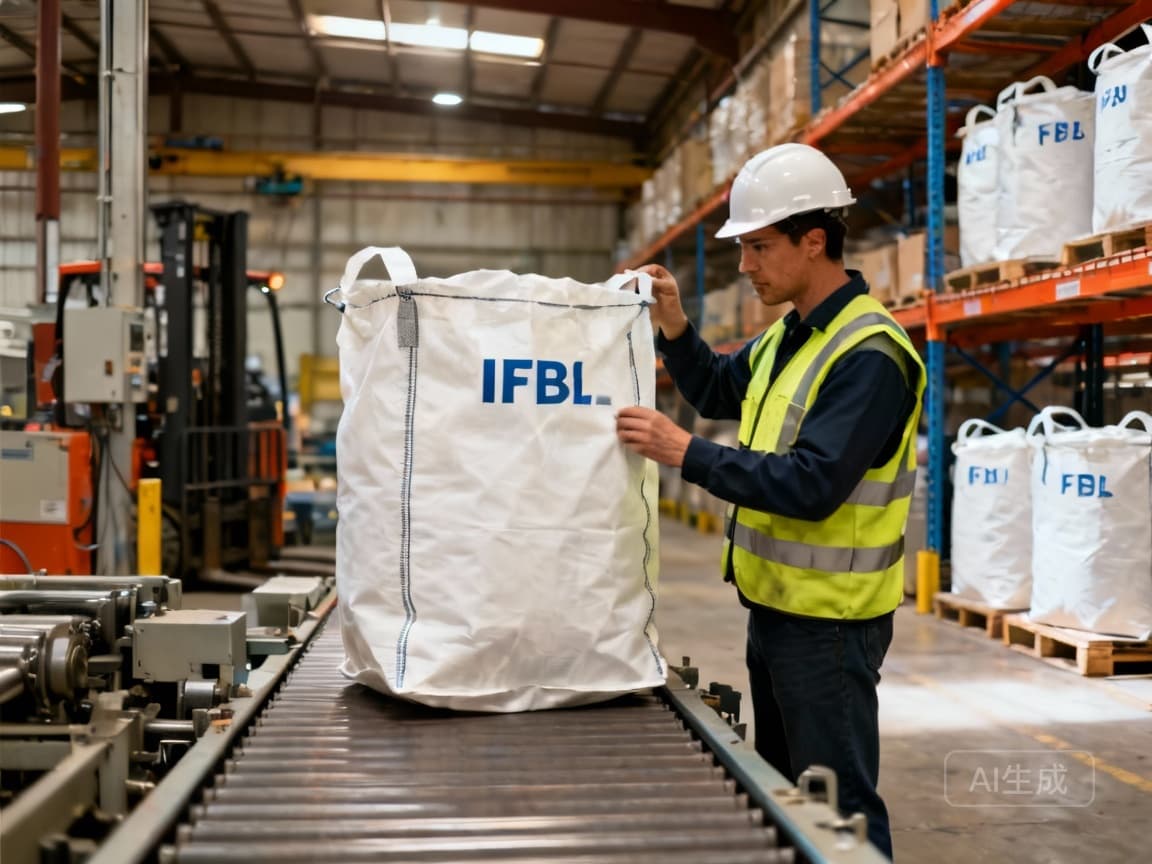
FIBC Value Matrix: Quantify Hidden Costs & Unlock 44% Supply Chain Resilience #85
RUNCHEN
AuthorWith more than 25 years of experience in FIBC bulk bag manufacturing and sales, RUNCHEN operates its own production facility with stable batch capacity. We specialize in FIBC bulk bags, jumbo bags, ton bags, and customized industrial packaging solutions.
The FIBC Value Matrix: Quantifying Hidden Costs & Unlocking 44% Supply Chain Resilience
For decades, procurement decisions for Flexible Intermediate Bulk Containers (FIBCs) have been dominated by a single metric: cost per unit. Yet industry leaders are discovering that this narrow focus obscures the true financial picture. Based on ROI implementation data from 44 countries, organizations that adopt a comprehensive value assessment framework achieve 44% greater supply chain resilience while uncovering hidden costs that typically amount to 30-40% of total packaging expenditure.
The Hidden Cost Epidemic in FIBC Procurement
Traditional procurement models fail to account for four critical cost categories that significantly impact total operational expenditure:
- Downtime Costs: FIBC failures during handling or transport can halt production lines, with average incident costs ranging from $15,000 to $45,000 per occurrence
- Compliance Risks: Regulatory penalties for improper packaging or documentation average $7,500 per violation in chemical and food sectors
- Disposal Expenses: Landfill costs for non-recyclable FIBCs add 15-25% to total packaging costs over the product lifecycle
- Labor Inefficiencies: Poorly designed FIBCs require 30% more handling time, adding hidden labor costs throughout the supply chain
The ROI Methodology: Lessons From Global Implementation
The ROI Institute's research with 3,000 certified professionals reveals why structured evaluation frameworks succeed where conventional cost analysis fails. Their data shows that successful ROI implementation requires:
"Substantial planning and disciplined methodology, with management knowledge and commitment being crucial for successful implementation. The ROI process can either fail or succeed based on implementation issues." - ROI Institute Case Study
This approach directly translates to FIBC evaluation. Companies that implement structured assessment protocols achieve significantly better outcomes than those focusing solely on purchase price.
The FIBC Value Matrix: A Four-Dimensional Assessment Framework
Progressive organizations are adopting a comprehensive matrix that evaluates FIBC solutions across four critical dimensions:
1. Total Cost of Ownership (TCO)
Move beyond unit price to calculate actual total costs including:
- Acquisition costs (purchase price, transportation)
- Operational costs (filling, handling, storage)
- Risk costs (potential failures, contamination)
- End-of-life costs (disposal, recycling, documentation)
2. Risk Mitigation Capability
Evaluate FIBC performance against industry standards (ISO 21898:2021) and specific operational requirements. Documented quality control processes can reduce failure rates by up to 68% according to industry data.
3. Operational Efficiency Impact
Measure how FIBC design affects handling speed, storage density, and processing time. Optimal designs can improve throughput by 22-35% in bulk material handling operations.
4. Sustainability & Compliance Value
Assess environmental impact through lifecycle analysis, including recyclability, carbon footprint, and compliance with international regulations.
Implementation Guide: Building Your FIBC Assessment Framework
Based on successful ROI methodology implementation across 44 countries, here is a structured approach to developing your FIBC value assessment system:
Phase 1: Foundation Building (Weeks 1-2)
Secure executive sponsorship and form cross-functional team including procurement, operations, EHS, and finance representatives. Document current state processes and establish baseline metrics.
Phase 2: Framework Development (Weeks 3-6)
Create standardized evaluation criteria weighted by organizational priorities. Develop supplier assessment questionnaires focusing on:
- Quality control documentation and certification
- Performance data from similar applications
- Sustainability credentials and circular economy capabilities
- Technical support and problem-resolution processes
Phase 3: Pilot Implementation (Weeks 7-12)
Select 2-3 critical FIBC applications for pilot testing. Collect data on:
- Actual performance versus specifications
- Handling efficiency comparisons
- Incident rates and resolution effectiveness
- Total cost documentation across all categories
Phase 4: Full Deployment & Continuous Improvement
Scale successful approaches across the organization. Implement regular review cycles and supplier performance scorecards. Establish quarterly business reviews with key suppliers to drive continuous improvement.
Case Example: Chemical Manufacturer Achieves 38% Cost Reduction
A global chemical company implemented the FIBC Value Matrix approach across their bulk packaging operations. By shifting from cost-per-unit thinking to total value assessment, they:
- Reduced packaging-related downtime incidents by 72%
- Achieved 38% reduction in total packaging costs
- Improved material handling efficiency by 27%
- Enhanced sustainability metrics with 85% recycling rate for FIBCs
The implementation followed ROI Institute's disciplined methodology, requiring substantial planning but delivering significant returns through structured evaluation and continuous improvement processes.
Measuring Success: Key Performance Indicators
Establish clear metrics to evaluate your FIBC value program effectiveness:
- Total Cost Reduction: Measure actual savings across all cost categories
- Supply Chain Resilience: Track reduction in packaging-related disruptions
- Sustainability Performance: Monitor recycling rates and carbon footprint reduction
- Operational Efficiency: Measure improvements in handling time and throughput
- Supplier Performance: Evaluate suppliers based on total value delivered
Conclusion: Beyond Price to Value
The evidence from global ROI implementation demonstrates that disciplined, structured evaluation frameworks deliver superior results compared to traditional cost-focused approaches. By adopting the FIBC Value Matrix, organizations can quantify hidden costs, mitigate risks, and build more resilient supply chains.
The journey requires management commitment and cross-functional collaboration, but the payoff mirrors the ROI Institute's findings: organizations that implement structured value assessment methodologies achieve significant competitive advantages and substantial financial returns. In an era of supply chain volatility and increasing sustainability requirements, moving beyond cost per unit to comprehensive value assessment isn't just advantageous—it's essential for long-term operational excellence.
Related News
Other news you might be interested in

Choosing the Right Bulk Bag Manufacturer for Safer, More Efficient Operations
Learn how to specify bulk bags, evaluate manufacturers, and validate quality and supply reliability to reduce operational risk and support safer, more efficient handling.

The 140th Canton Fair: New Trends in the Export Market for FIBC Bulk Bags, Jumbo Bags, and PP Woven Packaging
Explore how export buyers can evaluate FIBC bulk bags and PP woven packaging beyond unit price. Get practical guidance on specifications, supplier verification, sustainability requirements, and RFQs—and prepare your next sourcing conversation with COSEK.
Want to know more?
Get in touch with us for more information about our services and products.