From Container to Data Node: How Bulk Bag Design Boosts Unloading Efficiency 35%

RUNCHEN
AuthorWith more than 25 years of experience in FIBC bulk bag manufacturing and sales, RUNCHEN operates its own production facility with stable batch capacity. We specialize in FIBC bulk bags, jumbo bags, ton bags, and customized industrial packaging solutions.
From Container to Data Node: How Bulk Bag Design Boosts Unloading Efficiency 35%
For operations and supply chain managers, the bulk bag (FIBC) is often viewed as a passive container—a cost-effective vessel for moving dry materials. This transactional perspective has led to a market saturated with content focusing on price, basic safety, and loss prevention. However, this view overlooks a critical opportunity. The most significant gains in efficiency are not found in the bag as an isolated product, but in its role as the core, intelligent component of your material handling system. By shifting the narrative from container to integrated data node, we can unlock systemic value, with design-led improvements driving unloading efficiency gains of 35% or more.
The Hidden Cost of the "Black Box" Container
Traditional bulk bag procurement focuses on specifications: dimensions, safe working load, and basic construction. While vital, this approach creates invisible system bottlenecks. A bag that performs well in isolation can become a major point of friction when integrated with automated unloaders, fillers, and conveyor systems. The result is inconsistent flow rates, high residual content (often 3-5% left in the bag), and manual intervention that disrupts automated production schedules and inventory data accuracy. This transforms the bag from a low-cost item into a source of significant operational downtime and data blind spots.
Design as the Interface for System Efficiency
The leap in performance comes from engineering the bag specifically for its interface with equipment. Key design parameters directly dictate system-wide metrics:
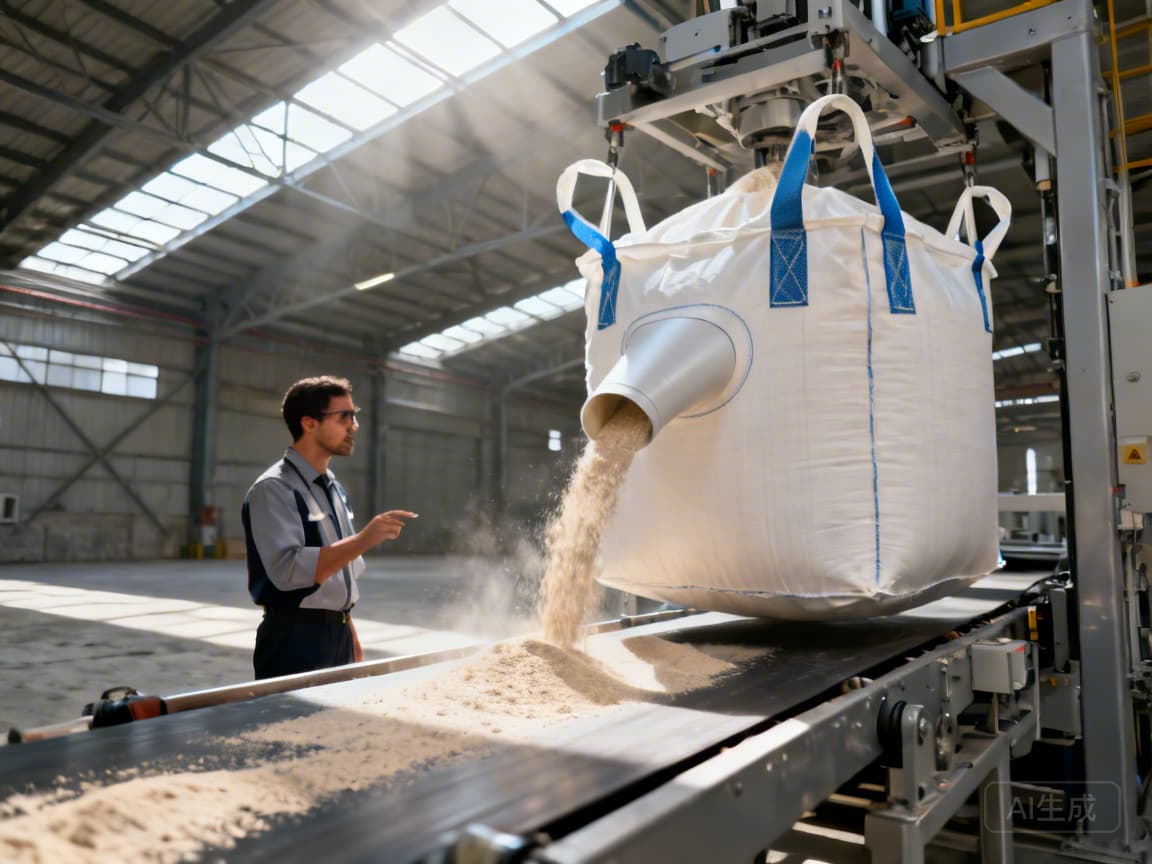
- Controlled Discharge & Flow Rate: The design of the discharge spout—its size, shape, and internal finish—is the primary governor of material flow. A spout engineered for a specific material's angle of repose and friction coefficient ensures consistent, predictable discharge, allowing downstream equipment to operate at optimal capacity without jamming or starving.
- Minimized Residuals for Accurate Data: A bag that leaves 5% of material behind isn't just wasteful; it corrupts your inventory and batch data. Advanced designs utilize specific fabric treatments, sloped baffles, and spout geometries to achieve residual rates of less than 0.5%. This precision transforms the bag from a "black box" into a reliable, predictable data point for your ERP or MES system, enabling just-in-time replenishment based on actual consumption.
- Lifting Loop Integration for Automation: The placement, strength, and consistency of lifting loops are not merely a safety feature. In automated environments, they are the critical pickup point for robotic arms and unloader frames. Precisely positioned loops enable faster, safer, and repeatable handling, reducing cycle time and eliminating manual alignment.
A Framework for Integration: The "System Compatibility" Assessment
Moving from a transactional to a systemic view requires a new evaluation framework. Instead of just checking a spec sheet, operations teams should assess compatibility through an engineering lens. Consider this actionable checklist:
- Material Flow Analysis: What is the material's bulk density, flowability, and abrasiveness? How does the bag's inner surface and discharge design manage these characteristics?
- Equipment Interface Audit: What are the exact dimensions and connection mechanisms of your unloader's inlet or filler's spout? Is the bag designed for a secure, dust-tight seal with this specific equipment?
- Data Handoff Protocol: Does the bag support tracking (e.g., via RFID or printed tags) to provide usage cycle data? Is its consistent performance reliable enough to feed accurate consumption data into your planning systems?
“The greatest efficiency gains are found at the interface points. A bulk bag designed in a vacuum creates friction; a bag designed as part of the system creates flow.” – Industry Engineering Principle
Quantifying the Value: From Friction to Flow
Applying this integrated design philosophy yields direct, measurable outcomes. While specific case data is proprietary, the engineering principles are clear and demonstrable. A bulk bag optimized for system compatibility can deliver:
- Unloading Time Reduction: Consistent, full-bore flow can cut discharge cycles by 20-35%, directly increasing line throughput.
- Material Yield Increase: Reducing residuals from 5% to 0.5% reclaims valuable product and improves batch cost accuracy.
- Reduced Downtime: Eliminating bridging, rat-holing, and manual clearing minimizes unplanned stops in automated processes.
- Improved Data Integrity: Predictable, complete discharge provides reliable data for inventory management, reducing safety stock requirements and improving production scheduling.
Your Next Step: From Reading to Assessment
The transition begins with a shift in perspective. The question is no longer "What does this bag cost?" but "What is the total cost of my material handling process, and how can this bag's design lower it?"
We recommend conducting an internal review using the framework above. Map your current bulk bag's performance against your equipment's requirements and your data needs. Identify the single largest point of friction in your unload or fill process—chances are, a specifically engineered bulk bag design can address it.
To move from assessment to action, engage with manufacturers who demonstrate a deep understanding of system integration. The right partner will not just sell you a container but will collaborate to analyze your process and deliver a component engineered for total efficiency. The goal is clear: stop buying a black box and start specifying a data node that drives your operational intelligence forward.
Related News
Other news you might be interested in

Choosing the Right Bulk Bag Manufacturer for Safer, More Efficient Operations
Learn how to specify bulk bags, evaluate manufacturers, and validate quality and supply reliability to reduce operational risk and support safer, more efficient handling.

The 140th Canton Fair: New Trends in the Export Market for FIBC Bulk Bags, Jumbo Bags, and PP Woven Packaging
Explore how export buyers can evaluate FIBC bulk bags and PP woven packaging beyond unit price. Get practical guidance on specifications, supplier verification, sustainability requirements, and RFQs—and prepare your next sourcing conversation with COSEK.
Want to know more?
Get in touch with us for more information about our services and products.