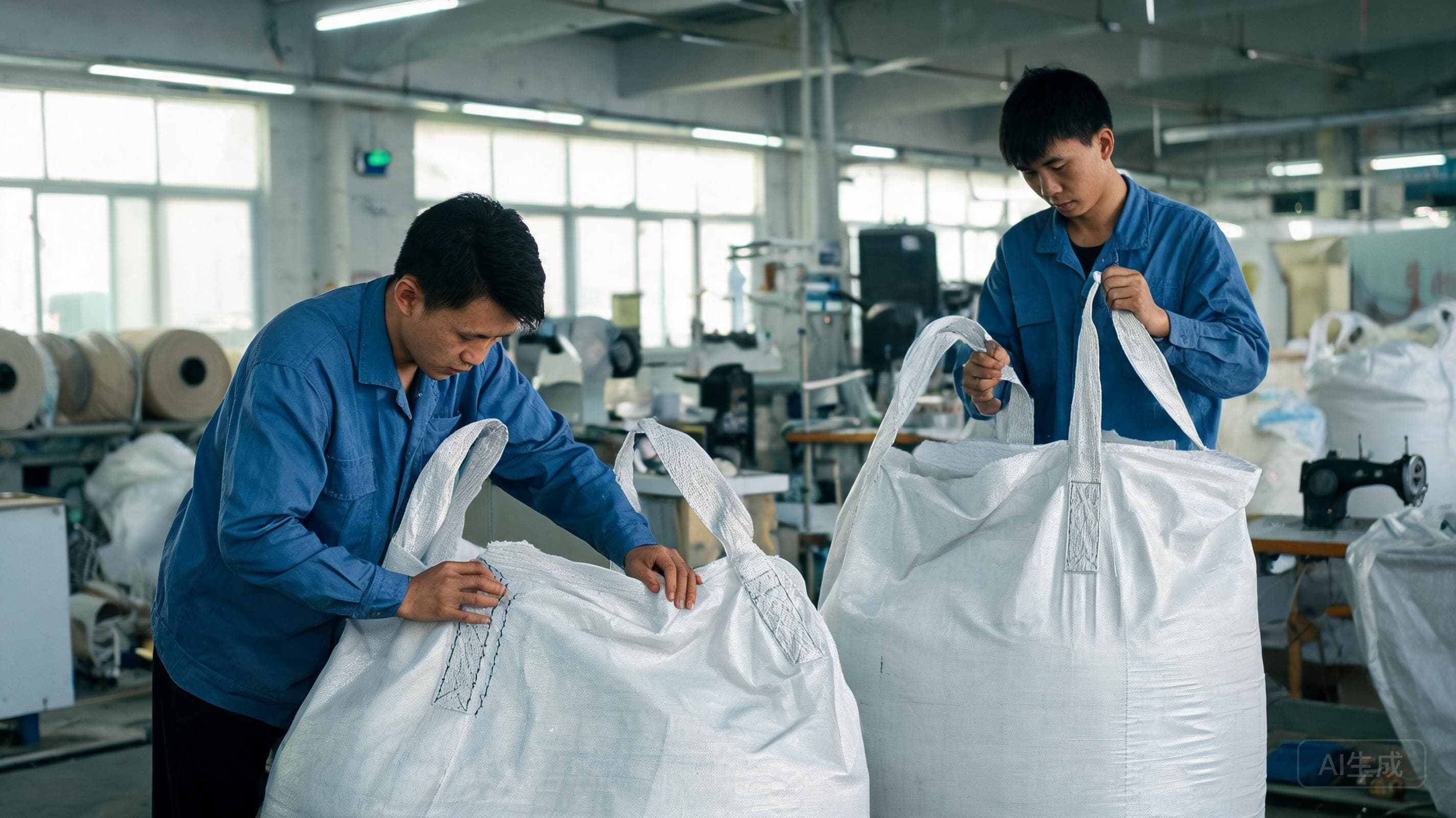
How to Choose the Right FIBC Bulk Bag for Safer, More Efficient Industrial Packaging
RUNCHEN
AuthorWith more than 25 years of experience in FIBC bulk bag manufacturing and sales, RUNCHEN operates its own production facility with stable batch capacity. We specialize in FIBC bulk bags, jumbo bags, ton bags, and customized industrial packaging solutions.
When packaging performance becomes an operational and commercial issue
For procurement and operations teams, industrial packaging is more than a purchasing decision. The right FIBC bulk bag must protect the product, work with existing filling and handling equipment, withstand storage and transport conditions, and arrive when production needs it. A poorly matched bag can cause leakage, contamination, handling delays, rejected shipments, repacking costs, and avoidable safety risks.
Packaging choices can also affect sustainability reporting and resource-efficiency targets. Public company disclosures may track packaging-material consumption and report efforts to reduce it. One CR Medical report excerpt references a 15% figure alongside packaging-material consumption data, but does not explain what the percentage measures. Treat it as a reason to review the complete report, not as a benchmark for another operation.
Base the business case for an FIBC on total performance: fit for the contents and handling conditions, applicable compliance requirements, product protection, and measurable material and cost efficiency.
Start with the load, handling process, and destination
Before comparing FIBC bulk bag options, define exactly what the bag must carry. Consider:
- Gross product weight and required bag capacity
- Bulk density and expected filled volume
- Flow characteristics, including whether the product bridges, compacts, or needs controlled discharge
- Sensitivity to moisture, dust, contamination, light, or odor transfer
- Electrostatic, combustible-dust, or hazardous-material considerations
- Whether an inner liner, special closure, or controlled handling is required
Map the bag’s full journey: filling, temporary storage, lifting, warehouse movement, stacking, transport, discharge, and disposal or reuse. Before finalizing the specification, confirm filling equipment, forklift or crane configuration, lifting method, rack dimensions, storage environment, and discharge arrangement with the supplier.
Agree on dimensions, filling and discharge features, liner requirements, and storage conditions before comparing prices. A bag that looks economical per unit may become costly if it fills slowly, fails to fit the storage footprint, creates unstable stacking, or requires manual intervention during discharge.
Clarify destination-market and customer requirements early. International shipments may require specific transport documentation, markings, certifications, and packaging controls. Establish these requirements before ordering.
Match bag construction to risk and application
Product names and colors can help identify a starting point, but they do not replace technical qualification. Review the current specification, certificates, rated working capacity, and suitability for the intended application.
For sensitive electronic components handled under electrostatic-control requirements, assess the COSEK Black Anti-Static Bulk Bag for Cleanroom Electronic Components Packaging. Confirm that its specifications, cleanliness controls, and handling protocol align with the facility’s ESD program and component requirements.
For regulated dangerous-goods applications, evaluate the COSEK White UN Certified Dangerous Goods FIBC Bulk Bag. Verify that the certification applies to the exact bag type, intended contents, packing group, filling method, closure arrangement, and transport conditions. Certification must be relevant to the actual shipment, not simply mentioned in a general product description.
Where additional strength or reinforcement is a priority, consider the Yellow Reinforced FIBC Bag. Review its construction and rated working capacity against the actual load, lifting method, number of lifting cycles, and warehouse handling plan.
For applications requiring a stable square-bottom format, consider the COSEK Brown Square Bottom FIBC Bulk Bag. Confirm that its dimensions and shape support efficient filling, stacking, storage, transport utilization, and discharge for the product.
Use product names as a starting point for qualification. Base the final selection on verified technical data, certificates, samples or pilot results, and application-specific suitability.
Assess safety, compliance, and product protection before purchase
Start with current documentation. Request technical data covering safe working load, safety factor, fabric weight and construction, seam design, lifting loops, filling and discharge configuration, and relevant test results. Review these details against planned operating conditions rather than relying on generic product information.
For dangerous goods, confirm that the UN marking and certification apply to the exact bag configuration and intended use. Clarify responsibilities for inspection, filling, closure, labeling, documentation, loading, and shipment release. A certified bag alone does not ensure compliance if the filling process or documentation falls short of applicable requirements.
For static-sensitive materials, involve qualified ESD and safety personnel. Review the required bag type, grounding arrangements, filling and discharge procedures, nearby equipment, environmental conditions, and operator training. Control electrostatic risk as part of the complete process, not as a packaging feature alone.
For cleanroom or contamination-sensitive applications, define what “clean” means for the product and process. Requirements may include controlled packaging, protected storage, inspection standards, traceability, and documentation of how bags are handled before delivery.
A supplier-approval checklist should cover traceability, quality-control procedures, incoming and final inspection, sample approval, manufacturing change notification, nonconformance management, and corrective-action response. These controls help prevent specification drift after initial approval.
Connect packaging selection to material efficiency goals
Material efficiency does not mean choosing the lightest bag available. It means specifying the material needed for safe, reliable performance without unnecessary excess. A CR Beer ESG excerpt describes greener-packaging efforts based on design and material selection, including lightweighting and source reduction while maintaining quality requirements. The same principle can inform FIBC procurement.
Review whether bag dimensions, fabric construction, liner selection, and handling performance are properly specified. Avoid defaulting to excess material instead of understanding the load and operating environment. At the same time, do not reduce material if that increases damage, leakage, instability, or product loss.
Measure packaging consumption using a consistent basis, such as bags per shipment, packaging mass per tonne of product, or packaging mass per unit shipped. Compare like-for-like products, routes, storage durations, and operating conditions.
Include damage rates, leakage incidents, rejected loads, repacking activity, handling failures, and product loss in efficiency reviews. A lower-cost or lighter bag is not an improvement if it increases operational risk or creates more waste elsewhere in the supply chain.
Set a baseline before making changes, then run a controlled pilot. Document test conditions, product characteristics, handling steps, and acceptance criteria so procurement, quality, operations, and sustainability teams can evaluate results together.
Build a total-cost comparison, not just a unit-price comparison
Unit price matters, but it is only one part of industrial packaging cost. Compare alternatives by usable capacity, fill-rate performance, discharge efficiency, storage footprint, transport utilization, handling reliability, and expected service performance.
Include potential costs from damaged product, rejected shipments, downtime, manual repacking, customer claims, disposal, and compliance failures. A lower-priced bulk bag may cost more overall if it disrupts filling, creates unstable warehouse storage, or fails during transport.
Review order quantities, lead times, inventory requirements, payment terms, and supplier production capacity. These factors affect working capital and continuity of supply, especially when FIBC bags support daily production or seasonal shipment schedules.
Use an agreed baseline and evaluation period when calculating savings. Do not assume that a percentage reported by another company, particularly one taken from an unclear report excerpt, applies to your products, process conditions, or supply chain.
Ask suppliers for transparent quotations and side-by-side specification comparisons. Confirm that proposed alternatives are equivalent in capacity, construction, certification, and intended performance.
Qualify suppliers with a practical evaluation process
A qualified supplier can help identify specification gaps before they become operational problems. Share a complete application profile covering product characteristics, operating environment, annual demand, destination markets, required certificates, and delivery expectations.
For safety-critical, regulated, contamination-sensitive, or demanding applications, request samples or a controlled pilot. Define acceptance criteria in advance, including fill performance, lifting behavior, stack stability, discharge efficiency, product protection, appearance, and documentation requirements.
Evaluate manufacturing quality, inspection methods, traceability controls, production capacity, delivery reliability, technical support, and responsiveness. Confirm how the supplier manages specification changes, defects, corrective actions, replacement requirements, and urgent replenishment.
A cross-functional review is valuable. Procurement can assess commercial terms and supply continuity; operations can evaluate handling; quality can review product protection; EHS can assess safety and compliance; and sustainability teams can measure material efficiency. Involving these functions early helps prevent late-stage changes and performance failures.
Questions to ask before requesting a quote
- What product will the FIBC contain, and what are its weight, density, flow characteristics, and sensitivity requirements?
- What are the filling, lifting, stacking, transport, storage, and discharge conditions?
- Are UN certification, antistatic performance, cleanroom-related controls, reinforcement, or a square-bottom design required?
- Which technical documents, test results, certificates, and traceability records must accompany the order?
- What dimensions, capacity, order volume, delivery schedule, and destination market are required?
- How will success be measured: fewer handling issues, lower damage rates, improved packaging-material efficiency, better transport utilization, or more dependable supply?
Turn the specification into a qualified supply decision
Make an effective FIBC purchasing decision by defining the application, identifying product and handling risks, establishing compliance needs, matching bag construction to requirements, validating performance, and comparing total cost rather than unit price alone.
Whether you are assessing the COSEK Black Anti-Static Bulk Bag, COSEK White UN Certified Dangerous Goods FIBC Bulk Bag, Yellow Reinforced FIBC Bag, or COSEK Brown Square Bottom FIBC Bulk Bag, give the supplier the details needed to assess suitability. Include annual volume, target delivery date, destination market, product characteristics, filling method, lifting arrangement, storage conditions, and required documentation.
Request a tailored quotation and technical review today. Contact our team with your product and handling requirements to discuss specifications, certification, or a sample evaluation.
Related News
Other news you might be interested in

Sustainable Bulk Packaging Strategies for the Modern Manufacturing Era
Discover how high-performance FIBC bulk bags reduce packaging waste, prevent product loss, and improve sustainability metrics. Learn key features, real-world results, and a step-by-step implementation roadmap to optimize your bulk packaging strategy.
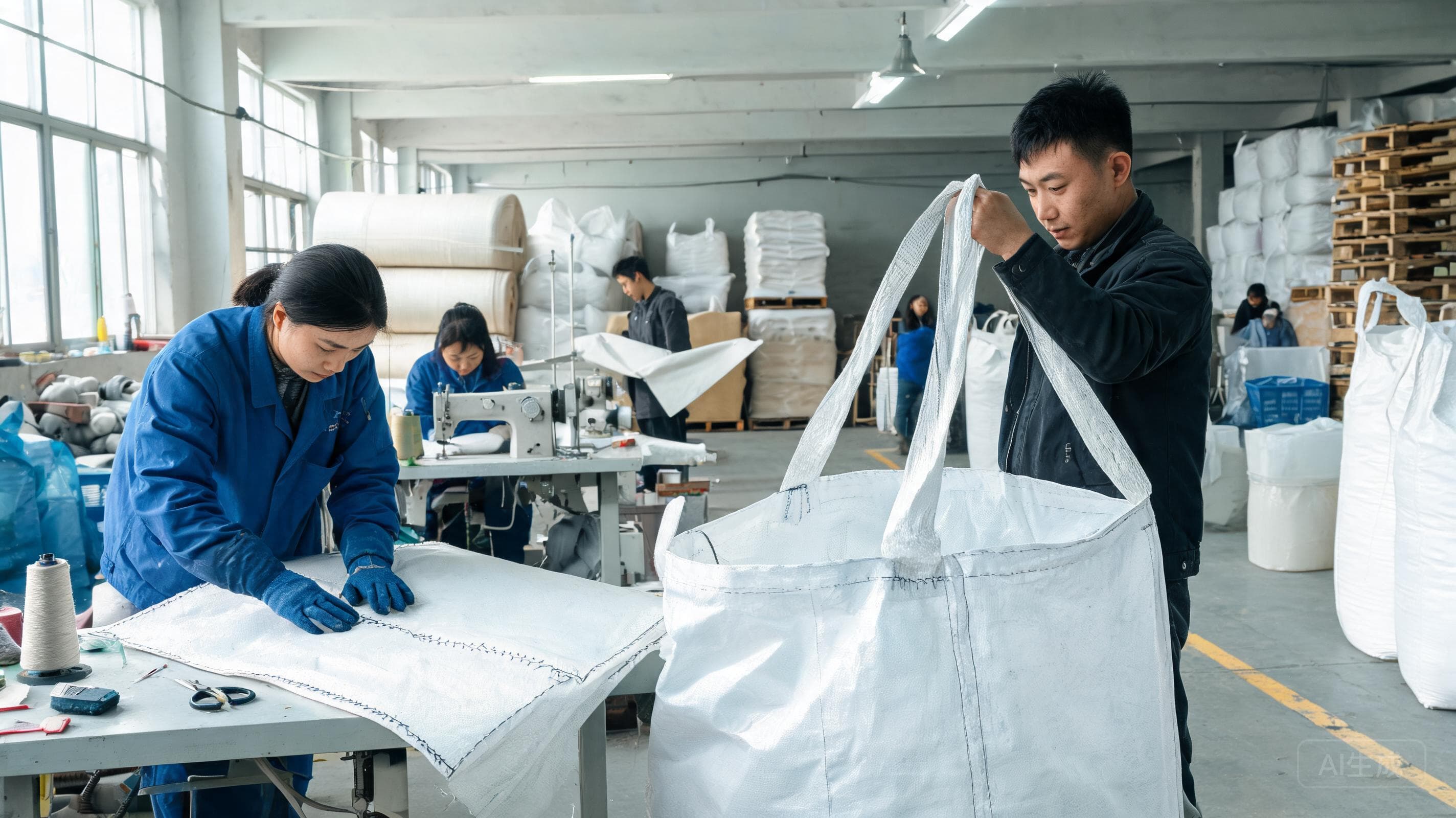
How to Select High-Performance FIBC Bags for Safer, More Sustainable Bulk Material Handling
Compare FIBC construction, safety, liners, discharge systems, quality controls, and supplier capability to reduce risk, protect products, improve efficiency, and control total cost.
Want to know more?
Get in touch with us for more information about our services and products.