Ton Bag Evolution: From Container to Value Hub in Sustainable Supply Chains

RUNCHEN
AuthorWith more than 25 years of experience in FIBC bulk bag manufacturing and sales, RUNCHEN operates its own production facility with stable batch capacity. We specialize in FIBC bulk bags, jumbo bags, ton bags, and customized industrial packaging solutions.
Ton Bag Evolution: From Container to Value Hub in Sustainable Supply Chains
For decades, the Flexible Intermediate Bulk Container (FIBC), or ton bag, has been viewed through a narrow lens: a cost-effective, passive vessel for moving dry bulk goods. The prevailing conversation for procurement and logistics managers has centered on price-per-unit, basic load safety, and logistical efficiency. However, a strategic shift is underway. Driven by macro-trends in sustainability and digitalization, the humble ton bag is evolving from a simple container into a critical value hub—a nexus connecting material innovation, smart manufacturing, and lifecycle asset management.
The Material Bridge: Connecting Brand Promise to Supply Chain Reality
The first transformation is material-driven. As end-consumer brands make bold sustainability commitments, the integrity of their entire supply chain is under scrutiny. This is where ton bags play a pivotal, often overlooked role.
Global mono-material packaging, prized for its recyclability, is a market projected to grow from $3.94 billion in 2024 to $5.63 billion by 2029, at a CAGR of 7.3%.
When a cosmetics brand, for instance, launches a line in 100% recyclable mono-material packaging, a critical question arises: are the raw resins and compounds delivered to their factory in packaging that aligns with this green promise? The ton bag becomes the "first-mile" validator of a brand's sustainable commitment. Inconsistent packaging upstream can undermine downstream brand integrity and complicate recycling streams. This positions the ton bag not just as a transporter, but as an essential bridge ensuring the "green purity" of the supply chain from origin to end-product.
The Process Node: From Cost Center to Smart Data Interface
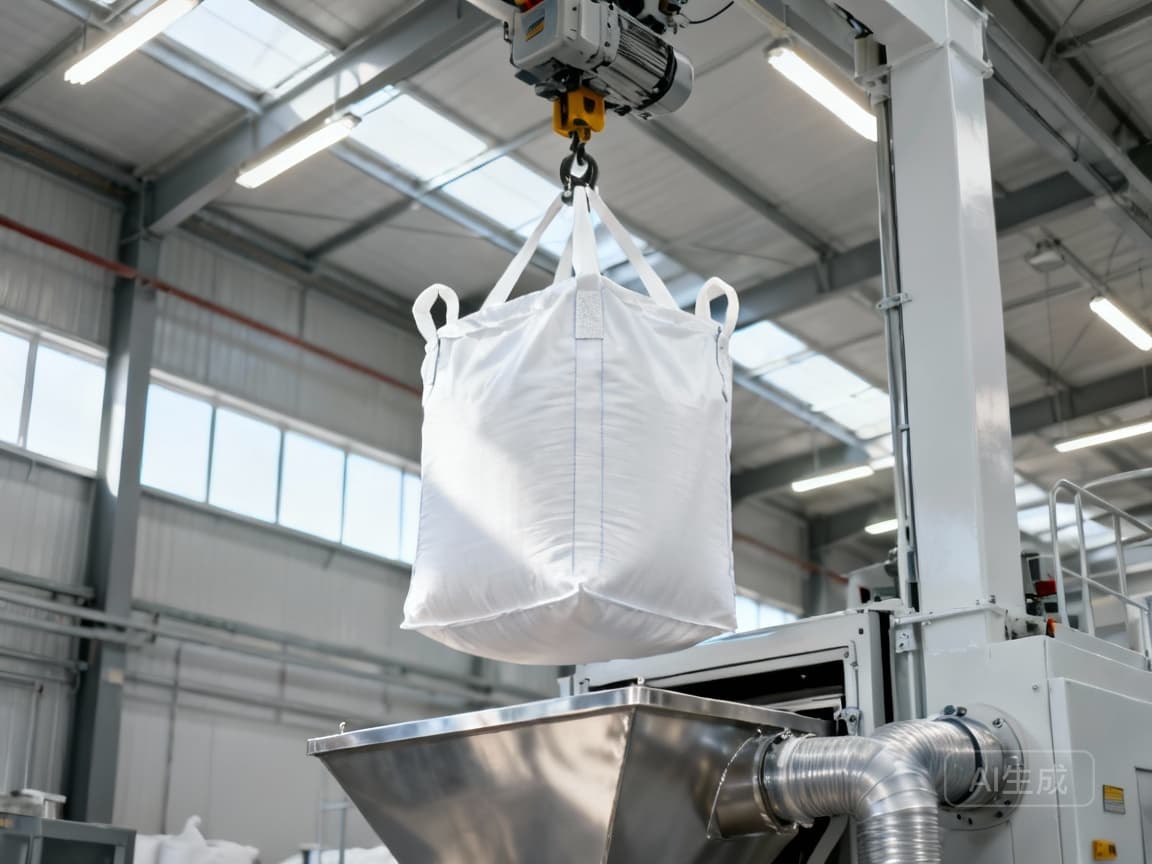
The second evolution redefines the ton bag's role within plant operations. Traditionally, unloading stations were seen as necessary cost centers—sources of dust and manual labor. Modern solutions reframe them as strategic data gateways for Industry 4.0.
Consider the experience of Endema, which provides customized FIBC unloading stations. Their solutions integrate electric hoists, sealed hoppers, dust collectors, and pneumatic conveying systems. The key insight from their implementation is that a modern unloader is more than just dust control; it is a physical IoT interface. This node can be integrated with bag-mounted RFID or QR codes for seamless batch traceability. It enables real-time inventory monitoring through weight sensors and provides data on equipment performance for predictive maintenance.
As Endema's experience notes, such retrofits require a holistic view of existing plant layout and process flow to maximize value. The result is a transition from a manual, opaque process to an automated, data-rich one that enhances Overall Equipment Effectiveness (OEE), optimizes production scheduling, and reduces operational risk—transforming a cost center into a source of intelligence.
The Asset Manager: Governing Risk and Value Across the Lifecycle
The final shift requires a fundamental change in perspective: viewing the ton bag as a managed production asset, not a disposable consumable. Poor handling leads to more than just bag rupture; it can cause production stoppages, safety incidents, and environmental compliance failures.
Guidance from manufacturers like Shandong Lusu Packaging, which details safe practices for lifting, forklift handling, and outdoor storage, forms the foundation. However, strategic asset management extends further. It encompasses:
- Specification & Procurement: Selecting the right bag design and material for the product and intended reuse cycles.
- In-Transit & Warehouse Safety: Implementing handling protocols to prevent damage.
- End-of-Life Strategy: Planning for responsible reuse, recycling, or disposal in line with evolving Extended Producer Responsibility (EPR) regulations.
Future regulations and EPR schemes will increasingly hold companies accountable for the full lifecycle of their packaging, including intermediate bulk containers. Proactive management mitigates hidden costs and future-proofs operations against compliance risks.
A Strategic Framework for the Modern Enterprise
To leverage the ton bag as a value hub, businesses must move beyond transactional purchasing. Here is a concise action framework:
- Audit Your Current State: Map your ton bag flow from receipt to disposal. Identify material compatibility issues, manual handling bottlenecks, and data gaps in tracking.
- Engage in Strategic Sourcing: Vet suppliers not just on price, but on their ability to collaborate on sustainable material options, provide data-supportive solutions (e.g., standardised flanges for automation), and offer take-back or recycling programs.
- Plan for Integration: For new lines or retrofits, involve ton bag handling experts early in the design phase. As the Endema case shows, a holistic view is critical for seamless integration into smart factory systems.
- Develop Lifecycle Protocols: Formalize handling, storage, and end-of-life management guidelines. Train staff not just on safety, but on the cost and sustainability impact of proper asset care.
The evolution is clear. By recognizing the ton bag's role as a material bridge, a process node, and a managed asset, forward-thinking companies can unlock new dimensions of sustainability, operational resilience, and supply chain intelligence. The strategic value far exceeds the cost of the bag itself.
Related News
Other news you might be interested in

Choosing the Right FIBC Manufacturer: A Practical Guide to Safer, More Reliable Bulk Packaging
Evaluate FIBC manufacturers by application fit, quality controls, total cost, and supply reliability. Use this practical guide to define specifications, assess samples, and plan a controlled trial.
Choosing the Right FIBC Bulk Bag: A Buyer’s Guide to Safer, More Reliable Shipments
Compare FIBC bulk bags by material, handling conditions, safety requirements, and total cost. Use this practical guide to define specifications, assess suppliers, and plan a trial.
Want to know more?
Get in touch with us for more information about our services and products.