Transform FIBC Bags into Data-Driven Assets: Boost Efficiency & Meet ESG Goals #8
RUNCHEN
AuthorWith more than 25 years of experience in FIBC bulk bag manufacturing and sales, RUNCHEN operates its own production facility with stable batch capacity. We specialize in FIBC bulk bags, jumbo bags, ton bags, and customized industrial packaging solutions.
Transform FIBC Bags into Data-Driven Assets: Boost Efficiency & Meet ESG Goals
In today's challenging economic climate, where industries like pharmaceuticals face revenue pressure and companies globally strive for operational excellence, every component of the supply chain must justify its strategic value. For decades, Flexible Intermediate Bulk Containers (FIBCs or bulk bags) have been viewed as a simple, passive cost item—a necessary expense for storage and transport. However, a strategic shift is underway. Forward-thinking organizations are now leveraging these ubiquitous containers as active, data-driven assets to drive automation, sustainability, and global compliance. This evolution moves FIBCs from the periphery of cost accounting to the core of strategic operational planning.
The Strategic Gap: From Cost Center to Performance Enabler
Traditional discussions around FIBCs focus on avoiding waste and minimizing loss—a purely defensive posture. Yet, broader business trends reveal a more profound opportunity. As seen in process improvement case studies, the universal need to streamline operations, reduce costs, and regain market share hinges on automation and optimization. Simultaneously, active carbon trading markets and the push for international growth, as highlighted in recent market insights, demand new tools for data collection and compliance. Your FIBCs are uniquely positioned to meet these needs, transforming from mere containers into intelligent interfaces within your digital and green transformation.
Pillar 1: Automate the Physical Flow
The first step is integrating FIBCs into automated material handling systems. Inefficient, manual loading and unloading create bottlenecks that undermine investments in automation elsewhere. The solution lies in "designing for automation."
- Standardized Dimensions & Lifting Loops: Consistent bulk bag dimensions and reinforced loops ensure reliable, hands-off interaction with bulk bag fillers and bulk bag dischargers.
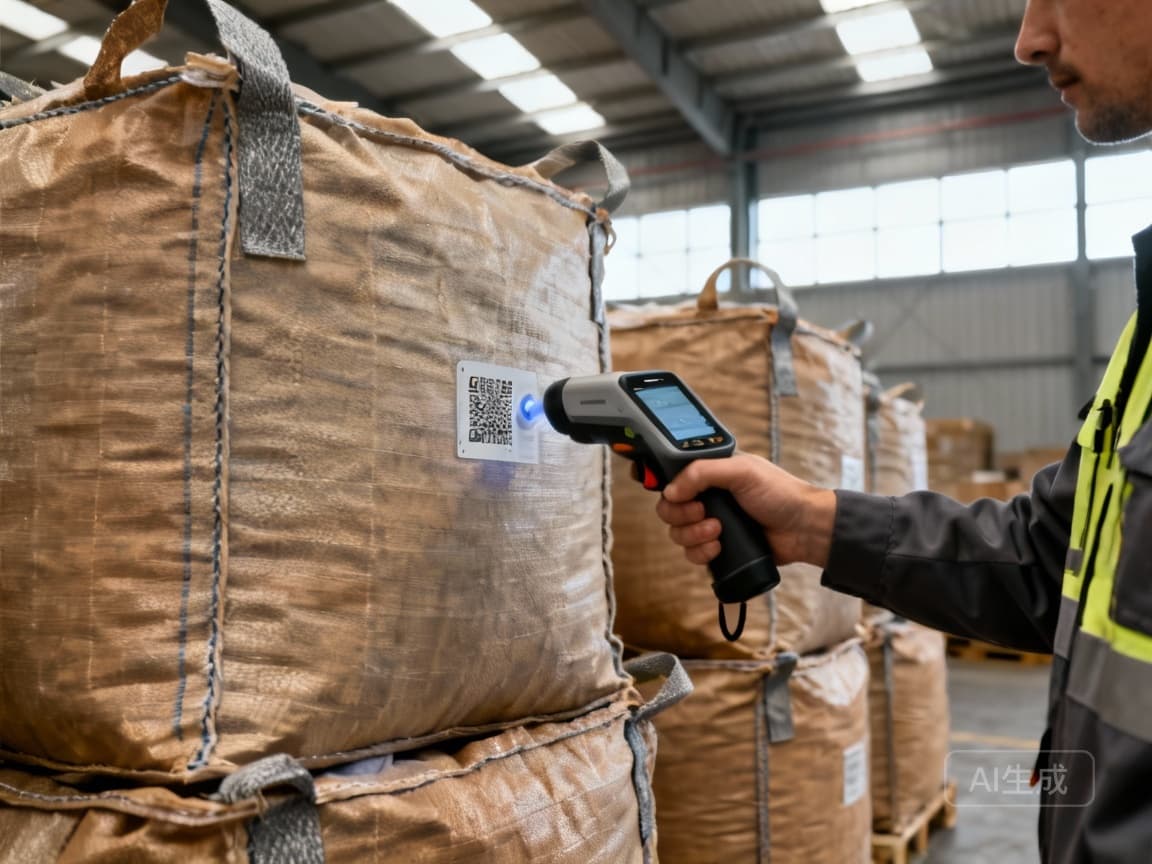
- Machine-Readable Identification: Advanced bag tags (RFID/QR codes) allow automated guided vehicles (AGVs) and sorting systems to identify, track, and route bags without human intervention.
This approach mirrors the core objective of enterprise AI and process optimization initiatives: to automate repetitive tasks, reduce human error, and free up resources for higher-value work. The result is a smoother, faster, and more reliable production line.
Pillar 2: Embed Sustainability & Data Traceability
Moving beyond basic bulk bag recycling, the next-generation FIBC serves as a tangible node in your circular economy and carbon accounting framework. With carbon markets active and mechanisms like China's CCER gaining momentum, verifiable data is currency.
Imagine an FIBC with a unique digital identity that logs every journey: fill weight, transport distance, number of reuses, and end-of-life recycling. This transforms the bag from a package into a data-collection unit. The implications are significant:
- Granular Carbon Footprinting: Accurately allocate Scope 3 emissions to specific shipments and batches.
- Enhanced ESG Reporting: Provide auditable data on material circularity and supply chain transparency.
- Carbon Asset Optimization: Support participation in carbon trading by providing the underlying data for allowance calculations, much like the facility that transacted 200,000 tonnes of allowances.
Pillar 3: Ensure Compliance as a Competitive Advantage
For industries like pharmaceuticals, food (e.g., ingredients for products like Dippin' Dots), and chemicals, packaging compliance is not an afterthought—it is a prerequisite for market access. As companies accelerate international product registrations, non-compliant packaging can cause costly delays or recalls.
Strategic collaboration with knowledgeable FIBC bulk bag manufacturers is crucial. They provide the expertise to navigate complex global regulations (FDA, EU 10/2011, etc.). Key value drivers include:
- Certified Materials: Ensuring fabrics and bulk bag liners meet stringent health and safety standards for sensitive contents.
- Contamination Prevention: Designs that protect product purity from factory to end-user.
- Full Traceability: Documentation that travels with the bag, serving as a "compliance passport" for your product.
Investing in custom, compliant FIBCs directly translates to faster time-to-market and significantly lower regulatory risk in overseas expansion.
Your Action Plan: Begin the Transformation
Re-evaluating your FIBC strategy requires a cross-functional view. Engage teams from operations, sustainability, and quality assurance to audit current usage against these three pillars. Start by asking your industrial bulk bag suppliers not just about price, but about:
- Their experience in designing bags for automated handling systems.
- Their ability to provide or integrate smart tracking and data-logging solutions.
- Their portfolio of certified materials and knowledge of target-market regulations.
The era of the passive bulk bag is over. By treating FIBCs as strategic, data-enabled assets, you unlock new dimensions of efficiency, sustainability, and market agility. This isn't just about saving on packaging costs; it's about empowering your entire operation to compete and thrive in a complex global landscape.
Related News
Other news you might be interested in
Choosing the Right Bulk Bag Manufacturer for Safer, More Efficient Operations
Learn how to specify bulk bags, evaluate manufacturers, and validate quality and supply reliability to reduce operational risk and support safer, more efficient handling.
The 140th Canton Fair: New Trends in the Export Market for FIBC Bulk Bags, Jumbo Bags, and PP Woven Packaging
Explore how export buyers can evaluate FIBC bulk bags and PP woven packaging beyond unit price. Get practical guidance on specifications, supplier verification, sustainability requirements, and RFQs—and prepare your next sourcing conversation with COSEK.
Want to know more?
Get in touch with us for more information about our services and products.