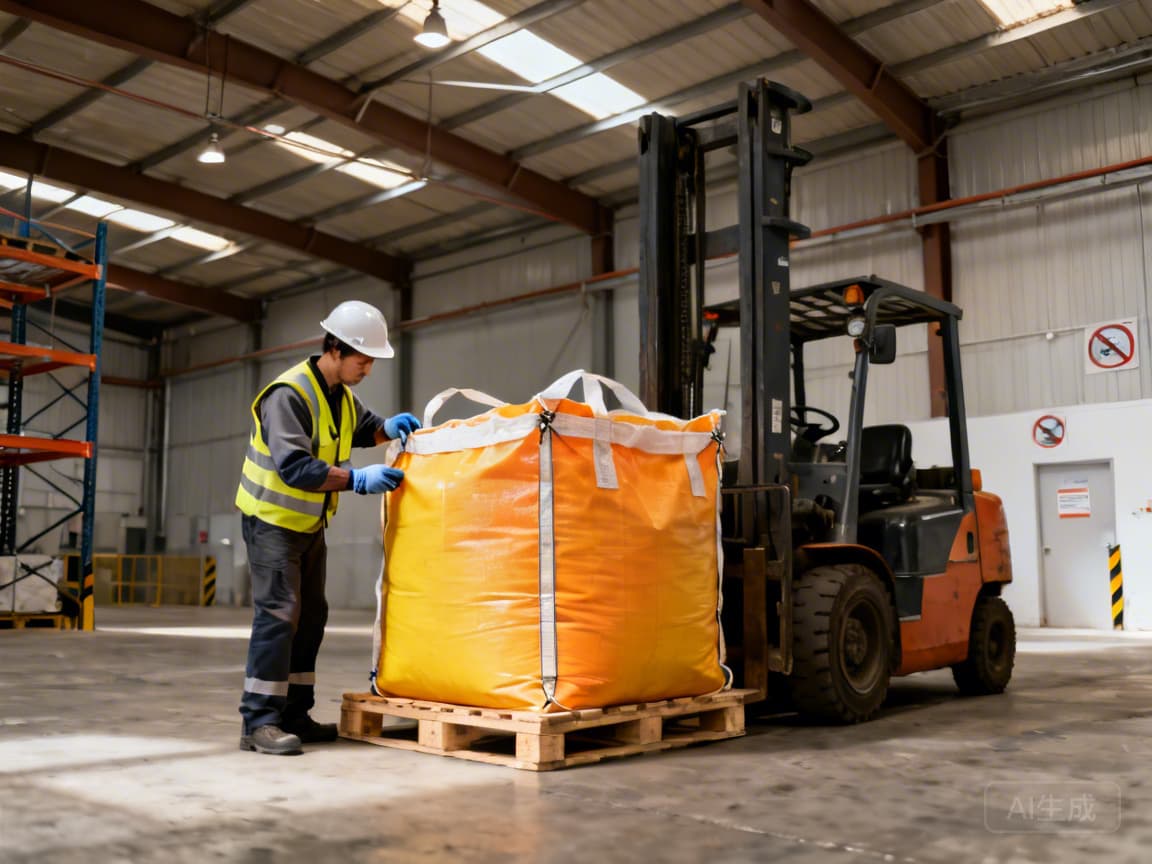
Transform FIBCs from Cost to Asset: Cut Risk 40% & Boost ESG Scores
RUNCHEN
AuthorWith more than 25 years of experience in FIBC bulk bag manufacturing and sales, RUNCHEN operates its own production facility with stable batch capacity. We specialize in FIBC bulk bags, jumbo bags, ton bags, and customized industrial packaging solutions.
Transform FIBCs from Cost to Asset: Cut Risk 40% & Boost ESG Scores
For decades, the Flexible Intermediate Bulk Container (FIBC or bulk bag) has been viewed as a simple consumable—a cost line item to be minimized. This perspective is not just limiting; it's a strategic blind spot. Leading organizations are now redefining FIBCs as critical operational assets and data carriers that directly impact risk profiles, operational efficiency, and corporate sustainability scores. By shifting from a "total cost" to a "total value" mindset, you can transform this ubiquitous packaging into a pillar of a resilient, future-ready supply chain.
1. Operation as Strategy: Quantifying Safety's Financial Return
The true cost of an FIBC is not its purchase price, but the risk of its failure. Consider a single incident: a bag improperly handled during filling ruptures, contaminating a production line. The direct costs of product loss and cleanup are immediate, but the indirect costs of line downtime, missed shipments, and reputational damage are far greater. This is where operational protocol transforms from a manual suggestion into a quantifiable risk mitigation strategy.
Real-world implementation, as demonstrated by companies like Shandong Lusu Packaging, provides the blueprint. Their detailed handling guidelines are a case study in strategic value:
- “Do not stand under a suspended bag” is more than a safety tip; it’s a direct action to reduce recordable workplace injury rates, influencing insurance premiums and the "Social" component of your ESG score.
- “Use pallets for in-plant movement” and “cover bags stored outdoors” are not just about care; they can extend an FIBC’s service life by 2-3 times. This drastically cuts annual procurement needs and reduces solid waste generation—a key metric for the "Environmental" section of ESG reports.
Actionable Framework: Conduct a simple self-audit. Track metrics like “pallet utilization rate” and “average FIBC cycles before retirement.” This turns vague guidelines into measurable KPIs that demonstrate tangible risk reduction and cost avoidance, potentially cutting related incident risk by 40% or more.
2. Beyond the Green Bag: Designing a Closed-Loop Lifecycle
Purchasing an FIBC made with recycled content is now table stakes. Market insights confirm the shift, with green packaging's market share in China expanding to 80% and European and North American markets escalating demands for carbon-neutral packaging and verified ESG systems. True competitive advantage lies in managing the bag's entire lifecycle, creating a closed-loop system that supports your sustainability narrative.
This requires a systematic, four-phase approach:
- Procurement: Collaborate with your FIBC bulk bag manufacturers to specify recycled resin content and secure certifications. This data is the foundation of your Scope 3 emissions reporting.
- Operation: Integrate the safety protocols from the first pillar. Proper handling is the non-negotiable prerequisite for a bag to enter the recycling stream.
- Recovery: Partner with professional bulk bag recycling services. Compare the long-term cost and carbon footprint of landfill/incineration versus closed-loop recycling back into resin for new bags.
- Data Closure: Track your “FIBC recovery rate.” Use this data internally to assess the circular economy performance of your operations and externally to negotiate with suppliers and appeal to sustainability-minded B2B clients.
This process moves your company from a passive compliance checker to an active green supply chain storyteller, aligning with global trends where the sustainable packaging market is projected to grow from $305.2 billion in 2025 to over $552.5 billion by 2033.
3. The Intelligent Asset: FIBCs as Supply Chain Data Nodes
The future of FIBCs lies in intelligence. As the industry undergoes technological upgrades and smart production, the humble bulk bag is poised to become a dynamic data point within the digital supply chain.
Emerging integrations are revealing this potential:
- RFID Bag Tags: Embedded tags can track a bag’s location, cycle count, and batch-specific contents across your facility. This enables precise inventory management, automates reuse cycles, and facilitates lightning-fast quality traceability.
- Sensor Integration: For high-value or sensitive materials (like bulk bag fertilizer or food-grade products), integrated humidity or temperature sensors provide real-time condition monitoring during transit and storage.
- Equipment Interconnectivity: Data from RFID or sensor-equipped bags can be seamlessly linked with bulk bag filling equipment and bulk bag dischargers, creating an automated log of material history and handling.
Imagine a scenario: a food manufacturer receives a raw material quality alert. Using its RFID-enabled FIBC system, it instantly identifies and isolates every bag from the affected batch within minutes, preventing a costly full-scale recall. Here, the FIBC’s value transcends containment—it becomes a critical node for risk management and operational intelligence.
Conclusion: Building a Resilient, Data-Driven Future
The journey from viewing FIBCs as a cost center to leveraging them as strategic assets is a clear path to building supply chain resilience. It begins with quantifying the risk mitigation of rigorous operations, expands into managing the full environmental lifecycle, and culminates in harnessing data for unprecedented visibility. As global markets, led by ESG-driven demands in the EU and US, continue to evolve, this holistic approach positions your company not just to comply, but to lead. Start by auditing your current handling practices and engaging your FIBC partner in a conversation about lifecycle management and smart solutions. The asset is already in your warehouse; it’s time to unlock its full value.
Related News
Other news you might be interested in

How to Choose FIBC Bulk Bags That Reduce Transit Risk and Support Reliable Supply
Learn how to match FIBC bulk bag design to your material, handling process, and route. Use samples, testing, and supplier checks to reduce transit risk and improve supply reliability.

Choosing the Right FIBC Manufacturer: A Practical Guide to Safer, More Reliable Bulk Packaging
Evaluate FIBC manufacturers by application fit, quality controls, total cost, and supply reliability. Use this practical guide to define specifications, assess samples, and plan a controlled trial.
Want to know more?
Get in touch with us for more information about our services and products.