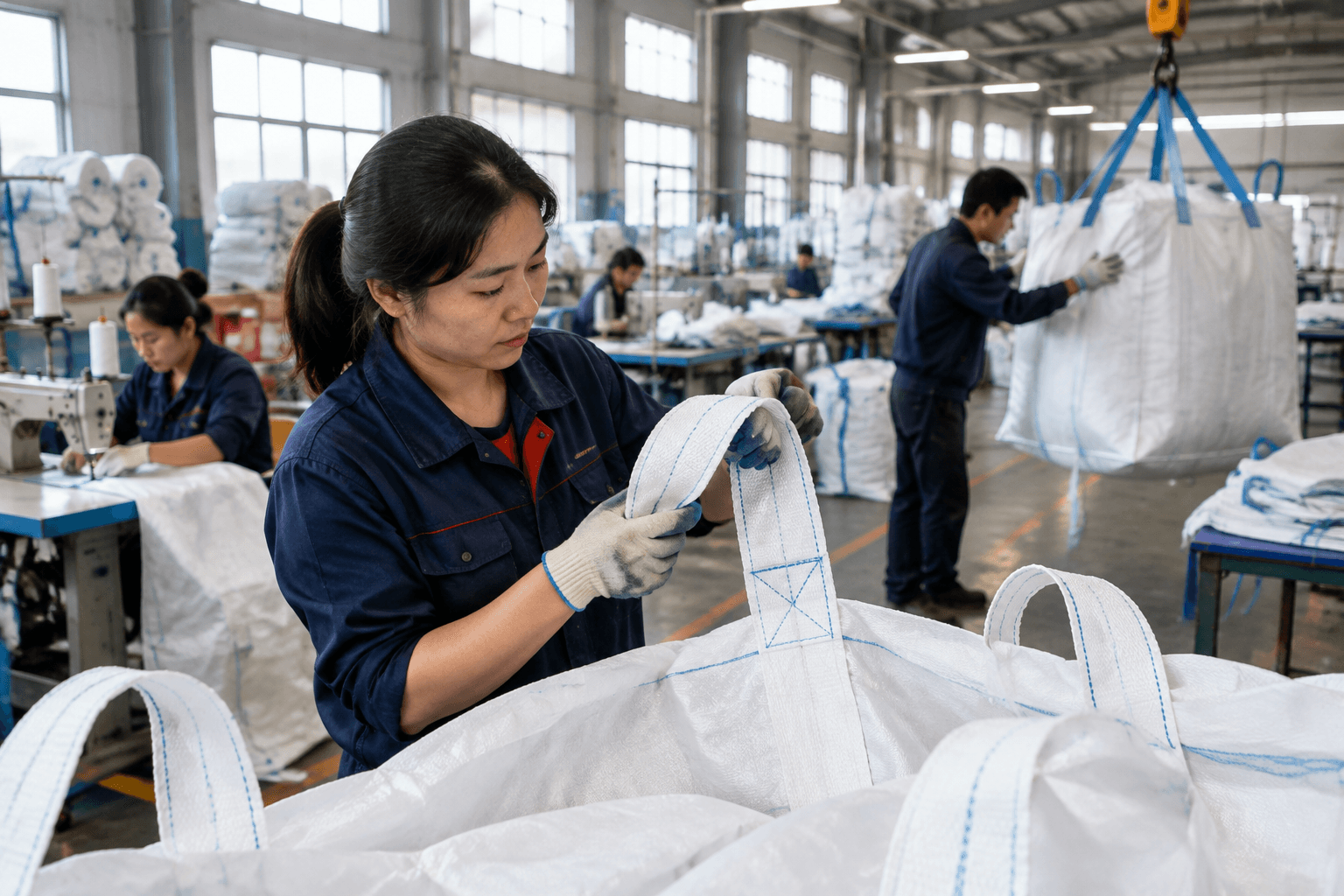
Choosing the Right Bulk Bag Manufacturer for Safer, More Efficient Operations
RUNCHEN
AuthorWith more than 25 years of experience in FIBC bulk bag manufacturing and sales, RUNCHEN operates its own production facility with stable batch capacity. We specialize in FIBC bulk bags, jumbo bags, ton bags, and customized industrial packaging solutions.
When packaging performance becomes an operational risk
For procurement and operations teams, a bulk bag is more than a packaging line item. It helps protect product, support safe handling, and keep material moving through filling, storage, transport, and discharge. Inconsistent bag performance can lead to product loss, filling delays, damaged inventory, cleanup, warehouse disruption, and higher transport costs.
These risks become more significant at scale. Discussion at the 2024 ISTA China Annual Conference referenced an era of 100 billion parcels and growing interest in circular packaging. This is not a ton bag market-size estimate, but it reflects a wider reality: packaging systems face increasing pressure to perform reliably across complex supply chains.
A low unit price does not necessarily mean a lower operating cost. Buyers need bulk packaging that suits the packed material, filling process, lifting equipment, storage environment, transport route, and end-of-life requirements. The right manufacturer can translate these operating conditions into a practical, repeatable bag specification.
This guide helps procurement, production, quality, warehouse, and logistics teams assess bag designs and manufacturing partners before placing an order. The aim is to reduce avoidable risk and select a bulk bag solution that supports efficient daily operations.
Start with the material, load, and handling requirements
The right bulk bag specification starts with the product, not a standard bag size. A manufacturer needs to understand what is being packed and how it behaves under actual operating conditions.
Key product details include:
- Bulk density and target fill weight
- Particle size, flow characteristics, and potential for bridging
- Moisture sensitivity and contamination-control requirements
- Abrasiveness and potential wear on fabric, seams, liners, and discharge components
- Whether ventilation, coating, or containment is required
- Product-specific handling, hygiene, or storage considerations
Next, define the safe working load, required safety factor, filling and discharge methods, lifting configuration, stacking conditions, and expected bag lifecycle. Is the bag intended for one-way use, limited reuse under controlled conditions, or a returnable process? Will it be filled by gravity, screw feeder, or pneumatic equipment? Will it be emptied through a discharge spout, cut open, or positioned over a downstream hopper?
Map the full handling journey before approving the design. Consider the filling station, conveyor transfer, warehouse storage, forklift movement, crane lifting, loading method, container or truck conditions, and final discharge point. A bag that suits the filling line may not be appropriate for a humid warehouse, a long export route, or repeated forklift handling.
Before finalizing a specification, share product samples, process drawings, filling equipment details, and handling information with the manufacturer. Detailed application data helps the supplier recommend appropriate dimensions, fabric construction, lifting loops, liners, and accessories.
Match the bag construction to the application
Bulk bag performance depends on how its components work together. Fabric weight, dimensions, seams, lifting loops, liners, filling and discharge spouts, coatings, and reinforcement features should be specified as a coordinated system—not selected in isolation.
Increasing fabric weight alone may not address an issue caused by unsuitable loop configuration, poor filling geometry, excessive abrasion, or a mismatch between the bag and lifting equipment. The manufacturer should review the complete operating requirement before recommending a construction.
The COSEK Ventilated Bulk Bag is worth considering when airflow through the bag is relevant to product handling or storage. Ventilated construction may suit materials that require air circulation, but the design should also account for moisture exposure, contamination concerns, stacking conditions, and product characteristics.
A Top-Lift Bulk Bag may suit operations designed around top lifting and compatible forklift or crane equipment. Confirm the loop configuration, loop length, lifting angle, equipment contact points, and handling environment during specification. The design must support the lifting method used at the facility and throughout transport.
An Internal Reinforcement Ton Bag can be evaluated when an application requires additional internal structural support. Its suitability depends on the target load, bag dimensions, product behavior, filling method, and handling demands. Select reinforcement to address a defined operational need, and confirm the expected benefit with the manufacturer.
When failure could cause significant safety, product-loss, or workflow consequences, application-specific trials are worthwhile. A sample or pilot order can reveal issues with filling speed, bag shape, stability, lifting clearance, discharge performance, and compatibility with existing equipment before full-scale purchasing begins.
Evaluate a manufacturer beyond the quoted unit price
Two suppliers may quote similar bag sizes and load capacities while offering different levels of engineering support, material control, inspection, and supply reliability. Compare how each manufacturer translates your application into a controlled production specification.
Ask suppliers how they document requirements through bag drawings, material specifications, approved samples, and production instructions. Cover fabric type and weight, stitching patterns, loop construction, dimensions, liner requirements, spout details, printing, labels, and special accessories.
Review quality assurance at multiple stages, including:
- Incoming checks for fabric and components
- Controls for cutting, sewing, loop attachment, and accessory installation
- Dimensional checks and workmanship inspections
- Verification of lifting components and finished-bag condition
- Batch identification and traceability processes
- Procedures for nonconforming products and specification changes
Request relevant test documentation and confirm that testing reflects the intended load and handling environment. A test result has limited value if it does not relate to the required bag configuration, lifting arrangement, application conditions, and safe working load.
Assess production capacity, normal lead times, order flexibility, communication, and support for recurring orders. A lower-cost bag can become expensive if it arrives late, varies from the approved sample, causes production stoppages, or requires repeated corrective action.
Compare total cost of ownership, not just price per bag. Include filling efficiency, damage risk, product loss, storage utilization, transport performance, labor requirements, disposal or reuse considerations, and the potential cost of operational disruption.
Connect packaging choices to wider supply-chain conditions
Bulk bag purchasing is affected by material availability, freight conditions, production schedules, exchange-rate movement, and changing input costs. Clear specifications and realistic delivery forecasts help manufacturers plan production and help buyers avoid last-minute sourcing pressure.
For context, a global aluminium industry report cited metallurgical alumina output of 130.4 million tonnes when discussing broader industry conditions. This figure is not evidence about polypropylene availability or ton bag pricing. It does illustrate how industrial buyers monitor upstream supply and production conditions when managing procurement risk.
Ask potential suppliers how they manage material sourcing, production planning, inventory, and customer communication when conditions change. A dependable manufacturer should explain how it maintains specification consistency, manages lead-time changes, and communicates early about delivery risks.
Supply-chain resilience relies on more than inventory. It also depends on suitable bag design, dependable manufacturing controls, realistic forecasts, clear order communication, and practical contingency planning.
Use evidence carefully when assessing performance claims
Connect performance claims to evidence relevant to your application. If a supplier describes a bag as stronger, more stable, more efficient, or better suited to a particular use, ask which configuration was tested and under what conditions.
A useful evaluation covers the bag design, test method, sample size, load, lifting arrangement, environmental conditions, and acceptance criteria. This matters when comparing bags with different fabric weights, seam constructions, loop arrangements, liners, coatings, or reinforcement features.
Some research-track excerpts reference a figure of 0.10%, but the available context does not identify what that percentage measures. Do not treat it as a ton bag performance benchmark without clarification. Base procurement decisions on documented tests, applicable standards, approved samples, and evidence tied directly to the intended use.
Distinguish among third-party standards, controlled test results, internal production records, general market commentary, and statistics from unrelated industries. Each may provide context, but they do not carry equal weight when selecting a bag for a high-value or demanding application.
Pilot orders and controlled trials are practical ways to validate a new specification. They let teams assess filling performance, operator handling, lifting compatibility, warehouse behavior, transport stability, discharge efficiency, and workflow impact before scaling up.
Build a practical evaluation checklist for shortlisted suppliers
Use a consistent checklist to compare shortlisted bulk bag manufacturers. This makes differences in scope, support, quality controls, and service visible alongside quoted pricing.
- Does the supplier understand the packed material, target load, bulk density, and flow behavior?
- Have filling, discharge, lifting, storage, and transport conditions been reviewed?
- Does the proposed construction address ventilation, reinforcement, containment, abrasion, and moisture requirements where applicable?
- Are the dimensions, fabric specification, loop arrangement, seams, spouts, liners, and accessories documented in a drawing or approved specification?
- Can the supplier provide samples, relevant quality documentation, and test information?
- Are production capacity, lead times, order quantities, and delivery commitments clear?
- Is production-batch traceability available, and is there a defined process for specification changes?
- What customization options are available for printing, labels, dimensions, filling and discharge features, and liners?
- Has the supplier explained how quality is checked before shipment?
- Have procurement, production, quality, warehouse, and logistics stakeholders approved the proposed specification?
Involve operational stakeholders early. Procurement may lead supplier selection, but production teams understand filling constraints, warehouse teams know handling realities, quality teams identify control requirements, and logistics teams assess transport and delivery risks. Cross-functional approval helps prevent a bag that looks right on paper from creating problems in use.
Turn the specification into a lower-risk purchasing decision
A stronger bulk bag purchasing process follows a clear sequence: define the application, select the construction, verify handling compatibility, validate quality controls, and confirm supply requirements. Each step helps reduce the risk of product loss, safety concerns, inefficient handling, or avoidable costs.
The COSEK Ventilated Bulk Bag, Top-Lift Bulk Bag, and Internal Reinforcement Ton Bag address different design considerations. Select among them based on the packed material, target load, airflow or containment needs, lifting method, bag dimensions, storage conditions, and route to market—not on the product name or appearance alone.
Before requesting a quotation, prepare the information a manufacturer needs to make a useful recommendation: product details, bulk density, target load, filling and discharge process, lifting equipment, known bag dimensions, expected order volumes, destination, target delivery dates, and any special packaging or labeling requirements.
Ready to specify the right bulk bag for your operation? Send our team your product, load, handling, and delivery requirements to request an application review and tailored bulk bag quotation.
Related News
Other news you might be interested in
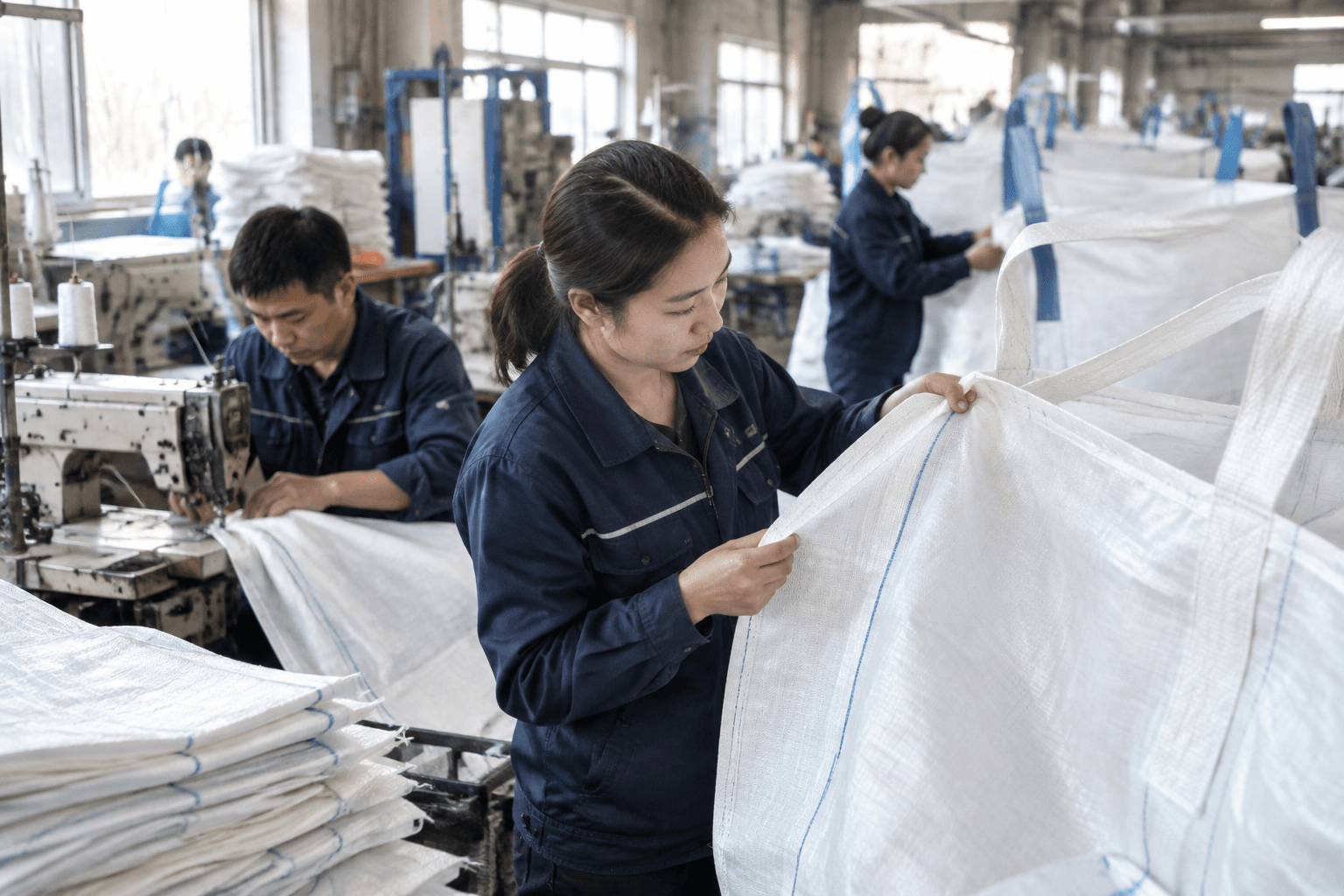
The 140th Canton Fair: New Trends in the Export Market for FIBC Bulk Bags, Jumbo Bags, and PP Woven Packaging
Explore how export buyers can evaluate FIBC bulk bags and PP woven packaging beyond unit price. Get practical guidance on specifications, supplier verification, sustainability requirements, and RFQs—and prepare your next sourcing conversation with COSEK.
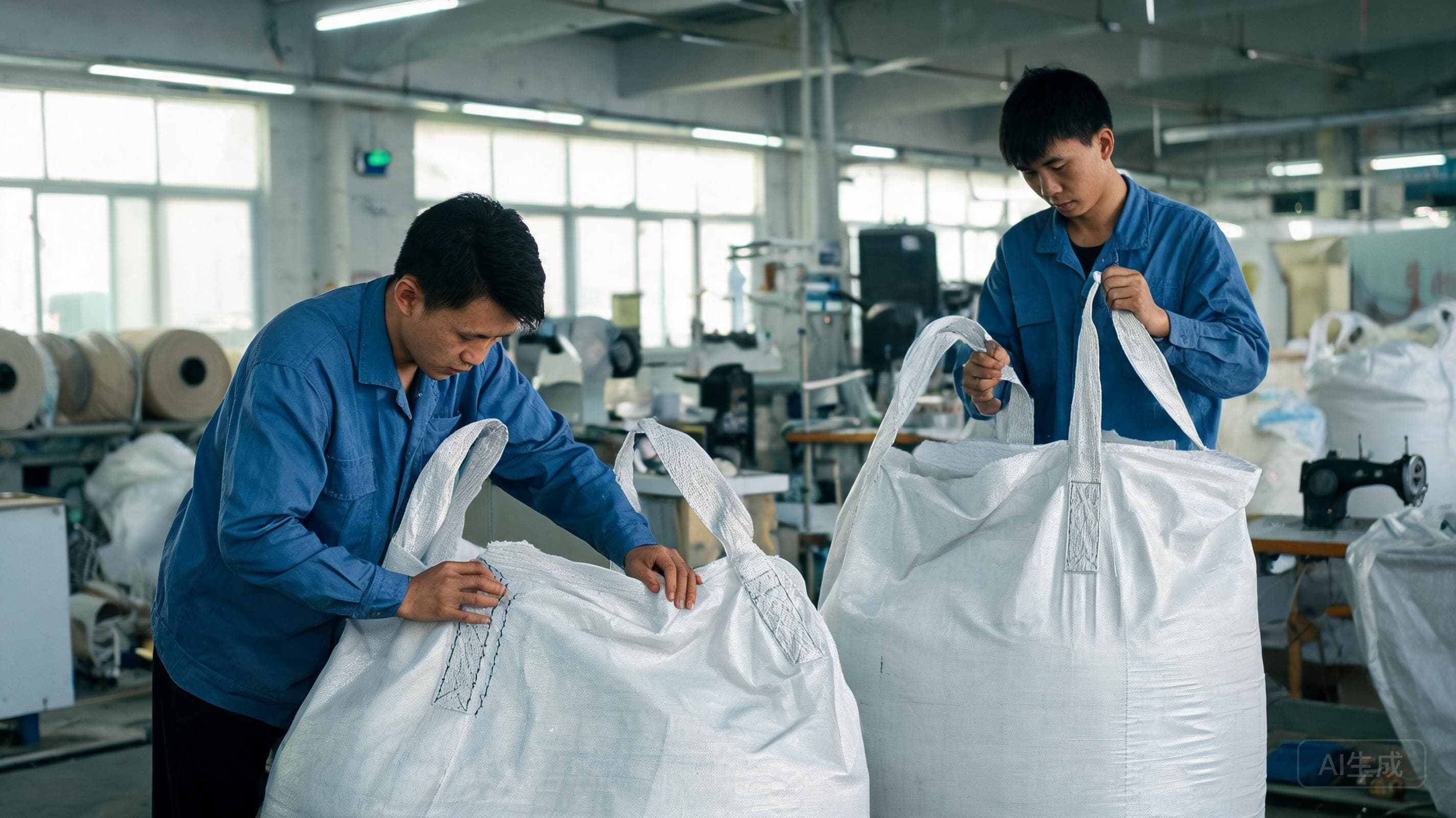
How to Choose the Right FIBC Bulk Bag for Safer, More Efficient Industrial Packaging
Choose an FIBC bulk bag by matching its construction to your product, handling process, compliance needs, and destination. Use technical review, pilot testing, and total-cost analysis to reduce risk.
Want to know more?
Get in touch with us for more information about our services and products.