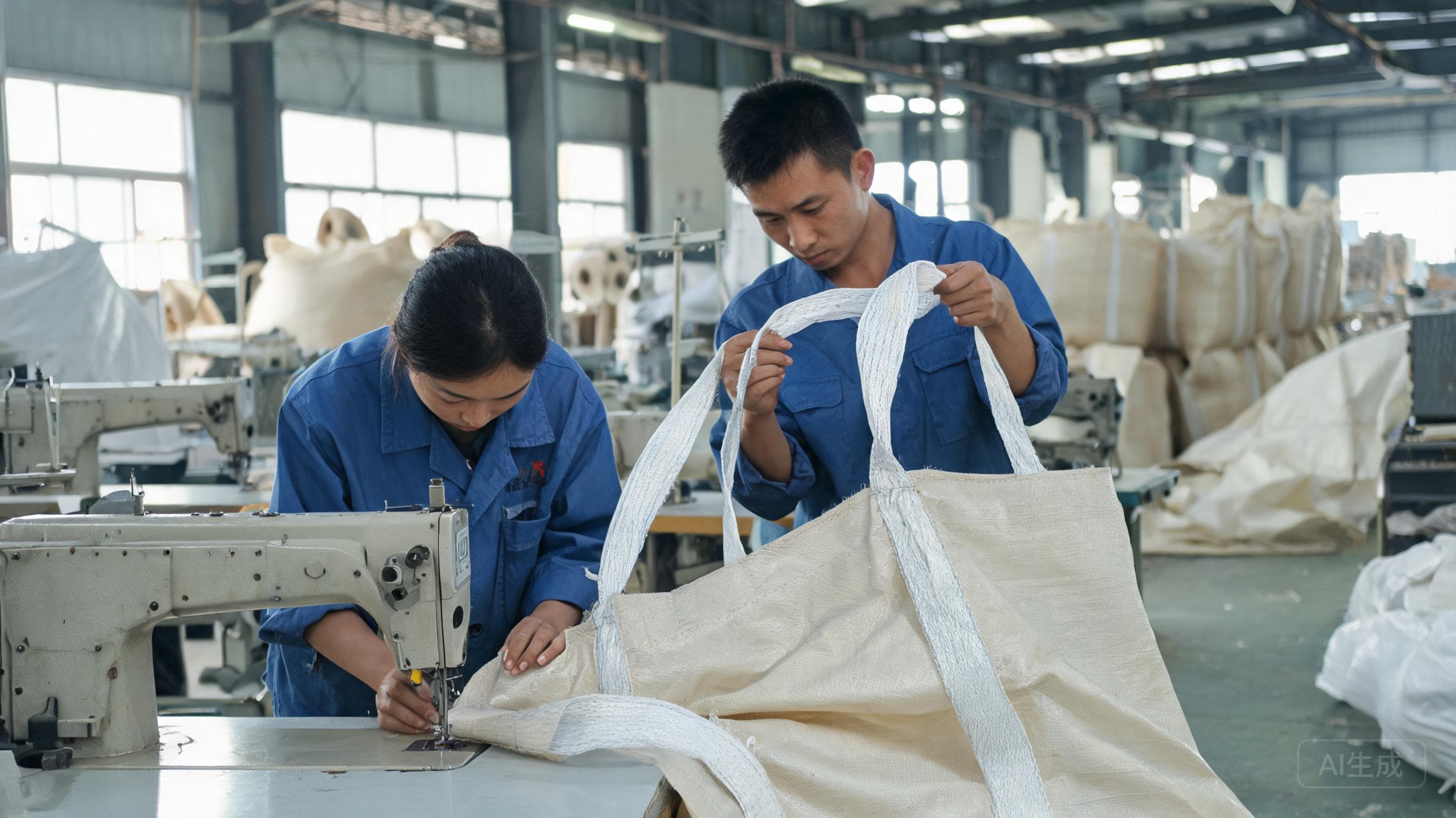
How to Choose a Bulk Bag Manufacturer That Protects Product Quality and Reduces Supply Risk
RUNCHEN
AuthorWith more than 25 years of experience in FIBC bulk bag manufacturing and sales, RUNCHEN operates its own production facility with stable batch capacity. We specialize in FIBC bulk bags, jumbo bags, ton bags, and customized industrial packaging solutions.
When packaging becomes a production and delivery risk
For bulk-material buyers, an FIBC is more than a container rated for a certain capacity. It is part of the production line, warehouse process, transport plan, and product-protection system. A poorly specified bag can expose your operation to contamination concerns, moisture damage, leakage, inconsistent dimensions, difficult handling, poor stacking, or missed delivery schedules.
Packaging performance matters across demanding transport and storage conditions. The 2024 ISTA China annual meeting referenced the era of 100 billion parcels and anticipated growth in reusable packaging. Parcel volumes do not directly measure FIBC demand, but the broader trend reinforces a procurement priority: evaluate packaging performance and transport readiness carefully.
The right bulk bag must match more than the requested weight capacity. It should suit the material, filling and discharge processes, lifting method, storage conditions, transport route, destination requirements, and expected reuse cycle. A qualified manufacturer can help identify risks before they cause product loss, packaging failures, operational delays, or supply disruption.
Start with the material and handling requirements
Begin supplier discussions with clear application data. Document the product weight, bulk density, particle size, flow characteristics, food-contact requirements, dust sensitivity, moisture exposure, and any hazardous-material classification. These details help determine whether the bag needs a liner, coating, particular fabric weight, specialized seams, static-control properties, or a different construction.
Next, match the bag to your operation. Share details about the filling line, filling spout, lifting equipment, pallet or container configuration, discharge method, storage period, and intended reuse cycle. A bag that works well in one process may create inefficiencies in another if its loops, inlet, outlet, shape, or dimensions do not suit the equipment.
For sugar, flour, and grain applications where visual identification is useful, evaluate the COSEK 浅蓝色食品级吨包袋 可见内容物设计 食用糖/面粉/谷物集装袋. Its visible-content design may support identification, but confirm food-contact suitability for the specific product, handling process, and destination-market requirements.
For buyers seeking a food-grade bag with a distinct color design, the COSEK White and Red Food-Grade Bulk Bag is another option to assess. Smaller batches, pilot runs, lower-volume handling, or applications that do not require a full-size FIBC may be better suited to the COSEK Small Bulk Bag.
Choose construction and features for the application
Bulk bag construction affects filling, handling, storage, and discharge. Shape influences stability and space utilization. Fabric affects strength and containment. Liners and coatings can support moisture protection or reduce product migration. Seams, lifting loops, inlet spouts, and discharge outlets must work with the actual equipment and handling conditions.
For moisture-sensitive grains, feed, or chemical raw materials, assess the COSEK 黑色防潮吨包袋 粮食/饲料/化工原料防水包装 against the protection your application requires. “Moisture resistant” is not a complete specification. Clarify whether you need protection from ambient humidity, rain during loading, extended warehouse storage, condensation in containers, or another specific risk.
Where leakage control is a priority, assess the COSEK White Cylindrical Leak-Proof Bulk Bag against the product’s behavior, particle size, filling pressure, stacking conditions, and discharge requirements. Verify performance through samples, trials, or agreed inspection criteria rather than relying on a general product description.
For an integrated bag configuration, consider the COSEK Light Blue Integrated FIBC. Buyers evaluating a square-bottom format can also review the COSEK Brown Square Bottom FIBC Bulk Bag, particularly when filling stability, warehouse stacking, or container utilization is important. Validate the format against the complete filling, stacking, lifting, and discharge process.
For standard bulk-material handling, the COSEK White General-Purpose FIBC Bulk Bag offers a baseline for comparing specifications. Use it as a starting point, then adjust the fabric, dimensions, lifting configuration, inlet and outlet design, and protection features to fit the material and operation.
Address specialist requirements before requesting a quote
Specialist applications require more than a standard bag quotation. For electronic components and cleanroom-related packaging, review static-control requirements, grounding procedures, handling protocols, and contamination controls before selecting the COSEK Black Anti-Static Bulk Bag for Cleanroom Electronic Components Packaging. The bag is only one part of a broader electrostatic-discharge and clean-handling process.
For regulated dangerous goods, selection must follow the applicable substance classification, packaging instructions, transport regulations, and destination-market rules. The COSEK White UN Certified Dangerous Goods FIBC Bulk Bag may be worth evaluating, but confirm suitability for the specific material, approved packing group, required testing, and transport mode.
During supplier qualification, provide safety data sheets, product specifications, regulatory requirements, export destinations, and customer-specific packaging standards. Product names and general descriptions do not replace application-specific verification, testing, certification review, or required documentation.
Evaluate manufacturing quality and supplier readiness
The strongest supplier is not necessarily the one with the lowest unit price. Evaluate how the manufacturer controls raw materials, maintains production consistency, conducts inspections, manages traceability, approves samples, and resolves nonconformities. These systems help determine whether repeat orders will perform as expected—not just whether the first sample looks acceptable.
Ask how the supplier verifies key criteria, including dimensions, safe working load, seam integrity, lifting-loop construction, fabric consistency, and required performance or compliance specifications. A reliable manufacturer should be able to explain its inspection process and identify the documentation provided with your order.
Confirm that the supplier can support repeat production, customization, realistic lead times, export documentation, and clear communication when specifications change. If your operation depends on consistent bag availability, manufacturing capacity and responsiveness are procurement requirements.
Request samples or a controlled production trial when practical. Agree on acceptance criteria before placing a larger order, including dimensional tolerances, appearance, labeling, bag weight, loading method, and required test documentation. Compare suppliers on total operating impact—handling efficiency, product-loss exposure, storage performance, replacement costs, and disruption risk—not unit price alone.
Use industry data carefully when building the business case
Industry figures can provide context, but they do not prove that a particular FIBC will deliver a specific result. One supplied industry snapshot reported global metallurgical alumina output rising from 130.4 million tonnes over the cited longer-term period. Alumina output is not a direct measure of FIBC demand, bag quality, or bag performance.
Upstream commodity shifts can still prompt useful questions about supply continuity, material availability, and sourcing risk. Request current, application-specific information from prospective suppliers before making procurement decisions based on market conditions.
Similarly, the cited research-track figure of 0.10% lacks enough context in the supplied summary to support a performance, savings, or ROI claim. Do not present it as an FIBC result. Use broad market figures to ask better supplier questions, not as evidence of market share, guaranteed savings, or expected product outcomes.
Build a measurable procurement and ROI case
Start with a baseline. Track bag-related damage, leakage events, contamination incidents, filling or discharge delays, rejected shipments, and packaging cost per shipped tonne. These measures give your team a basis for evaluating whether a new bag design or manufacturer improves operations.
Run controlled comparisons using agreed specifications and comparable conditions. Keep the material, fill weight, handling process, storage period, transport conditions, and inspection approach as consistent as possible before attributing improvements to a bag design or supplier.
Potential value may come from reduced product loss, fewer handling interruptions, better storage or transport utilization, and fewer rejected shipments. Separate verified customer results from internal estimates, and request documented case evidence before using savings figures for internal approval.
The 100 billion parcel reference is logistics context only. It is not a customer success story, a measure of FIBC demand, or a quantified return on investment for bulk packaging.
Prepare a specification that speeds up supplier evaluation
A complete specification helps manufacturers provide accurate recommendations, samples, lead times, and quotations. Include the product type, target capacity, required dimensions, fabric or color preferences, food-contact requirements, static-control needs, moisture-protection level, and filling and discharge details.
Specify the lifting configuration, transport and storage conditions, destination market, expected order volume, forecast demand, and target delivery date. Attach drawings, photos, existing bag samples, safety documentation, and required test or compliance criteria where available.
Ask shortlisted manufacturers to state their assumptions, application risks, recommended options, sample availability, production lead time, and quotation validity. This approach reveals differences in supplier capability early and helps prevent a low-price quote from becoming an expensive specification problem.
Turn the evaluation into a qualified supplier conversation
Once your requirements are documented, request a product recommendation, specification review, or sample discussion based on the actual application. Compare relevant options across food-grade, moisture-protection, anti-static, dangerous-goods, leak-proof, integrated, square-bottom, general-purpose, and small-bag applications.
To get a useful recommendation, provide the material, required capacity, operating conditions, regulatory needs, order quantity, and target delivery date. The manufacturer can then recommend a suitable construction, flag potential risks, and confirm whether samples or testing are appropriate before production.
Send COSEK your bag specification, material details, quantity, and target delivery date to request a tailored bulk bag quotation and application suitability review. Contact COSEK to start your specification review.
Related News
Other news you might be interested in
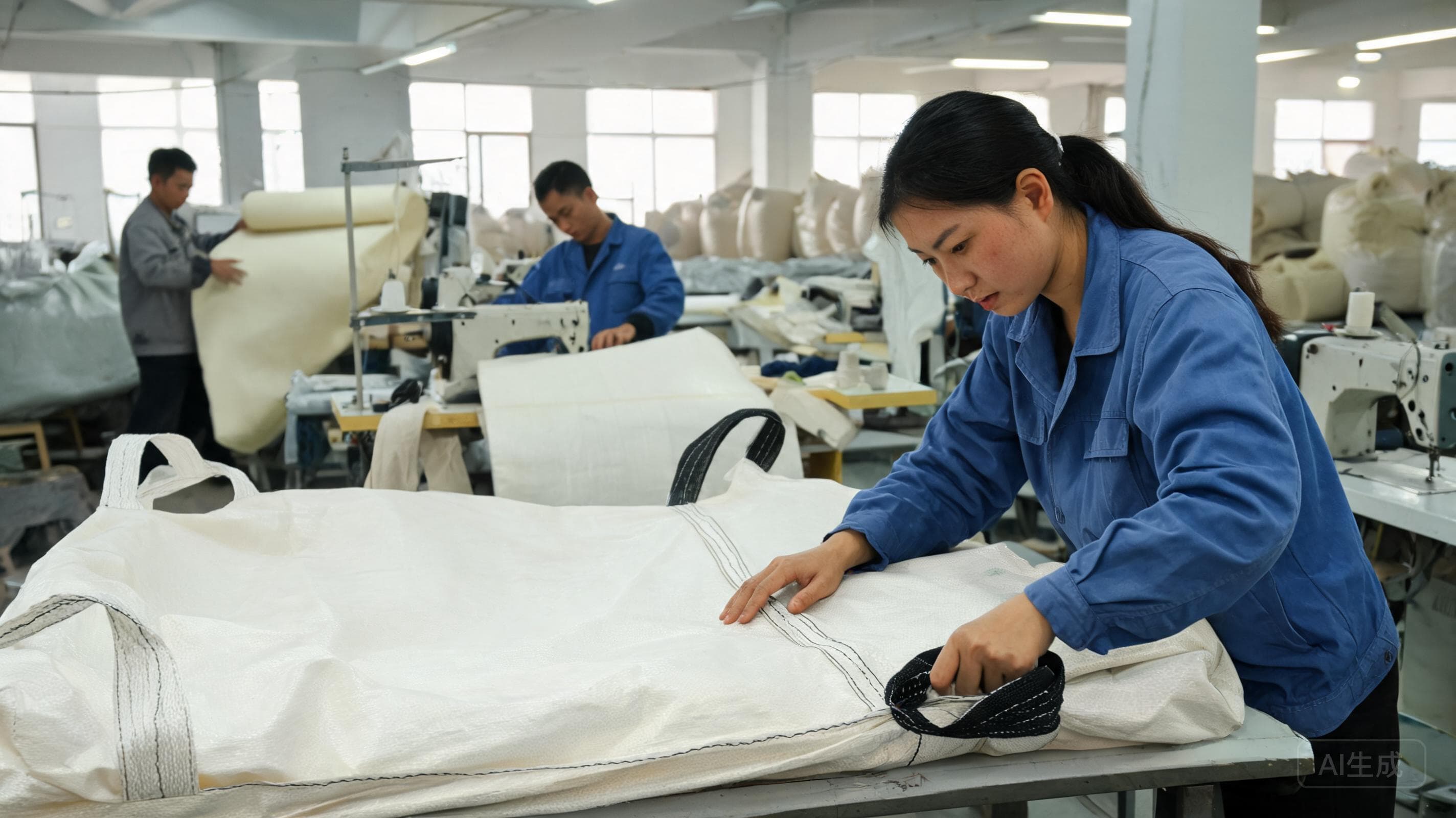
How to Choose the Right FIBC Supplier for Safer, More Reliable Bulk Packaging
Learn how to match FIBC design to your product and handling needs, assess supplier quality, compare total costs, and prepare a stronger request for quotation.

How to Choose the Right FIBC Bulk Bag Supplier for Safer, More Profitable Operations
Choose an FIBC supplier by matching bag design to your material and handling process, verifying quality controls, planning for supply continuity, and measuring total operating cost.
Want to know more?
Get in touch with us for more information about our services and products.