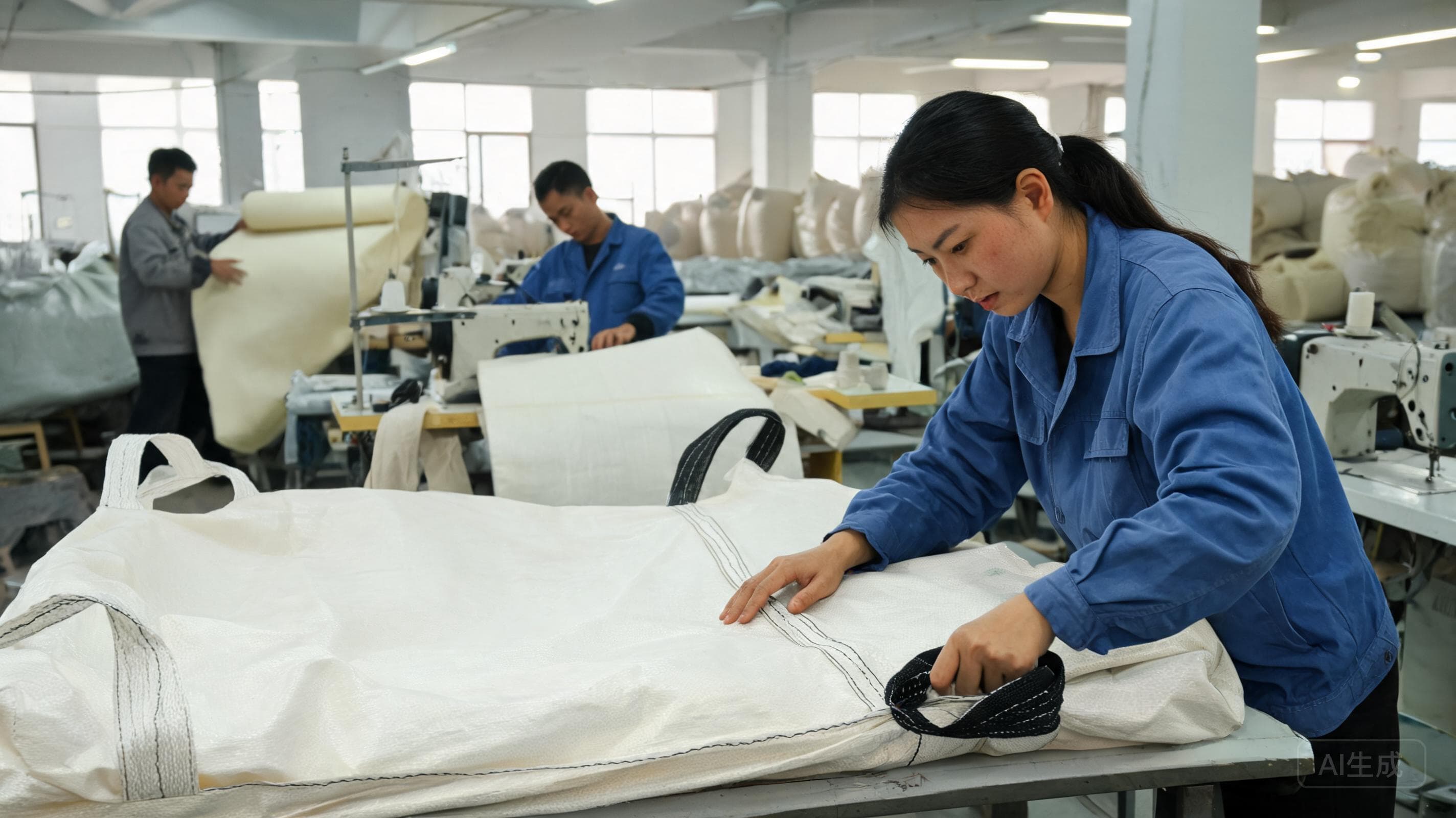
How to Choose the Right FIBC Supplier for Safer, More Reliable Bulk Packaging
RUNCHEN
AuthorWith more than 25 years of experience in FIBC bulk bag manufacturing and sales, RUNCHEN operates its own production facility with stable batch capacity. We specialize in FIBC bulk bags, jumbo bags, ton bags, and customized industrial packaging solutions.
When Bulk Packaging Problems Become Business Problems
Choosing an FIBC supplier is more than a purchasing decision. The wrong bulk bag can lead to product damage, leakage, inconsistent specifications, slow handling, inefficient storage, and supply chain disruption. For manufacturers and distributors moving powders, granules, food ingredients, chemicals, minerals, or other bulk materials, those issues can quickly affect operations and customer relationships.
Modern logistics networks put a premium on transit protection and repeatable quality. The 2024 ISTA China Annual Conference discussed the express packaging sector entering the “100 billion parcels” era. This figure is not a measure of FIBC demand, but it does reflect the scale and complexity of distribution networks. Across packaging formats, reliable performance matters as products move through increasingly demanding supply chains.
The practical question is not simply “Which FIBC is cheapest?” It is: Which bag design and supplier capability best match your product, process, handling conditions, and risk profile?
Start With the Material, Load, and Handling Requirements
Before comparing quotations, define the characteristics that affect bag construction and performance:
- Product type: Powder, granule, flake, pellet, mineral, food ingredient, chemical, or another bulk material.
- Bulk density: Weight per volume affects target capacity and safe working load requirements.
- Flow characteristics: Free-flowing and difficult-flowing materials may need different discharge designs.
- Moisture sensitivity: Products that must stay dry may need an appropriate liner or moisture-management solution.
- Contamination risk: Sensitive products may require controlled material selection, hygiene procedures, or dedicated production considerations.
- Food-contact requirements: Confirm material, hygiene, documentation, and compliance requirements for the intended market.
Also specify the target safe working load, safety factor, filling and discharge methods, lifting configuration, and storage environment. A bag designed for a single warehouse lift may not suit repeated handling, extended outdoor storage, or an automated filling process.
Map the bag’s full journey: filling line, staging area, warehouse, truck, container, customer delivery point, and final discharge. This can reveal risks such as abrasion from sharp edges, punctures from forklift contact, unstable loads during stacking, or slow emptying caused by incompatible discharge equipment.
Give your supplier a written specification and, where practical, representative product samples. This helps them recommend a suitable construction rather than quote only on dimensions and price.
Match FIBC Design to the Application
FIBC performance depends on more than fabric weight. Shape, dimensions, coating, seams, liners, filling and discharge spouts, and lifting loops all affect performance in real operations.
Dimensions must work with your filling station, pallet footprint, warehouse storage method, transport equipment, and customer handling process. Fabric and seam design should support the required load and help manage abrasion, product loss, and handling stresses. Filling and discharge options should be compatible with your equipment and product flow.
For a compact bulk-pack format, evaluate the COSEK Small Bulk Bag against your required load, lifting method, product density, and handling conditions.
For food-related applications, consider the COSEK White and Red Food-Grade Bulk Bag. Confirm its suitability against applicable material requirements, hygiene expectations, product-contact needs, and compliance obligations for your market.
Where containment and leakage control are priorities, the COSEK White Cylindrical Leak-Proof Bulk Bag may be an option to assess. Verify its construction and expected performance for your material, particle size, filling process, discharge arrangement, and transport conditions.
The COSEK Light Blue Integrated FIBC is another option for buyers seeking an integrated bag solution. Confirm its configuration, lifting arrangement, dimensions, and compatibility with your filling and handling equipment.
A qualified supplier should ask how your product flows, how the bag is lifted, where it is stored, whether a liner is needed, and which risks must be controlled during transport and discharge. One bag format does not fit every application.
Evaluate Quality Control and Supplier Reliability
Even a well-designed bag can cause problems if quality varies between production runs. Ask how the supplier manages consistency from incoming materials through finished-bag inspection.
- How are incoming materials controlled and documented?
- How are fabric properties, dimensions, and sewing quality checked?
- What batch traceability is available?
- Which tests are performed for the proposed bag configuration?
- What standards or methods support performance claims?
- How are samples approved before full production?
- What tolerances apply to dimensions, weight, printing, and construction?
- How are defects investigated and corrected?
Request relevant test documentation and clarify what has been verified. A test result is meaningful only when you know the bag configuration tested, the method used, and the conditions to which the result applies. Do not assume a general claim covers every size, fabric, liner, or lifting configuration.
Assess operational capability too. Ask about production capacity, minimum order quantities, lead times, communication, export support where relevant, and contingency planning. Your supplier should be able to support repeat orders as demand and schedules change.
Put Market Statistics in the Right Context
Industry statistics can provide context, but they do not replace supplier qualification or application testing. The 2024 ISTA China Annual Conference reference to the “100 billion parcels” era signals the scale of logistics and the importance of packaging performance. It is not a direct measurement of the FIBC market or evidence of an individual supplier’s performance.
A 2026 global aluminium industry outlook referenced metallurgical alumina output of 130.4 million tonnes in an earlier period. This may offer broad industrial context, but it does not measure polypropylene FIBC input costs. For price and availability assessments, focus on the actual resin, woven fabric, liner, sewing, printing, and accessory inputs required for your specification.
If a source cites a figure of 0.10%, identify its original metric, methodology, and scope. Do not use it as a general packaging benchmark, universal defect rate, or supplier performance claim unless the research supports that interpretation.
Build a Business Case Beyond Unit Price
The lowest unit price does not always deliver the lowest total packaging cost. A better-matched bag may improve filling performance, reduce product loss, support pallet utilization, ease handling, or prevent production interruptions.
Compare the full packaging lifecycle, including:
- Filling speed and equipment compatibility
- Stability during handling and storage
- Product loss from leakage, dusting, or incomplete discharge
- Warehouse space and transport utilization
- Labour required for lifting, positioning, and emptying
- Damage, rework, rejected loads, and customer claims
- Disposal, recycling, or reuse requirements where applicable
Use your own baseline data to estimate the value of reducing leakage, damage, rework, or downtime. Measure fill times, product-loss incidents, discharge residue, damaged-bag rates, and handling delays before testing a new configuration.
A controlled trial is often the best next step. Agree on measurable criteria such as filling performance, discharge behavior, transit condition, stacking stability, defect rate, and operator feedback. The figures of 100 billion parcels, 130.4 million tonnes, and 0.10% are contextual only; none demonstrates a COSEK customer result or guarantees a return on investment.
Consider Sustainability and Circularity Requirements
Clarify whether your priority is reduced material use, reuse, recyclability, customer-requested documentation, or alignment with regulatory requirements. The 2024 ISTA China Annual Conference also discussed projected growth in the circular packaging market. This is a reason to ask lifecycle questions, not proof that every FIBC is reusable, recyclable in every location, or suitable for every circularity program.
Request evidence for environmental claims, including material composition, intended service life, reuse conditions and limitations, recycling pathways in your market, and relevant product, hygiene, and safety restrictions.
Balance circularity goals with product protection, contamination control, safe handling, and operational performance. Using less material may not deliver the desired business outcome if it increases product loss or handling risk.
Prepare a Complete Request for Quotation
A clear request for quotation helps suppliers provide a technically relevant recommendation and reduces the risk of later redesigns. Include:
- Product type, bulk density, and flow characteristics
- Target capacity and safe working load
- Required dimensions and pallet footprint
- Filling configuration and equipment details
- Discharge configuration and emptying process
- Lifting method, such as forklift or crane
- Warehouse, stacking, transport, and storage conditions
- Food-contact, hygiene, or other compliance requirements
- Leakage concerns, liner needs, and moisture-protection expectations
- Printing, color, labeling, and traceability requirements
- Sample, test-evidence, and production-tolerance requirements
- Estimated order volume, lead time, and repeat-order expectations
Compare responses on technical fit, quality assurance, delivery reliability, communication, and ongoing support—not price alone. A supplier that identifies missing information or application risks may be more valuable than one that provides a fast quote based on incomplete requirements.
Discuss Your FIBC Requirements With COSEK
Start with your application, not a generic bag size. Share your product characteristics, target load, filling and discharge equipment, storage conditions, and handling methods so the proposed FIBC can be evaluated against your operation.
COSEK can discuss specifications and sample requirements for the COSEK Small Bulk Bag, COSEK White and Red Food-Grade Bulk Bag, COSEK White Cylindrical Leak-Proof Bulk Bag, and COSEK Light Blue Integrated FIBC. Confirm essential performance and compliance requirements before requesting a final quote to help reduce redesigns, delays, and procurement risk.
Contact COSEK with your product, load, and handling requirements to discuss a suitable FIBC configuration and arrange a project-specific evaluation.
Related News
Other news you might be interested in
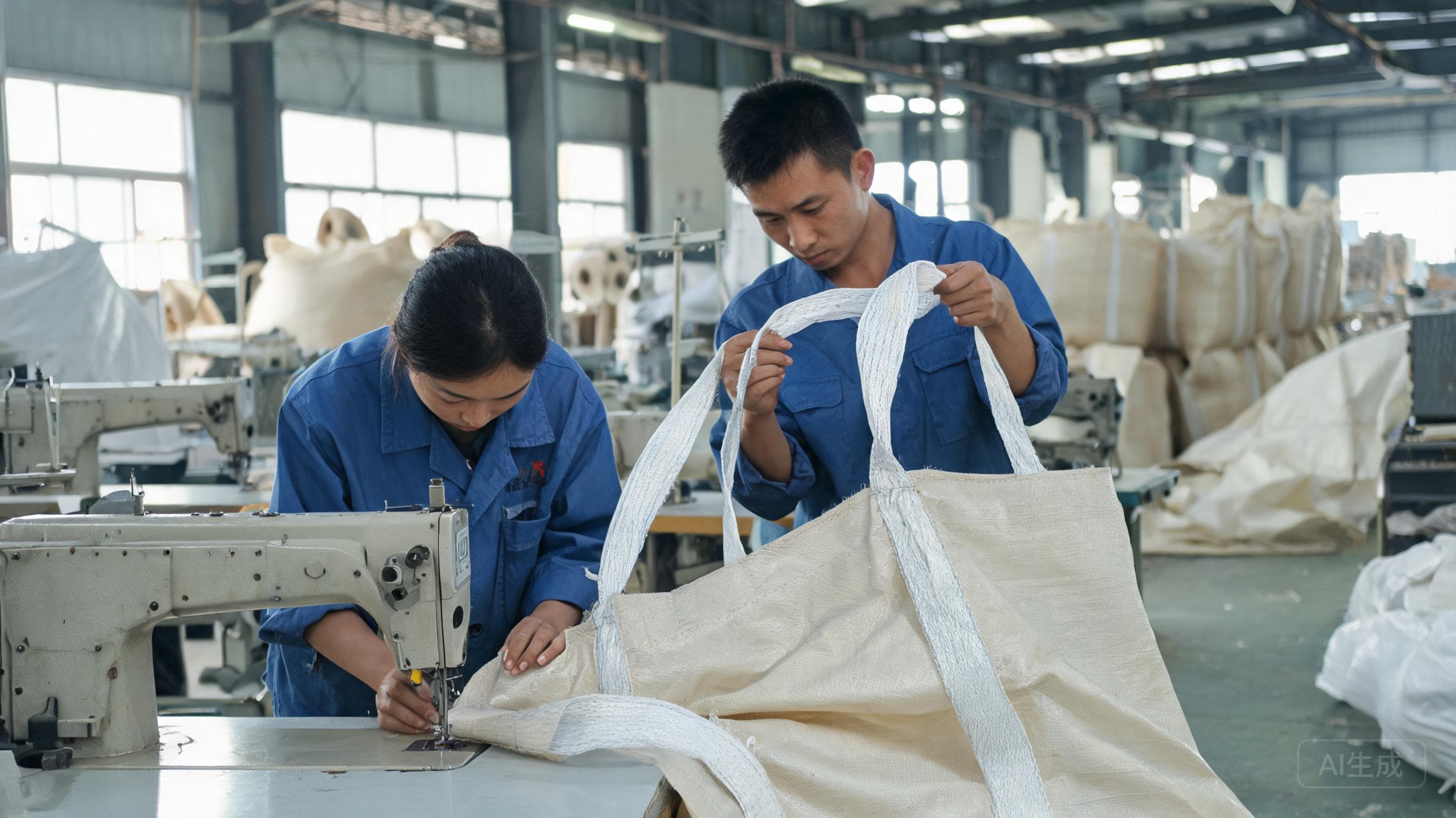
How to Choose a Bulk Bag Manufacturer That Protects Product Quality and Reduces Supply Risk
Evaluate bulk bag manufacturers on application fit, quality controls, compliance, and supply readiness. Use a clear specification and trial plan to reduce product loss and procurement risk.

How to Choose the Right FIBC Bulk Bag Supplier for Safer, More Profitable Operations
Choose an FIBC supplier by matching bag design to your material and handling process, verifying quality controls, planning for supply continuity, and measuring total operating cost.
Want to know more?
Get in touch with us for more information about our services and products.