FIBC ROI: Quantify Risk Mitigation & Protect Product Value Beyond Cost Per Bag #87
RUNCHEN
AuthorWith more than 25 years of experience in FIBC bulk bag manufacturing and sales, RUNCHEN operates its own production facility with stable batch capacity. We specialize in FIBC bulk bags, jumbo bags, ton bags, and customized industrial packaging solutions.
The Hidden Costs of Cost-Per-Bag Procurement
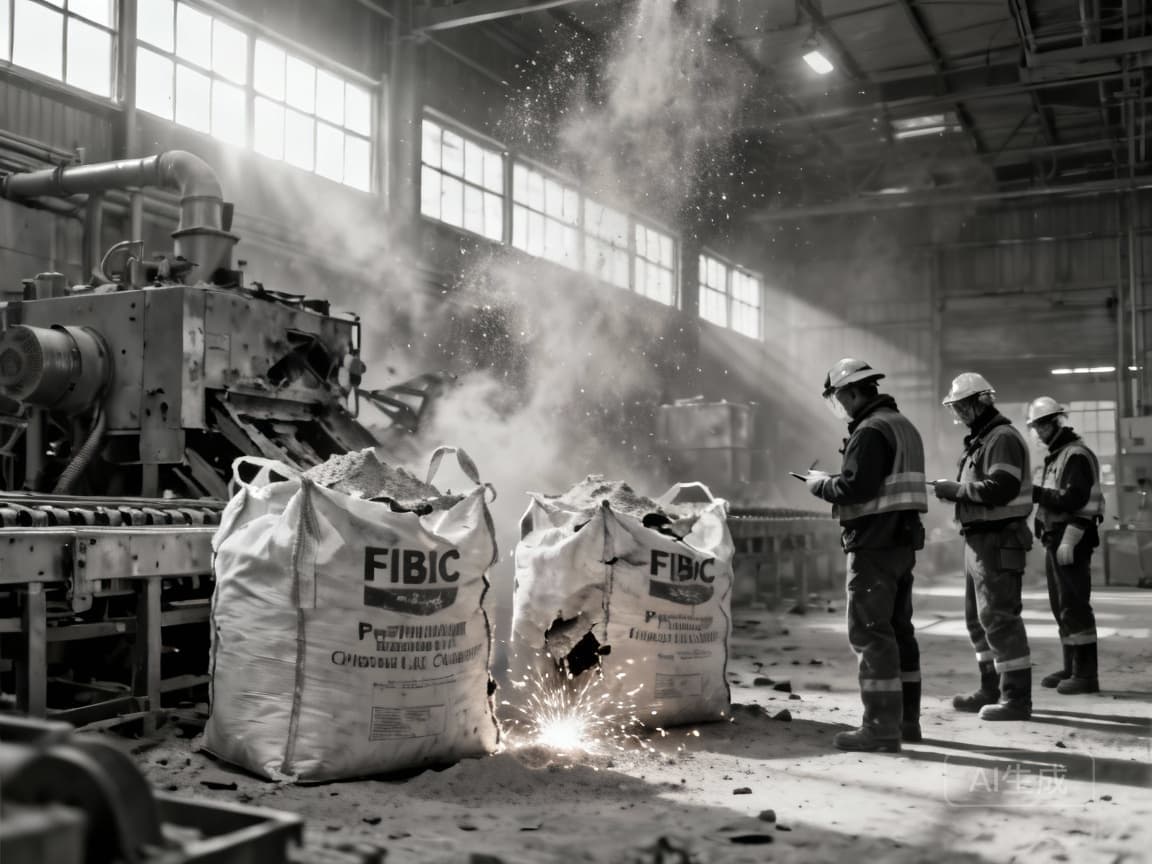
Imagine this scenario: a manufacturing plant sources the lowest-cost FIBC bags for their premium chemical powder. Three months later, static discharge ignites a dust explosion that halts production for two weeks, damages equipment worth millions, and triggers regulatory investigations. The initial "savings" of $3 per bag just cost the company over $2 million in direct losses and incalculable reputational damage. This isn't hypothetical—it's the reality facing procurement professionals who focus exclusively on cost per bag rather than risk-adjusted value.
The global FIBC market reached $66 billion in 2024 and continues growing at 5.6% CAGR, projected to reach $120 billion by 2035. Meanwhile, China's packaging market—the world's largest e-commerce ecosystem—stands at $218.37 billion in 2025, growing at 4.96% CAGR. These numbers reveal more than market size; they demonstrate how critical packaging integrity has become to modern supply chains.
The Risk-Value Framework: Calculating What Really Matters
Traditional procurement metrics fail to capture the true financial impact of packaging decisions. As ROI Institute's research with 3,000 certified professionals across 44 countries demonstrated, successful ROI implementation requires methodological discipline and management knowledge. Their approach provides the foundation for evaluating FIBC investments beyond mere price comparisons.
Four-Step Risk-Value Assessment Model
Implement this structured framework to transform your FIBC procurement strategy:
- Risk Identification: Document all potential failure points specific to your products—moisture sensitivity, static accumulation, UV degradation, contamination risks, or handling failures
- Probability and Impact Quantification: Calculate potential financial impacts using historical data. For example: contamination events averaging $250,000 per incident occurring 2-3 times annually
- Solution Evaluation: Match specialized FIBC features to specific risks—conductive bags for static-sensitive materials, barrier films for moisture protection, certified food-grade materials for contamination prevention
- Risk-Adjusted ROI Calculation: Compare premium FIBC costs against prevented losses rather than just initial savings
ROI Institute's research confirms that organizations implementing disciplined ROI methodologies achieve significantly higher returns by focusing on risk prevention rather than cost reduction alone.
Real-World ROI: Beyond Theoretical Calculations
Consider Instrumental's experience with technology investments that prevented 10,000 defective parts from reaching customers, generating $80,000 in unexpected savings beyond projected ROI. This case study exemplifies how quality investments often deliver returns far exceeding initial projections by preventing catastrophic failures.
Apply this principle to FIBC selection: A pharmaceutical company investing in premium moisture-barrier bags might spend $15 more per bag, but preventing a single batch contamination event saving $500,000 generates returns that dwarf the initial investment. The medical packaging sector's 7.14% CAGR growth rate reflects increasing recognition of this value proposition.
Implementation Guide: Transforming Procurement Practices
Technical Specification Development
Create detailed technical requirements based on your risk assessment:
- Specify exact material compositions and certifications (FDA, EU, ISO standards)
- Define performance thresholds for moisture vapor transmission rates, static decay rates, or UV resistance
- Establish testing protocols for incoming quality validation
- Document handling and storage requirements to maintain integrity
Vendor Qualification Process
Transition from price-based sourcing to value-based partnership selection:
- Require vendors to complete detailed questionnaires about their quality systems and manufacturing controls
- Conduct facility audits focusing on raw material management, production processes, and testing capabilities
- Review documentation practices and traceability systems
- Evaluate technical support capabilities and problem-resolution processes
The European market's rapid expansion at 5.6% CAGR reflects growing emphasis on supplier qualifications and sustainable materials, reinforcing this strategic approach.
Financial Justification Framework
Build your business case using this structured format:
- Direct Cost Avoidance: Reduced product loss, lower insurance premiums, decreased warranty claims
- Operational Efficiency Gains: Reduced downtime, faster handling, improved storage efficiency
- Strategic Value Creation: Enhanced brand protection, regulatory compliance, customer satisfaction improvements
- Risk Mitigation Value: Quantified reduction in catastrophic failure probabilities
As Instrumental's experience demonstrated, the actual impact of quality investments often exceeds initial expectations by preventing problems before they occur.
Transforming Supplier Relationships
Move beyond transactional relationships by implementing these practices:
- Share your risk assessment findings with potential partners
- Request collaborative solution development rather than bidding documents
- Establish joint performance metrics focused on total cost reduction
- Implement gain-sharing arrangements for innovation and improvement
This approach aligns with the flexible packaging sector's 6.79% CAGR growth, driven by innovations developed through manufacturer-customer collaborations.
Conclusion: The Strategic Imperative
The evidence is clear: FIBC procurement must evolve from cost-centered to value-driven decision making. With the global market expanding toward $120 billion by 2035 and specialized sectors like healthcare packaging growing at 7.14% CAGR, organizations that fail to adapt risk significant competitive disadvantage.
Implement the risk-value framework outlined here to transform your packaging investments from cost items to strategic assets. The discipline of ROI methodology—proven across 44 countries and thousands of organizations—provides the structure for making data-driven decisions that protect product value, ensure supply chain continuity, and deliver returns that far exceed initial projections. Your FIBC investment isn't about bags; it's about protecting everything they contain.
Related News
Other news you might be interested in
Choosing the Right Bulk Bag Manufacturer for Safer, More Efficient Operations
Learn how to specify bulk bags, evaluate manufacturers, and validate quality and supply reliability to reduce operational risk and support safer, more efficient handling.

The 140th Canton Fair: New Trends in the Export Market for FIBC Bulk Bags, Jumbo Bags, and PP Woven Packaging
Explore how export buyers can evaluate FIBC bulk bags and PP woven packaging beyond unit price. Get practical guidance on specifications, supplier verification, sustainability requirements, and RFQs—and prepare your next sourcing conversation with COSEK.
Want to know more?
Get in touch with us for more information about our services and products.