ISO 9001-Certified Bulk Bag Manufacturing: Expert Guide to Selecting Industrial FIBC Solutions with 2025 Safety Standards #12
RUNCHEN
AuthorWith more than 25 years of experience in FIBC bulk bag manufacturing and sales, RUNCHEN operates its own production facility with stable batch capacity. We specialize in FIBC bulk bags, jumbo bags, ton bags, and customized industrial packaging solutions.
Industry Standards and Certification Requirements
With over 15 years of experience in bulk bag manufacturing, we've observed how ISO 9001 certification distinguishes industry leaders from commodity suppliers. This certification goes beyond documentation—it embodies a systematic quality management approach ensuring every FIBC (Flexible Intermediate Bulk Container) meets stringent safety and performance criteria. The 2025 safety standards introduce enhanced testing protocols, especially for specialized bags like conductive and static-safe FIBCs used in explosive environments.
The ISO 9001 framework requires documented quality control processes throughout manufacturing, from polymer selection to final stitching. For industrial buyers, this translates to consistent product performance and reduced risk of bag failure. Our certification undergoes annual audits by independent bodies, guaranteeing continuous process improvement. When assessing suppliers, verify their ISO 9001:2015 certification status and inquire about audit frequency—quarterly audits signify robust quality systems.
Key Compliance Markings for 2025
Beyond ISO certification, multiple industry-specific standards regulate bulk bag manufacturing:
- ISO 21898: Packaging for hazardous materials—particularly crucial for chemical and pharmaceutical applications
- EN 1892: European standard for mechanical handling specifications
- FDA 21 CFR: Food-grade compliance for edible product handling like dippin dots or food ingredients
- ATEX Directive 2014/34/EU: Mandatory for explosive atmosphere applications
Technical Specifications by Bag Type
Choosing the right bulk bag requires understanding technical specifications beyond basic dimensions. Through extensive client consultations, we've found most procurement errors stem from misinterpreting safety factors and fabric construction.
Inner Reinforcement Bags
These bags incorporate internal baffles that prevent bulging and maintain structural integrity during filling and transport. Particularly effective for powders and fine materials prone to shifting, the internal reinforcements create separate chambers that evenly distribute pressure. Our stress-testing demonstrates that properly designed inner reinforcement bags can enhance load stability by up to 40% compared to standard designs.
Top Lift Bags
Featuring reinforced lifting loops integrated into the bag's body, these FIBCs excel in applications requiring frequent handling. The crucial specification is the loop-to-body strength ratio—industry best practice requires a minimum 5:1 safety factor. For instance, a 2,000kg capacity bag should have loops tested to at least 10,000kg breaking strength.
Breathable Bags
Constructed with breathable polypropylene fabric, these bags permit air flow while containing materials. The mesh count (threads per square inch) determines both breathability and containment properties. For agricultural products like bulk bird seed or fertilizer, we recommend 10x10 mesh construction as the optimal balance between ventilation and material retention.
Conductive and Static-Safe Bags
These specialized FIBCs integrate conductive threads or coatings to dissipate static electricity, essential for handling flammable materials. The 2025 standards impose stricter resistivity requirements—surface resistance must not exceed 10^9 ohms for Type C (conductive) bags. Our testing protocols include three-point resistance checks during manufacturing, after filling simulation, and post-transport simulation.
Case Study: Pharmaceutical Grade Implementation
When a pharmaceutical leader required ISO-certified bulk bags for active ingredients, the project demanded compliance with both ISO 9001 and FDA standards. The challenge involved developing bags that maintained purity while enduring gamma irradiation sterilization.
Our solution featured multi-layer construction with FDA-approved polyethylene inner liners and anti-static properties for powder transfer. The implementation included:
- Complete material traceability from resin to finished product
- Cleanroom manufacturing with particulate monitoring
- Validation testing for extractables and leachables
- Sterilization compatibility testing across multiple methods
The outcome was a 99.8% reduction in contamination incidents and $350,000 annual savings from reduced batch rejections. This case exemplifies how proper bulk bag selection directly impacts operational efficiency in regulated industries.
Bulk Bag Selection Framework
Based on analyzing 500+ industrial applications, we've established a structured FIBC selection methodology:
Step 1: Material Characteristics Analysis
Document your material's flow properties, abrasiveness, moisture content, and particle size. Hygroscopic materials like certain fertilizers demand different construction than free-flowing materials like plastic pellets.
Step 2: Handling Environment Assessment
Evaluate static electricity risks, temperature extremes, UV exposure, and potential chemical interactions. Outdoor storage requires UV-stabilized fabrics, while food applications need FDA-compliant materials.
Step 3: Filling and Discharge Requirements
Consider filling method (gravity vs. pneumatic), discharge rate needs, and whether specialized features like bottom spouts or duffle-top closures are required. High-speed filling operations necessitate bags with reinforced stress points.
Step 4: Regulatory Compliance Verification
Confirm necessary certifications for your industry and region. International shipments often require compliance with multiple regulatory frameworks.
Expert Resources and Implementation Tools
To ensure proper bulk bag selection, we provide clients with comprehensive checklists and specification sheets:
FIBC Specification Checklist
- Safety factor ratio (typically 5:1 or 6:1)
- Fabric construction (woven polypropylene basis weight)
- Lifting configuration (loop design and reinforcement)
- Liner compatibility and attachment method
- Discharge features (spout type, valve mechanisms)
- Certification documentation requirements
Performance Testing Protocols
Reputable manufacturers should provide third-party test results for:
- Vertical drop tests (simulated filled drops from 1.5 meters)
- Stacking compression tests (72 hours at 150% rated capacity)
- UV resistance testing (500 hours minimum for outdoor use)
- Seam strength testing (stitching and sewing integrity)
Conclusion and Professional Consultation
Selecting ISO 9001-certified bulk bags meeting 2025 safety standards requires careful evaluation of technical specifications, regulatory requirements, and application-specific needs. While this guide addresses typical scenarios, specialized applications may require custom engineering solutions.
Our team offers complimentary technical consultations including material compatibility analysis and sample testing. With ISO 9001:2015 and ISO 14001 certified manufacturing facilities, we provide complete documentation packages including material certificates, test reports, and compliance statements.
Note: Performance characteristics may vary based on specific material properties, handling conditions, and environmental factors. Always consult qualified engineers for applications involving hazardous materials or specialized requirements. Certifications and standards mentioned are current as of publication but may be revised by regulatory bodies.
For specification sheets, testing protocols, or to discuss your specific bulk bag requirements, contact our technical team with your material safety data sheets and handling parameters.
Related News
Other news you might be interested in
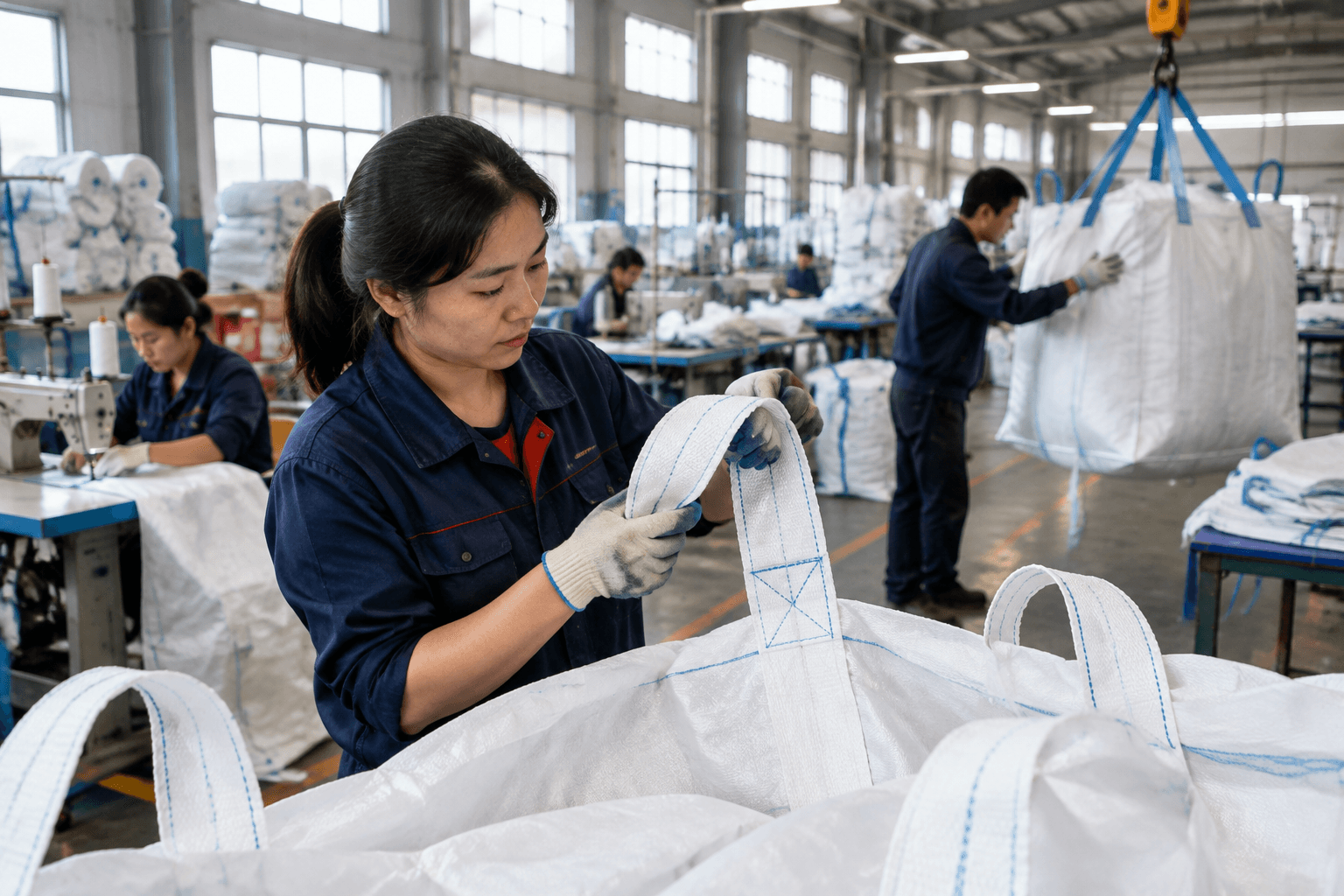
Choosing the Right Bulk Bag Manufacturer for Safer, More Efficient Operations
Learn how to specify bulk bags, evaluate manufacturers, and validate quality and supply reliability to reduce operational risk and support safer, more efficient handling.
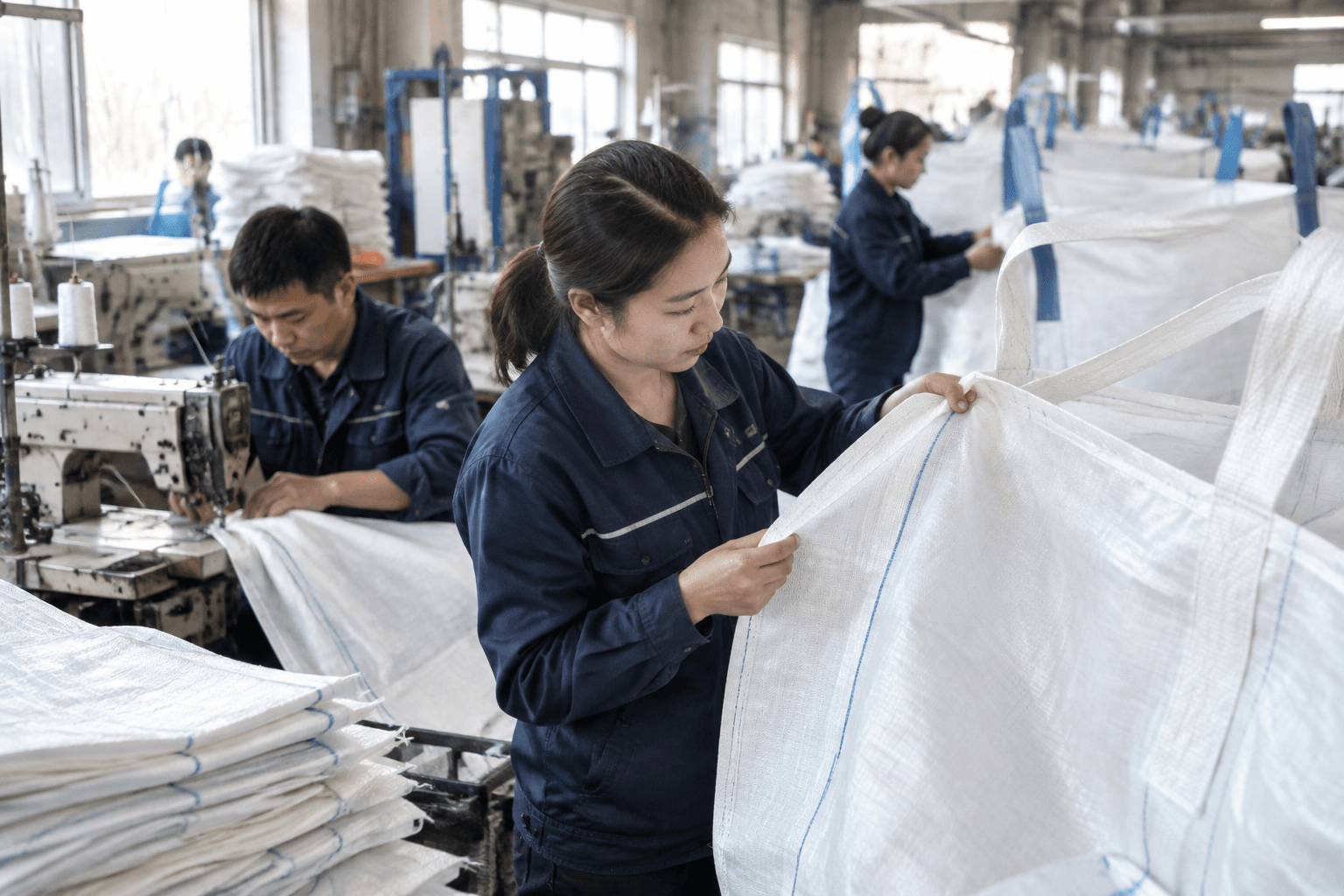
The 140th Canton Fair: New Trends in the Export Market for FIBC Bulk Bags, Jumbo Bags, and PP Woven Packaging
Explore how export buyers can evaluate FIBC bulk bags and PP woven packaging beyond unit price. Get practical guidance on specifications, supplier verification, sustainability requirements, and RFQs—and prepare your next sourcing conversation with COSEK.
Want to know more?
Get in touch with us for more information about our services and products.