Single material ton bag: a sustainable packaging system solution driving 7.5% growth
RUNCHEN
AuthorWith more than 25 years of experience in FIBC bulk bag manufacturing and sales, RUNCHEN operates its own production facility with stable batch capacity. We specialize in FIBC bulk bags, jumbo bags, ton bags, and customized industrial packaging solutions.
Single-Material FIBCs: The Sustainable Packaging System Driving 7.5% Growth
In the bulk material handling industry, a fundamental shift is underway. The conversation is moving beyond the simple cost-per-bag calculation to a more strategic, systemic, and sustainable paradigm. The humble Flexible Intermediate Bulk Container (FIBC), or ton bag, is being reimagined from a commodity packaging item into a critical node within an intelligent, efficient, and circular material flow system. This evolution is powerfully underscored by the robust growth of the single-material packaging market, projected at a CAGR of approximately 7.5%. For forward-thinking operations, supply chain, and sustainability managers, this represents not just a trend, but a tangible opportunity to align packaging strategy with core operational and ESG objectives.
From Commodity to System: Integrating FIBCs for Seamless Material Flow
The true value of an FIBC is unlocked not in isolation, but in its seamless integration with the equipment and processes around it. A system-centric approach transforms packaging from a passive container into an active facilitator of efficiency, safety, and cleanliness.
Case in Point: The Integrated Unloading Station
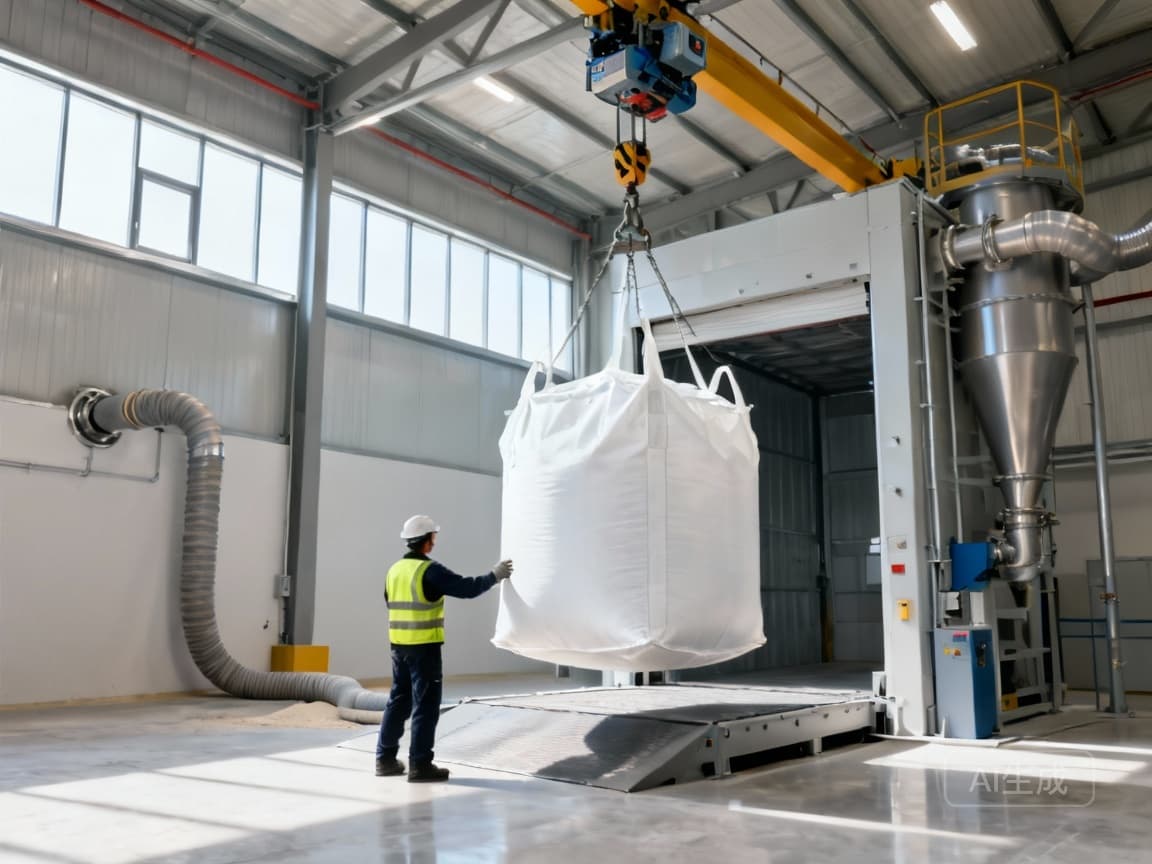
Consider the challenge faced by industries like plastics, food, and pharmaceuticals, where dust contamination, product integrity, and operator safety are paramount. As demonstrated in the Endema case study, a customized FIBC unloading station—integrating electric hoists, sealed discharge, dust collection, and pneumatic conveying—delivers a systemic solution. The results are clear: dust-free operation, guaranteed material quality, and significant savings in time, space, and operational cost. This exemplifies the shift from selling a bag to engineering a material handling node.
Implementation requires a focus on system interfaces. Key considerations include:
- Standardized Discharge Designs: Ensuring the bag's outlet seamlessly connects to process equipment.
- Automation Compatibility: Designing for integration with robotic palletizers or automated guided vehicles (AGVs).
- Data Connectivity: Exploring FIBCs with RFID tags for real-time inventory tracking and supply chain visibility, paving the way for predictive logistics.
The lesson from field implementation is clear: solutions must be tightly coupled with specific production processes and material characteristics. Automated equipment and sealed systems are not luxuries but necessities for modern, efficient, and clean operations.
The Circular Imperative: Single-Material FIBCs as a Sustainability Driver
The drive for sustainability is reshaping packaging across all sectors. Market insights confirm that the global mono-material packaging market is experiencing strong growth, fueled by regulatory pressures, simplified recycling, and brand commitments. For FIBCs, this moves the discussion past vague "recyclability" claims into the concrete realm of material science and circular business models.
Engineering the Pure-Polymer FIBC
The goal is a fully recyclable FIBC where the body, liner, and lifting loops are all made from the same polymer family, typically polypropylene (PP). The technical challenge lies in balancing this mono-material construction with essential performance properties like UV resistance, moisture barrier, and anti-static protection—often previously achieved with multi-layer or coated materials. Advances in polymer technology and coatings are making this balance achievable, creating a bag designed for its next life from the outset.
Building a Circular Ecosystem
The sustainable potential extends beyond the bag's first use. Innovative models are emerging:
- Reuse & Take-Back Programs: Implementing standardized, durable FIBCs in a pooled, returnable system similar to pallet pooling.
- Chemical Recycling: Using advanced recycling to break down used PP FIBCs into virgin-quality feedstock for manufacturing new bags, closing the loop.
This is particularly critical for brand-sensitive industries. With the cosmetics packaging market projected for sustained growth, driven significantly by sustainable demand, suppliers can leverage traceable, single-material FIBC solutions to help brands meet their Scope 3 emissions and ESG reporting goals.
Operationalizing Safety and Performance: A Lifecycle View
Superior system design and sustainable materials must be underpinned by uncompromising safety and lifecycle management. Expertise here builds critical trust (E-E-A-T). The experience from Shandong Lusu Packaging highlights that improper handling—during lifting, forklift operation, or storage—directly leads to safety hazards and reduced service life.
A proactive, risk-based management approach is essential:
- Scientific Specification: Selecting FIBCs based on a detailed risk assessment of the material's properties (flowability, explosiveness, corrosiveness), not just weight.
- Rigorous Handling Protocols: Enforcing correct lifting techniques and advocating for the use of pallets for transport, as proven in practice.
- Informed Storage Practices: As evidenced, outdoor storage requires protective covering to shield against UV radiation and moisture, which data shows dramatically accelerates polymer degradation.
Conclusion: A Strategic Partnership for the Future
The future of bulk material handling belongs to those who view FIBCs through a systemic and sustainable lens. By integrating ton bags as intelligent nodes within material flow systems, pioneering single-material designs for circularity, and enforcing rigorous lifecycle safety protocols, businesses can unlock new dimensions of efficiency and responsibility. The 7.5% CAGR growth in single-material packaging is a market signal—the move towards sophisticated, sustainable packaging systems is not a niche trend but the new operational imperative. The question is no longer just about which bag to buy, but about which partner can provide the holistic system solution for a more efficient and sustainable future.
Related News
Other news you might be interested in
Choosing the Right FIBC Bulk Bag: A Procurement Guide for Safer, More Reliable Packaging
Use this practical FIBC procurement guide to define your application, compare specifications and suppliers, verify compliance, and request a bag configuration that fits your operation.
Choosing the Right Bulk Bag Manufacturer for Safer, More Efficient Operations
Learn how to specify bulk bags, evaluate manufacturers, and validate quality and supply reliability to reduce operational risk and support safer, more efficient handling.
Want to know more?
Get in touch with us for more information about our services and products.