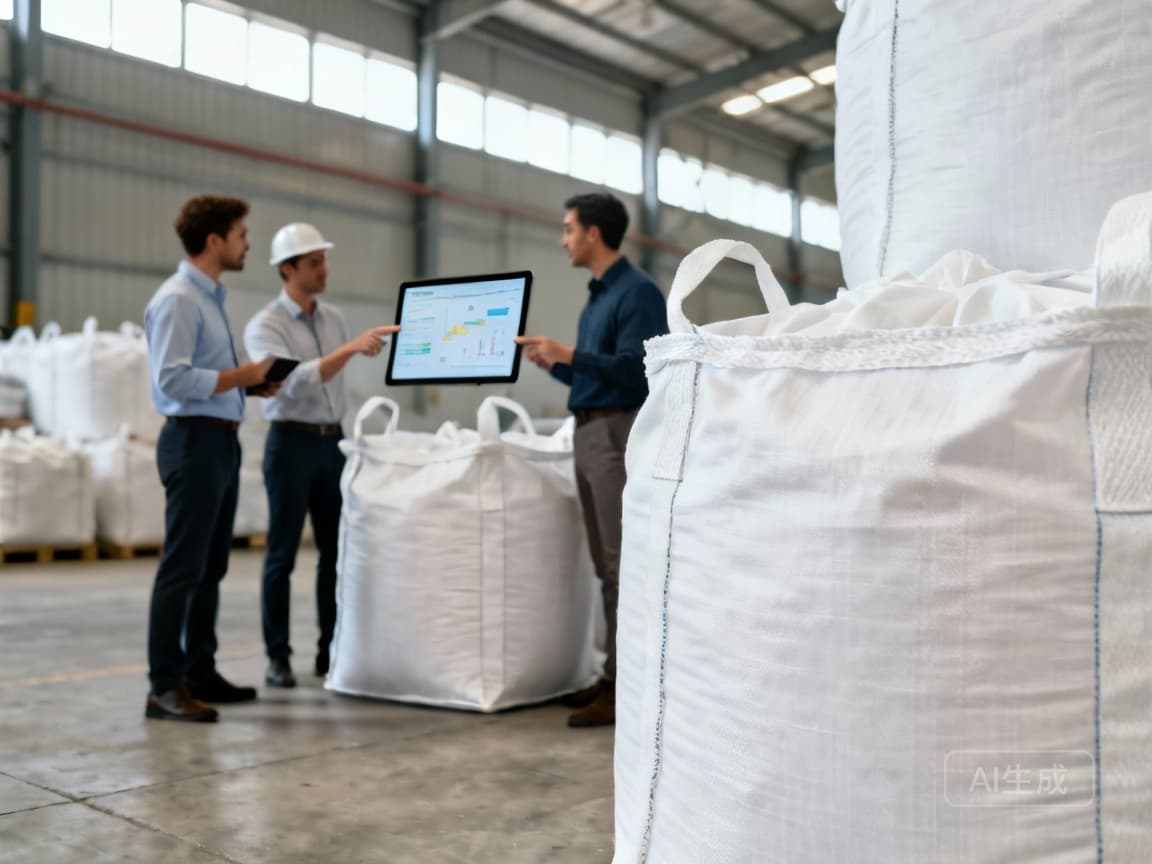
Single material ton bag: EPR compliance and circular economy strategy driving 7.3% market growth
RUNCHEN
AuthorWith more than 25 years of experience in FIBC bulk bag manufacturing and sales, RUNCHEN operates its own production facility with stable batch capacity. We specialize in FIBC bulk bags, jumbo bags, ton bags, and customized industrial packaging solutions.
From Cost Center to Strategic Asset: How Mono-Material FIBCs Drive Compliance and Growth
The conversation around flexible intermediate bulk containers (FIBCs) is shifting. For decades, procurement decisions were dominated by engineering specs and unit cost. Today, a powerful market force is rewriting the rules: sustainability is no longer a niche preference but a core business imperative. The global mono-material packaging market is projected to grow from $3.94 billion in 2024 to $5.63 billion by 2029, at a steady CAGR of 7.3%. This growth is not incidental; it is structurally driven by stringent Extended Producer Responsibility (EPR) regulations and the sustainable sourcing mandates of global brands. For B2B buyers in chemicals, food, pharmaceuticals, and minerals, the choice of bulk bag has evolved from a simple packaging decision to a critical lever for regulatory compliance, supply chain resilience, and long-term value creation.
The Regulatory Imperative: EPR Makes Sustainability a Financial Equation
Global plastic production has doubled in the last two decades, reaching 460 million tonnes in 2019, with packaging as a primary end-use. In response, governments worldwide are enacting EPR schemes that hold producers—and increasingly, the brands that use packaging—financially responsible for the collection, recycling, and disposal of their products. This transforms sustainability from a reputational concern into a direct line-item cost.
Traditional multi-material FIBCs, often combining layers of polypropylene (PP) with polyethylene (PE) or other polymers, are notoriously difficult and costly to recycle. They frequently end up in incineration or landfill, incurring high waste fees and failing to meet EPR "eco-modulation" criteria that can penalize non-recyclable designs. In contrast, mono-material PP or PE FIBCs are designed for recycling. Their uniform composition allows them to be efficiently processed into high-quality recyclate, potentially generating revenue from recycled material streams and significantly reducing end-of-life liability.
Investing in high-performance, traceable mono-material FIBCs is a long-term investment in supply chain security and brand reputation. This mirrors the strategic logic of companies like Tingyi (Master Kong), which prioritizes long-termism and proactive investment in core areas like food safety to ensure stable growth and optimize cost structures.
The business case is clear. By facilitating a circular pathway, mono-material FIBCs help companies mitigate regulatory risk, avoid future compliance fines, and turn a cost center (waste disposal) into a potential value stream.
Beyond the Green Claim: Performance and Sustainability Converge
A common misconception is that sustainable packaging requires a compromise on performance. Market insights highlight a counter-trend: innovation in high-barrier mono-material films and breakthroughs in material science are closing the performance gap. Advanced technologies like tailored co-polymers, specific additive masterbatches, and sophisticated mono-material multilayer co-extrusion allow next-generation FIBCs to offer superior moisture barrier, UV protection, and anti-static properties—all while remaining fully recyclable.
This is crucial for protecting sensitive or high-value commodities. Whether it's hygroscopic minerals, temperature-sensitive food ingredients, or electronic components, the right mono-material solution can match or exceed the protective qualities of complex composites. The key for procurement and operations teams is to move beyond generic "green" claims and ask specific, technical questions of their FIBC suppliers:
- What is the exact mono-material composition and recyclability rate according to recognized standards?
- Can you provide validated data on barrier performance (e.g., water vapor transmission rate) for my specific product?
- Do you offer a clear, certified take-back or recycling pathway for used bags?
- Can you share Life Cycle Assessment (LCA) data comparing your mono-material bag to a traditional alternative?
Building a Circular Partnership: The Ecosystem Advantage
The ultimate value of mono-material FIBCs is realized within a circular system. Leading manufacturers are evolving from product vendors to strategic partners who help clients close the loop. This requires a shift in mindset, similar to the approach taken by global firms like the ROI Institute, whose success in complex international implementations relies on a blend of global standardized methodology and localized execution support.
For FIBCs, this translates into offering not just a bag, but a system. Forward-thinking providers are developing solutions that encompass:
- Reverse Logistics & Take-Back Programs: Reliable collection systems to ensure used FIBCs re-enter the recycling stream.
- Traceability and Transparency: Using digital tools or markers to track a bag's lifecycle, providing proof of circularity to stakeholders and regulators.
- Recycled Content Integration: Offering new FIBCs containing certified recycled material, supporting customers' own sustainability targets.
This ecosystem approach mirrors the strategy of companies like momo (Fubon Media Technology), which integrates ESG into its core operational blueprint. By collaborating with nearly 10,000 suppliers on CSR principles, momo demonstrates that extensive supply chain collaboration is key to amplifying impact. For an FIBC user, choosing a partner with a robust circular economy network is a force multiplier for their own sustainability goals.
Conclusion: A Strategic Investment for the Future
The data is unequivocal. The 7.3% CAGR growth of the mono-material packaging market is a signal of a fundamental transition. For businesses that rely on bulk bags, the move to high-performance mono-material FIBCs is a strategic decision that aligns with three critical objectives: navigating the complex web of global EPR regulations, meeting the escalating sustainability demands of downstream customers and consumers, and future-proofing the supply chain against waste-related costs and risks.
By framing the FIBC as a strategic asset for circularity, companies can transform a routine procurement item into a driver of compliance, efficiency, and long-term brand value. The question is no longer if you should adopt mono-material solutions, but how quickly you can integrate them into your sustainability and supply chain strategy.
Related News
Other news you might be interested in
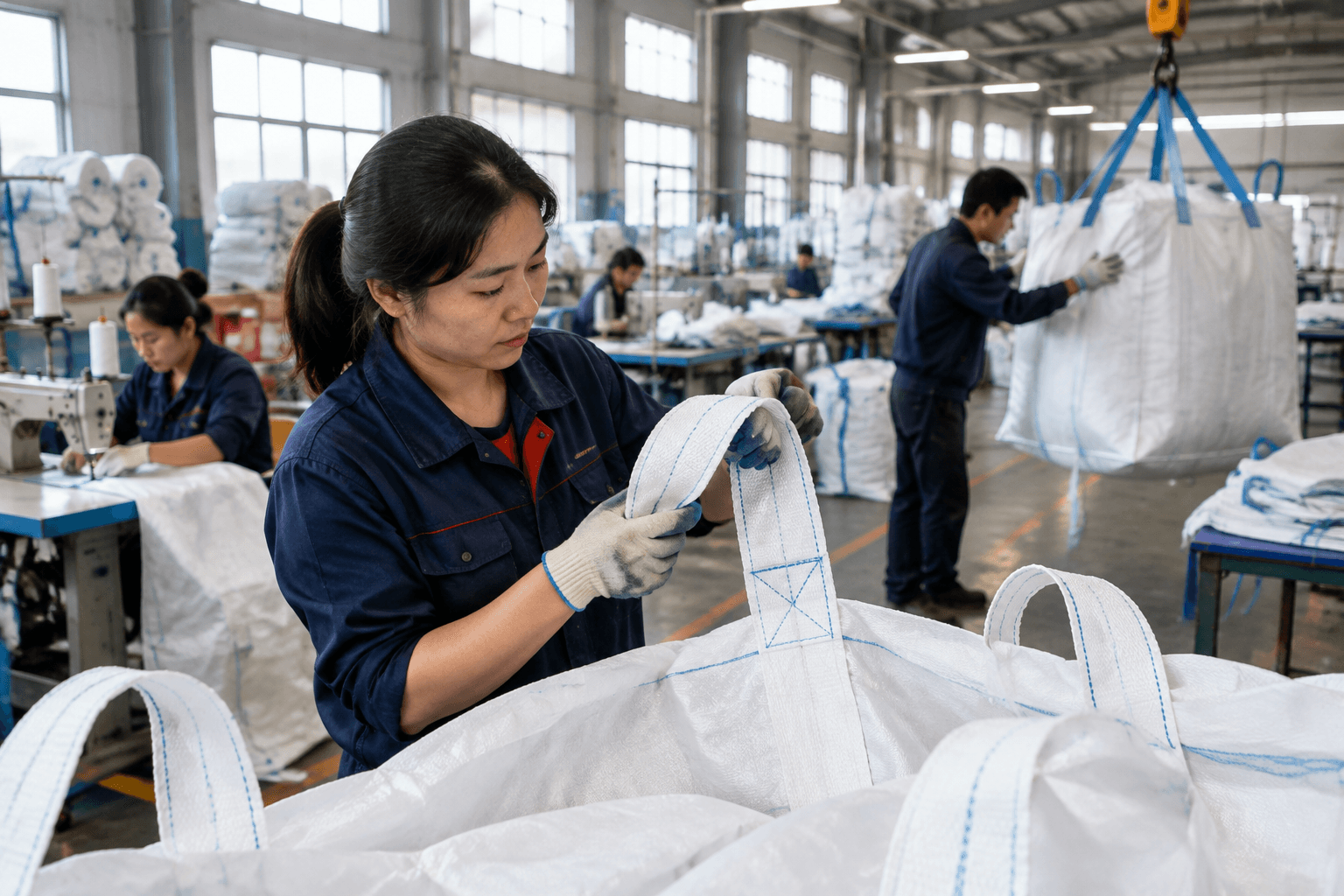
Choosing the Right Bulk Bag Manufacturer for Safer, More Efficient Operations
Learn how to specify bulk bags, evaluate manufacturers, and validate quality and supply reliability to reduce operational risk and support safer, more efficient handling.
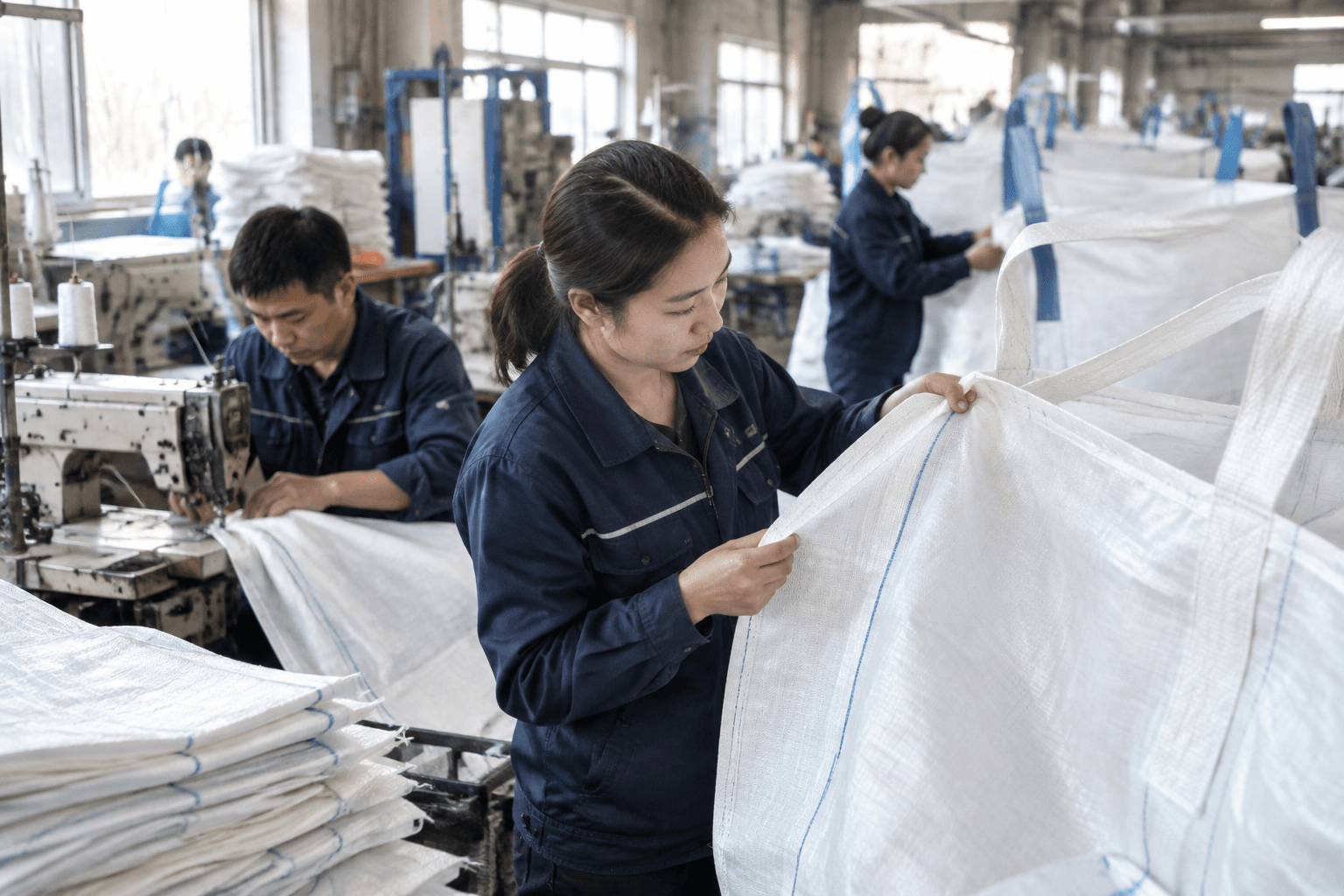
The 140th Canton Fair: New Trends in the Export Market for FIBC Bulk Bags, Jumbo Bags, and PP Woven Packaging
Explore how export buyers can evaluate FIBC bulk bags and PP woven packaging beyond unit price. Get practical guidance on specifications, supplier verification, sustainability requirements, and RFQs—and prepare your next sourcing conversation with COSEK.
Want to know more?
Get in touch with us for more information about our services and products.