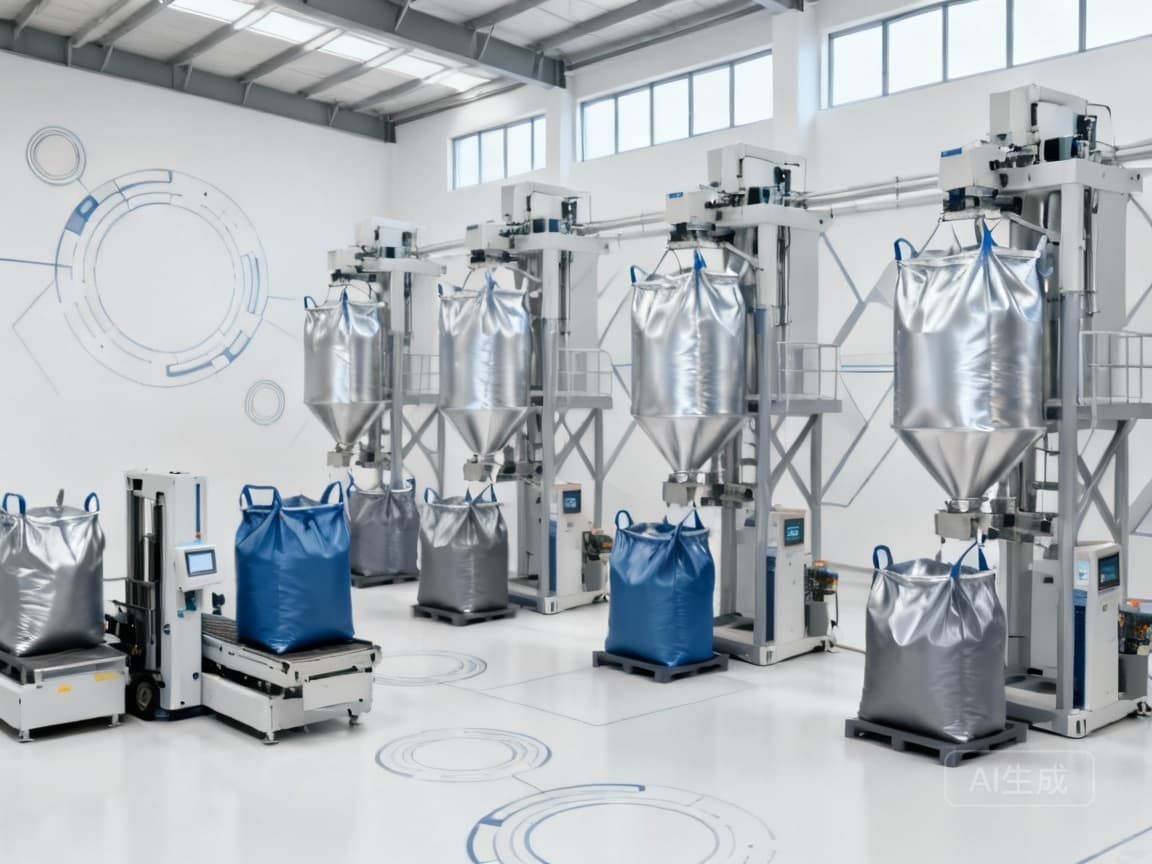
Smart Bulk Bags Cut Plastic Waste: 3.5B Tons Reduced Annually in Supply Chains #65
RUNCHEN
AuthorWith more than 25 years of experience in FIBC bulk bag manufacturing and sales, RUNCHEN operates its own production facility with stable batch capacity. We specialize in FIBC bulk bags, jumbo bags, ton bags, and customized industrial packaging solutions.
Beyond Waste Reduction: How Smart Bulk Bag Systems Create Circular Value in Manufacturing Supply Chains
The global packaging industry faces a critical challenge: 3.5 billion tons of plastic waste generated annually, with approximately 0.5% entering our oceans and causing significant environmental damage. Traditional linear packaging models—produce, use, dispose—are no longer sustainable from both environmental and economic perspectives. However, innovative bulk bag systems are emerging as transformative solutions that go beyond simple waste reduction to create genuine circular economy value throughout manufacturing supply chains.
The Circular Economy Imperative in Packaging
Extended Producer Responsibility (EPR) regulations are reshaping packaging standards worldwide, compelling manufacturers to reconsider their packaging strategies. These regulations, combined with growing consumer and investor pressure for sustainable practices, have created an urgent need for solutions that address waste at the source while delivering measurable business value.
Global bulk bag market projections indicate growth to $5.63 billion by 2029, with a 7.3% CAGR, driven primarily by EPR initiatives and plastic waste collection programs
Smart bulk bag systems represent a paradigm shift from traditional packaging approaches. Unlike single-use alternatives, these reusable systems are designed for multiple lifecycles, creating closed-loop systems that minimize waste while maximizing resource efficiency.
Case Study: Tingyi (Master Kong) Holding Corporation's Transformation
Strategic Packaging Overhaul
Tingyi's comprehensive packaging transformation demonstrates the tangible benefits of bulk bag adoption. The company implemented a multi-faceted approach:
- Replaced conventional raw material packaging with tanker transportation systems
- Implemented comprehensive carton recycling programs
- Transitioned from traditional packaging to bulk bag systems
- Developed specialized vinegar barrel recovery projects
Measurable Outcomes
The implementation delivered significant environmental and operational benefits:
- Substantial reduction in plastic packaging waste
- Improved packaging recovery and utilization rates
- Enhanced supply chain efficiency through standardized packaging
- Reduced transportation costs and environmental impact
This case illustrates that bulk bag systems aren't merely packaging changes but represent fundamental operational transformations that create value across multiple business dimensions.
Four-Stage Implementation Framework for Bulk Bag Systems
Stage 1: Comprehensive Packaging Audit
Begin with a thorough assessment of current packaging flows and waste streams:
- Map all packaging touchpoints across your supply chain
- Quantify current waste generation and disposal costs
- Identify opportunities for standardization and consolidation
- Establish baseline metrics for future performance measurement
Stage 2: Customized System Design
Develop tailored solutions based on specific operational needs:
- Select appropriate bulk bag materials based on product characteristics
- Design handling and transportation infrastructure requirements
- Establish cleaning, maintenance, and tracking protocols
- Develop implementation timelines and resource allocation plans
Stage 3: Supply Chain Integration
Execute a coordinated implementation across all stakeholders:
- Align internal departments and external partners on new processes
- Install necessary handling equipment and tracking systems
- Train personnel on new procedures and safety protocols
- Establish performance monitoring and reporting systems
Stage 4: Continuous Optimization
Implement ongoing improvement processes:
- Regular performance reviews against established metrics
- Identification of additional efficiency opportunities
- Technology upgrades and process refinements
- Expansion of successful practices to additional product lines
Calculating Comprehensive ROI
Evaluating bulk bag system investment requires considering both economic and environmental returns:
Direct Cost Savings
- Reduced packaging material purchases
- Lower waste disposal and handling costs
- Decreased transportation expenses through improved density
- Reduced product loss and damage
Environmental Value
- Carbon emission reductions from decreased transportation
- Reduced landfill usage and associated environmental costs
- Improved resource efficiency metrics
- Enhanced regulatory compliance and reduced risk
Strategic Benefits
- Improved brand reputation and market positioning
- Competitive advantage in sustainability-conscious markets
- Better relationships with environmentally-focused stakeholders
- Future-proofing against increasingly stringent regulations
Future Outlook: The EPR-Driven Transformation
The packaging landscape is evolving rapidly under EPR frameworks that assign greater responsibility to producers for the entire lifecycle of their packaging materials. Companies that proactively adopt circular packaging solutions like bulk bag systems will enjoy significant advantages:
- Reduced compliance costs and regulatory risks
- Improved access to markets with strict packaging requirements
- Enhanced ability to meet corporate sustainability targets
- Stronger positioning for green financing and investment
As EPR programs expand globally, early adopters of bulk bag systems will benefit from established infrastructure, proven processes, and accumulated expertise that provides sustainable competitive advantages.
Conclusion: Strategic Implementation for Maximum Impact
The transition to smart bulk bag systems represents more than an environmental initiative—it's a strategic business decision that delivers comprehensive value. By following the structured implementation framework outlined above and learning from successful implementations like Tingyi's, manufacturers can transform their packaging from a cost center to a value creator.
The 3.5 billion ton plastic waste challenge requires solutions that scale, and bulk bag systems offer precisely that—proven, practical approaches that reduce waste while improving operational efficiency and creating circular economy value throughout the supply chain.
Related News
Other news you might be interested in
Choosing the Right Bulk Bag Manufacturer for Safer, More Efficient Operations
Learn how to specify bulk bags, evaluate manufacturers, and validate quality and supply reliability to reduce operational risk and support safer, more efficient handling.
The 140th Canton Fair: New Trends in the Export Market for FIBC Bulk Bags, Jumbo Bags, and PP Woven Packaging
Explore how export buyers can evaluate FIBC bulk bags and PP woven packaging beyond unit price. Get practical guidance on specifications, supplier verification, sustainability requirements, and RFQs—and prepare your next sourcing conversation with COSEK.
Want to know more?
Get in touch with us for more information about our services and products.